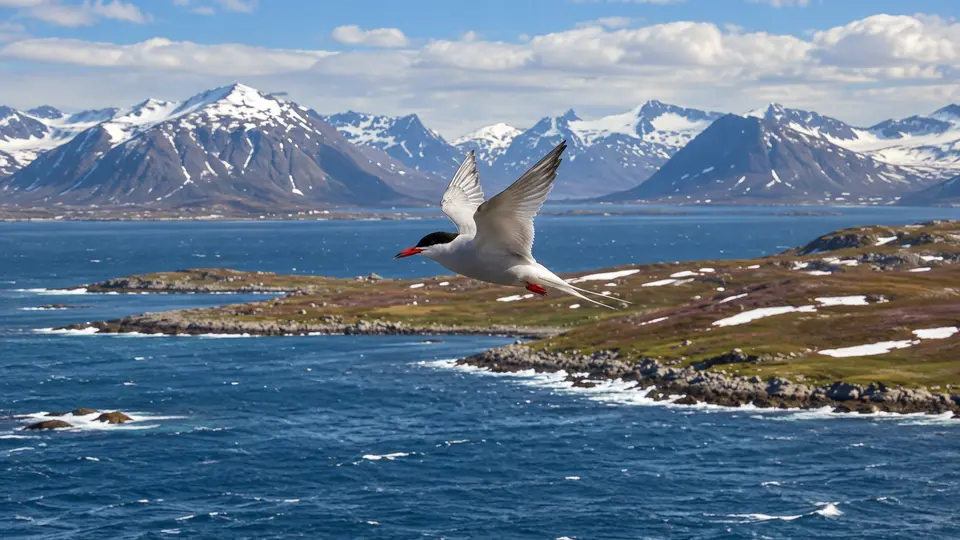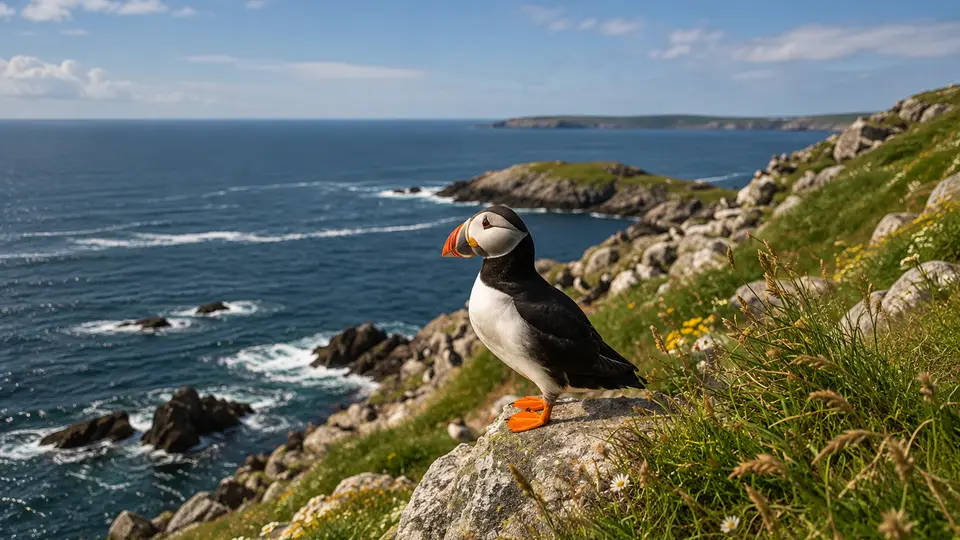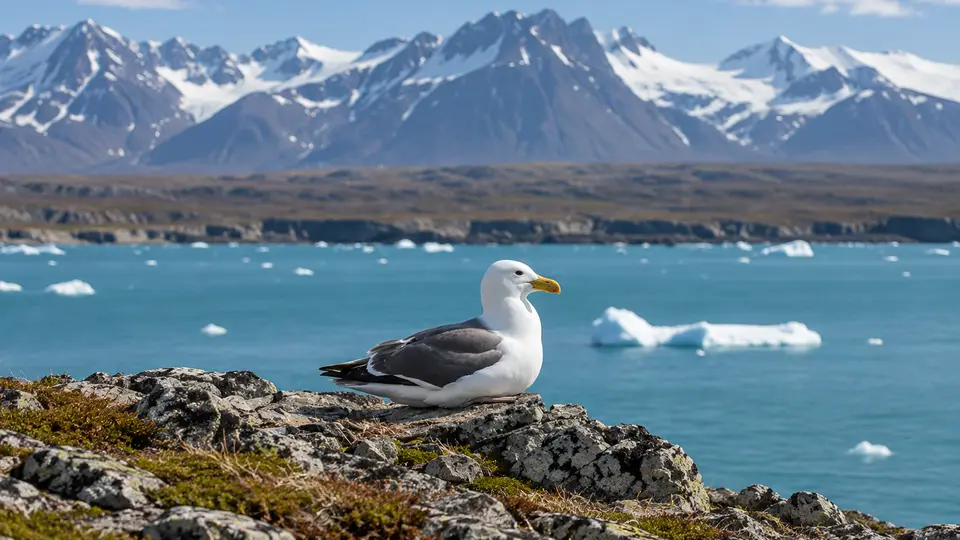
Northern Fulmar in its natural habitatAI-modified

Northern FulmarFulmarus glacialisWhere and when to see them

Northern Fulmar at a glance

The northern fulmar is an ocean-going seabird of the North Atlantic, North Pacific and adjacent Arctic waters. Although superficially gull-like, it belongs to the tube-nosed seabirds, alongside petrels and albatrosses. Its stiff-winged flight and effortless use of wind are characteristic around northern cliffs and offshore waters. Adults occur in pale and dark plumage forms. They breed slowly, laying a single egg, and long adult survival is especially important to maintaining their populations.

Behaviour & reproduction

Size
43–52 cm (17–20 in) body length
Weight
450–1,000 g (16–35 oz)
Lifespan
20–40 years
Status
Least Concern

Fulmars glide close to wave crests and soar along cliffs with shallow, infrequent wingbeats. Breeding pairs return to ledges, often reusing the same site over successive years. Both parents incubate the single egg and bring food to the chick. Birds gather around natural feeding opportunities and sometimes fishing vessels, but remain vulnerable to fishing-related mortality. When threatened at a nest, adults and chicks can eject oily stomach contents toward an intruder. Courtship displays often involve head-bowing and mutual preening on the nest ledges before egg-laying. Fulmars are long-lived birds, capable of breeding for many years once they reach maturity at around 6-12 years old. They exhibit strong site fidelity, often returning to the exact same nest site year after year for their entire lives.

Top wildlife locations

Norway wildlife habitatAI-modified

Norway

Established coastal cliff viewpoints and permitted island visits can overlook suitable nesting ledges, especially along western and northern coasts. Some colonies are remote or inaccessible; deck observations depend on route and weather.

Scotland wildlife habitatAI-modified

Scotland

Coastal paths overlooking sea cliffs offer plausible shore viewing, including on northern and western islands. Many ledges are inaccessible and should remain so; use established viewpoints rather than approaching nests or cliff edges.

Arctic wildlife habitatAI-modified

Arctic

Accessible coastal cliffs may support colonies, while distant deck viewing is possible along suitable marine routes. Much Arctic nesting habitat is remote, restricted or inaccessible, and shore visits require local authorization and safety planning.

Destinations describe the species' habitat, not guaranteed cruise stops. Some animals require an optional inland excursion or are found in restricted reserves.

Fun facts about the Northern Fulmar

  • A breeding pair normally lays just one egg per year.
  • Some individuals have lived for more than 50 years.
  • Concentrated stomach oil serves both as an energy-rich food reserve and a defensive secretion.
  • Pale and dark plumage forms belong to the same species.

Best time to see the Northern Fulmar

Late spring through summer is generally best for shore observation near breeding cliffs in Norway, Scotland and accessible Arctic regions. Adults may attend colonies outside that period, especially farther south. Arctic travel windows are narrower and depend on sea ice, weather and permitted access. Prime viewing opportunities coincide with peak breeding activity when both adults are regularly attending nests and chicks are present. Although non-breeding individuals can be seen at sea year-round, the highest concentrations near land occur during the nesting season. Early autumn also offers good chances to see fledglings practicing flight near colonies.

Northern Fulmar: season matrix by destination

Travel and observation windows vary by region. Highlighted months are an orientation for planning, not confirmed sightings or a guarantee of access.

Norway

Late spring and summer provide long daylight and plausible colony-viewing conditions, but local breeding attendance, access restrictions and weather vary.

JanFebMarAprMayJunJulAugSepOctNovDec
Cruise ships in Norway

Scotland

Spring and summer are practical windows for cliff observation. Some colonies are attended outside these months, but neither attendance nor favorable viewing weather is assured.

JanFebMarAprMayJunJulAugSepOctNovDec
Cruise ships in Scotland

Arctic

These are broad summer travel and daylight months, not a uniform Arctic breeding calendar. Ice, regional distribution and landing restrictions can rule out observation.

JanFebMarAprMayJunJulAugSepOctNovDec
Cruise ships in Arctic

Where the Northern Fulmar lives

For most of the year, fulmars occupy open marine waters, from continental shelves to distant ocean areas. Breeding sites include sea cliffs, rocky slopes and occasionally buildings near the coast. Productive northern seas support colonies, while access to individual Arctic sites varies greatly. Fulmar populations in the North Atlantic are among the most abundant seabirds, extending their range southwards in recent decades. While commonly associated with cliffs, they will also nest on flat, low-lying ground on remote islands, provided there are no land predators. They are particularly abundant in areas with strong upwelling currents that bring nutrients to the surface.

What the Northern Fulmar eats

Fulmars take fish, squid, crustaceans and other marine animals, usually from or near the surface. They also scavenge carrion and fisheries waste. Diet varies regionally and seasonally, and swallowed plastic can accumulate because floating fragments may be mistaken for food. Fulmars primarily feed by surface-seizing, rarely diving beyond a meter for food. Their diet also includes small fish such as capelin and sandeels, which are crucial prey species in many parts of their range. This adaptable foraging strategy allows them to exploit a wide variety of food sources, including discards from fisheries.

Species at a glance

Common name
Northern Fulmar
Scientific name
Fulmarus glacialis
Animal group
Birds
Size
43–52 cm (17–20 in) body length
Weight
450–1,000 g (16–35 oz)
Lifespan
20–40 years
Status
Least Concern
Identification
Unlike gulls, it has conspicuous tubular nostrils, a thick pale bill and stiff, straight-winged gliding flight, with pale birds showing a dark eye patch. The Northern Fulmar's plumage is typically grey and white, but a darker, entirely grey morph also occurs, particularly in the Canadian Arctic. Their large, dark eyes stand out against their pale head, contributing to their distinctive facial expression. The stout bill has a prominent yellowish hue, tipped with a darker nail.

Northern Fulmar: frequently asked questions

Where can I see the Northern Fulmar?
Norway, Scotland, Arctic. Watch cliff ledges from established paths or observe passing birds from a distant deck. Stay back from unstable edges and occupied nests: defensive stomach oil can strike intruders and seriously harm other birds' plumage. When observing colonies, use binoculars or a spotting scope to minimize disturbance and get closer views of nesting birds. Pay attention to their characteristic calls, which are a series of guttural cackles and grunts often heard near breeding sites. Deck observation from cruise ships frequently provides excellent views of fulmars gliding gracefully in the ship's wake.
When is the best time to see the Northern Fulmar?
Late spring through summer is generally best for shore observation near breeding cliffs in Norway, Scotland and accessible Arctic regions. Adults may attend colonies outside that period, especially farther south. Arctic travel windows are narrower and depend on sea ice, weather and permitted access. Prime viewing opportunities coincide with peak breeding activity when both adults are regularly attending nests and chicks are present. Although non-breeding individuals can be seen at sea year-round, the highest concentrations near land occur during the nesting season. Early autumn also offers good chances to see fledglings practicing flight near colonies.
How big does the Northern Fulmar get?
43–52 cm (17–20 in) body length. Adult weight: 450–1,000 g (16–35 oz). Size varies with age, sex and population.
How should I behave around the Northern Fulmar?
Watch cliff ledges from established paths or observe passing birds from a distant deck. Stay back from unstable edges and occupied nests: defensive stomach oil can strike intruders and seriously harm other birds' plumage. When observing colonies, use binoculars or a spotting scope to minimize disturbance and get closer views of nesting birds. Pay attention to their characteristic calls, which are a series of guttural cackles and grunts often heard near breeding sites. Deck observation from cruise ships frequently provides excellent views of fulmars gliding gracefully in the ship's wake.
What does the Northern Fulmar eat?
Fulmars take fish, squid, crustaceans and other marine animals, usually from or near the surface. They also scavenge carrion and fisheries waste. Diet varies regionally and seasonally, and swallowed plastic can accumulate because floating fragments may be mistaken for food. Fulmars primarily feed by surface-seizing, rarely diving beyond a meter for food. Their diet also includes small fish such as capelin and sandeels, which are crucial prey species in many parts of their range. This adaptable foraging strategy allows them to exploit a wide variety of food sources, including discards from fisheries.
Are wildlife sightings guaranteed on an adventure cruise?
No. Animals move freely and routes, weather, access restrictions and local conditions influence every outing. Confirm the actual itinerary and shore program before booking.

Compare wildlife in the same destinations

Explore other birds recorded in these destinations. Similar surroundings do not mean the animals share the same habits or viewing season.

Species comparison by animal group and destination
Northern FulmarAI-modifiedNorthern FulmarArctic TernAI-modifiedArctic TernAtlantic PuffinAI-modifiedAtlantic Puffin
Animal groupBirdsAnimal groupBirdsAnimal groupBirds
DestinationsNorway, Scotland, ArcticDestinationsAlaska, Norway, ArcticDestinationsNew England, Norway, Scotland, Arctic
Scientific nameFulmarus glacialisScientific nameScientific name
All wildlife destinations
AI-modified
Plan your trip

Find your next wildlife adventure

Compare destinations, shore programs and dates with the animals and habitats you would love to see.

  • Naturalist-led shore excursions
  • Responsible wildlife watching
  • Small expedition ships