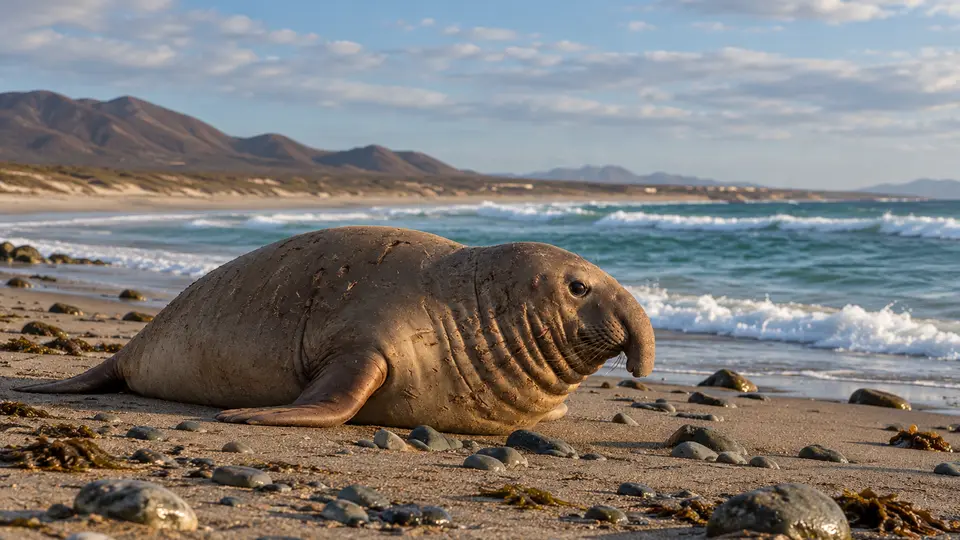
Northern Elephant Seal in its natural habitatAI-modified

Northern Elephant SealMirounga angustirostrisWhere and when to see them

Northern Elephant Seal at a glance

The northern elephant seal is a large North Pacific pinniped that comes ashore to breed, give birth and replace its coat. Adult males dwarf females and develop an inflatable nose used in displays. Commercial hunting nearly eliminated the species, with survivors around Mexico's Guadalupe Island playing a crucial role in its recovery. Today, protected breeding beaches support substantial colonies, although disturbance, changing ocean conditions and entanglement remain concerns. Viewing should remain strictly from authorized distant shore or deck positions.

Behaviour & reproduction

Size
Females 2.5–3 m (8.2–9.8 ft); males 4–5 m (13–16 ft) long
Weight
Females 400–800 kg (880–1,760 lb); males 1,500–2,300 kg (3,300–5,100 lb)
Lifespan
Males 13–15 years; females 18–22 years
Status
Least Concern

On breeding beaches, dominant males compete for access to groups of females through vocal displays, posturing and sometimes violent fights. Females usually deliver one pup and nurse it intensively for about four weeks before departing. Breeding adults fast ashore, drawing on stored fat. Outside the breeding period, seals spend most of their time at sea. They return separately for a concentrated annual molt, shedding both hair and the outer layer of skin. On breeding beaches, dominant males compete for access to groups of females through vocal displays, posturing and sometimes violent fights. Females usually deliver one pup and nurse it intensively for about four weeks before departing. Breeding adults fast ashore, drawing on stored fat. Outside the breeding period, seals spend most of their time at sea. They return separately for a concentrated annual molt, shedding both hair and the outer layer of skin. After weaning, pups remain on the beach for several weeks, practicing swimming and fasting before departing for their first ocean foraging trip. The social structure on breeding beaches is polygynous, with a few dominant males, or 'beachmasters', siring the majority of offspring.

Top wildlife locations

Mexico wildlife habitatAI-modified

Mexico

Baja California's offshore islands hold breeding beaches, but many are protected, remote or inaccessible to visitors. Distant deck viewing may be possible where permitted; authorized shore access must never be assumed.
Destinations describe the species' habitat, not guaranteed cruise stops. Some animals require an optional inland excursion or are found in restricted reserves.

Fun facts about the Northern Elephant Seal

  • Adult males may weigh several times as much as adult females.
  • Pups are normally nursed for only about four weeks before abrupt weaning.
  • Its annual catastrophic molt replaces hair and the outer skin layer together.
  • The population rebounded from an extreme hunting bottleneck centered on survivors at Guadalupe Island.

Best time to see the Northern Elephant Seal

December through March is the broad breeding-season window, with colony composition changing as males, mothers and pups arrive or depart. Spring and summer bring different age and sex groups ashore to molt. Mexican island access is restricted or variable, so permissions outweigh seasonal expectations. December through March is the broad breeding-season window, with colony composition changing as males, mothers and pups arrive or depart. Spring and summer bring different age and sex groups ashore to molt. Mexican island access is restricted or variable, so permissions outweigh seasonal expectations. Peak pupping occurs in late January and early February, making this period particularly dynamic for observation of mother-pup interactions. Molting seals, which appear dishevelled, are present from April through August, with different age classes molting at slightly different times.

Northern Elephant Seal: season matrix by destination

Travel and observation windows vary by region. Highlighted months are an orientation for planning, not confirmed sightings or a guarantee of access.

Mexico

This window overlaps breeding haul-outs, not guaranteed access or sightings. Island closures, permits and weather may prevent observation throughout the season.

JanFebMarAprMayJunJulAugSepOctNovDec
Cruise ships in Mexico

Where the Northern Elephant Seal lives

Breeding and molting require accessible sandy or cobble beaches, mainly on offshore islands and selected mainland coasts. Mexican colonies occur around Baja California and its islands. Away from these haul-outs, northern elephant seals range widely through the cool waters of the North Pacific. Breeding and molting require accessible sandy or cobble beaches, mainly on offshore islands and selected mainland coasts. Mexican colonies occur around Baja California and its islands. Away from these haul-outs, northern elephant seals range widely through the cool waters of the North Pacific. These large pinnipeds are known for their extreme migratory patterns, traveling thousands of kilometers from their breeding grounds to distant foraging areas. They are highly pelagic when not on land, inhabiting oceanic waters over continental shelves and deeper basins.

What the Northern Elephant Seal eats

Their food consists largely of squid and fish captured far offshore. Females and males often use different feeding areas and take different mixtures of prey. While ashore for breeding or molting, adults generally do not feed and instead rely on substantial energy reserves. Their food consists largely of squid and fish captured far offshore. Females and males often use different feeding areas and take different mixtures of prey. While ashore for breeding or molting, adults generally do not feed and instead rely on substantial energy reserves. Their prey includes deep-water species like Pacific hake, rockfish, and various squids, reflecting their deep-diving foraging behavior. Analysis of stomach contents and stable isotopes helps scientists understand their diverse and opportunistic feeding habits.

Species at a glance

Common name
Northern Elephant Seal
Scientific name
Mirounga angustirostris
Animal group
Marine life
Size
Females 2.5–3 m (8.2–9.8 ft); males 4–5 m (13–16 ft) long
Weight
Females 400–800 kg (880–1,760 lb); males 1,500–2,300 kg (3,300–5,100 lb)
Lifespan
Males 13–15 years; females 18–22 years
Status
Least Concern
Identification
Adult males have a conspicuous trunklike nose, and both sexes lack the external ear flaps and agile land gait of nearby sea lions. Adult males have a conspicuous trunklike nose, and both sexes lack the external ear flaps and agile land gait of nearby sea lions. Their large size, especially the males, distinguishes them from other pinnipeds in their range. Pups are born with a black lanugo coat, which they shed after about four weeks to reveal a silver-gray pelage.

Northern Elephant Seal: frequently asked questions

Where can I see the Northern Elephant Seal?
Mexico. Use binoculars from authorized shore viewpoints or a distant deck. Keep well beyond local exclusion distances, never block routes to the sea, and avoid beaches with fighting males. Protected Mexican colonies may be entirely inaccessible. Use binoculars from authorized shore viewpoints or a distant deck. Keep well beyond local exclusion distances, never block routes to the sea, and avoid beaches with fighting males. Protected Mexican colonies may be entirely inaccessible. Observing seals from a vessel requires maintaining a respectful distance, typically at least 100 meters, to avoid disturbing the animals. Approaching too closely, especially during breeding or molting, can cause stress, stampedes, or abandonment of pups.
When is the best time to see the Northern Elephant Seal?
December through March is the broad breeding-season window, with colony composition changing as males, mothers and pups arrive or depart. Spring and summer bring different age and sex groups ashore to molt. Mexican island access is restricted or variable, so permissions outweigh seasonal expectations. December through March is the broad breeding-season window, with colony composition changing as males, mothers and pups arrive or depart. Spring and summer bring different age and sex groups ashore to molt. Mexican island access is restricted or variable, so permissions outweigh seasonal expectations. Peak pupping occurs in late January and early February, making this period particularly dynamic for observation of mother-pup interactions. Molting seals, which appear dishevelled, are present from April through August, with different age classes molting at slightly different times.
How big does the Northern Elephant Seal get?
Females 2.5–3 m (8.2–9.8 ft); males 4–5 m (13–16 ft) long. Adult weight: Females 400–800 kg (880–1,760 lb); males 1,500–2,300 kg (3,300–5,100 lb). Size varies with age, sex and population.
How should I behave around the Northern Elephant Seal?
Use binoculars from authorized shore viewpoints or a distant deck. Keep well beyond local exclusion distances, never block routes to the sea, and avoid beaches with fighting males. Protected Mexican colonies may be entirely inaccessible. Use binoculars from authorized shore viewpoints or a distant deck. Keep well beyond local exclusion distances, never block routes to the sea, and avoid beaches with fighting males. Protected Mexican colonies may be entirely inaccessible. Observing seals from a vessel requires maintaining a respectful distance, typically at least 100 meters, to avoid disturbing the animals. Approaching too closely, especially during breeding or molting, can cause stress, stampedes, or abandonment of pups.
What does the Northern Elephant Seal eat?
Their food consists largely of squid and fish captured far offshore. Females and males often use different feeding areas and take different mixtures of prey. While ashore for breeding or molting, adults generally do not feed and instead rely on substantial energy reserves. Their food consists largely of squid and fish captured far offshore. Females and males often use different feeding areas and take different mixtures of prey. While ashore for breeding or molting, adults generally do not feed and instead rely on substantial energy reserves. Their prey includes deep-water species like Pacific hake, rockfish, and various squids, reflecting their deep-diving foraging behavior. Analysis of stomach contents and stable isotopes helps scientists understand their diverse and opportunistic feeding habits.
Are wildlife sightings guaranteed on an adventure cruise?
No. Animals move freely and routes, weather, access restrictions and local conditions influence every outing. Confirm the actual itinerary and shore program before booking.

Compare wildlife in the same destinations

Explore other marine life recorded in these destinations. Similar surroundings do not mean the animals share the same habits or viewing season.

Species comparison by animal group and destination
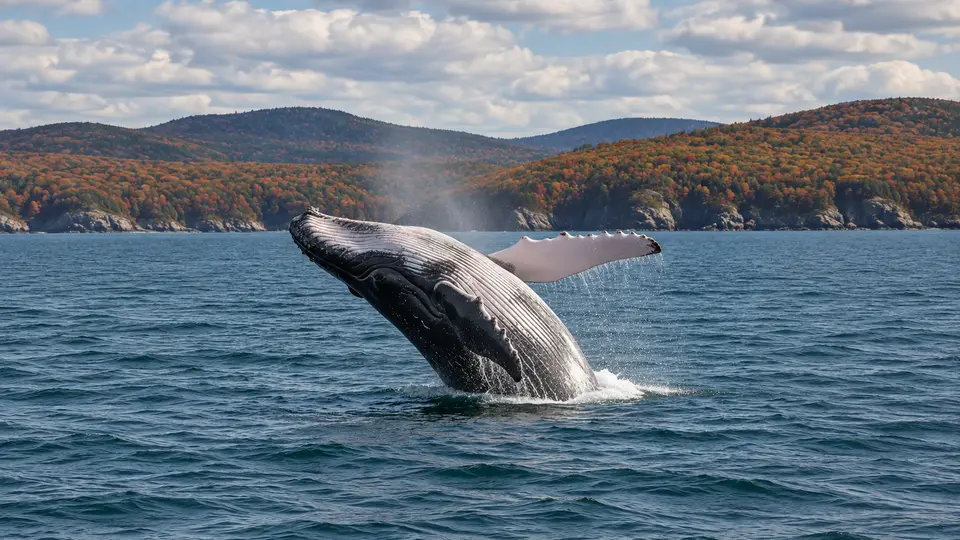
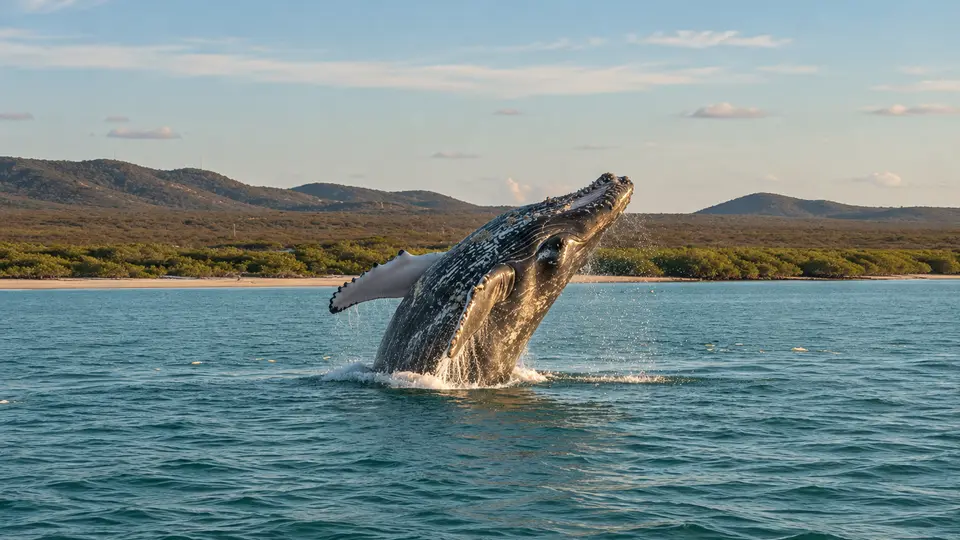
Northern Elephant SealAI-modifiedNorthern Elephant SealFin WhaleAI-modifiedFin WhaleGray WhaleAI-modifiedGray Whale
Animal groupMarine lifeAnimal groupMarine lifeAnimal groupMarine life
DestinationsMexicoDestinationsMexico, New England, Croatia, Greece, Norway, Portugal, Antarctica, ArcticDestinationsAlaska, Mexico
Scientific nameMirounga angustirostrisScientific nameScientific name
All wildlife destinations
AI-modified
Plan your trip

Find your next wildlife adventure

Compare destinations, shore programs and dates with the animals and habitats you would love to see.

  • Naturalist-led shore excursions
  • Responsible wildlife watching
  • Small expedition ships