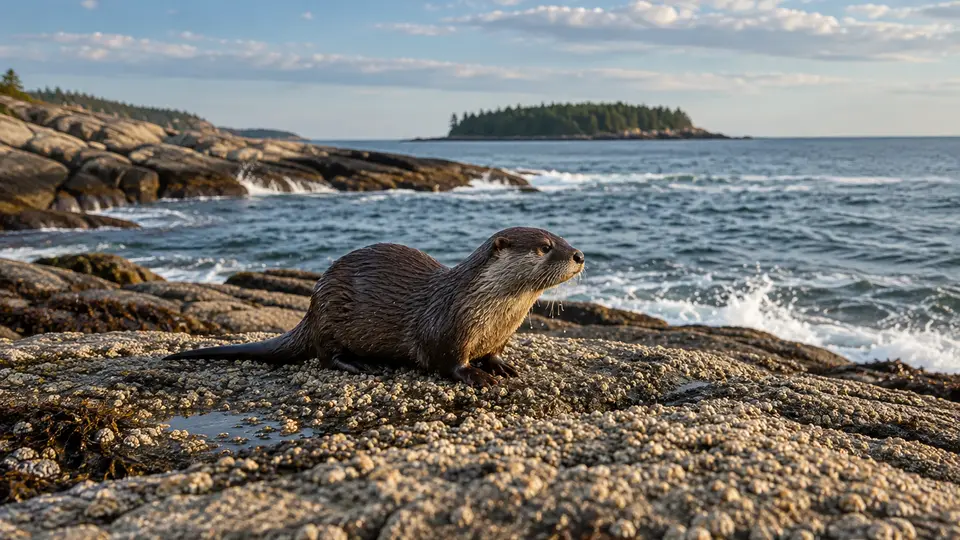
River Otter in its natural habitatAI-modified

River OtterLontra canadensisWhere and when to see them

River Otter at a glance

The North American river otter is a streamlined member of the weasel family found across much of Canada and the United States. Despite its name, it also inhabits estuaries and sheltered marine shores, particularly where freshwater and secure resting cover are nearby. Dense fur, webbed feet and a muscular tail support an amphibious lifestyle. Its recovery in many regions reflects cleaner waterways, legal protection and reintroductions, although local populations still depend on healthy aquatic habitats.

Behaviour & reproduction

Size
90–130 cm (35–51 in) total length
Weight
5–14 kg (11–31 lb)
Lifespan
8–13 years
Status
Least Concern

River otters travel along habitual routes between feeding places, resting sites and communal scent-marking areas called latrines. They may live alone or associate in family groups and loose social parties. Sliding, chasing and wrestling help develop coordination and maintain social relationships, although similar movements also serve practical travel purposes. Activity is often greatest around dawn, dusk or at night, but coastal animals can appear by day. Mothers raise their young in sheltered dens near water. River otters are highly vocal, using a range of chirps, chuckles, and growls for communication within their social groups. These playful interactions strengthen social bonds and are critical for the development of hunting skills in young otters. They are excellent swimmers and divers, capable of holding their breath for several minutes while hunting underwater.

Top wildlife locations

Alaska wildlife habitatAI-modified

Alaska

Sheltered coastal coves, stream mouths and forest-backed shores provide plausible viewing from land or a stationary deck. No inland excursion is essential, but animals are elusive and must be distinguished carefully from sea otters.

New England wildlife habitatAI-modified

New England

Salt-marsh creeks, estuary margins and wooded coastal ponds offer plausible shore observation. An inland wetland excursion may improve habitat access, but is not essential; sightings are sporadic even where tracks and latrines occur.

Destinations describe the species' habitat, not guaranteed cruise stops. Some animals require an optional inland excursion or are found in restricted reserves.

Fun facts about the River Otter

  • Its thick whiskers help detect prey movements in murky water.
  • Delayed implantation separates mating from the later development of the embryo.
  • Communal latrines communicate information through scent rather than serving only as waste sites.
  • It can use marine shorelines despite being named a river otter.

Best time to see the River Otter

River otters remain active year-round rather than hibernating. Late spring through early autumn provides long daylight and easier coastal access in Alaska and New England. Winter snow can reveal tracks, but weather, ice and shorter days complicate observation; no season ensures visible animals. While no season guarantees sightings, spring and summer provide the best chances for observing mothers with pups as they venture out more frequently. Calm water conditions and reduced ice cover during these warmer months also facilitate better viewing from boats or shore. Autumn can offer good viewing opportunities as well, particularly before heavy snowfall or ice formation.

River Otter: season matrix by destination

Travel and observation windows vary by region. Highlighted months are an orientation for planning, not confirmed sightings or a guarantee of access.

Alaska

These months offer longer daylight and generally easier coastal travel. River otters are resident and active outside this window; it is not a breeding-season forecast.

JanFebMarAprMayJunJulAugSepOctNovDec
Cruise ships in Alaska

New England

This broad window favors accessible trails and open water. Otters remain active in winter, and local disturbance and daily timing strongly affect visibility.

JanFebMarAprMayJunJulAugSepOctNovDec
Cruise ships in New England

Where the River Otter lives

Suitable habitat includes rivers, lakes, marshes, estuaries and protected coastal inlets. Otters need abundant prey, bank-side cover and secure den sites, often using cavities or burrows made by other animals. On marine coasts, nearby freshwater supports drinking and fur maintenance. Coastal populations often utilize intertidal zones and kelp forests for foraging, demonstrating adaptability to diverse aquatic environments. They often create their own burrows when natural cavities are unavailable, digging into soft earth near water. Habitat preferences also include areas with low human disturbance and good water quality, essential for both prey availability and otter health.

What the River Otter eats

Fish and crayfish dominate many river otter diets, with proportions varying by region and season. Frogs, crabs and other aquatic invertebrates are also eaten, while birds and small mammals are occasional prey. Otters often exploit locally abundant, relatively easy-to-catch fish. In Alaska, specific prey includes various salmon species, rockfish, and sculpins, often caught using their sensitive whiskers to detect movement. New England otters frequently consume panfish, eels, and occasionally shellfish, cracking shells with their powerful jaws. Their high metabolic rate requires frequent feeding, making opportunistic foraging a key survival strategy.

Species at a glance

Common name
River Otter
Scientific name
Lontra canadensis
Animal group
Mammals
Size
90–130 cm (35–51 in) total length
Weight
5–14 kg (11–31 lb)
Lifespan
8–13 years
Status
Least Concern
Identification
Compared with a sea otter, a North American river otter has a longer tapering tail, a sleeker body and a smaller head, and usually travels belly-down rather than resting on its back. Key distinguishing features also include their dark brown fur, often lighter on the belly, and their powerful, muscular tail which is thick at the base and tapers to a point. They possess small, rounded ears and a broad muzzle with prominent vibrissae. Unlike sea otters, river otters have webbed feet with visible claws, adapted for swimming and burrowing.

River Otter: frequently asked questions

Where can I see the River Otter?
Alaska, New England. Wait quietly above a sheltered shoreline or stream mouth, leaving clear access between water and cover. Do not approach dens, offer fish or let dogs investigate otters; adults can bite defensively, especially around young. Look for their characteristic V-shaped wake in the water and listen for chirping or chattering vocalizations, especially from groups. From a vessel, scan shorelines with dense vegetation or rocky outcrops where they might haul out. Early morning or late evening often yield the most active observations, but coastal otters can be seen throughout the day.
When is the best time to see the River Otter?
River otters remain active year-round rather than hibernating. Late spring through early autumn provides long daylight and easier coastal access in Alaska and New England. Winter snow can reveal tracks, but weather, ice and shorter days complicate observation; no season ensures visible animals. While no season guarantees sightings, spring and summer provide the best chances for observing mothers with pups as they venture out more frequently. Calm water conditions and reduced ice cover during these warmer months also facilitate better viewing from boats or shore. Autumn can offer good viewing opportunities as well, particularly before heavy snowfall or ice formation.
How big does the River Otter get?
90–130 cm (35–51 in) total length. Adult weight: 5–14 kg (11–31 lb). Size varies with age, sex and population.
How should I behave around the River Otter?
Wait quietly above a sheltered shoreline or stream mouth, leaving clear access between water and cover. Do not approach dens, offer fish or let dogs investigate otters; adults can bite defensively, especially around young. Look for their characteristic V-shaped wake in the water and listen for chirping or chattering vocalizations, especially from groups. From a vessel, scan shorelines with dense vegetation or rocky outcrops where they might haul out. Early morning or late evening often yield the most active observations, but coastal otters can be seen throughout the day.
What does the River Otter eat?
Fish and crayfish dominate many river otter diets, with proportions varying by region and season. Frogs, crabs and other aquatic invertebrates are also eaten, while birds and small mammals are occasional prey. Otters often exploit locally abundant, relatively easy-to-catch fish. In Alaska, specific prey includes various salmon species, rockfish, and sculpins, often caught using their sensitive whiskers to detect movement. New England otters frequently consume panfish, eels, and occasionally shellfish, cracking shells with their powerful jaws. Their high metabolic rate requires frequent feeding, making opportunistic foraging a key survival strategy.
Are wildlife sightings guaranteed on an adventure cruise?
No. Animals move freely and routes, weather, access restrictions and local conditions influence every outing. Confirm the actual itinerary and shore program before booking.

Compare wildlife in the same destinations

Explore other mammals recorded in these destinations. Similar surroundings do not mean the animals share the same habits or viewing season.

Species comparison by animal group and destination
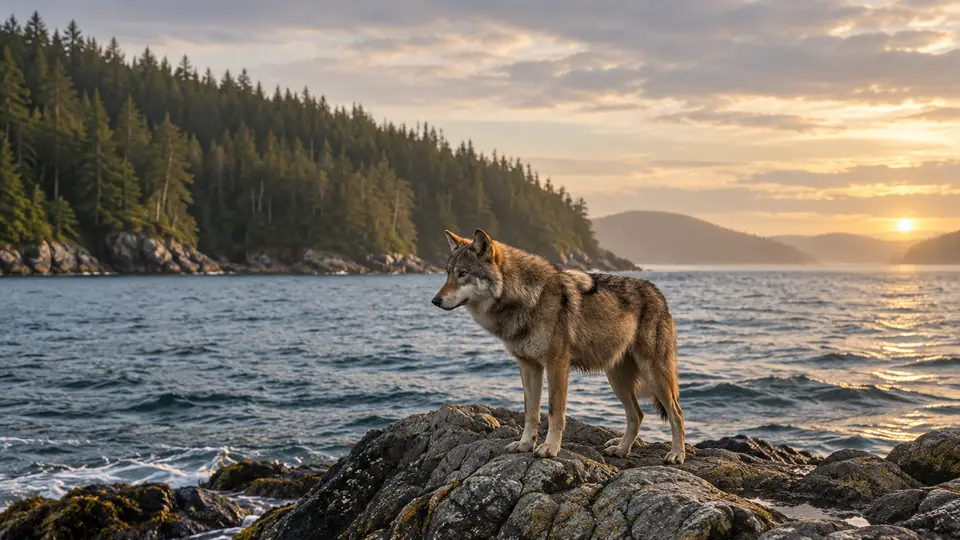
River OtterAI-modifiedRiver OtterAlexander Archipelago WolfAI-modifiedAlexander Archipelago WolfAmerican Black BearAI-modifiedAmerican Black Bear
Animal groupMammalsAnimal groupMammalsAnimal groupMammals
DestinationsAlaska, New EnglandDestinationsAlaskaDestinationsAlaska, New England
Scientific nameLontra canadensisScientific nameScientific name
All wildlife destinations
AI-modified
Plan your trip

Find your next wildlife adventure

Compare destinations, shore programs and dates with the animals and habitats you would love to see.

  • Naturalist-led shore excursions
  • Responsible wildlife watching
  • Small expedition ships