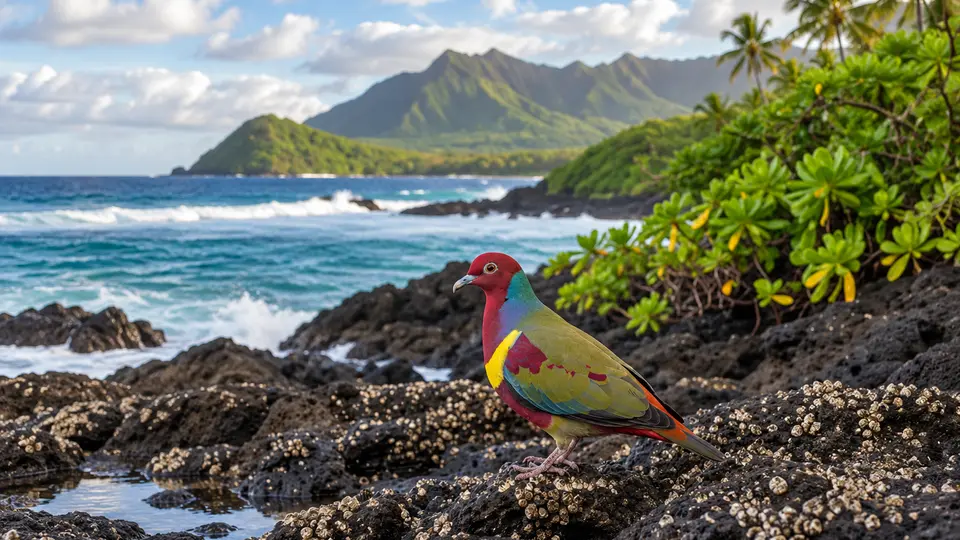
Many-colored fruit dove in its natural habitatAI-modified

Many-colored fruit dovePtilinopus perousiiWhere and when to see them

Many-colored fruit dove at a glance

The many-colored fruit dove is a compact canopy pigeon native to Fiji, Tonga and Samoa. Males are strikingly pale with vivid patches of red and yellow, while females are greener and much harder to pick out among leaves. Its distribution follows suitable wooded habitat and fruit supplies rather than open coastal scenery. Even a brightly marked male can disappear surprisingly well inside a sunlit, leafy crown.

Behaviour & reproduction

Size
23–25 cm (9.1–9.8 in) long
Weight
85–110 g (3.0–3.9 oz)
Lifespan
Not reliably established
Status
Least Concern

These doves spend much of their time quietly feeding or resting high in trees. They may gather with other fruit-eating birds at a productive fruit crop, then disperse when that resource declines. Flight between trees is direct, but movements within a crown can be subtle. Pairs build a light twig platform, and the usual clutch is a single egg rather than the two common in many pigeons. Pairs maintain close contact, often foraging together in the upper canopy, but are generally not aggressive towards other frugivores. The simple nest is typically placed on a horizontal branch, often in a thorny bush for protection from predators.

Top wildlife locations

Fiji wildlife habitatAI-modified

Fiji

Wooded coastal margins and mature fruiting trees near forest offer plausible viewing, but open beaches do not. Many useful sites require an inland excursion and local permission; canopy birds can remain difficult to locate.
Destinations describe the species' habitat, not guaranteed cruise stops. Some animals require an optional inland excursion or are found in restricted reserves.

Fun facts about the Many-colored fruit dove

  • Males and females have markedly different plumage.
  • Its native range spans three Pacific island groups: Fiji, Tonga and Samoa.
  • A typical clutch contains only one egg.
  • Swallowing fruits whole allows it to transport seeds away from parent trees.

Best time to see the Many-colored fruit dove

May through October often offers relatively drier conditions for forest walks in Fiji. The dove is resident, so fruit availability and local forest quality are more important than migration timing. Breeding and fruiting schedules should not be inferred from the travel season. While resident, local fruit availability can fluctuate, influencing the ease of spotting them even outside the traditional breeding season. The presence of recently fruiting trees near trails can be a more reliable indicator for viewing opportunities.

Many-colored fruit dove: season matrix by destination

Travel and observation windows vary by region. Highlighted months are an orientation for planning, not confirmed sightings or a guarantee of access.

Fiji

Relatively drier travel months, not an established peak for dove sightings or breeding; local fruit crops strongly influence visibility.

JanFebMarAprMayJunJulAugSepOctNovDec
Cruise ships in Fiji

Where the Many-colored fruit dove lives

It uses lowland and hill forest, forest edges and some secondary woodland with mature fruiting trees. Coastal woodland can be suitable where tree cover is substantial. Treeless beaches and heavily cleared areas provide little useful habitat for this canopy specialist. They are often found in primary rainforests, secondary growth, and sometimes even large gardens with native fruiting trees. The species prefers areas with a diverse array of fruiting tree species to ensure a year-round food supply.

What the Many-colored fruit dove eats

Small fleshy fruits dominate the diet, with figs particularly important. Fruits are generally swallowed whole, allowing seeds to pass through the digestive tract. Feeding opportunities shift among tree species and locations as different crops ripen across the forest landscape. Their gape is surprisingly wide, allowing them to swallow fruits much larger than might be expected from their small size. This specialized diet means they play a crucial role in seed dispersal within their forest ecosystems.

Species at a glance

Common name
Many-colored fruit dove
Scientific name
Ptilinopus perousii
Animal group
Birds
Size
23–25 cm (9.1–9.8 in) long
Weight
85–110 g (3.0–3.9 oz)
Lifespan
Not reliably established
Status
Least Concern
Identification
The pale, red-and-yellow male and green female with a red crown differ from Fiji’s orange fruit dove, whose adult male is overwhelmingly orange. The female's plumage is largely green, providing excellent camouflage among the leaves, while the male's vibrant colors make him stand out against the foliage. Juveniles resemble females but may have duller plumage and less distinct markings.

Many-colored fruit dove: frequently asked questions

Where can I see the Many-colored fruit dove?
Fiji. Scan fruiting crowns from public paths or authorized forest trails, using binoculars rather than approaching nests. Watch footing while looking upward, avoid damaging fruiting branches, and use a local guide where forest access or land ownership is unclear. Their cryptic coloration and quiet movements often make them challenging to spot despite their bright plumage, requiring patience. Listen for their soft, cooing calls which can betray their presence high in the canopy.
When is the best time to see the Many-colored fruit dove?
May through October often offers relatively drier conditions for forest walks in Fiji. The dove is resident, so fruit availability and local forest quality are more important than migration timing. Breeding and fruiting schedules should not be inferred from the travel season. While resident, local fruit availability can fluctuate, influencing the ease of spotting them even outside the traditional breeding season. The presence of recently fruiting trees near trails can be a more reliable indicator for viewing opportunities.
How big does the Many-colored fruit dove get?
23–25 cm (9.1–9.8 in) long. Adult weight: 85–110 g (3.0–3.9 oz). Size varies with age, sex and population.
How should I behave around the Many-colored fruit dove?
Scan fruiting crowns from public paths or authorized forest trails, using binoculars rather than approaching nests. Watch footing while looking upward, avoid damaging fruiting branches, and use a local guide where forest access or land ownership is unclear. Their cryptic coloration and quiet movements often make them challenging to spot despite their bright plumage, requiring patience. Listen for their soft, cooing calls which can betray their presence high in the canopy.
What does the Many-colored fruit dove eat?
Small fleshy fruits dominate the diet, with figs particularly important. Fruits are generally swallowed whole, allowing seeds to pass through the digestive tract. Feeding opportunities shift among tree species and locations as different crops ripen across the forest landscape. Their gape is surprisingly wide, allowing them to swallow fruits much larger than might be expected from their small size. This specialized diet means they play a crucial role in seed dispersal within their forest ecosystems.
Are wildlife sightings guaranteed on an adventure cruise?
No. Animals move freely and routes, weather, access restrictions and local conditions influence every outing. Confirm the actual itinerary and shore program before booking.

Compare wildlife in the same destinations

Explore other birds recorded in these destinations. Similar surroundings do not mean the animals share the same habits or viewing season.

Species comparison by animal group and destination
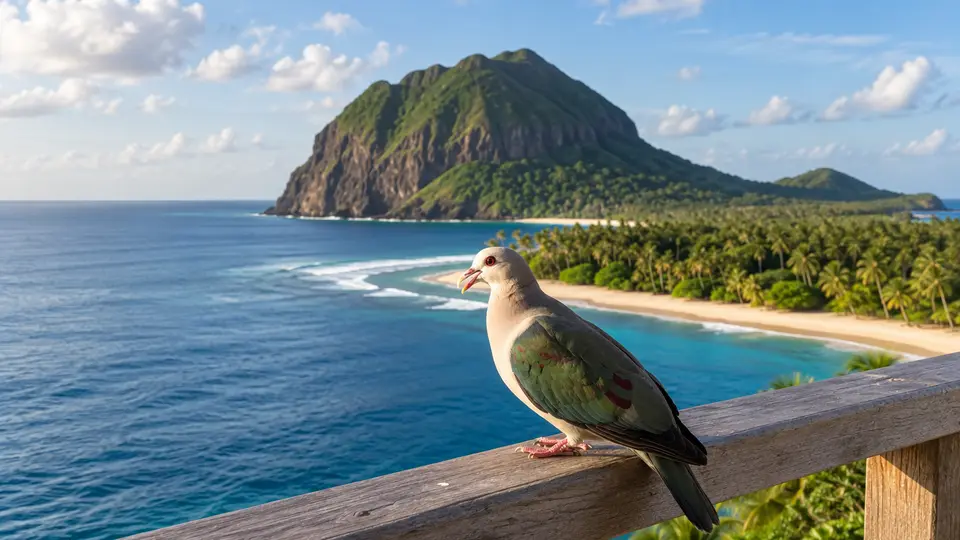
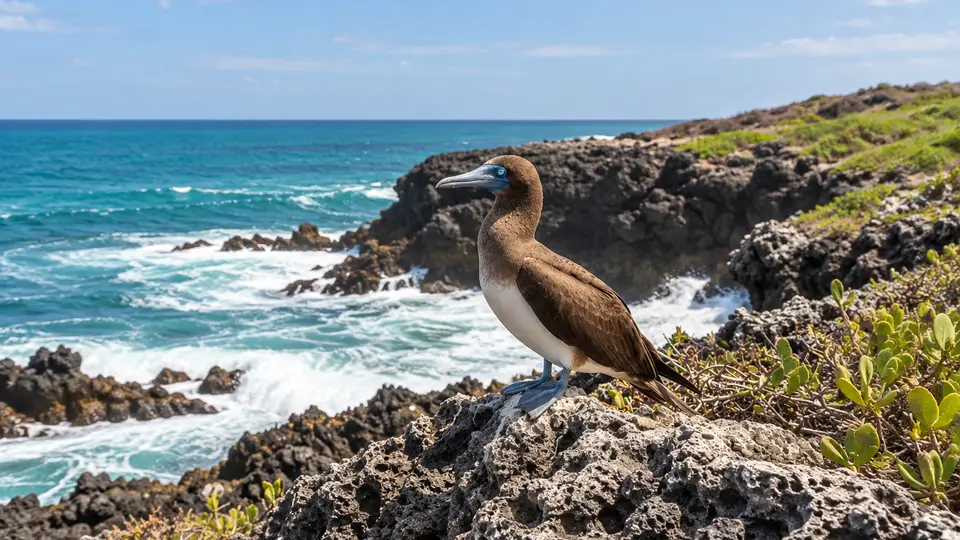
Many-colored fruit doveAI-modifiedMany-colored fruit doveBarking imperial pigeonAI-modifiedBarking imperial pigeonBrown BoobyAI-modifiedBrown Booby
Animal groupBirdsAnimal groupBirdsAnimal groupBirds
DestinationsFijiDestinationsFijiDestinationsCosta Rica, Cape Verde, Egypt, Fiji, Polynesia
Scientific namePtilinopus perousiiScientific nameScientific name
All wildlife destinations
AI-modified
Plan your trip

Find your next wildlife adventure

Compare destinations, shore programs and dates with the animals and habitats you would love to see.

  • Naturalist-led shore excursions
  • Responsible wildlife watching
  • Small expedition ships