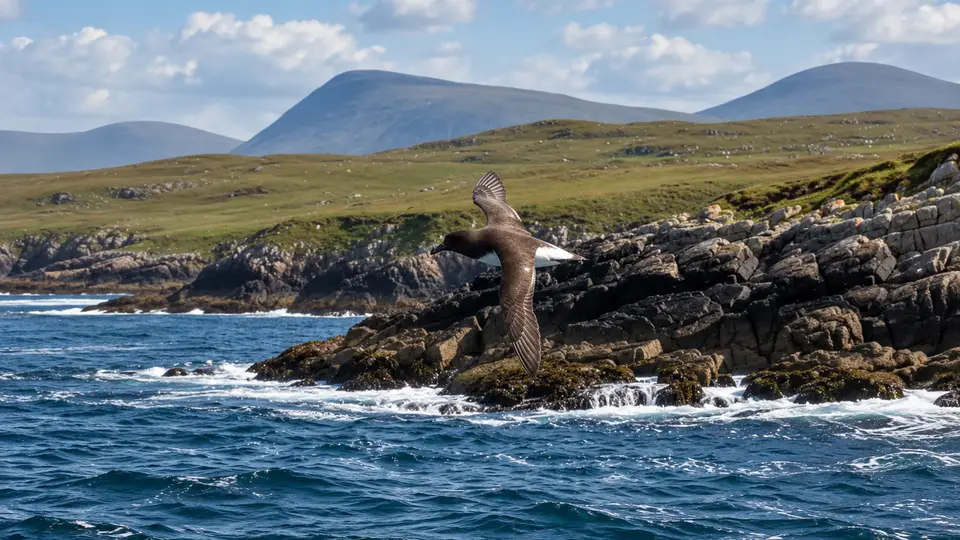
Manx Shearwater in its natural habitatAI-modified

Manx ShearwaterPuffinus puffinusWhere and when to see them

Manx Shearwater at a glance

The Manx shearwater is a long-distance seabird with sharply contrasting dark upperparts and white underparts. Scotland supports important breeding colonies, especially on islands with suitable burrowing ground and limited mammalian predators. Birds spend most of their lives at sea, returning to land to nest. Their stiff-winged flight, alternating quick wingbeats with low glides, is often the clearest clue during distant coastal or deck observations.

Behaviour & reproduction

Size
30–38 cm (12–15 in) long; 76–89 cm (30–35 in) wingspan
Weight
350–575 g (12–20 oz)
Lifespan
15–30 years
Status
Least Concern

At sea, Manx shearwaters travel efficiently close to the waves, using wind and air currents to reduce effort. Breeding adults usually visit their burrows after dark, which lowers exposure to predators such as large gulls. Pairs share incubation and chick feeding, sometimes making lengthy foraging trips. Outside the breeding season, many migrate across the Atlantic toward productive waters off eastern South America before returning north. Courtship rituals include mutual preening and 'billing' at their burrow entrances before egg-laying. Parents recognize their own chicks by distinct vocalizations, even among dense colonies. Manx shearwaters exhibit strong philopatry, returning to their natal colonies and often the same burrow year after year.

Top wildlife locations

Scotland wildlife habitatAI-modified

Scotland

Western coastal headlands and authorized island viewpoints offer distant sea watching. Breeding slopes can be inaccessible or tightly managed; do not assume colony access, and expect birds to remain offshore during daylight.
Destinations describe the species' habitat, not guaranteed cruise stops. Some animals require an optional inland excursion or are found in restricted reserves.

Fun facts about the Manx Shearwater

  • One ringed individual was documented surviving for more than 50 years.
  • Breeding birds may return to the same burrow over many seasons.
  • Their eerie nighttime colony calls historically inspired supernatural stories.
  • Many birds cross the equator during their annual Atlantic migration.

Best time to see the Manx Shearwater

April through September is the main Scottish observation period, encompassing colony attendance and late-summer movements. Shore viewing depends strongly on wind, sea state and local passage. Peak visibility from a headland need not coincide with peak nesting activity on nearby islands. Early morning and late evening often provide the best opportunities for observing birds flying to and from colonies during the breeding season. Severe gales can ground birds or push them closer to shore, sometimes offering unexpected viewing opportunities. Migratory passage in autumn can involve thousands of birds passing a single headland over several hours.

Manx Shearwater: season matrix by destination

Travel and observation windows vary by region. Highlighted months are an orientation for planning, not confirmed sightings or a guarantee of access.

Scotland

Broad breeding-season and passage window for coastal observation; weather, colony access and offshore distribution determine actual opportunities.

JanFebMarAprMayJunJulAugSepOctNovDec
Cruise ships in Scotland

Where the Manx Shearwater lives

Breeding habitat includes grassy maritime slopes, soft island soils and other ground suitable for burrows or sheltered cavities. Away from nests, these birds occupy shelf seas and oceanic waters. Coastal headlands overlooking feeding areas or migration routes can provide distant views. They often select islands free from terrestrial predators for breeding success. Nest burrows can be surprisingly deep, reaching several meters in length and often reused in subsequent years. Habitat degradation and the introduction of non-native predators like rats and stoats pose significant threats to their breeding grounds.

What the Manx Shearwater eats

Small schooling fish, squid and crustaceans form the diet. Adults pursue prey below the surface and may gather where currents concentrate food. Chicks receive energy-rich meals brought back by parents, with feeding frequency influenced by weather and the distance to productive waters. While feeding, they often engage in 'pattering' with their feet on the water's surface to help maintain position. Though primarily surface feeders, they can also perform shallow dives to catch prey. Their diet in Scottish waters frequently includes sandeels and sprats, crucial prey items for chick growth.

Species at a glance

Common name
Manx Shearwater
Scientific name
Puffinus puffinus
Animal group
Birds
Size
30–38 cm (12–15 in) long; 76–89 cm (30–35 in) wingspan
Weight
350–575 g (12–20 oz)
Lifespan
15–30 years
Status
Least Concern
Identification
Compared with sooty shearwater, it has a clean white underside, while its smaller size and more rapid wingbeats help distinguish it from great shearwater. Their stiff-winged, 'shearing' flight low over the waves is a key behavioral identifier, distinct from the more direct flight of gulls. The underwing pattern is uniformly white, lacking the dark carpal bar seen on some larger shearwater species. They also possess a distinctive, haunting nocturnal call around their breeding colonies, which is useful for identification at night.

Manx Shearwater: frequently asked questions

Where can I see the Manx Shearwater?
Scotland. Use a telescope from a safe headland or binoculars from a designated deck area. Stay back from cliff edges, especially in wind. At permitted colony visits, follow lighting restrictions and never walk across fragile burrowed ground. Scanning a wide area with binoculars can help locate distant feeding frenzies or rafts of birds resting on the water. When on deck, focus on the wake and areas where currents meet, as these can concentrate prey and attract shearwaters. Respect all signage and designated viewing areas to minimize disturbance, especially near breeding sites.
When is the best time to see the Manx Shearwater?
April through September is the main Scottish observation period, encompassing colony attendance and late-summer movements. Shore viewing depends strongly on wind, sea state and local passage. Peak visibility from a headland need not coincide with peak nesting activity on nearby islands. Early morning and late evening often provide the best opportunities for observing birds flying to and from colonies during the breeding season. Severe gales can ground birds or push them closer to shore, sometimes offering unexpected viewing opportunities. Migratory passage in autumn can involve thousands of birds passing a single headland over several hours.
How big does the Manx Shearwater get?
30–38 cm (12–15 in) long; 76–89 cm (30–35 in) wingspan. Adult weight: 350–575 g (12–20 oz). Size varies with age, sex and population.
How should I behave around the Manx Shearwater?
Use a telescope from a safe headland or binoculars from a designated deck area. Stay back from cliff edges, especially in wind. At permitted colony visits, follow lighting restrictions and never walk across fragile burrowed ground. Scanning a wide area with binoculars can help locate distant feeding frenzies or rafts of birds resting on the water. When on deck, focus on the wake and areas where currents meet, as these can concentrate prey and attract shearwaters. Respect all signage and designated viewing areas to minimize disturbance, especially near breeding sites.
What does the Manx Shearwater eat?
Small schooling fish, squid and crustaceans form the diet. Adults pursue prey below the surface and may gather where currents concentrate food. Chicks receive energy-rich meals brought back by parents, with feeding frequency influenced by weather and the distance to productive waters. While feeding, they often engage in 'pattering' with their feet on the water's surface to help maintain position. Though primarily surface feeders, they can also perform shallow dives to catch prey. Their diet in Scottish waters frequently includes sandeels and sprats, crucial prey items for chick growth.
Are wildlife sightings guaranteed on an adventure cruise?
No. Animals move freely and routes, weather, access restrictions and local conditions influence every outing. Confirm the actual itinerary and shore program before booking.

Compare wildlife in the same destinations

Explore other birds recorded in these destinations. Similar surroundings do not mean the animals share the same habits or viewing season.

Species comparison by animal group and destination
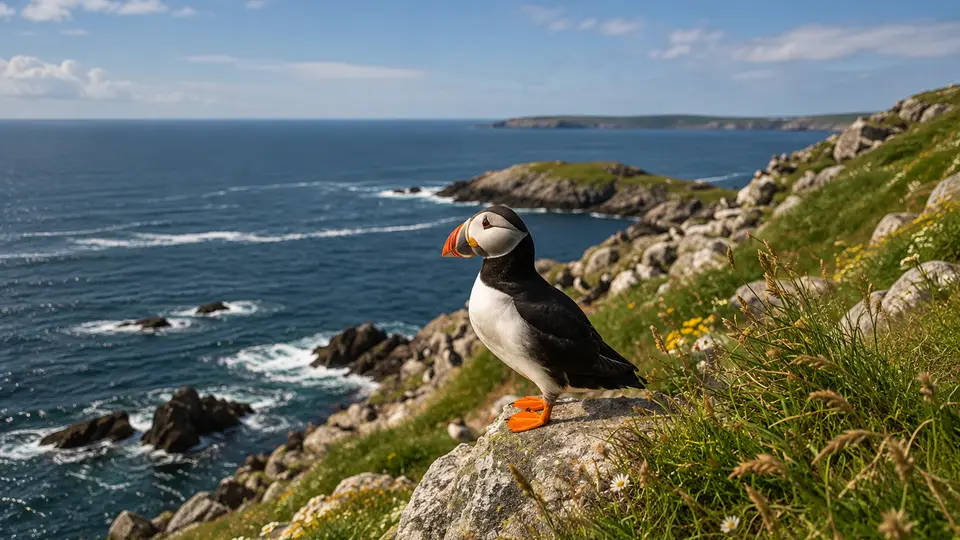
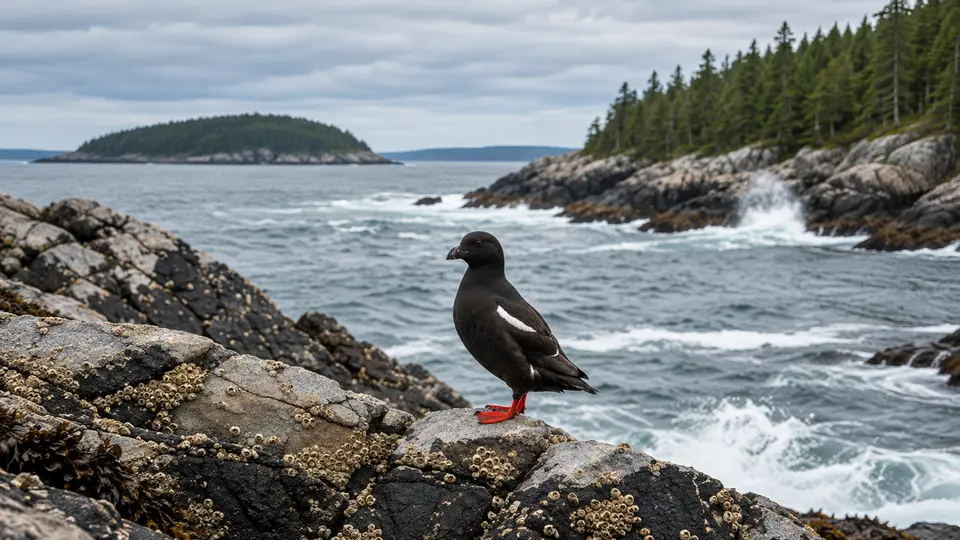
Manx ShearwaterAI-modifiedManx ShearwaterAtlantic PuffinAI-modifiedAtlantic PuffinBlack GuillemotAI-modifiedBlack Guillemot
Animal groupBirdsAnimal groupBirdsAnimal groupBirds
DestinationsScotlandDestinationsNew England, Norway, Scotland, ArcticDestinationsNew England, Norway, Scotland
Scientific namePuffinus puffinusScientific nameScientific name
All wildlife destinations
AI-modified
Plan your trip

Find your next wildlife adventure

Compare destinations, shore programs and dates with the animals and habitats you would love to see.

  • Naturalist-led shore excursions
  • Responsible wildlife watching
  • Small expedition ships