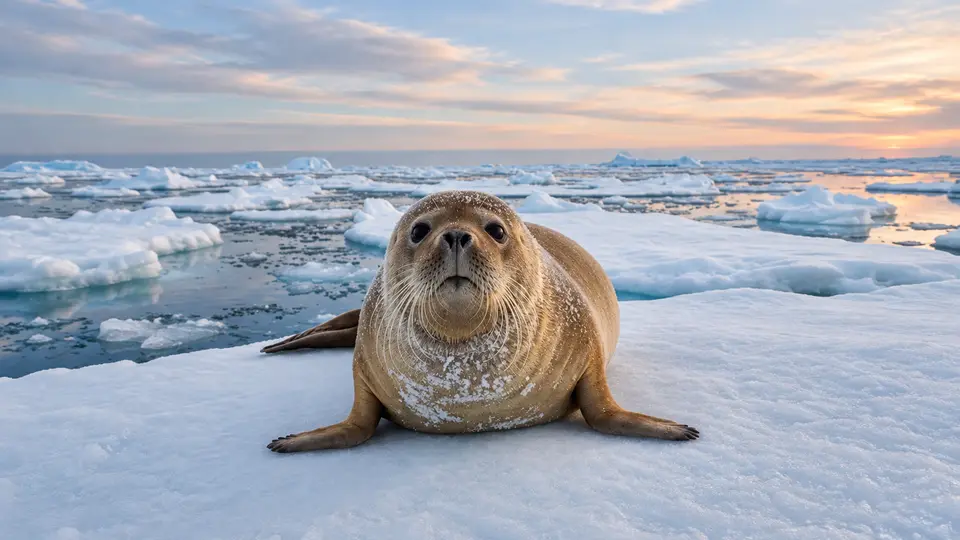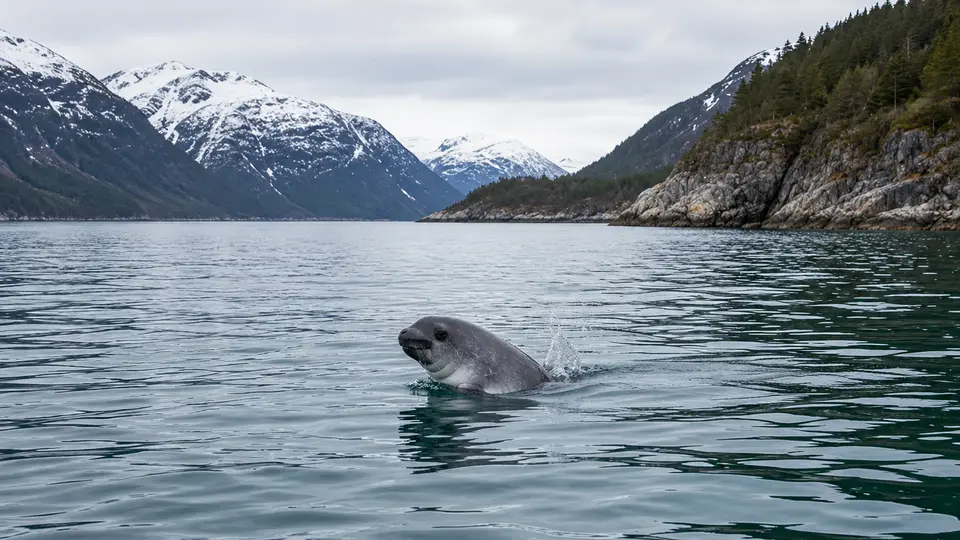
Harbour Porpoise in its natural habitatAI-modified

Harbour PorpoisePhocoena phocoenaWhere and when to see them

Harbour Porpoise at a glance

The harbour porpoise is one of the smallest cetaceans regularly seen around Norway and Scotland. A brief glimpse of a triangular fin may be the only indication of its presence, even close to a coastal viewpoint. This is the same species called harbor porpoise in American English. Its understated surface behaviour contrasts with that of many dolphins, while accidental capture in fishing nets remains an important threat.

Behaviour & reproduction

Size
1.4–1.9 m (4.6–6.2 ft) body length
Weight
45–70 kg (99–154 lb)
Lifespan
10–20 years
Status
Least Concern

Usually seen singly or in small groups, harbour porpoises move through coastal feeding grounds without prolonged surface displays. They often appear to roll gently as they breathe, then vanish for an unpredictable interval. Narrow-band, high-frequency clicks guide prey detection. Feeding occupies much of their time because small bodies lose heat rapidly in cold water. They rarely approach vessels closely, and several nearby animals may be surprisingly difficult to track. Communication among porpoises primarily involves high-frequency clicks, largely inaudible to the human ear. Although usually solitary or in small groups, temporary aggregations can occur in highly productive feeding areas, though these seldom involve synchronized activities or social displays.

Top wildlife locations

Norway wildlife habitatAI-modified

Norway

Fjord mouths, sheltered sounds and coastal headlands offer plausible land-based viewpoints. Animals are widespread but inconspicuous; remote island viewpoints may need additional transport, while many mainland options require no inland excursion.

Scotland wildlife habitatAI-modified

Scotland

Headlands overlooking tidal channels and sheltered bays provide realistic shore-viewing habitat. Porpoises may appear close to coasts but remain easy to miss; exposed viewpoints can be inaccessible during rough weather.

Destinations describe the species' habitat, not guaranteed cruise stops. Some animals require an optional inland excursion or are found in restricted reserves.

Fun facts about the Harbour Porpoise

  • The two English spellings, harbor and harbour, refer to the same species.
  • Its rapid metabolism requires frequent meals throughout the day.
  • Porpoises belong to a different family from oceanic dolphins.
  • A close breath can sound like a short puff, although observers should not approach to hear it.

Best time to see the Harbour Porpoise

Late spring through early autumn provides comfortable coastal access and longer daylight in Norway and Scotland. Animals occur year-round in many areas, however. Choose settled weather with little surface chop, and treat any local seasonal peak as site-specific rather than universal. The species shows seasonal shifts in distribution, with higher concentrations in some coastal areas during the summer months due to prey abundance. Observing them from shore is often most successful during calm conditions, as their small size makes them difficult to spot in choppy seas.

Harbour Porpoise: season matrix by destination

Travel and observation windows vary by region. Highlighted months are an orientation for planning, not confirmed sightings or a guarantee of access.

Norway

Long daylight and generally easier coastal access support observation; presence is not restricted to these months and sightings remain weather-dependent.

JanFebMarAprMayJunJulAugSepOctNovDec
Cruise ships in Norway

Scotland

A practical daylight and coastal-access window, not a breeding calendar; calm conditions are more important than month alone.

JanFebMarAprMayJunJulAugSepOctNovDec
Cruise ships in Scotland

Where the Harbour Porpoise lives

Shallow shelf seas, fjord entrances, tidal channels and coastal bays support this species. Headlands overlooking current boundaries can provide useful observation positions. Porpoises also enter estuarine waters, although suitable habitat does not mean animals will be visible during a short visit. They are typically found in waters less than 200 meters deep, preferring areas with strong currents and ample food supply. While generally coastal, individuals can be found further offshore, especially during migrations or when following prey distributions.

What the Harbour Porpoise eats

Diet includes sand eels, herring, sprat, small gadoids and other available fish, with squid also taken. The mix differs among coastal regions and seasons. Frequent feeding is important, so disruption of productive feeding patches can carry a substantial energetic cost. Porpoises are opportunistic feeders, adjusting their diet to local prey availability, often consuming several kilograms of fish daily. Acoustic studies have shown they use echolocation clicks to pinpoint individual fish, even in turbid waters.

Species at a glance

Common name
Harbour Porpoise
Scientific name
Phocoena phocoena
Animal group
Mammals
Size
1.4–1.9 m (4.6–6.2 ft) body length
Weight
45–70 kg (99–154 lb)
Lifespan
10–20 years
Status
Least Concern
Identification
The harbour porpoise differs from dolphins in its blunt, beakless head, small triangular dorsal fin and typically quiet, low rolling surfacing. Unlike dolphins, their movements are generally less acrobatic, characterized by a smooth, rolling motion rather than leaps or splashes. The small, dark fin and uniform dark grey to black upperparts, transitioning to white undersides, also distinguish them from larger cetaceans.

Harbour Porpoise: frequently asked questions

Where can I see the Harbour Porpoise?
Norway, Scotland. Scan calm tidal edges from a safe headland or distant deck. Avoid cliff edges and wave-washed rocks, and never encourage a vessel to chase a sighting. Brief, low surfacings make patience more useful than moving closer. Their low-profile surfacing means scanning a wide area with binoculars is often more effective than focusing on a single spot. Listen for the distinct puffing sound they make when exhaling at the surface, which can sometimes alert observers to their presence before they are seen.
When is the best time to see the Harbour Porpoise?
Late spring through early autumn provides comfortable coastal access and longer daylight in Norway and Scotland. Animals occur year-round in many areas, however. Choose settled weather with little surface chop, and treat any local seasonal peak as site-specific rather than universal. The species shows seasonal shifts in distribution, with higher concentrations in some coastal areas during the summer months due to prey abundance. Observing them from shore is often most successful during calm conditions, as their small size makes them difficult to spot in choppy seas.
How big does the Harbour Porpoise get?
1.4–1.9 m (4.6–6.2 ft) body length. Adult weight: 45–70 kg (99–154 lb). Size varies with age, sex and population.
How should I behave around the Harbour Porpoise?
Scan calm tidal edges from a safe headland or distant deck. Avoid cliff edges and wave-washed rocks, and never encourage a vessel to chase a sighting. Brief, low surfacings make patience more useful than moving closer. Their low-profile surfacing means scanning a wide area with binoculars is often more effective than focusing on a single spot. Listen for the distinct puffing sound they make when exhaling at the surface, which can sometimes alert observers to their presence before they are seen.
What does the Harbour Porpoise eat?
Diet includes sand eels, herring, sprat, small gadoids and other available fish, with squid also taken. The mix differs among coastal regions and seasons. Frequent feeding is important, so disruption of productive feeding patches can carry a substantial energetic cost. Porpoises are opportunistic feeders, adjusting their diet to local prey availability, often consuming several kilograms of fish daily. Acoustic studies have shown they use echolocation clicks to pinpoint individual fish, even in turbid waters.
Are wildlife sightings guaranteed on an adventure cruise?
No. Animals move freely and routes, weather, access restrictions and local conditions influence every outing. Confirm the actual itinerary and shore program before booking.

Compare wildlife in the same destinations

Explore other mammals recorded in these destinations. Similar surroundings do not mean the animals share the same habits or viewing season.

Species comparison by animal group and destination
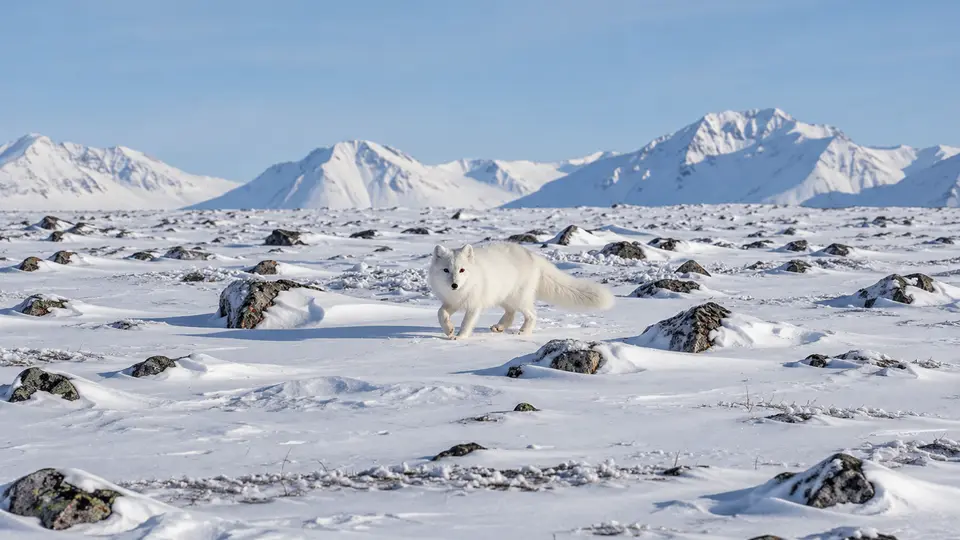
Harbour PorpoiseAI-modifiedHarbour PorpoiseArctic FoxAI-modifiedArctic FoxBearded SealAI-modifiedBearded Seal
Animal groupMammalsAnimal groupMammalsAnimal groupMammals
DestinationsNorway, ScotlandDestinationsNorway, ArcticDestinationsNorway, Arctic
Scientific namePhocoena phocoenaScientific nameScientific name
All wildlife destinations
AI-modified
Plan your trip

Find your next wildlife adventure

Compare destinations, shore programs and dates with the animals and habitats you would love to see.

  • Naturalist-led shore excursions
  • Responsible wildlife watching
  • Small expedition ships