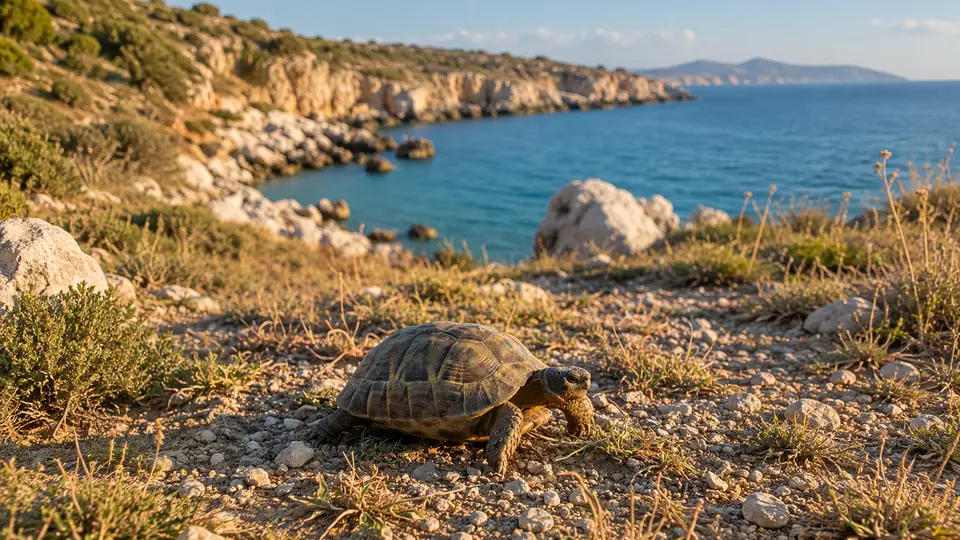
Spur-thighed Tortoise in its natural habitatAI-modified

Spur-thighed TortoiseTestudo graecaWhere and when to see them

Spur-thighed Tortoise at a glance

The Greek or spur-thighed tortoise is a terrestrial reptile distributed across a geographically varied range that includes Turkey, southeastern Europe, North Africa and western Asia. Its domed shell varies greatly in yellow, olive and dark markings. The familiar name covers a complex of regional forms, so appearance and adult size differ considerably. Habitat conversion, road mortality and collection threaten populations, and wild individuals should never be removed as pets.

Behaviour & reproduction

Size
15–30 cm (5.9–11.8 in) shell length
Weight
0.7–3 kg (1.5–6.6 lb)
Lifespan
40–60 years
Status
Vulnerable

Activity follows temperature closely. Tortoises bask to warm themselves, then browse slowly through vegetation, retreating into shade or shelter when conditions become too hot. Many Turkish populations spend winter inactive, while summer heat can also reduce surface activity. Males court females with persistent following, shell bumping and biting. Females excavate nests in soil and leave the eggs to develop without parental care, making undisturbed ground essential for successful reproduction. They are long-lived animals, with individuals potentially reaching ages of 50 years or more in the wild, contributing to their slow reproductive rate. Many populations in Turkey engage in aestivation during the hottest summer months, burying themselves in soil to avoid dehydration and extreme temperatures.

Top wildlife locations

Turkey wildlife habitatAI-modified

Turkey

Coastal scrub, open pine woodland and lightly managed field margins offer suitable habitat along established walking routes. Some populations require inland excursions; occurrence is patchy, and protected areas may restrict off-path access.
Destinations describe the species' habitat, not guaranteed cruise stops. Some animals require an optional inland excursion or are found in restricted reserves.

Fun facts about the Spur-thighed Tortoise

  • The thigh spurs give this species its alternative English name.
  • Shell markings vary substantially between populations.
  • Females bury eggs and provide no subsequent parental care.
  • Shell growth rings cannot reliably establish an older tortoise's exact age.

Best time to see the Spur-thighed Tortoise

Spring is usually the most useful observation period in coastal Turkey, when mild temperatures and fresh vegetation encourage activity. Early autumn may also be suitable after extreme heat eases. Winter inactivity and hot midsummer conditions can make animals difficult to detect. During spring, hatchlings and juveniles are more likely to be seen as they emerge and begin feeding, offering unique viewing opportunities. Observing during these periods allows visitors to witness active feeding and social interactions.

Spur-thighed Tortoise: season matrix by destination

Travel and observation windows vary by region. Highlighted months are an orientation for planning, not confirmed sightings or a guarantee of access.

Turkey

Mild spring and autumn conditions favor activity; altitude, rainfall and local summer heat can shift this window.

JanFebMarAprMayJunJulAugSepOctNovDec
Cruise ships in Turkey

Where the Spur-thighed Tortoise lives

Habitats include Mediterranean scrub, open woodland, grassy slopes, field margins and dry, rocky landscapes with scattered vegetation. They require both sunny basking places and shaded refuges. Coastal populations may occur behind beaches, but busy sand strips themselves are generally poor places to search. They are often found in areas with loose, well-drained soil suitable for digging nests and burrows for estivation or hibernation. In Turkey, their habitat frequently overlaps with agricultural land, including olive groves and vineyards, where they can find food and shelter.

What the Spur-thighed Tortoise eats

Wild Greek tortoises primarily browse leaves, shoots, flowers and other low-growing plant material. Diet changes seasonally as fresh herbs emerge and later dry. They are not naturally dependent on fruit, bread or garden scraps, and visitors should avoid offering any food. In addition to green plant material, they may consume fallen berries and occasional carrion or insect larvae, though these form a minor part of their diet. Hydration often comes from the moisture content of the plants they eat, supplemented by drinking from puddles after rain.

Species at a glance

Common name
Spur-thighed Tortoise
Scientific name
Testudo graeca
Animal group
Reptiles
Size
15–30 cm (5.9–11.8 in) shell length
Weight
0.7–3 kg (1.5–6.6 lb)
Lifespan
40–60 years
Status
Vulnerable
Identification
Unlike Hermann's tortoise, it typically has a prominent conical spur on each thigh and lacks a hard nail-like tip at the end of the tail. The plastron (under shell) typically features large, symmetrical dark blotches that can help differentiate it from other tortoise species. While variable, their carapace (upper shell) is usually domed and yellowish-brown to olive, often with dark spots or borders on each scute.

Spur-thighed Tortoise: frequently asked questions

Where can I see the Spur-thighed Tortoise?
Turkey. Watch without lifting, feeding or turning the tortoise. Stay on existing paths to avoid trampling concealed animals or nests, and keep location details discreet where collection is a concern. Give roadside individuals space. Always maintain a respectful distance to avoid causing stress or altering their natural behavior, especially during courtship or feeding. Binoculars can enhance observation without disturbing the animals, allowing for detailed viewing of shell patterns and activity.
When is the best time to see the Spur-thighed Tortoise?
Spring is usually the most useful observation period in coastal Turkey, when mild temperatures and fresh vegetation encourage activity. Early autumn may also be suitable after extreme heat eases. Winter inactivity and hot midsummer conditions can make animals difficult to detect. During spring, hatchlings and juveniles are more likely to be seen as they emerge and begin feeding, offering unique viewing opportunities. Observing during these periods allows visitors to witness active feeding and social interactions.
How big does the Spur-thighed Tortoise get?
15–30 cm (5.9–11.8 in) shell length. Adult weight: 0.7–3 kg (1.5–6.6 lb). Size varies with age, sex and population.
How should I behave around the Spur-thighed Tortoise?
Watch without lifting, feeding or turning the tortoise. Stay on existing paths to avoid trampling concealed animals or nests, and keep location details discreet where collection is a concern. Give roadside individuals space. Always maintain a respectful distance to avoid causing stress or altering their natural behavior, especially during courtship or feeding. Binoculars can enhance observation without disturbing the animals, allowing for detailed viewing of shell patterns and activity.
What does the Spur-thighed Tortoise eat?
Wild Greek tortoises primarily browse leaves, shoots, flowers and other low-growing plant material. Diet changes seasonally as fresh herbs emerge and later dry. They are not naturally dependent on fruit, bread or garden scraps, and visitors should avoid offering any food. In addition to green plant material, they may consume fallen berries and occasional carrion or insect larvae, though these form a minor part of their diet. Hydration often comes from the moisture content of the plants they eat, supplemented by drinking from puddles after rain.
Are wildlife sightings guaranteed on an adventure cruise?
No. Animals move freely and routes, weather, access restrictions and local conditions influence every outing. Confirm the actual itinerary and shore program before booking.

Compare wildlife in the same destinations

Explore other reptiles recorded in these destinations. Similar surroundings do not mean the animals share the same habits or viewing season.

Species comparison by animal group and destination
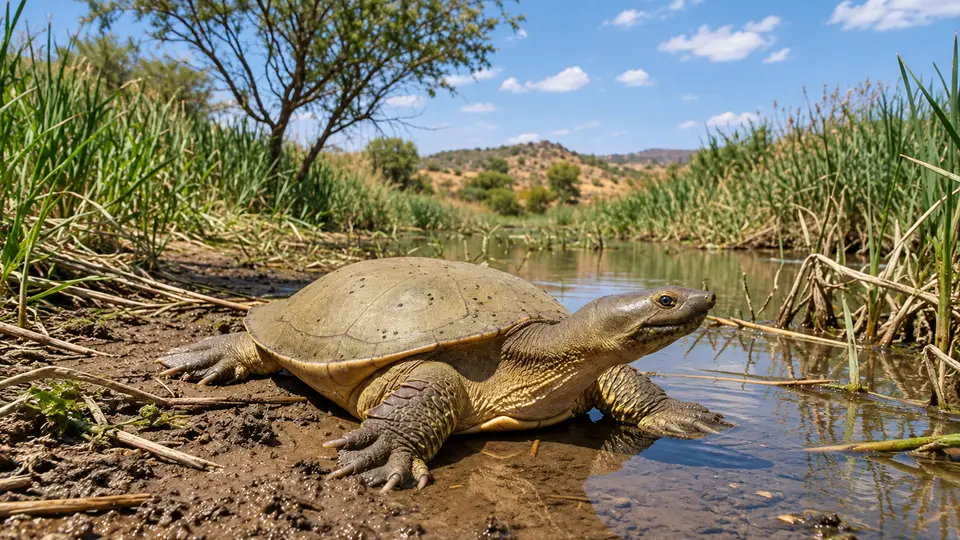
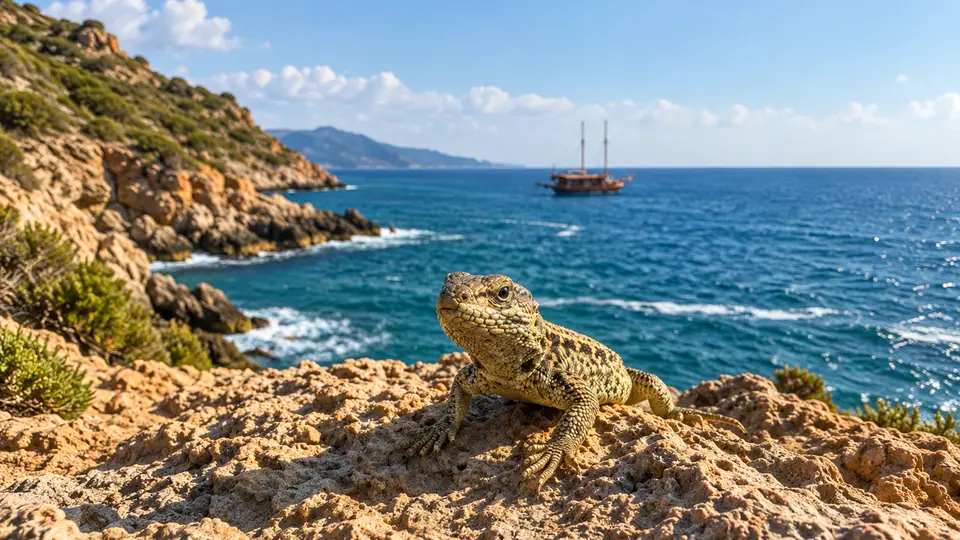
Spur-thighed TortoiseAI-modifiedSpur-thighed TortoiseAfrican Softshell TurtleAI-modifiedAfrican Softshell TurtleAnatolian Rock LizardAI-modifiedAnatolian Rock Lizard
Animal groupReptilesAnimal groupReptilesAnimal groupReptiles
DestinationsTurkeyDestinationsTurkeyDestinationsTurkey
Scientific nameTestudo graecaScientific nameScientific name
All wildlife destinations
AI-modified
Plan your trip

Find your next wildlife adventure

Compare destinations, shore programs and dates with the animals and habitats you would love to see.

  • Naturalist-led shore excursions
  • Responsible wildlife watching
  • Small expedition ships