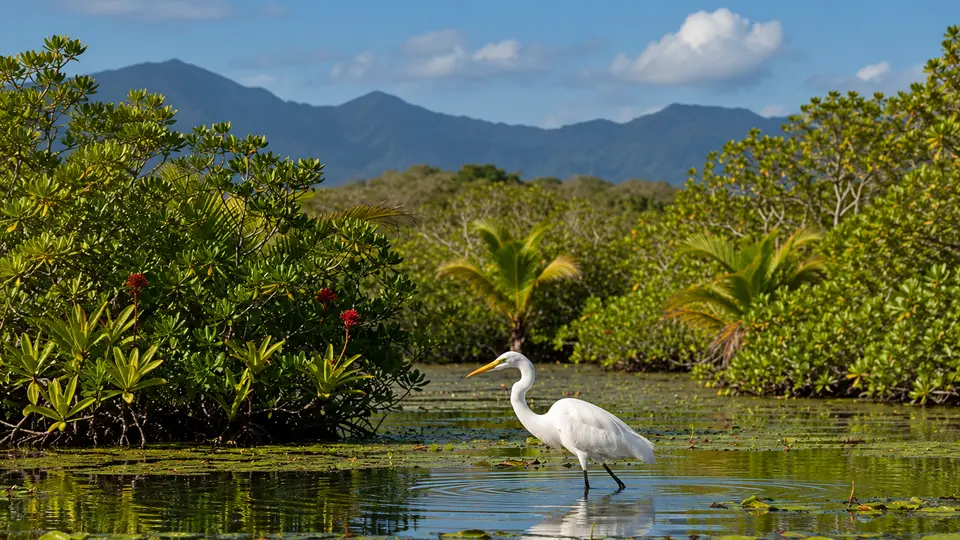
Great Egret in its natural habitatAI-modified

Great EgretArdea albaWhere and when to see them

Great Egret at a glance

The great egret is a tall white heron with a slender neck, dark legs and a long pointed bill. It occupies wetlands across much of the world, from tropical mangrove lagoons to temperate river deltas. Breeding adults develop delicate back plumes that once made the species a major target of the feather trade. Its recovery in some regions illustrates successful protection, although wetland loss and disturbance remain important local pressures.

Behaviour & reproduction

Size
80-104 cm (31.5-40.9 in) long
Weight
0.7-1.5 kg (1.5-3.3 lb)
Lifespan
Not reliably established
Status
Least Concern

Great egrets hunt with deliberate steps or stand motionless until prey comes within striking distance. Feeding birds may defend small territories, but plentiful food can draw loose gatherings. They usually nest colonially in trees or reeds, sometimes alongside other herons. Courtship includes raised ornamental plumes and ritualized movements. Adults share incubation and chick feeding, while older nestlings can compete intensely when food supplies fail to meet the brood's needs. Courtship displays, often performed at the nest site, involve bowing, bill clapping, and elaborate plume presentation to attract mates. After hatching, young egrets can be quite noisy, begging loudly from their parents for food.

Top wildlife locations

Costa Rica wildlife habitatAI-modified

Costa Rica

Mangrove estuaries, coastal lagoons and public wetland boardwalks offer suitable shore habitat. Inland marsh excursions can broaden options but are not essential; seasonal water levels can shift birds away from familiar viewpoints.

Greece wildlife habitatAI-modified

Greece

Coastal lagoon hides and public viewpoints around river deltas provide plausible viewing without entering reedbeds. Some productive freshwater sites require inland excursions, and protected wetland zones may have seasonal access limits.

Turkey wildlife habitatAI-modified

Turkey

Watch shallow coastal lagoons and delta marshes from established roads, hides or public paths. Inland lakes offer additional habitat but require separate excursions; reedbed nesting zones may be closed to visitors.

Destinations describe the species' habitat, not guaranteed cruise stops. Some animals require an optional inland excursion or are found in restricted reserves.

Fun facts about the Great Egret

  • Breeding plumes extend from the back rather than the head.
  • The bill can darken in breeding condition in some populations.
  • Its neck folds tightly during flight.
  • The species became a prominent symbol of campaigns against the plume trade.

Best time to see the Great Egret

Costa Rica's Pacific dry season often improves access to wetland edges, while Caribbean rainfall differs. In Greece and Turkey, spring and autumn suit migration watching and comfortable wetland visits; winter can also be productive. Regional presence should be checked separately from general travel weather. In Costa Rica, look for them year-round in suitable wetlands, with local population increases during the dry season as water bodies shrink. Throughout their northern range, many populations are migratory, moving south for the winter.

Great Egret: season matrix by destination

Travel and observation windows vary by region. Highlighted months are an orientation for planning, not confirmed sightings or a guarantee of access.

Costa Rica

These months mainly favor Pacific-side travel; the species occurs year-round, and Caribbean weather follows a different pattern.

JanFebMarAprMayJunJulAugSepOctNovDec
Cruise ships in Costa Rica

Greece

Spring and autumn are practical wetland travel windows; winter presence can also be substantial, and local numbers vary among wetlands.

JanFebMarAprMayJunJulAugSepOctNovDec
Cruise ships in Greece

Turkey

These shoulder-season months favor many coastal wetland visits, not a nationwide breeding peak; regional migration and water management influence presence.

JanFebMarAprMayJunJulAugSepOctNovDec
Cruise ships in Turkey

Where the Great Egret lives

They occupy shallow freshwater marshes, flooded meadows, lake margins, estuaries and mangrove wetlands. Feeding usually requires accessible shallows rather than deep open water. Nesting cover may lie some distance from feeding grounds, making connected wetland mosaics particularly valuable for breeding populations. This widespread species can also be found in agricultural areas like rice paddies and irrigation canals, especially where water levels are controlled. Their adaptability to disturbed wetlands highlights their resilience in various altered landscapes.

What the Great Egret eats

Fish are important prey, supplemented by frogs, aquatic insects, crustaceans, reptiles and occasionally small mammals. Great egrets use rapid bill strikes rather than filtering or probing continuously. Their broad diet helps them exploit seasonal flooding and changing water levels. They often use a 'stand and wait' hunting strategy, patiently waiting for prey to come into range before striking. Great egrets can consume large quantities of fish, playing an important role in aquatic ecosystems.

Species at a glance

Common name
Great Egret
Scientific name
Ardea alba
Animal group
Birds
Size
80-104 cm (31.5-40.9 in) long
Weight
0.7-1.5 kg (1.5-3.3 lb)
Lifespan
Not reliably established
Status
Least Concern
Identification
Its large size and long neck distinguish it from little and snowy egrets, which are smaller and typically show contrasting yellow feet. Beyond size, their entirely yellow bill in breeding season and black legs (sometimes with a yellow or greenish tibia) are key identification features. They lack the shaggy crest of some other egret species.

Great Egret: frequently asked questions

Where can I see the Great Egret?
Costa Rica, Greece, Turkey. Use wetland hides, boardwalks or distant shore viewpoints. Keep clear of nesting reedbeds and trees, avoid driving feeding birds from scarce shallows, and never approach an injured egret's sharp bill. From a cruise deck, scanning coastal marshes or river estuaries with binoculars can reveal their tall white forms against the green. During shore excursions, remember that disturbance during breeding season can impact nesting success.
When is the best time to see the Great Egret?
Costa Rica's Pacific dry season often improves access to wetland edges, while Caribbean rainfall differs. In Greece and Turkey, spring and autumn suit migration watching and comfortable wetland visits; winter can also be productive. Regional presence should be checked separately from general travel weather. In Costa Rica, look for them year-round in suitable wetlands, with local population increases during the dry season as water bodies shrink. Throughout their northern range, many populations are migratory, moving south for the winter.
How big does the Great Egret get?
80-104 cm (31.5-40.9 in) long. Adult weight: 0.7-1.5 kg (1.5-3.3 lb). Size varies with age, sex and population.
How should I behave around the Great Egret?
Use wetland hides, boardwalks or distant shore viewpoints. Keep clear of nesting reedbeds and trees, avoid driving feeding birds from scarce shallows, and never approach an injured egret's sharp bill. From a cruise deck, scanning coastal marshes or river estuaries with binoculars can reveal their tall white forms against the green. During shore excursions, remember that disturbance during breeding season can impact nesting success.
What does the Great Egret eat?
Fish are important prey, supplemented by frogs, aquatic insects, crustaceans, reptiles and occasionally small mammals. Great egrets use rapid bill strikes rather than filtering or probing continuously. Their broad diet helps them exploit seasonal flooding and changing water levels. They often use a 'stand and wait' hunting strategy, patiently waiting for prey to come into range before striking. Great egrets can consume large quantities of fish, playing an important role in aquatic ecosystems.
Are wildlife sightings guaranteed on an adventure cruise?
No. Animals move freely and routes, weather, access restrictions and local conditions influence every outing. Confirm the actual itinerary and shore program before booking.

Compare wildlife in the same destinations

Explore other birds recorded in these destinations. Similar surroundings do not mean the animals share the same habits or viewing season.

Species comparison by animal group and destination
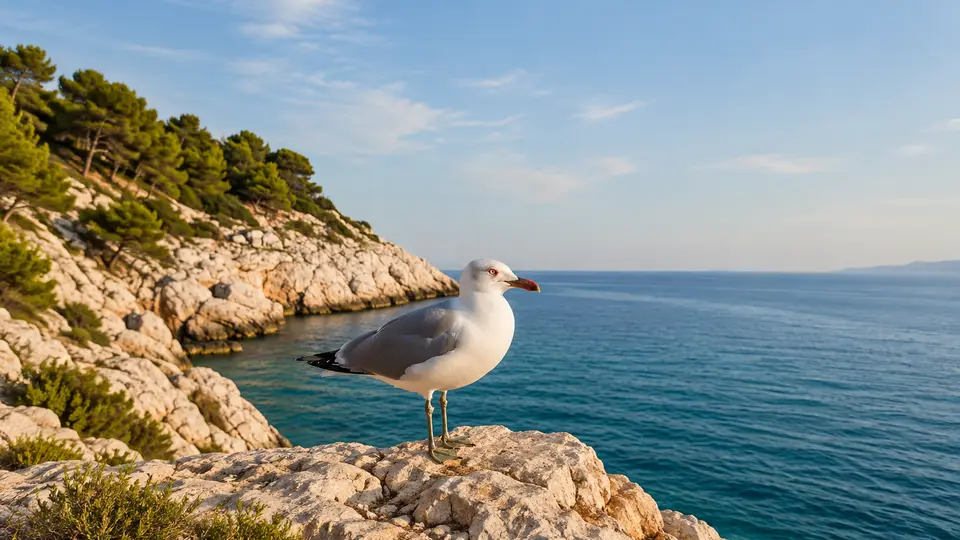
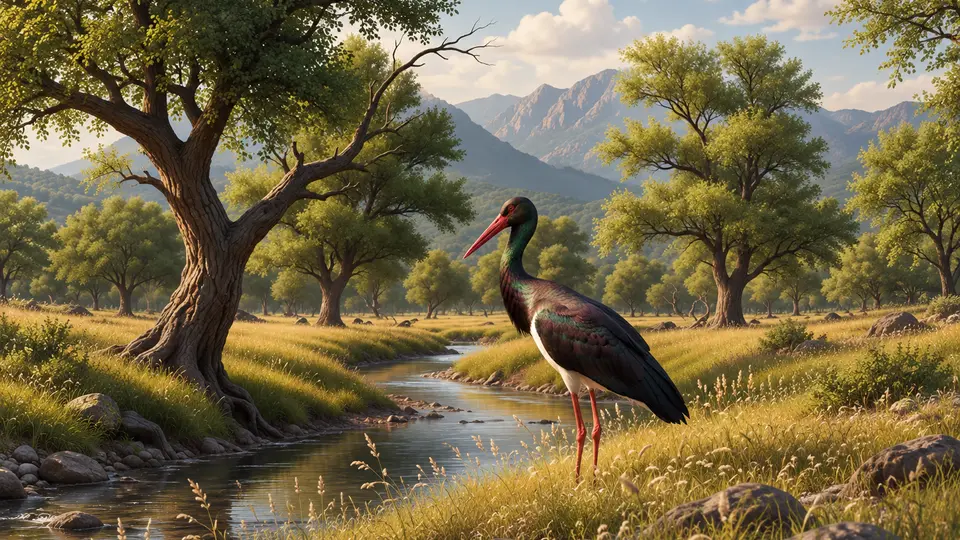
Great EgretAI-modifiedGreat EgretAudouin's GullAI-modifiedAudouin's GullBlack StorkAI-modifiedBlack Stork
Animal groupBirdsAnimal groupBirdsAnimal groupBirds
DestinationsCosta Rica, Greece, TurkeyDestinationsCroatia, Greece, Portugal, TurkeyDestinationsPortugal, Turkey
Scientific nameArdea albaScientific nameScientific name
All wildlife destinations
AI-modified
Plan your trip

Find your next wildlife adventure

Compare destinations, shore programs and dates with the animals and habitats you would love to see.

  • Naturalist-led shore excursions
  • Responsible wildlife watching
  • Small expedition ships