
Eurasian Oystercatcher in its natural habitatAI-modified

Eurasian OystercatcherHaematopus ostralegusWhere and when to see them

Eurasian Oystercatcher at a glance

The Eurasian oystercatcher is a bold black-and-white wader with pink legs and a long orange-red bill. It is closely associated with northern European shores, although some populations also breed inland. Along Norway's coast its ringing calls are a familiar sign of the warmer months. The bill is both a probing tool and a powerful implement for opening shellfish, but individual birds differ in technique and do not all specialize in the same prey.

Behaviour & reproduction

Size
40-45 cm (15.7-17.7 in) long
Weight
400-800 g (14.1-28.2 oz)
Lifespan
Up to 43.3 years in the wild
Status
Near Threatened

Pairs defend breeding territories with loud calls, conspicuous postures and short pursuit flights. The nest is a shallow scrape, sometimes placed on gravel, rock or human-made surfaces. Chicks leave the nest early but continue receiving food from their parents, unlike the more independent young of many other waders. Outside breeding, birds gather at feeding grounds and high-tide roosts. Daily movements on the coast are often governed more by exposed intertidal ground than by daylight. Pairs often exhibit strong fidelity to their breeding sites, returning year after year to the same territory. They communicate with a variety of loud, piping calls, including a distinctive 'klee-eep' alarm call. During high tide, large flocks can be seen congregating in traditional roosting areas, often standing on one leg.

Top wildlife locations

Norway wildlife habitatAI-modified

Norway

Accessible rocky shores, estuary margins and coastal pastures provide good shore-viewing habitat. Birds may nest close to paths, but remote islands and protected nesting areas should not be entered for closer views.

Destinations describe the species' habitat, not guaranteed cruise stops. Some animals require an optional inland excursion or are found in restricted reserves.

Fun facts about the Eurasian Oystercatcher

  • Parents teach and provision chicks while they develop demanding shell-opening skills.
  • Long-term pairs may reuse the same breeding territory for many years.
  • Bill tips wear differently in hammering and probing specialists.
  • Despite its name, it commonly eats mussels and cockles rather than oysters.

Best time to see the Eurasian Oystercatcher

April through August is a practical Norwegian coastal window, spanning widespread breeding presence and family activity. Some birds remain through winter, especially in milder areas, while many migrate south. Tide state strongly affects visibility and should be considered separately from seasonal travel planning. During spring and early summer, pairs are highly visible defending territories and raising young along the Norwegian coast. Autumn can also offer good viewing opportunities as post-breeding birds and migrants gather before their southward journey. Cruise passengers observing from deck can often spot them foraging on exposed mudflats or resting on rocky outcrops during low tide.

Eurasian Oystercatcher: season matrix by destination

Travel and observation windows vary by region. Highlighted months are an orientation for planning, not confirmed sightings or a guarantee of access.

Norway

These months cover widespread coastal breeding presence and practical daylight; winter occurrence is more localized, and exposed feeding habitat changes with each tide.

JanFebMarAprMayJunJulAugSepOctNovDec
Cruise ships in Norway

Where the Eurasian Oystercatcher lives

Rocky shores, tidal flats, estuaries, shingle beaches and coastal grassland all support the species. Inland breeding occurs beside rivers, lakes and farmland in parts of its range. Safe nesting ground and undisturbed high-tide resting areas are as important as productive feeding flats. Its adaptability allows it to thrive in both natural coastal ecosystems and human-modified landscapes. While primarily coastal, a small percentage of the European population breeds inland, often near large freshwater bodies. These birds prefer open areas for nesting, providing good visibility for predator detection.

What the Eurasian Oystercatcher eats

Mussels, cockles and other bivalves are important coastal prey, alongside limpets, marine worms and crustaceans. Inland birds take earthworms and insects. Some individuals hammer shells open, while others insert the bill between valves, with bill-tip shape reflecting habitual feeding techniques. The powerful, chisel-like bill is specially adapted for prying open bivalves and probing for invertebrates in sand and mud. They can apply significant force to dislodge limpets or crack open shells, showcasing remarkable dexterity. Oystercatchers have also been observed taking small fish or crabs when available.

Species at a glance

Common name
Eurasian Oystercatcher
Scientific name
Haematopus ostralegus
Animal group
Birds
Size
40-45 cm (15.7-17.7 in) long
Weight
400-800 g (14.1-28.2 oz)
Lifespan
Up to 43.3 years in the wild
Status
Near Threatened
Identification
Its black head and upperparts, white underparts, broad white wing bars and orange-red bill distinguish it from Norway's other waders and from entirely dark oystercatcher species. Their vibrant orange bill, which is noticeably shorter and stouter than many other wader species, stands out against the black plumage. Look for their distinct white V-shape on the back when in flight, contrasting sharply with their dark upperparts. They are also characterized by their pinkish-red legs, which are visible at close range.

Eurasian Oystercatcher: frequently asked questions

Where can I see the Eurasian Oystercatcher?
Norway. Watch feeding flats from established coastal paths and leave high-tide roosts undisturbed. If adults begin persistent alarm calls, retreat carefully: camouflaged eggs or chicks may be on nearby shingle or grass. When viewing from a cruise ship, scan exposed rocky shorelines and intertidal zones at low tide for foraging individuals. On shore excursions, maintain a respectful distance, especially if adults show signs of agitation, as their nests are often well camouflaged scrapes. Binoculars are essential for appreciating their distinctive features and feeding techniques.
When is the best time to see the Eurasian Oystercatcher?
April through August is a practical Norwegian coastal window, spanning widespread breeding presence and family activity. Some birds remain through winter, especially in milder areas, while many migrate south. Tide state strongly affects visibility and should be considered separately from seasonal travel planning. During spring and early summer, pairs are highly visible defending territories and raising young along the Norwegian coast. Autumn can also offer good viewing opportunities as post-breeding birds and migrants gather before their southward journey. Cruise passengers observing from deck can often spot them foraging on exposed mudflats or resting on rocky outcrops during low tide.
How big does the Eurasian Oystercatcher get?
40-45 cm (15.7-17.7 in) long. Adult weight: 400-800 g (14.1-28.2 oz). Size varies with age, sex and population.
How should I behave around the Eurasian Oystercatcher?
Watch feeding flats from established coastal paths and leave high-tide roosts undisturbed. If adults begin persistent alarm calls, retreat carefully: camouflaged eggs or chicks may be on nearby shingle or grass. When viewing from a cruise ship, scan exposed rocky shorelines and intertidal zones at low tide for foraging individuals. On shore excursions, maintain a respectful distance, especially if adults show signs of agitation, as their nests are often well camouflaged scrapes. Binoculars are essential for appreciating their distinctive features and feeding techniques.
What does the Eurasian Oystercatcher eat?
Mussels, cockles and other bivalves are important coastal prey, alongside limpets, marine worms and crustaceans. Inland birds take earthworms and insects. Some individuals hammer shells open, while others insert the bill between valves, with bill-tip shape reflecting habitual feeding techniques. The powerful, chisel-like bill is specially adapted for prying open bivalves and probing for invertebrates in sand and mud. They can apply significant force to dislodge limpets or crack open shells, showcasing remarkable dexterity. Oystercatchers have also been observed taking small fish or crabs when available.
Are wildlife sightings guaranteed on an adventure cruise?
No. Animals move freely and routes, weather, access restrictions and local conditions influence every outing. Confirm the actual itinerary and shore program before booking.

Compare wildlife in the same destinations

Explore other birds recorded in these destinations. Similar surroundings do not mean the animals share the same habits or viewing season.

Species comparison by animal group and destination
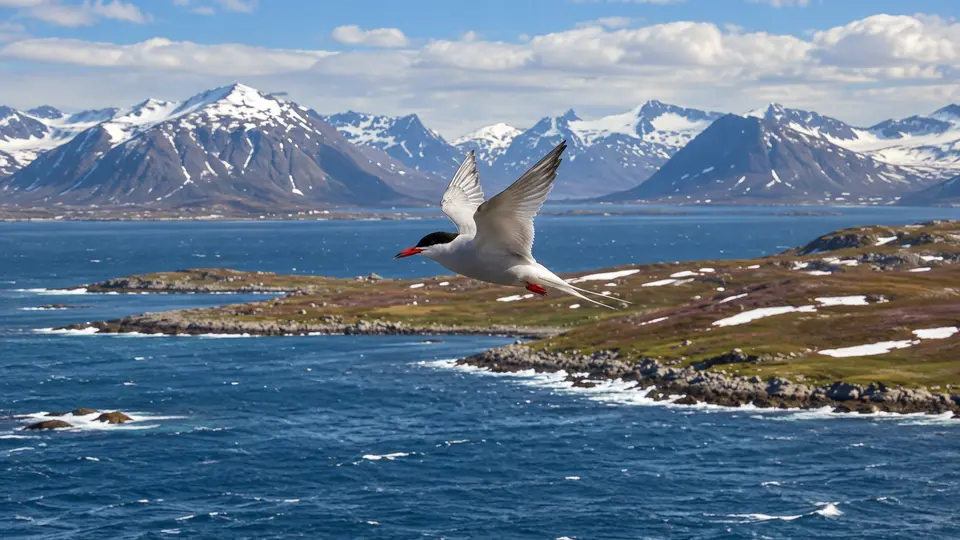
Eurasian OystercatcherAI-modifiedEurasian OystercatcherArctic TernAI-modifiedArctic TernAtlantic PuffinAI-modifiedAtlantic Puffin
Animal groupBirdsAnimal groupBirdsAnimal groupBirds
DestinationsNorwayDestinationsAlaska, Norway, ArcticDestinationsNew England, Norway, Scotland, Arctic
Scientific nameHaematopus ostralegusScientific nameScientific name
All wildlife destinations
AI-modified
Plan your trip

Find your next wildlife adventure

Compare destinations, shore programs and dates with the animals and habitats you would love to see.

  • Naturalist-led shore excursions
  • Responsible wildlife watching
  • Small expedition ships