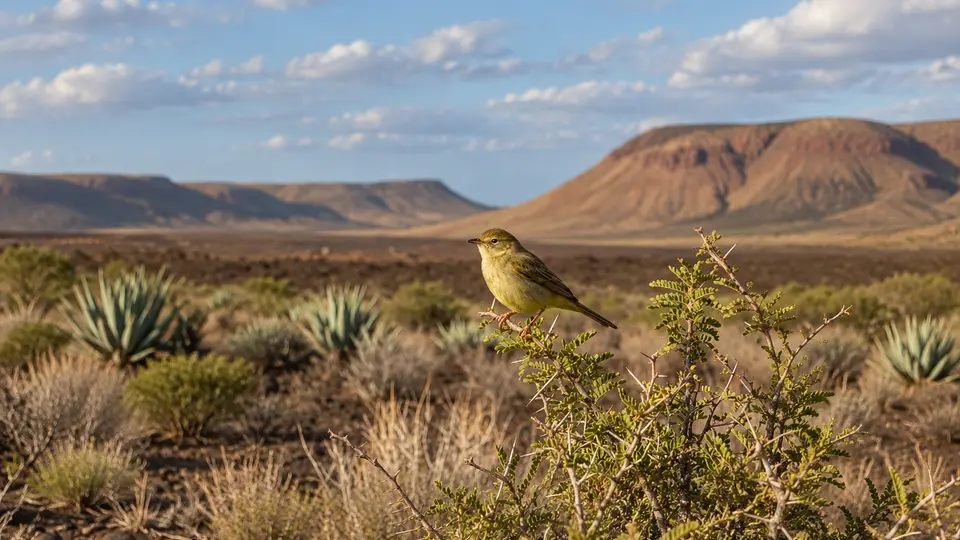
Cape Verde Warbler in its natural habitatAI-modified

Cape Verde WarblerAcrocephalus brevipennisWhere and when to see them

Cape Verde Warbler at a glance

The Cape Verde warbler is a localized endemic songbird that survives in pockets of relatively lush vegetation within an otherwise dry archipelago. Unlike many reed warblers, it is not restricted to reedbeds, using cultivated valleys, shrubs and wooded gardens. Its plain brown plumage can make it easy to overlook until a male sings. A small range and dependence on scattered vegetated habitats leave it vulnerable to drought, habitat alteration and loss of productive valley vegetation.

Behaviour & reproduction

Size
13-14 cm (5.1-5.5 in) long
Weight
15-20 g (0.53-0.71 oz)
Lifespan
Not reliably established
Status
Endangered

Warblers work through dense foliage, climbing stems and inspecting leaves and branches for small prey. Singing males may become conspicuous on exposed twigs, but birds often disappear rapidly into cover. Pairs use thick vegetation for nesting, and local breeding activity responds to suitable conditions rather than a perfectly uniform island calendar. Patient listening from a path is usually more effective than walking into vegetation, which can disturb concealed nests without improving identification. Males frequently sing from prominent perches within their territories, often from the top of a bush or small tree. Pairs are monogamous and construct cup-shaped nests hidden deep within dense bushes or thickets.

Top wildlife locations

Cape Verde wildlife habitatAI-modified

Cape Verde

Vegetated valleys and cultivated gardens on occupied islands provide suitable habitat, generally requiring an inland excursion. Coastal viewing is plausible only where dense valley vegetation reaches near shore; ordinary beaches are unsuitable.
Destinations describe the species' habitat, not guaranteed cruise stops. Some animals require an optional inland excursion or are found in restricted reserves.

Fun facts about the Cape Verde Warbler

  • It is an endemic member of the reed warbler family.
  • It uses cultivated vegetation rather than depending exclusively on natural wetlands.
  • Its scientific epithet brevipennis means short-winged.
  • Its known surviving island populations include Santiago, Fogo and São Nicolau.

Best time to see the Cape Verde Warbler

The species is resident, so suitable habitat can be checked year-round. November to April generally favors comfortable inland walking, but local rainfall, vegetation growth and breeding condition affect vocal activity. Avoid treating this travel period as a fixed singing or nesting season. Peak breeding activity often occurs during the cool, wet season from July to October, though it can be highly variable. Outside of the breeding period, birds may be less vocal and thus harder to detect.

Cape Verde Warbler: season matrix by destination

Travel and observation windows vary by region. Highlighted months are an orientation for planning, not confirmed sightings or a guarantee of access.

Cape Verde

A comfortable inland travel window for a resident bird, not a fixed breeding season; local rain and vegetation influence detectability.

JanFebMarAprMayJunJulAugSepOctNovDec
Cruise ships in Cape Verde

Where the Cape Verde Warbler lives

Vegetated valleys, irrigated cultivation, sugarcane patches, shrubs and small wooded areas provide habitat on occupied islands. Moisture and structural cover matter more than proximity to the sea. Most targeted visits require inland travel, because exposed beaches and arid waterfronts offer little suitable cover. This warbler frequently utilizes shade coffee plantations and areas of dense, humid vegetation. It thrives in ravines and steep-sided valleys where water sources support lush plant growth.

What the Cape Verde Warbler eats

Insects and other small invertebrates are taken from foliage, stems and branches. Foraging often involves close inspection within dense vegetation rather than conspicuous aerial pursuit. Detailed proportions of prey types are not well established, so its diet is best described broadly as primarily insectivorous. Larvae, beetles, and small flies constitute a significant portion of its diet. During the breeding season, parents prioritize soft-bodied insects for their young.

Species at a glance

Common name
Cape Verde Warbler
Scientific name
Acrocephalus brevipennis
Animal group
Birds
Size
13-14 cm (5.1-5.5 in) long
Weight
15-20 g (0.53-0.71 oz)
Lifespan
Not reliably established
Status
Endangered
Identification
Its plain brown upperparts, pale underparts and long pointed bill distinguish it from local sparrows, while separation from visiting Acrocephalus warblers may require song and detailed plumage assessment. Its relatively long tail and unmarked crown are useful field marks for separating it from other warblers. Note the faint supercilium which is typically short and not strongly defined.

Cape Verde Warbler: frequently asked questions

Where can I see the Cape Verde Warbler?
Cape Verde. Listen from established paths beside vegetated valleys and gardens. Avoid playback and entry into dense nesting cover, obtain permission for cultivated land, and allow birds to approach naturally rather than pursuing them through crops. Focus on areas with native fig trees and other fruit-bearing plants, as these can attract foraging insects and, subsequently, warblers. Early morning is often the best time to hear vocalizations and observe activity before temperatures rise.
When is the best time to see the Cape Verde Warbler?
The species is resident, so suitable habitat can be checked year-round. November to April generally favors comfortable inland walking, but local rainfall, vegetation growth and breeding condition affect vocal activity. Avoid treating this travel period as a fixed singing or nesting season. Peak breeding activity often occurs during the cool, wet season from July to October, though it can be highly variable. Outside of the breeding period, birds may be less vocal and thus harder to detect.
How big does the Cape Verde Warbler get?
13-14 cm (5.1-5.5 in) long. Adult weight: 15-20 g (0.53-0.71 oz). Size varies with age, sex and population.
How should I behave around the Cape Verde Warbler?
Listen from established paths beside vegetated valleys and gardens. Avoid playback and entry into dense nesting cover, obtain permission for cultivated land, and allow birds to approach naturally rather than pursuing them through crops. Focus on areas with native fig trees and other fruit-bearing plants, as these can attract foraging insects and, subsequently, warblers. Early morning is often the best time to hear vocalizations and observe activity before temperatures rise.
What does the Cape Verde Warbler eat?
Insects and other small invertebrates are taken from foliage, stems and branches. Foraging often involves close inspection within dense vegetation rather than conspicuous aerial pursuit. Detailed proportions of prey types are not well established, so its diet is best described broadly as primarily insectivorous. Larvae, beetles, and small flies constitute a significant portion of its diet. During the breeding season, parents prioritize soft-bodied insects for their young.
Are wildlife sightings guaranteed on an adventure cruise?
No. Animals move freely and routes, weather, access restrictions and local conditions influence every outing. Confirm the actual itinerary and shore program before booking.

Compare wildlife in the same destinations

Explore other birds recorded in these destinations. Similar surroundings do not mean the animals share the same habits or viewing season.

Species comparison by animal group and destination
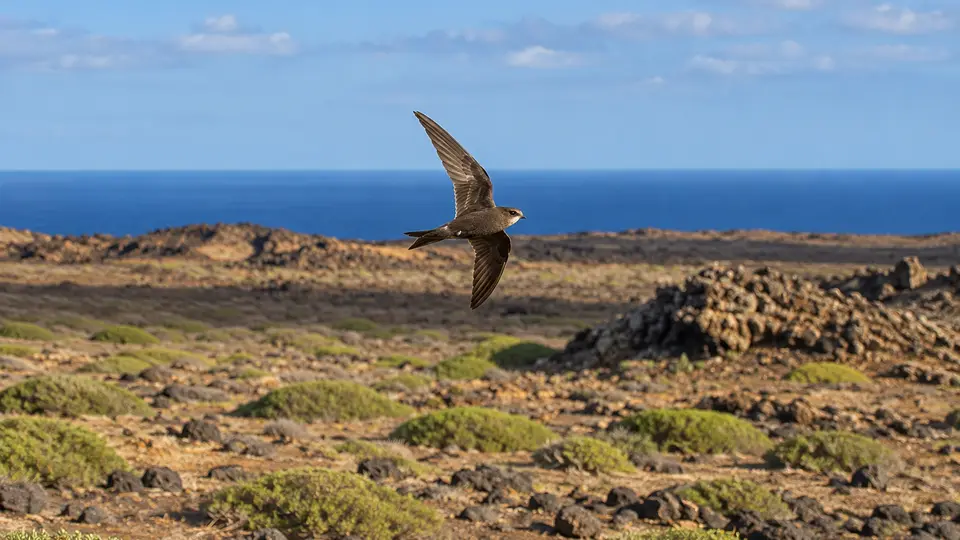
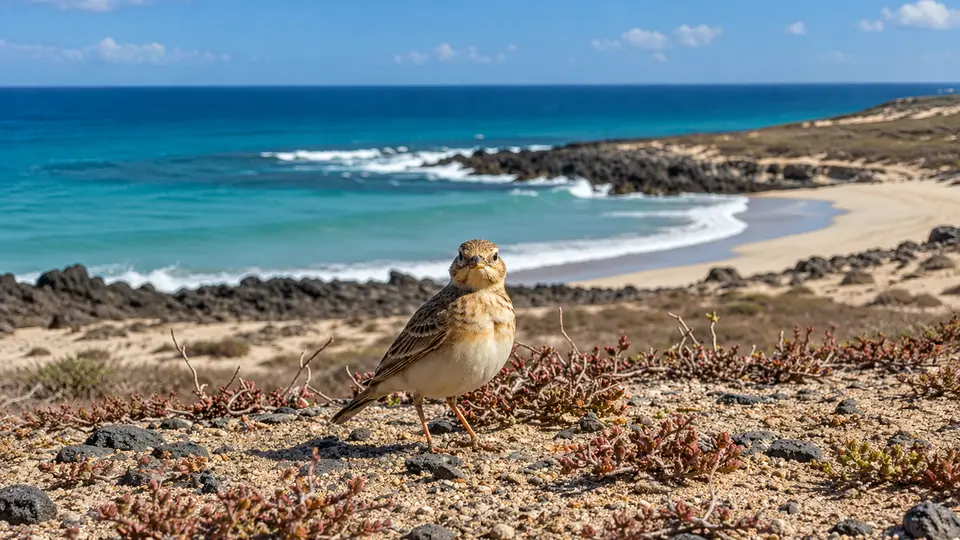
Cape Verde WarblerAI-modifiedCape Verde WarblerAlexander's SwiftAI-modifiedAlexander's SwiftBar-tailed LarkAI-modifiedBar-tailed Lark
Animal groupBirdsAnimal groupBirdsAnimal groupBirds
DestinationsCape VerdeDestinationsCape VerdeDestinationsCape Verde
Scientific nameAcrocephalus brevipennisScientific nameScientific name
All wildlife destinations
AI-modified
Plan your trip

Find your next wildlife adventure

Compare destinations, shore programs and dates with the animals and habitats you would love to see.

  • Naturalist-led shore excursions
  • Responsible wildlife watching
  • Small expedition ships