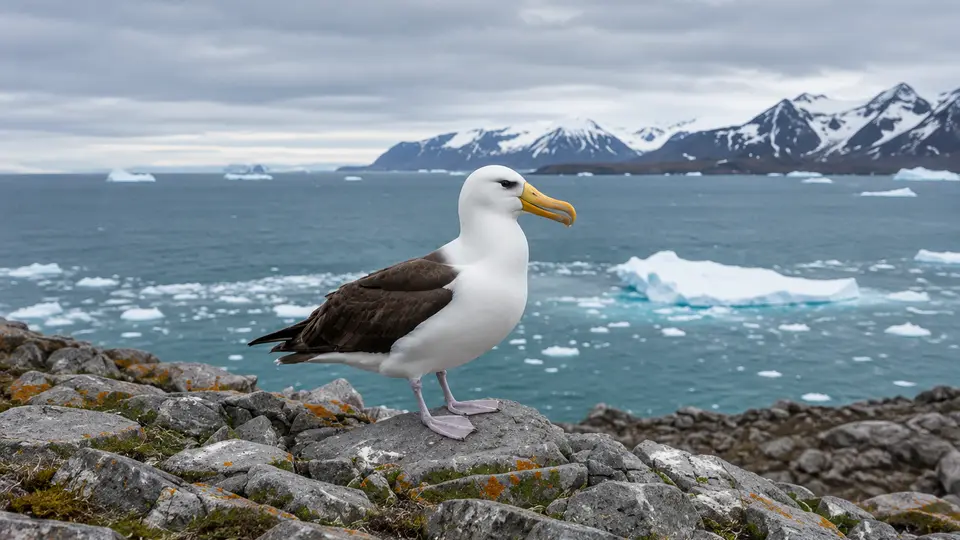
Black-browed Albatross in its natural habitatAI-modified

Black-browed AlbatrossThalassarche melanophrisWhere and when to see them

Black-browed Albatross at a glance

The black-browed albatross is a Southern Ocean seabird built for efficient travel over windy seas. Its white head, dark eyebrow and long, narrow wings give it a striking appearance from a distant vessel deck. It breeds mainly on subantarctic islands rather than the Antarctic continent itself. Although globally assessed as Least Concern, it remains vulnerable to fisheries bycatch, and conditions differ among breeding populations distributed across the southern oceans.

Behaviour & reproduction

Size
80–95 cm (31–37 in) long; 200–240 cm (79–94 in) wingspan
Weight
3–5 kg (6.6–11 lb)
Lifespan
30 years or more
Status
Least Concern

Black-browed albatrosses use wind gradients above waves to travel with relatively little flapping. At colonies, established pairs perform bill movements, calls and mutual preening that reinforce their bond. They generally lay a single egg in a raised nest of soil and vegetation, sharing incubation and chick care. Birds range widely while feeding, and their tendency to attend fishing vessels creates serious risks where hooks, lines or cables are present. Courtship rituals involve elaborate aerial displays and synchronized ground movements, strengthening pair bonds that can last for many years. Chicks are fed a diet of regurgitated oil and partially digested food, growing rapidly over several months. This species is highly colonial, with thousands of pairs nesting in close proximity, creating a bustling and noisy environment during the breeding season.

Top wildlife locations

Antarctica wildlife habitatAI-modified

Antarctica

Distant deck views are plausible on some Southern Ocean approaches, while continental Antarctic shore sightings are less dependable. Breeding colonies are principally subantarctic and should not be assumed accessible on standard Antarctic visits.
Destinations describe the species' habitat, not guaranteed cruise stops. Some animals require an optional inland excursion or are found in restricted reserves.

Fun facts about the Black-browed Albatross

  • A breeding attempt normally begins with a single egg.
  • Pairs may maintain bonds over many breeding seasons.
  • Their dark eyebrow gives the species its common name.
  • Dynamic soaring allows them to extract travelling energy from ocean winds.

Best time to see the Black-browed Albatross

The austral spring and summer overlap with breeding activity and the principal Antarctic visitor season. November through March offers practical deck observation on some ocean passages, but route and latitude matter greatly. Coastal Antarctic visits do not imply access to breeding colonies. During the austral summer, large numbers of these albatrosses can be observed foraging in waters around the Antarctic Peninsula and Scotia Arc islands, offering excellent viewing opportunities from expedition ships. Peak breeding activity, including egg laying and early chick rearing, occurs from October to January. Migration patterns mean that some individuals will be present in subantarctic waters year-round, though concentrations are highest during the breeding season.

Black-browed Albatross: season matrix by destination

Travel and observation windows vary by region. Highlighted months are an orientation for planning, not confirmed sightings or a guarantee of access.

Antarctica

These months reflect the principal visitor season and overlap with breeding elsewhere; sightings depend on ocean route, not simply arrival in Antarctica.

JanFebMarAprMayJunJulAugSepOctNovDec
Cruise ships in Antarctica

Where the Black-browed Albatross lives

At sea, this species occupies Southern Ocean waters, especially productive shelf edges, fronts and areas of upwelling. Breeding colonies occur on grassy slopes, tussock-covered ground and coastal cliffs of subantarctic islands. It is not a typical breeder on continental Antarctic ice-free shores. This species can be found across the entire Southern Ocean, ranging north to about 30° S during the non-breeding season. Key breeding strongholds include the Falkland Islands (Islas Malvinas), South Georgia, and Chile, hosting the vast majority of the global population. Their preference for continental shelf waters reflects the higher productivity and food availability in these areas.

What the Black-browed Albatross eats

Black-browed albatrosses eat fish, squid, crustaceans and other marine prey obtained near the surface. They also take carrion and fishery waste when available. Food varies geographically, and attraction to fishing activity can expose birds to lethal gear interactions. Prey is typically snatched from the surface or just below, often involving shallow dives or surface dipping. Their diet can also include offal and discards from fishing vessels, which, while providing an opportunistic food source, also increases their vulnerability to bycatch. The broad diet reflects an opportunistic foraging strategy, adapting to regional and seasonal food availability.

Species at a glance

Common name
Black-browed Albatross
Scientific name
Thalassarche melanophris
Animal group
Birds
Size
80–95 cm (31–37 in) long; 200–240 cm (79–94 in) wingspan
Weight
3–5 kg (6.6–11 lb)
Lifespan
30 years or more
Status
Least Concern
Identification
Adults differ from grey-headed albatrosses by their white heads and orange-yellow bills, while the closely related Campbell albatross has a pale rather than dark iris. The black eyebrow contrasting with a white head is a key field mark that is visible even at a distance. Their underwings are predominantly white with a broad, irregular dark leading and trailing edge, which helps distinguish them from other albatross species in flight. Juveniles have an all-dark bill, which gradually lightens to the adult coloration over several years.

Black-browed Albatross: frequently asked questions

Where can I see the Black-browed Albatross?
Antarctica. Watch passing birds from a secure deck or authorised coastal viewpoint. Never feed or lure them, keep loose items secured in strong winds, and avoid approaching nests where colony access is permitted. When viewing from a ship, look for their distinctive flight pattern as they glide effortlessly over waves, often following the ship's wake. Binoculars are essential for detailed observation, allowing appreciation of their facial markings and bill color. Be mindful of maritime regulations and always follow guide instructions regarding wildlife viewing distances, especially near colonies.
When is the best time to see the Black-browed Albatross?
The austral spring and summer overlap with breeding activity and the principal Antarctic visitor season. November through March offers practical deck observation on some ocean passages, but route and latitude matter greatly. Coastal Antarctic visits do not imply access to breeding colonies. During the austral summer, large numbers of these albatrosses can be observed foraging in waters around the Antarctic Peninsula and Scotia Arc islands, offering excellent viewing opportunities from expedition ships. Peak breeding activity, including egg laying and early chick rearing, occurs from October to January. Migration patterns mean that some individuals will be present in subantarctic waters year-round, though concentrations are highest during the breeding season.
How big does the Black-browed Albatross get?
80–95 cm (31–37 in) long; 200–240 cm (79–94 in) wingspan. Adult weight: 3–5 kg (6.6–11 lb). Size varies with age, sex and population.
How should I behave around the Black-browed Albatross?
Watch passing birds from a secure deck or authorised coastal viewpoint. Never feed or lure them, keep loose items secured in strong winds, and avoid approaching nests where colony access is permitted. When viewing from a ship, look for their distinctive flight pattern as they glide effortlessly over waves, often following the ship's wake. Binoculars are essential for detailed observation, allowing appreciation of their facial markings and bill color. Be mindful of maritime regulations and always follow guide instructions regarding wildlife viewing distances, especially near colonies.
What does the Black-browed Albatross eat?
Black-browed albatrosses eat fish, squid, crustaceans and other marine prey obtained near the surface. They also take carrion and fishery waste when available. Food varies geographically, and attraction to fishing activity can expose birds to lethal gear interactions. Prey is typically snatched from the surface or just below, often involving shallow dives or surface dipping. Their diet can also include offal and discards from fishing vessels, which, while providing an opportunistic food source, also increases their vulnerability to bycatch. The broad diet reflects an opportunistic foraging strategy, adapting to regional and seasonal food availability.
Are wildlife sightings guaranteed on an adventure cruise?
No. Animals move freely and routes, weather, access restrictions and local conditions influence every outing. Confirm the actual itinerary and shore program before booking.

Compare wildlife in the same destinations

Explore other birds recorded in these destinations. Similar surroundings do not mean the animals share the same habits or viewing season.

Species comparison by animal group and destination
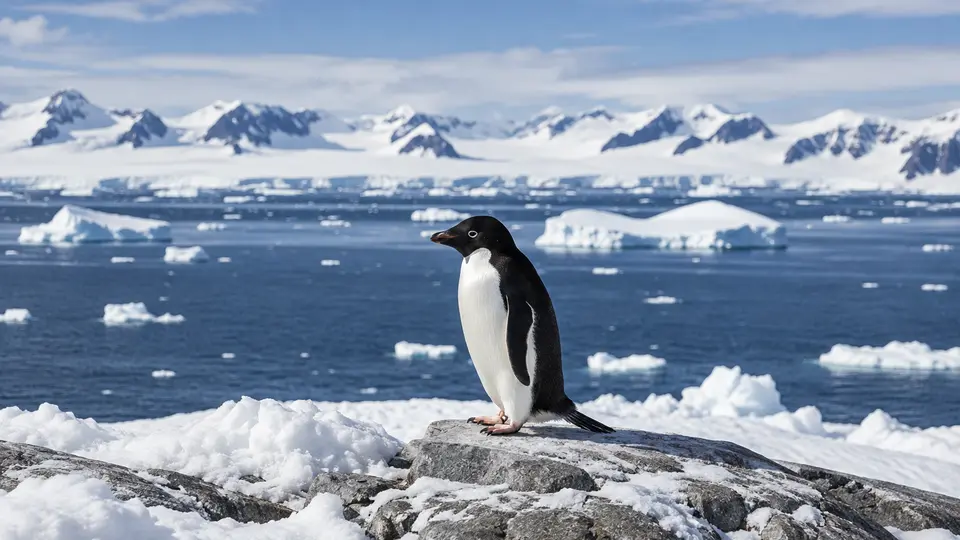
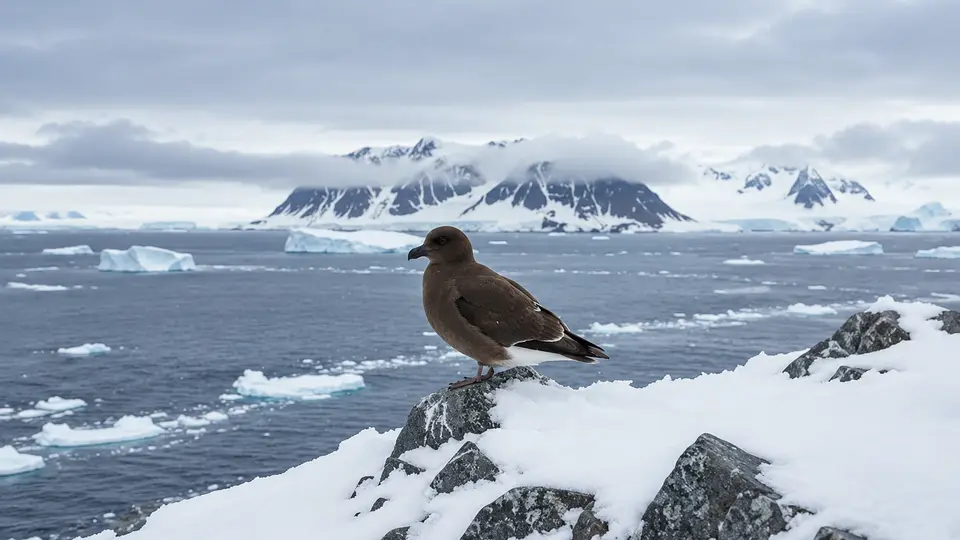
Black-browed AlbatrossAI-modifiedBlack-browed AlbatrossAdélie PenguinAI-modifiedAdélie PenguinAntarctic PetrelAI-modifiedAntarctic Petrel
Animal groupBirdsAnimal groupBirdsAnimal groupBirds
DestinationsAntarcticaDestinationsAntarcticaDestinationsAntarctica
Scientific nameThalassarche melanophrisScientific nameScientific name
All wildlife destinations
AI-modified
Plan your trip

Find your next wildlife adventure

Compare destinations, shore programs and dates with the animals and habitats you would love to see.

  • Naturalist-led shore excursions
  • Responsible wildlife watching
  • Small expedition ships