Roatan, Utila e Cayo Cochinos (French Harbor - French Harbor)
Roatan Aggressor · Honduras · 7 noites
Sobre este itinerário
Esta aventura liveaboard explora os vibrantes locais de mergulho de Roatan, Utila e Cayo Cochinos, oferecendo um passeio completo pelas Ilhas da Baía de Honduras. Os mergulhadores podem esperar encontrar uma vida marinha diversificada em impressionantes formações de recifes, desde paredes dramáticas a jardins rasos e coloridos. O itinerário inclui oportunidades para mergulho em naufrágios, exploração de montes submarinos e mergulhos noturnos, prometendo uma rica experiência subaquática.
Regiões nesta rota
Destaques
Black Hills
A popular site among divers, Black Hills is known for schooling fish such as Creole wrasse, Atlantic spadefish, and Southern sennets. Scorpionfish, toadfish, and the rare frogfish also frequent this seamount. A resident turtle often interacts with divers, adding to the memorable experience.
- Schools of fish
- Rare frogfish
- Resident turtle
- Seamount diving
Cannery Bank
Cannery Bank is a premier location for witnessing large pelagic fish in open waters. The site boasts vibrant colors on its mounts, with depths ranging from 25 to 110 feet, creating a dynamic environment for diverse marine encounters.
- Large pelagic fish
- Vibrant colors
- Dynamic environment
Cayos Cochinos
The Cayos Cochinos dive sites offer a rich tapestry of marine life, from macro creatures to patrolling barracuda and sharks. The area is known for its spectacular coral gardens and clear waters.
- Macro life
- Coral gardens
- Barracuda patrols
- Clear waters
CJ's Drop-off
Known as an excellent site for deep diving, CJ's Drop-off is home to spiny Caribbean lobster, golden tail moray eels, and schools of jacks. The vibrant marine life here makes it a rewarding experience for those exploring its depths.
- Deep diving
- Caribbean lobster
- Golden tail moray
- Schools of jacks
Duppy Waters
Duppy Waters begins with a vibrant coral garden at about 20 feet, which then slopes down into deeper blue waters. This site is rich with eagle rays, stingrays, octopuses, and schools of Creole wrasse and blue tang, creating a dynamic and colorful underwater scene.
- Coral garden
- Sloping walls
- Eagle rays
- Octopuses
Halliburton Wreck
This artificial reef, sunk in 1998, starts with the wheelhouse at 65 feet and extends to the vessel bottom at 100 feet. Green morays, spotted drum, yellowline arrow crabs, channel clinging crabs, and bearded fire worms are commonly seen. Porcupine fish and pipefish also frequent this exceptional dive site.
- Artificial reef
- Green morays
- Arrow crabs
- Porcupine fish
Hawksbill Bank
Hawksbill Bank is a seamount beginning at 40 feet and sloping down to 80 feet, named after the rare fingerprints it contains. Bluebell tunicates are abundant, and rare fingerprint corals can also be found. A resident hawksbill turtle gives the site its name.
- Seamount diving
- Sloping reef
- Bluebell tunicates
- Hawksbill turtle
Jack Neil Point
Featuring sand, walls, and individual coral heads, Jack Neil Point is a must-dive site. Divers can expect to see stout seahorse, large-eye toadfish, flying gurnards, and octopus, making it one of the best night diving locations in the area.
- Sand and walls
- Stout seahorse
- Flying gurnards
- Night diving
Mary’s Place
One of Roatan's most famous dive sites, Mary's Place is a lush reef characterized by numerous crevices and tunnels. These intricate formations invite exploration and provide excellent photographic opportunities, making it a favorite for many divers.
- Lush reef
- Crevices and tunnels
- Photo opportunities
Odyssey Wreck
The Odyssey Wreck is Roatan's largest shipwreck, a formidable freighter measuring 300 feet long, 50 feet wide, and 85 feet tall. As one of the Caribbean's largest wrecks, it offers an expansive and dramatic dive site for exploration.
- Largest Roatan wreck
- 300 ft freighter
- Caribbean wreck diving
Old Bank
Old Bank is a very shallow dive site, notable for its rare elkhorn coral flourishes and diverse small critters. It is also a prime location to spot the elusive yellowhead jawfish peering out from its hole, making it a favorite for macro enthusiasts.
- Shallow dive
- Elkhorn coral
- Small critters
- Yellowhead jawfish
Pelican Point
Pelican Point is a rich reef, featuring French and queen angelfish, butterflyfish, tangs, and parrotfish. On the outer edge of the reef, divers can often spot sharks and barracudas patrolling, adding an exciting dimension to the dive.
- Rich reef
- Angelfish
- Sharks
- Barracuda patrols
Raggedy Cay
This popular site offers diving at depths between 30 and 130 feet, where majestic eagle rays often sweep through the soft corals. Octopuses can be found around the sand channels, while spotted moray eels inhabit the coral garden, creating a lively underwater spectacle.
- Soft corals
- Majestic eagle rays
- Sand channels
- Spotted moray eels
Roatan, Bay Islands of Honduras
The dive sites around Roatan represent the vibrant underwater landscape of the Bay Islands, offering divers sheer walls, beautiful shallow reefs, and impressive wrecks. These pristine seamounts and reefs provide a frontier rarely explored, rich in marine life and photographic opportunities.
- Sheer walls
- Shallow reefs
- Spectacular wrecks
- Offshore seamounts
Taviana’s Wall
Known for its abundant turtle population, Taviana's Wall is a vibrant site that offers great night diving experiences. Divers can often spot octopus, crabs, and lobsters during evening descents, adding to the magic of this unique location.
- Turtle encounters
- Night dives
- Octopus and crabs
- Lobsters
Toon Town
Known for its excellent macro life, Toon Town, off Cayos Cochinos, is filled with dense clumps of bluebell tunicates, small crabs, and vibrant flamingo tongue cowries. This site is a photographer's dream, showcasing the tiny wonders of the tunicate kingdom.
- Macro dive
- Bluebell tunicates
- Small crabs
- Flamingo tongue cowries
Utila
Utila's dive sites are characterized by breathtaking reefs and a reputation for large pelagic encounters. The area often features schools of Creole wrasse, Atlantic spadefish, and horse-eye jacks. It is also known for sightings of majestic marine creatures like manta rays, marlin, and even whale sharks, making it a thrilling destination for divers.
- Breathtaking reefs
- Large pelagic sightings
- Manta rays
- Whale sharks
Wreck of the Aguila
This shipwreck has become a thriving artificial reef, home to numerous large groupers and a striking blue parrotfish. A significant green moray eel is also a resident here, known for its playful interactions with divers. The wreck provides a fascinating environment for marine life.
- Large groupers
- Blue parrotfish
- Green moray eel
- Artificial reef
Requisitos
- CertificaçãoOpen Water
- ExperiênciaNão é necessário um número mínimo de mergulhos registados.
Bom saber
- Diver certification: Open Water with no minimum logged dives required.
- Fly-after-dive: Divers are recommended to wait 24 hours before flying after the last dive.
- Depth Range: 30 – 130 ft (9m – 40m).
- Wetsuit: 3-5 mm wetsuit recommended.
- Water temperatures: 78-84F (summer), 75-80F (winter).
Plano dia a dia
Dia 1: Dia de Embarque – Roatan Yacht Club & Marina
Os hóspedes são recebidos a bordo do Roatan Aggressor no Roatan Yacht Club & Marina. Após se instalarem nas cabines e receberem um briefing de segurança, a embarcação prepara-se para a partida. O jantar é servido a bordo enquanto a expectativa para a semana de mergulho aumenta.
Dia 2: Roatán – Exploração do West End e Lado Sul
O dia foca nos deslumbrantes locais de mergulho do West End ou Lado Sul de Roatán, conhecidos por seus recifes exuberantes, paredes dramáticas e ecossistemas marinhos saudáveis. Os mergulhadores exploram ricas formações de corais, fendas e túneis que caracterizam essas áreas. Esses locais são frequentemente o lar de uma abundância de peixes de recife e invertebrados.
Dia 3: Roatán – Montes Submarinos e Cayos Cochinos
O mergulho de hoje inclui a exploração dos montes submarinos de Roatán e das águas intocadas que cercam Cayos Cochinos. Essas áreas são caracterizadas por vibrantes formações de corais e abundante vida macro. Os montes submarinos frequentemente atraem espécies pelágicas maiores, enquanto Cayos Cochinos oferece diversos ambientes de recife ricos em pequenas criaturas e coloridos peixes de recife.
Dia 4: Utila – Mergulhos Diversos em Recifes e Naufrágios
O mergulho em Utila exibe sua topografia subaquática diversificada, desde recifes rasos a paredes mais profundas e naufrágios impressionantes. Os locais aqui são conhecidos por cardumes de peixes, grandes pelágicos e criaturas únicas. O ambiente de Utila frequentemente apresenta correntes dinâmicas, contribuindo para a saúde e diversidade de seus vibrantes ecossistemas de corais.
Dia 5: Utila / Roatán – Exploração Contínua
O quinto dia continua a exploração dos locais de mergulho de Utila ou Roatán, aprofundando as descobertas dos dias anteriores. Os mergulhadores podem esperar mais oportunidades para experiências variadas, desde a caça de criaturas em manchas de areia até mergulhos à deriva ao longo de paredes vibrantes. O foco permanece na imersão na rica biodiversidade e nas características geológicas únicas das Ilhas da Baía.
Dia 6: Roatán – Mergulho no West End ou Southside
O dia retorna aos espetaculares recifes de Roatán, focando no West End ou no Southside, oferecendo diferentes perspectivas de mergulho. Os mergulhadores desfrutam de mais encontros com a abundante vida marinha e exploram mais dos célebres locais de mergulho da ilha. Essas áreas são renomadas por seus ecossistemas de corais saudáveis e diversas populações de peixes.
Dia 7: Retorno a Roatan – Mergulhos Finais e Jantar de Despedida
O último dia de mergulho decorre perto de Roatan, oferecendo uma última oportunidade para experienciar o seu cativante mundo subaquático. Estão planeados dois mergulhos antes de a embarcação regressar à doca. À noite, os hóspedes desfrutam de um cocktail de despedida e de um jantar em terra, recordando as aventuras da semana.
Dia 8: Desembarque – Roatan Yacht Club & Marina
Os hóspedes fazem o check-out do Roatan Aggressor no Roatan Yacht Club & Marina. Os transfers são organizados para a partida, concluindo uma memorável viagem liveaboard pelas Ilhas da Baía de Honduras.
Próximas partidas
- 2026-11-21 – 2026-11-28a partir de 3,295 USDReservar
- 2026-11-28 – 2026-12-05a partir de 2,295 USDReservar
- 2026-12-05 – 2026-12-12a partir de 2,295 USDReservar
- 2026-12-12 – 2026-12-19a partir de 1,795 USDReservar
- 2026-12-19 – 2026-12-26a partir de 2,295 USDReservar
- 2026-12-26 – 2027-01-02a partir de 2,295 USDReservar
- 2027-01-02 – 2027-01-09a partir de 2,295 USDReservar
- 2027-01-09 – 2027-01-16a partir de 2,295 USDReservar
- 2027-01-16 – 2027-01-23a partir de 3,295 USDReservar
- 2027-01-23 – 2027-01-30a partir de 3,295 USDReservar
- 2027-01-30 – 2027-02-06a partir de 2,471 USDReservar
- 2027-02-06 – 2027-02-13a partir de 3,295 USDReservar
Sobre o barco
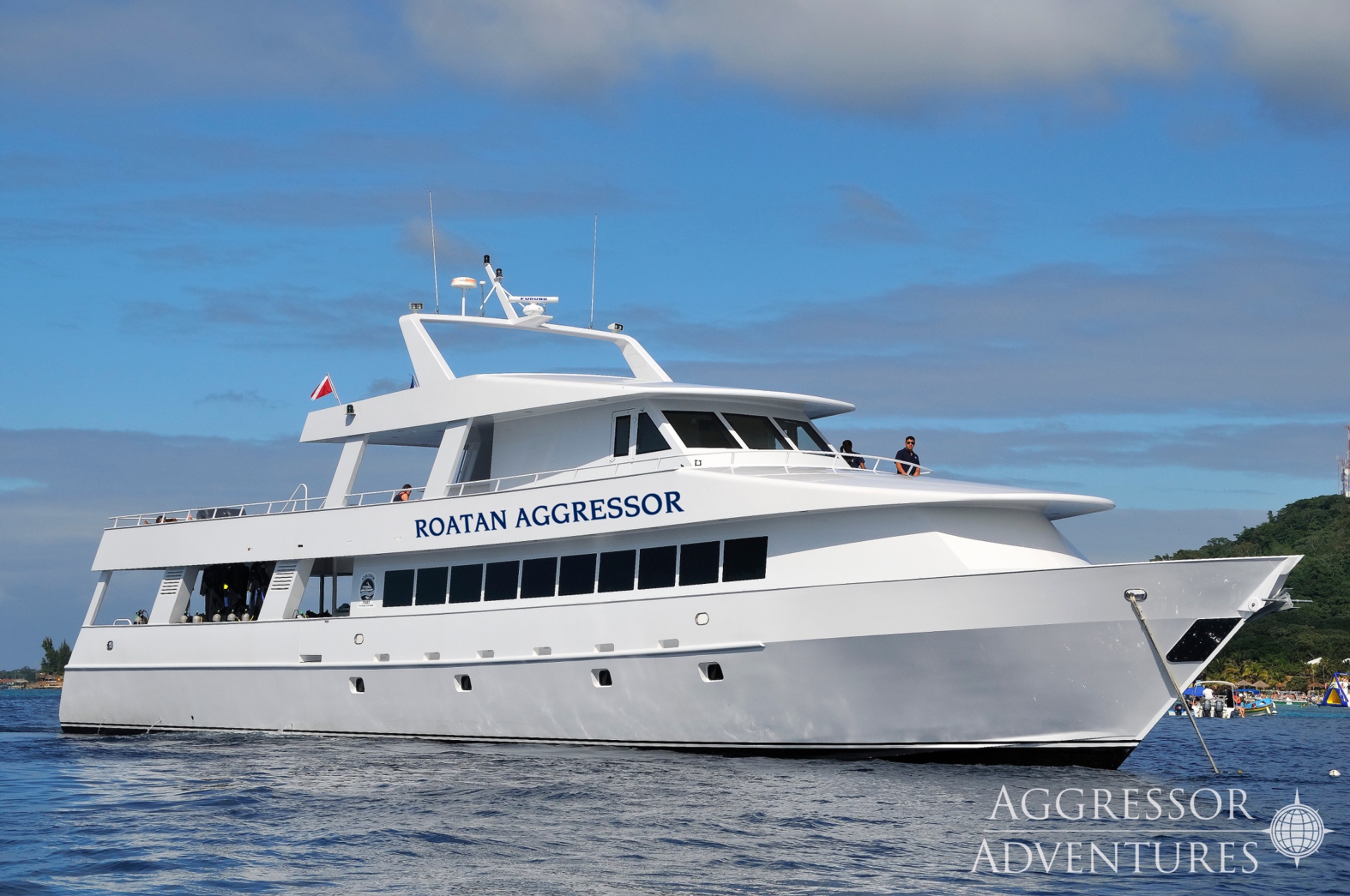 Roatan AggressorHonduras