North Wrecks, Ras Mohamed, Tiran, Brothers, Safaga (Hurghada - Hurghada)
Discovery I · Egito · 8D7N
Sobre este itinerário
Este itinerário de liveaboard no Mar Vermelho explora uma combinação de naufrágios do norte, recifes vibrantes e ilhas ao largo. O percurso leva os mergulhadores pelas famosas áreas de Ras Mohammed e Tiran, continua para sul até às Brother Islands e aos recifes perto de Safaga. Os mergulhos oferecem encontros com vida marinha diversificada, incluindo várias espécies de tubarões, raias manta e cardumes de peixes, em cenários de topografia subaquática dramática e naufrágios históricos. É uma semana de mergulho incrível nas águas icónicas do Egito.
Regiões nesta rota
Destaques
Carnatic
The Carnatic, a 90-meter-long sail and engine steamer, sank in 1869 while carrying a cargo of wine and 'London soda water'. The wreck is largely intact and lies at approximately 26 meters, offering excellent penetrations into its cargo holds. Its wooden hull has decayed, revealing its iron framework, which is now heavily adorned with soft corals, attracting various marine life including groupers and octopuses.
- 19th-century steamer
- Intact structure
- Penetration opportunities
- Soft coral growth
Dunraven
The Dunraven wreck, a 72m-long English steamer, sank in 1876 on Sha'ab Mahmoud. It lies upside down at a maximum depth of 29m. The wreck is heavily encrusted with corals, attracting a wide variety of marine life including glassfish and moray eels. It offers an excellent opportunity for exploring a historical site that has become a thriving artificial reef.
- 19th-century steamer
- Upside-down position
- Coral encrusted
- Abundant marine life
Giannis D
The Giannis D is a large Greek freighter that sank in 1983. The wreck is split into two sections, lying at a maximum depth of 28m. Divers can explore the engine room, bridge, and cabins, which are now heavily encrusted with soft corals. The wreck is teeming with glassfish, snapper, jacks, and moray eels, making it a captivating dive site for both its historical aspect and marine life.
- Greek freighter wreck
- Penetration dives
- Engine room exploration
- Abundant glassfish
Ras Mohamed
Ras Mohamed National Park is celebrated for its exceptional reef ecosystems, found at the tip of the Sinai where the Red Sea meets the Gulf of Suez and the Gulf of Aqaba. This national park offers some of the best diving in the region, known for its healthy reefs, abundant marine life, and dramatic underwater topography. It's an ideal location for both vibrant reef exploration and wall diving.
- Pristine reefs
- Diverse marine life
- Wall diving
- National park status
Red Sea
The Red Sea is globally renowned for its exceptional marine biodiversity, crystal-clear waters, and stunning coral reefs. It is home to thousands of invertebrate species and over a thousand types of fish, many of which are endemic. The nutrient-rich waters support vibrant ecosystems, making it a prime destination for divers seeking encounters with reef sharks, dugongs, and a myriad of colorful reef fish.
- Exceptional biodiversity
- Crystal-clear waters
- Endemic species
- Vibrant coral reefs
Safaga
Safaga is a port town known for its accessible and diverse dive sites, offering a mix of vibrant reefs and historical wrecks. The sites around Safaga generally feature rich hard and soft coral formations, with a variety of reef fish and occasional larger marine life. It's a key area for exploring both natural reef beauty and submerged history in the Red Sea.
- Coral diversity
- Reef exploration
- Accessible wrecks
- Varied marine habitats
Salam Express
The Salam Express is a relatively recent wreck, sinking in 1976 after an overnight journey from Hurghada to Safaga. The vessel, lying on its side, extends to a maximum depth of 29m. It is completely covered in corals and is home to a wide variety of marine life, including glassfish and moray eels. This wreck offers an excellent deep reef dive experience.
- Recent wreck
- Coral-covered structure
- Glassfish schools
- Moray eels
Sha'ab Ali Abu Nuhas
Sha'ab Ali, near Abu Nuhas, is a great reef area offering diverse marine habitats. This site is known for its shallow, healthy reef systems that provide excellent opportunities for observing a variety of reef fish and some larger pelagic species. The area is particularly famous for its 'Yellow Fish Reef', which is often blanketed by schools of yellow fish, creating stunning visual displays.
- Healthy reef systems
- Diverse fish species
- Shallow depths
- Yellow Fish Reef
SS Thistlegorm
The SS Thistlegorm is one of the most famous and best-preserved wrecks in the world. This British war vessel, sunk in 1941, carried a significant cargo of wartime supplies like trucks, motorbikes, and rifles. Lying at a depth of 30 meters, the wreck offers incredible penetration possibilities and is now home to a diverse marine ecosystem, making it a highlight for any Red Sea itinerary.
- World War II wreck
- Cargo holds
- Motorbikes and trucks
- Penetration opportunities
The Brothers Islands
The Brother Islands are renowned for their twin pinnacles emerging from the deep abyss, located about 60 miles offshore from El Quseir. As part of the Marine Park Islands National Park, these islands offer spectacular wall diving with vibrant soft corals and dense gorgonian forests. The area is a hotspot for large pelagics, including various shark species and manta rays, with occasional thresher sharks sighted on the North and South plateaus of Small Brother.
- Pelagic encounters
- Shark schools
- Soft coral walls
- Gorgonian forests
Thomas Reef
Thomas Reef is part of the Tiran Strait, recognized for its stunning wall dives and deep canyon. The reef boasts impressive hard and soft coral gardens, attracting a wide array of reef fish and pelagic species. Strong currents often characterize this site, making it an exciting drift dive with abundant marine life.
- Deep canyon
- Wall dives
- Coral gardens
- Drift diving
Requisitos
- CertificaçãoAdvanced Open Water
- Mínimo de mergulhos registados10
- ExperiênciaOs mergulhadores devem ter um mínimo de 10 mergulhos registrados.
Bom saber
- An Advanced Open Water certification is recommended to maximize enjoyment of the trip, especially for deeper sites and potential currents.
- Beginner divers may find some dives challenging and might be asked by the Cruise Director to skip certain dives.
- Divers are recommended to wait for 24 hours before flying after their last dive.
- Transfers are generally from/to Hurghada or RMF airport for Saturday, the first and last day of the trip. Additional charges may apply for transfers on other days or from Marsa Alam.
- Guests must be on board by Sunday before 05:00. The boat typically departs on Sunday and returns to port on Friday at about 15:30.
Plano dia a dia
Dia 1: Embarque – Hurghada
O embarque começa em Hurghada. Os hóspedes instalam-se nas suas cabines e recebem um briefing de segurança completo antes de a embarcação se preparar para a partida. A primeira noite é passada na marina, permitindo relaxar e antecipar a semana de mergulho que se avizinha.
Dia 2: Naufrágios do Norte e Ras Mohamed – Aventuras de Mergulho
O mergulho de hoje foca-se no norte do Mar Vermelho, potencialmente incluindo naufrágios famosos como o SS Thistlegorm, considerado um dos melhores mergulhos em naufrágios a nível global. A área oferece ricas perspetivas históricas e oportunidades para explorar incríveis recifes artificiais. Após os mergulhos em naufrágios, a viagem continua para o Parque Nacional Ras Mohamed, conhecido pelos seus recifes intocados e ecossistemas marinhos diversos, oferecendo mergulhos em paredes e vibrantes jardins de coral.
Dia 3: Tiran – Exploração de Recifes
O dia é dedicado à exploração dos impressionantes recifes da área de Tiran, incluindo os recifes Gordon, Thomas, Woodhouse e Jackson. Estes locais são conhecidos pelas suas quedas dramáticas, vibrantes jardins de coral e fortes correntes que atraem espécies pelágicas. Os mergulhadores podem esperar um ambiente dinâmico com potenciais mergulhos à deriva ao longo de deslumbrantes formações de parede, oferecendo a oportunidade de observar cardumes de peixes e vida marinha maior atraída pelas águas ricas em nutrientes.
Dia 4: Ilhas Brother – Encontros Oceânicos
Hoje marca a chegada às icónicas Ilhas Brother, que compreendem Big Brother e Small Brother. Estes pináculos remotos emergem das profundezas e são celebrados pelos seus encontros pelágicos e paredes intocadas adornadas com corais moles e florestas de gorgónias. A área é conhecida por correntes fortes e oferece oportunidades espetaculares de mergulho à deriva, onde os mergulhadores encontram frequentemente várias espécies de tubarões, incluindo tubarões-martelo e tubarões-oceânicos de pontas brancas.
Dia 5: Ilhas Brother – Naufrágios e Recifes
Continuando a exploração das Ilhas Brother, os mergulhadores têm mais oportunidades para explorar a rica vida marinha em torno destes montes submarinos isolados. O dia também pode incluir mergulhos nos naufrágios do Aida II e Numidia em Big Brother, proporcionando uma fascinante mistura de exploração histórica e ecossistemas de recife vibrantes. Estes locais frequentemente abrigam grandes cardumes de peixes e uma variedade de tubarões de recife.
Dia 6: Safaga – Recifes e Naufrágios do Norte
A viagem prossegue para sul em direção à região de Safaga, oferecendo diversos locais de mergulho conhecidos pelas suas belas formações de coral e potenciais mergulhos em naufrágios. Esta área frequentemente apresenta sistemas de recife vibrantes com abundância de peixes de recife, e alguns locais são caracterizados por topografia dramática, como paredes e pináculos. A exploração pode incluir recifes locais populares e naufrágios mais rasos, proporcionando uma experiência de mergulho relaxada, mas envolvente.
Dia 7: Safaga – Exploração Final
O último dia completo de mergulho continua na área de Safaga, focando na exploração adicional dos seus renomados locais de mergulho. Esta região é famosa pelas suas condições relativamente calmas em comparação com o mar aberto, tornando-a ideal para desfrutar de extensos sistemas de recifes, incluindo corais duros e moles. Os mergulhadores podem descobrir habitats marinhos variados, desde jardins de corais rasos até pináculos mais profundos repletos de vida macro e cardumes de peixes coloridos antes de a embarcação iniciar a sua viagem de regresso.
Dia 8: Desembarque – Hurghada
Após o pequeno-almoço, os hóspedes desembarcam em Hurghada. Os transfers são organizados de acordo com os planos de viagem individuais, concluindo uma inesquecível viagem de liveaboard pelo Mar Vermelho.
Próximas partidas
- 2027-01-09 – 2027-01-16a partir de 930 USDReservar
- 2027-01-23 – 2027-01-30a partir de 930 USDReservar
- 2027-02-13 – 2027-02-20a partir de 930 USDReservar
- 2027-02-27 – 2027-03-06a partir de 930 USDReservar
- 2027-04-17 – 2027-04-24a partir de 1,037 USDReservar
- 2027-05-22 – 2027-05-29a partir de 1,037 USDReservar
- 2027-09-25 – 2027-10-02a partir de 1,277 USDReservar
- 2027-10-16 – 2027-10-23a partir de 1,277 USDReservar
- 2027-11-13 – 2027-11-20a partir de 1,277 USDReservar
- 2028-01-08 – 2028-01-15a partir de 988 USDReservar
- 2028-01-22 – 2028-01-29a partir de 988 USDReservar
- 2028-02-12 – 2028-02-19a partir de 988 USDReservar
Todos os itinerários deste barco
- Naufrágios do Norte, Ras Mohamed, Tiran (Hurghada - Hurghada) · 8D7N
- Brothers - Daedalus - Elphinstone (Port Ghalib) (Port Ghalib → Port Ghalib) · 8D7N
- Brothers - Daedalus - Elphinstone (Hurghada) (Hurghada → Hurghada) · 8D7N
- St. John's, Fury Shoal, Elphinstone (Port Ghalib - Port Ghalib) · 8 dias e 7 noites
- Brothers - Daedalus - Elphinstone (Hurghada → Port Ghalib) · 8D7N
- Brothers - Daedalus - Elphinstone (Port Ghalib → Hurghada) · 8D7N
- Brothers - Daedalus - Elphinstone · 7 noites
- Brothers, Daedalus, Elphinstone (Hurghada - Hurghada) · 7 noites
- Daedalus, Rocky, Zabargad, Elphinstone (Porto Ghalib - Porto Ghalib) · 7 noites
Sobre o barco
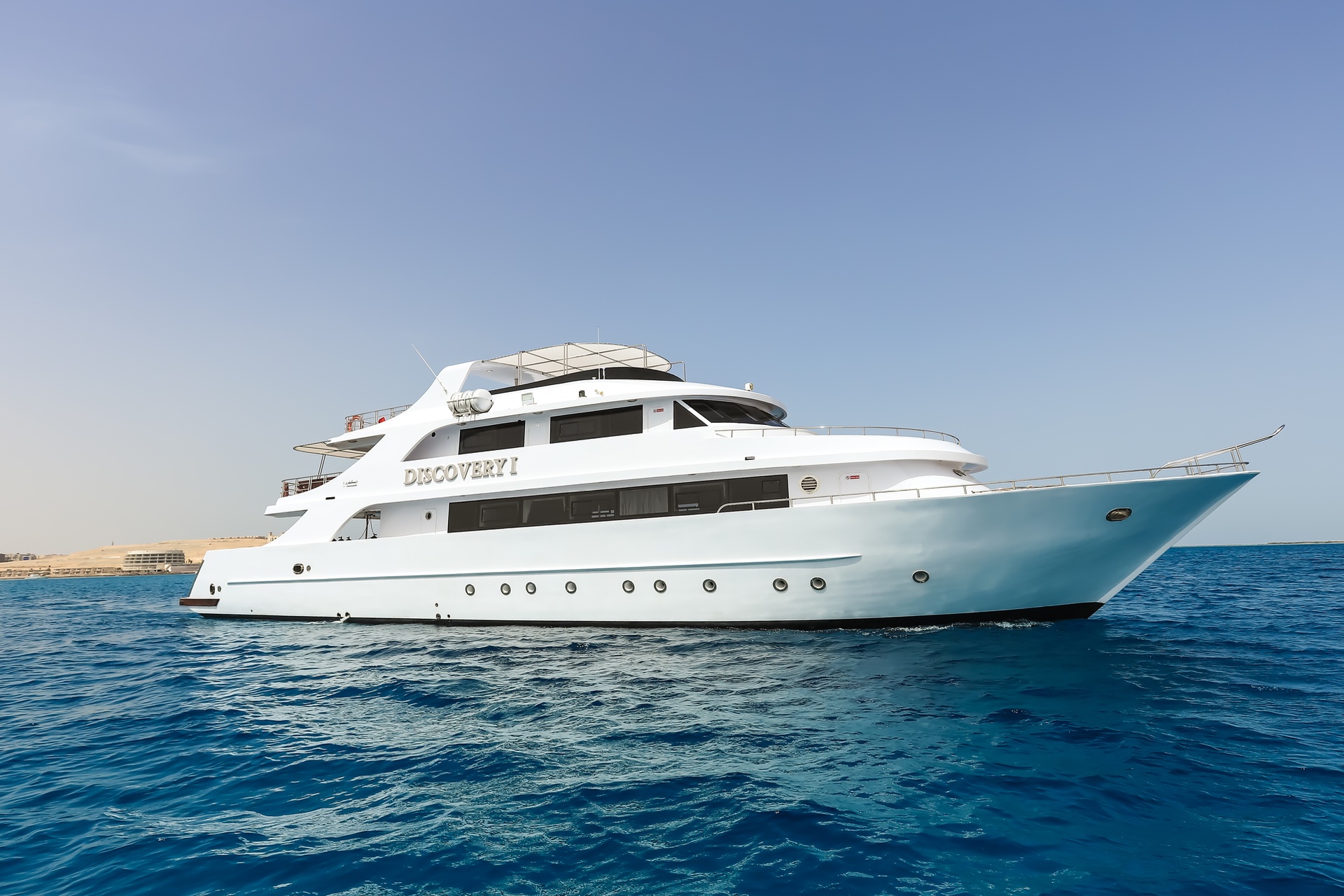 Discovery IEgito