Bluerides – Blue Rides - Book dykkecruise over hele verdenOCEAN ADVENTURES
River CruisesRiversNature & WildlifeOur Promise
River CruisesRiversNature & WildlifeOur PromiseLogg inn

Elvereisemål

  • Elvereisemål
  • Amazonas
  • Donau
  • Rhinen
  • Mekong
  • Nilen

Skip og avganger

  • Søk etter elvecruise
  • Tilbud

Natur og dyreliv

  • Natur og dyreliv

Reisehjelp

  • Vårt løfte
  • Kontakt

Kontakt

Ta kontakt

Ta gjerne kontakt, vi hjelper deg med å finne riktig tur eller svare på spørsmål.

E-postSkriv til oss, vi svarer som regel i løpet av få timer.
contact@bluerides.com
WhatsAppSend oss en melding på WhatsApp, man–fre 10:00–16:00 (CET).
Start WhatsApp-chat
TelefonRing oss, vi hjelper deg gjerne.
Gratis samtale, man–fre 10:00–20:00 (CET).
Europa+49 800 1144 990USA+1 888 557 7735Storbritannia+44 800 707 4152Australia+61 2 8599 6113Canada+1 888 557 7735
Which river journey is yours?Answer 8 quick questions and find the river cruise that fits you.
8 questions, 1 minute·Plus Gift
Sikre betalingsmåterDine betalinger er fullt sikret med AES-256-kryptering.
Drevet avStripeWiseAMEXPayGoogle PaySEPABank
Kolofon·Vilkår og betingelser·Personvern·Om oss·Kontakt·Ansvarsfraskrivelse·Partnerprogram·Cruise·
Besøk oss her

© 2026 Blue Rides. Alle rettigheter reservert.·

Bluerides – Blue Rides - Book dykkecruise over hele verdenOCEAN ADVENTURES
River CruisesRiversNature & WildlifeOur Promise
River CruisesRiversNature & WildlifeOur PromiseLogg inn
Black Tern i våtmark — Danube, dyreliv på elvecruise
Hjem›River Cruises›River Wildlife›Black Tern

Black TernChlidonias nigerHvor og når du kan se dem

Previous speciesBlack StorkNext speciesBlack-bellied Whistling Duck

Black Tern at a glance

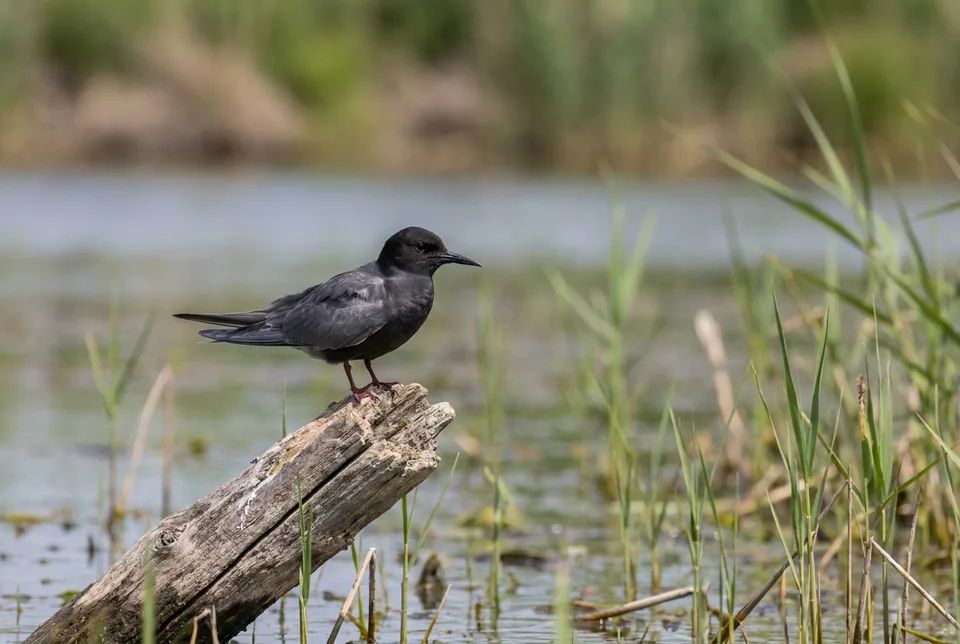
The Black Tern is a small marsh tern whose dark breeding plumage contrasts with the predominantly pale appearance associated with many familiar terns. Its ecology links shallow freshwater wetlands, aerial feeding and migration, rather than restricting it to a large river's main channel. Cornell describes nesting in substantial marshes and feeding on insects and small fish, often captured without the deep plunge characteristic of some other terns. The River registry places the species in Romania's Danube Delta, around Mahmudia and connected lakes and channels. The original local checklist names Chlidonias niger alongside its English and Romanian names. This establishes a delta occurrence context, not a guarantee on every outing. It must also remain separate from the central European Passau–Vienna–Bratislava–Budapest itinerary, which does not automatically enter the delta. A dedicated lower-Danube or delta programme is the relevant travel setting.

Behaviour & reproduction

Size
Not verified in the sources read
Weight
Not verified in the sources read
Lifespan
Not verified in the sources read
Status
See sourced assessment

Black Terns often course slowly above marsh vegetation and open water, watching for prey before making a quick downward capture. Cornell describes swooping to take prey with the bill rather than diving deeply. They also pursue flying insects with agile changes of direction, giving a feeding group a different appearance from a flock repeatedly plunge-diving offshore. During nesting, both members of a pair participate in selecting a site in sheltered shallow water. Floating or water-supported nesting substrates place the birds close to the effects of changing water conditions and disturbance. Visitors should never steer into a colony to obtain a closer view. At the Danube Delta, watch naturally feeding birds from an authorised route and allow the guide to keep clear of nesting areas. A group over a lake may include several marsh tern species, so behaviour should support, not replace, a careful examination of plumage and structure.

Top wildlife locations

Elvelandskap Danube — leveområde på elvecruise

Danube

Romania: Danube Delta around Mahmudia and delta lakes/channels. Separate lower-Danube/delta itinerary, not Passau–Vienna–Bratislava–Budapest.
Explore river cruises

Destinations describe the species' habitat, not guaranteed cruise stops. Some animals require an optional inland excursion or are found in restricted reserves.

Fun facts about the Black Tern

  • Its scientific name is Chlidonias niger.
  • It is a marsh tern.
  • Breeding adults have conspicuously dark plumage.
  • Nonbreeding birds are much paler.
  • It catches flying insects.
  • It also eats small fish.
  • It generally does not dive deeply for prey.
  • Both sexes participate in choosing a nest site.
  • The River entry concerns the Romanian Danube Delta.

Best time to see the Black Tern

The Danube Delta location retains an empty month array. The original beginner checklist confirms Black Tern by scientific and common name but does not provide an exact local month-by-month viewing season in the material read. The registry's spring, summer and passage wording is therefore left qualitative rather than converted into calendar numbers. Cornell's North American breeding and migration account provides biology, not a Romanian itinerary forecast. Nor can a generic delta birding season or comfortable boating weather establish when this particular species will be encountered near Mahmudia. Ask a local guide about recent records, the wetland types included and whether the outing reaches lakes or channels used by marsh terns. Confirm that the booked programme actually enters the Danube Delta. Even a suitable seasonal itinerary cannot guarantee daily sightings, and a checklist should not be interpreted as a current count or evidence of nesting at every visited lake.

Black Tern: season matrix by destination

Highlighted months reflect the stated local evidence, not guaranteed encounters. Neutral months mean no verified monthly viewing window, not absence. Observation records and recommended viewing windows are distinct.

Danube

The original checklist establishes occurrence but supplies no exact local monthly viewing proof.

janfebmaraprmaijunjulaugsepoktnovdes
Explore river cruises

Where the Black Tern lives

Freshwater marshes with shallow water and substantial vegetation are central breeding habitat. Cornell describes nesting in large wetlands, including marshy lake edges, and notes that migrants use a much wider variety of waters. River edges, lagoons and other open wetland habitats can therefore be relevant outside nesting contexts. These broad statements explain why a delta landscape can support the species, but they do not identify every occupied lake. The registry specifically names the Romanian Danube Delta around Mahmudia and its lakes and channels. This is geographically and ecologically distinct from an upper or middle Danube city itinerary. A local checklist confirms the species in the delta assemblage without specifying a dependable observation station. Seek an excursion that includes suitable wetland habitat and complies with protected-area rules. Boat wakes, close approaches and entry into vegetated nesting areas can cause problems even when the surrounding water appears extensive and apparently empty.

What the Black Tern eats

Black Terns eat insects and small fish, with the balance changing among habitats and stages of the annual cycle. Cornell lists a wide range of insects and other small animals in the breeding-season diet and describes a greater reliance on small fish in offshore nonbreeding waters. Feeding methods include taking prey from near the water surface and catching insects in the air. This flexibility helps explain why birds may be seen over marsh vegetation, open water or nearby fields. It does not establish what a particular Danube Delta bird has eaten unless the prey is observed. From a boat, repeated shallow swoops are more informative than assuming every downward movement is a deep dive. Do not use fish, insects or other bait to bring birds closer. Preserve the feeding space by maintaining distance and avoiding repeated passage through a concentrated group, especially where nesting birds are also present.

Species at a glance

Common name
Black Tern
Scientific name
Chlidonias niger
Animal group
Birds
Size
Not verified in the sources read
Weight
Not verified in the sources read
Lifespan
Not verified in the sources read
Status
Cornell describes it as a common bird in steep decline; that is not adopted as a formal global Red List category.
Identification
In breeding plumage, Black Terns show a dark head and body contrasting with grey wings, but the species becomes much paler outside that plumage. This seasonal transformation makes the name less useful as a year-round identification shortcut. The relatively small, buoyant marsh-tern shape and shallow feeding swoops are useful context, while precise head, breast and wing patterns become important in mixed groups. Whiskered and White-winged Terns require particular care in European wetlands. Distance and backlighting can conceal the differences, so an uncertain bird should remain unidentified rather than be assigned from location alone. The original delta checklist explicitly lists Chlidonias niger, confirming the taxon intended by the registry. Its presence on that list does not identify a bird currently in front of the observer. Obtain several natural views, avoid disturbing feeding or nesting birds, and use a suitable regional field guide for difficult transitional or immature plumages.

Black Tern: frequently asked questions

Where can I see the Black Tern?
Danube. Watch low-flying terns over marshes and shallow lakes, following individuals long enough to distinguish their feeding style and plumage. Binoculars help separate dark breeding birds from distant silhouettes, while photographs may assist with more difficult nonbreeding or transitional plumages. The Danube Delta contains other marsh terns, so a dark bird should not be labelled solely from its general colour. Remain on authorised boat routes and accept a distant view where a closer approach would disturb a colony or feeding concentration. A guide may recognise sensitive areas that are not obvious to visitors. Do not ask for birds to be flushed from vegetation or for a boat to circle repeatedly through a flock. The registered opportunity is around Mahmudia and delta lakes and channels, not routine viewing from a city-cruise deck farther upriver. Record the actual place and observed features when reporting a sighting rather than simply assigning it to the Danube.
When is the best time to see the Black Tern?
The Danube Delta location retains an empty month array. The original beginner checklist confirms Black Tern by scientific and common name but does not provide an exact local month-by-month viewing season in the material read. The registry's spring, summer and passage wording is therefore left qualitative rather than converted into calendar numbers. Cornell's North American breeding and migration account provides biology, not a Romanian itinerary forecast. Nor can a generic delta birding season or comfortable boating weather establish when this particular species will be encountered near Mahmudia. Ask a local guide about recent records, the wetland types included and whether the outing reaches lakes or channels used by marsh terns. Confirm that the booked programme actually enters the Danube Delta. Even a suitable seasonal itinerary cannot guarantee daily sightings, and a checklist should not be interpreted as a current count or evidence of nesting at every visited lake.
How big does the Black Tern get?
Not verified in the sources read. Adult weight: Not verified in the sources read. Size varies with age, sex and population.
How should I behave around the Black Tern?
Watch low-flying terns over marshes and shallow lakes, following individuals long enough to distinguish their feeding style and plumage. Binoculars help separate dark breeding birds from distant silhouettes, while photographs may assist with more difficult nonbreeding or transitional plumages. The Danube Delta contains other marsh terns, so a dark bird should not be labelled solely from its general colour. Remain on authorised boat routes and accept a distant view where a closer approach would disturb a colony or feeding concentration. A guide may recognise sensitive areas that are not obvious to visitors. Do not ask for birds to be flushed from vegetation or for a boat to circle repeatedly through a flock. The registered opportunity is around Mahmudia and delta lakes and channels, not routine viewing from a city-cruise deck farther upriver. Record the actual place and observed features when reporting a sighting rather than simply assigning it to the Danube.
What does the Black Tern eat?
Black Terns eat insects and small fish, with the balance changing among habitats and stages of the annual cycle. Cornell lists a wide range of insects and other small animals in the breeding-season diet and describes a greater reliance on small fish in offshore nonbreeding waters. Feeding methods include taking prey from near the water surface and catching insects in the air. This flexibility helps explain why birds may be seen over marsh vegetation, open water or nearby fields. It does not establish what a particular Danube Delta bird has eaten unless the prey is observed. From a boat, repeated shallow swoops are more informative than assuming every downward movement is a deep dive. Do not use fish, insects or other bait to bring birds closer. Preserve the feeding space by maintaining distance and avoiding repeated passage through a concentrated group, especially where nesting birds are also present.
Are wildlife sightings guaranteed on a river cruise?
No. Animals move freely and routes, weather, access restrictions and local conditions influence every outing. Confirm the actual itinerary and shore program before booking.

Compare wildlife in the same destinations

Explore other birds recorded in these destinations. Similar surroundings do not mean the animals share the same habits or viewing season.

Species comparison by animal group and destination
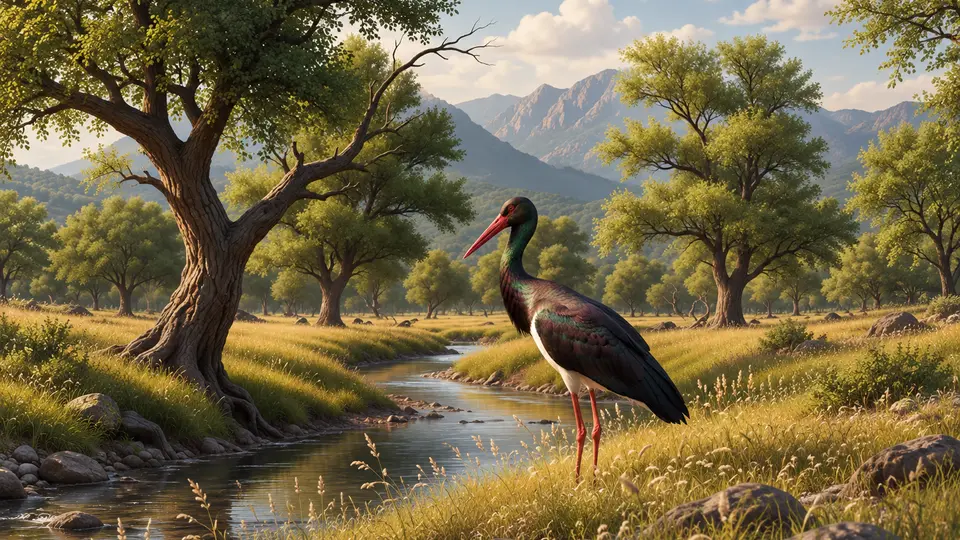
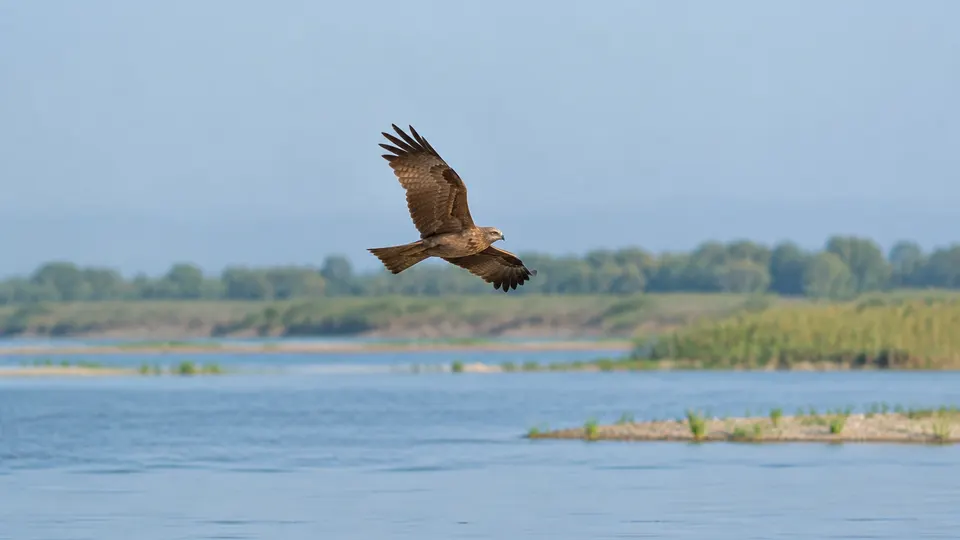
Black Tern i våtmark — Danube, dyreliv på elvecruiseBlack TernBlack kite i våtmark — Danube, Rhine, dyreliv på elvecruiseBlack KiteBlack stork i våtmark — Danube, dyreliv på elvecruiseBlack Stork
Animal groupBirdsAnimal groupBirdsAnimal groupBirds
DestinationsDanubeDestinationsDanube, RhineDestinationsDanube
Scientific name
Chlidonias niger

Chlidonias niger

Scientific name
Scientific name
Size
Not verified in the sources read
Size
Size
Weight
Not verified in the sources read
Weight
Weight
Lifespan
Not verified in the sources read
Lifespan
Lifespan
Status
See sourced assessment
Status
Status
Identification
In breeding plumage, Black Terns show a dark head and body contrasting with grey wings, but the species becomes much paler outside that plumage.

In breeding plumage, Black Terns show a dark head and body contrasting with grey wings, but the species becomes much paler outside that plumage. This seasonal transformation makes the name less useful as a year-round identification shortcut. The relatively small, buoyant marsh-tern shape and shallow feeding swoops are useful context, while precise head, breast and wing patterns become important in mixed groups. Whiskered and White-winged Terns require particular care in European wetlands. Distance and backlighting can conceal the differences, so an uncertain bird should remain unidentified rather than be assigned from location alone. The original delta checklist explicitly lists Chlidonias niger, confirming the taxon intended by the registry. Its presence on that list does not identify a bird currently in front of the observer. Obtain several natural views, avoid disturbing feeding or nesting birds, and use a suitable regional field guide for difficult transitional or immature plumages.

Identification
Identification
Habitat
Freshwater marshes with shallow water and substantial vegetation are central breeding habitat.

Freshwater marshes with shallow water and substantial vegetation are central breeding habitat. Cornell describes nesting in large wetlands, including marshy lake edges, and notes that migrants use a much wider variety of waters. River edges, lagoons and other open wetland habitats can therefore be relevant outside nesting contexts. These broad statements explain why a delta landscape can support the species, but they do not identify every occupied lake. The registry specifically names the Romanian Danube Delta around Mahmudia and its lakes and channels. This is geographically and ecologically distinct from an upper or middle Danube city itinerary. A local checklist confirms the species in the delta assemblage without specifying a dependable observation station. Seek an excursion that includes suitable wetland habitat and complies with protected-area rules. Boat wakes, close approaches and entry into vegetated nesting areas can cause problems even when the surrounding water appears extensive and apparently empty.

Habitat
Habitat
Diet
Black Terns eat insects and small fish, with the balance changing among habitats and stages of the annual cycle.

Black Terns eat insects and small fish, with the balance changing among habitats and stages of the annual cycle. Cornell lists a wide range of insects and other small animals in the breeding-season diet and describes a greater reliance on small fish in offshore nonbreeding waters. Feeding methods include taking prey from near the water surface and catching insects in the air. This flexibility helps explain why birds may be seen over marsh vegetation, open water or nearby fields. It does not establish what a particular Danube Delta bird has eaten unless the prey is observed. From a boat, repeated shallow swoops are more informative than assuming every downward movement is a deep dive. Do not use fish, insects or other bait to bring birds closer. Preserve the feeding space by maintaining distance and avoiding repeated passage through a concentrated group, especially where nesting birds are also present.

Diet
Diet
Best season
The Danube Delta location retains an empty month array.

The Danube Delta location retains an empty month array. The original beginner checklist confirms Black Tern by scientific and common name but does not provide an exact local month-by-month viewing season in the material read. The registry's spring, summer and passage wording is therefore left qualitative rather than converted into calendar numbers. Cornell's North American breeding and migration account provides biology, not a Romanian itinerary forecast. Nor can a generic delta birding season or comfortable boating weather establish when this particular species will be encountered near Mahmudia. Ask a local guide about recent records, the wetland types included and whether the outing reaches lakes or channels used by marsh terns. Confirm that the booked programme actually enters the Danube Delta. Even a suitable seasonal itinerary cannot guarantee daily sightings, and a checklist should not be interpreted as a current count or evidence of nesting at every visited lake.

Best season
Best season
Season matrix by destination
DanubeNo verified monthly viewing evidence

The original checklist establishes occurrence but supplies no exact local monthly viewing proof.

Season matrix by destinationSeason matrix by destination
Previous speciesBlack StorkNext speciesBlack-bellied Whistling Duck
All river wildlife
On this page
  • 01About
  • 02Behaviour & reproduction
  • 03Top wildlife locations
  • 04Fun facts
  • 05Best season
  • 06Season matrix by destination
  • 07Habitat
  • 08Diet
  • 09Species at a glance
  • 10Questions & answers
  • 11Compare

Find your river cruise

Planlegg reisen

Find your next river journey

Compare destinations, shore programs and dates with the animals and habitats you would love to see.

  • Daily shore excursions
  • Responsible wildlife watching
  • Boutique river ships
Explore river cruises