Bluerides – Blue Rides - Prenota crociere subacquee in tutto il mondoOCEAN ADVENTURES
River CruisesRiversNature & WildlifeOur Promise
River CruisesRiversNature & WildlifeOur PromiseAccedi

Destinazioni fluviali

  • Destinazioni fluviali
  • Rio delle Amazzoni
  • Danubio
  • Reno
  • Mekong
  • Nilo

Navi e partenze

  • Ricerca crociere fluviali
  • Offerte

Natura e fauna selvatica

  • Natura e fauna selvatica

Assistenza di viaggio

  • La nostra promessa
  • Contatti

Contatti

Contattaci

Scrivici quando vuoi: ti aiutiamo a scegliere il viaggio o a risolvere ogni dubbio.

E-mailScrivici: di solito rispondiamo in poche ore.
contact@bluerides.com
WhatsAppScrivici su WhatsApp, lun–ven 10:00–16:00 (CET).
Avvia la chat WhatsApp
TelefonoChiamaci, saremo felici di aiutarti.
Chiamata gratuita, lun–ven 10:00–20:00 (CET).
Europa+49 800 1144 990USA+1 888 557 7735Regno Unito+44 800 707 4152Australia+61 2 8599 6113Canada+1 888 557 7735
Which river journey is yours?Answer 8 quick questions and find the river cruise that fits you.
8 questions, 1 minute·Plus Gift
Metodi di pagamento sicuriI tuoi pagamenti sono completamente protetti con crittografia AES-256.
Realizzato daStripeWiseAMEXPayGoogle PaySEPABank
Impronta·Termini e condizioni·Informativa sulla privacy·Chi siamo·Contatto·Esonero di Responsabilità·Programma di affiliazione·Cruise·
Seguici qui

© 2026 Blue Rides. Tutti i diritti riservati.·

Bluerides – Blue Rides - Prenota crociere subacquee in tutto il mondoOCEAN ADVENTURES
River CruisesRiversNature & WildlifeOur Promise
River CruisesRiversNature & WildlifeOur PromiseAccedi
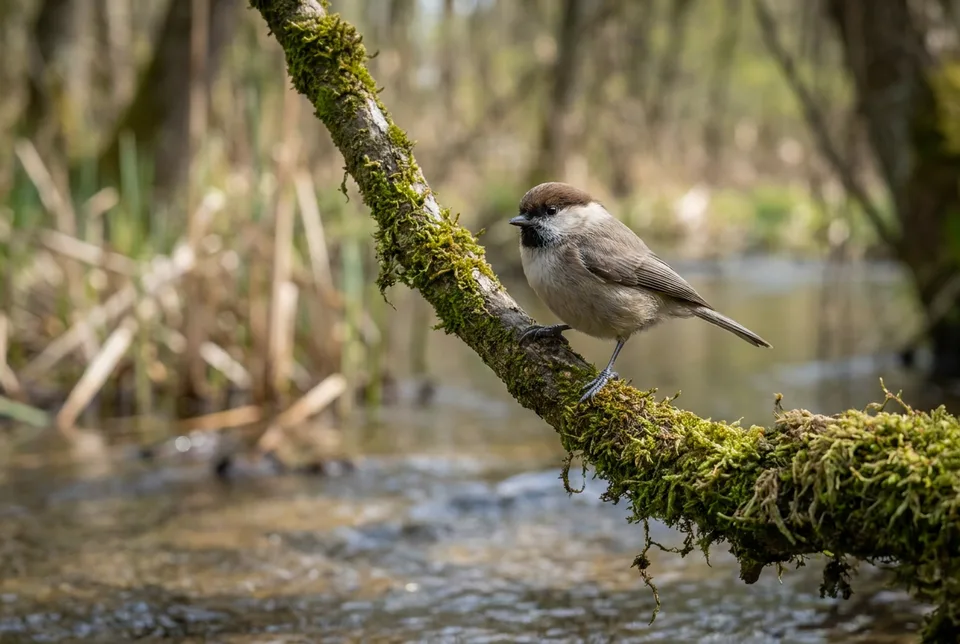
Marsh Tit in una zona umida — Saone, fauna delle crociere fluviali
Home›River Cruises›River Wildlife›Marsh Tit

Marsh TitPoecile palustrisDove e quando osservarli

Previous speciesMallardNext speciesMeadow Pipit

Marsh Tit at a glance

The Marsh Tit is a small, understated woodland bird rather than a specialist of open marsh water. Brown upperparts, pale cheeks and a black cap can make it look straightforward until the very similar Willow Tit is considered. Its scolding call is often more useful than a fleeting view. BTO gives a reference mass of 10.7 grams and highlights a substantial British decline, placing the species on the UK Red List; that national category should not be presented as its global conservation status. The cruise-linked occurrence is on the lower Saône, along the Grand Lyon Rives de Saône promenade between Rochetaillée, Fontaines and Lyon. The municipal biodiversity guide lists Marsh Tit there. This is an opportunity for patient shore observation among wooded banks, not a dependable open-water sighting. Source: https://www.bto.org/learn/about-birds/birdfacts/marsh-tit

Behaviour & reproduction

Size
Body length not verified.
Weight
10.7 g (0.38 oz) reference value; BTO BirdFacts.
Lifespan
Species-specific lifespan not verified.
Status
UK Red-listed according to BTO; a current global assessment was not verified.

BTO describes Marsh Tits mainly as single birds or pairs, with adults remaining on or close to their territories through the year. That differs from the conspicuous roving family parties of Long-Tailed Tits, although different small birds may use the same wooded corridor. The sharp 'pitchuu' call can draw attention to an otherwise inconspicuous bird. Natural holes are used for nesting, and nest boxes can also be accepted. Young birds disperse away from their parents' territory, but BTO's distances should not be turned into a map of local Saône movements. Watch an individual as it changes perches and listen before deciding on identity. Repeated visits to a cavity are sensitive behaviour: stand well back and do not inspect the hole or linger directly below it.

Top wildlife locations

Paesaggio fluviale Saone — habitat delle crociere fluviali

Saone

Lower Saône: Grand Lyon Rives de Saône promenade, Rochetaillée-sur-Saône–Fontaines-sur-Saône–Lyon, upstream of the Rhône confluence. Viewing context: Wooded banks; shore walk; identification requires close view.
Explore river cruises

Destinations describe the species' habitat, not guaranteed cruise stops. Some animals require an optional inland excursion or are found in restricted reserves.

Fun facts about the Marsh Tit

  • Despite its name, it favours mature woodland.
  • Adults often remain near their territories.
  • Singles and pairs are typical in BTO’s account.
  • It uses natural holes for nesting.
  • Nest boxes may also be accepted.
  • Its scolding call helps identification.
  • Willow Tit is a close visual lookalike.

Best time to see the Marsh Tit

Adults remaining near territories year-round is a species-level statement from BTO's British account. It does not establish continuous monthly occurrence on the Rochetaillée–Fontaines–Lyon promenade. The Grand Lyon biodiversity guide confirms inclusion in the local bird community but supplies no species-specific recurring month range. The location months array therefore remains empty. Timing a visit around quiet conditions and access to wooded sections is more defensible than promising a seasonal peak that was not documented. Leaf cover can change the practical difficulty of seeing small birds, but that observational issue must not be converted into an occurrence calendar. If a local guide reports a recent Marsh Tit, use that information to choose a respectful viewpoint while keeping the longer-term seasonal claim unverified.

Marsh Tit: season matrix by destination

Highlighted months reflect the stated local evidence, not guaranteed encounters. Neutral months mean no verified monthly viewing window, not absence. Observation records and recommended viewing windows are distinct.

Saone

A recurring species-specific numerical month range for this exact reach was not verified. Months are left empty; occurrence, broad residency, breeding dates and single trips are not treated as a calendar.

genfebmaraprmaggiulugagosetottnovdic
Explore river cruises

Where the Marsh Tit lives

Mature deciduous woodland with some understorey is the habitat emphasised by BTO. The species' English name can mislead visitors into searching reeds rather than the wooded bank. Along the registered Saône reach, older trees and lower vegetation are the relevant elements to inspect from the promenade. Grand Lyon's occurrence list does not specify territories, tree species or abundance at individual stops, so it cannot justify directing visitors to one nesting tree. Woodland continuity and structure matter more to this profile than the width of the river beside it. An urban stretch with scattered ornamental trees may differ from a more layered bank, even within the same walking route. Keep the claim geographically confined to the lower-Saône project rather than extending it to all waterside woodland in France.

What the Marsh Tit eats

The retrieved BTO introduction describes foraging within woodland understorey but does not supply a full diet account. A species-specific prey list, seasonal food proportions and measurements from the lower Saône were not verified. This profile therefore avoids giving a supposedly local menu or assigning every bill movement to a particular food. A small item carried from one perch to another may not be identifiable from a public path, and the bird's identity should be established before drawing conclusions about its feeding. Its association with mature woodland provides a useful ecological context without requiring unsupported dietary precision. Do not introduce food to attract a bird for comparison with Willow Tit. Natural movements and calls are better evidence, and baiting near public paths can create unnecessary concentrations or disturbance.

Species at a glance

Common name
Marsh Tit
Scientific name
Poecile palustris
Animal group
Birds
Size
Body length not verified.
Weight
10.7 g (0.38 oz) reference value; BTO BirdFacts.
Lifespan
Species-specific lifespan not verified.
Status
UK Red-listed according to BTO; a current global assessment was not verified.
Identification
The RSPB describes a mainly brown bird with a glossy black cap, dark bib and pale belly. The overall resemblance to Willow Tit is close enough that cap shine or bib shape should not be treated as infallible single features. Lighting can change the apparent gloss, and a moving bird may never offer a useful comparison. BTO emphasises the characteristic scolding 'pitchuu' call and the need for care in field identification. Look at the complete head pattern, body tones and wing while listening for repeated natural calls. The combination is stronger than any one fleeting feature. A riverbank setting does not settle the identification because similar-looking woodland birds can occur near water too. Seek confirmation from a local bird specialist when photographs or sound are inconclusive.

Marsh Tit: frequently asked questions

Where can I see the Marsh Tit?
Saone. Use the wooded-bank portions of the Rives de Saône route and pause to listen before scanning the branches. The call can be valuable because Marsh and Willow Tits are difficult to separate visually. Try to observe the head and wing in good light without stepping off the public path or pushing through understorey. A recording made passively during a natural call can be checked later with an experienced local observer. Avoid playback, particularly near a bird repeatedly returning to one patch. If the identification remains uncertain, record a Marsh/Willow Tit rather than forcing a species label. The registered viewing advice explicitly requires a close view; this means an optical view from a safe distance, not an instruction to approach a cavity or follow the bird into cover.
When is the best time to see the Marsh Tit?
Adults remaining near territories year-round is a species-level statement from BTO's British account. It does not establish continuous monthly occurrence on the Rochetaillée–Fontaines–Lyon promenade. The Grand Lyon biodiversity guide confirms inclusion in the local bird community but supplies no species-specific recurring month range. The location months array therefore remains empty. Timing a visit around quiet conditions and access to wooded sections is more defensible than promising a seasonal peak that was not documented. Leaf cover can change the practical difficulty of seeing small birds, but that observational issue must not be converted into an occurrence calendar. If a local guide reports a recent Marsh Tit, use that information to choose a respectful viewpoint while keeping the longer-term seasonal claim unverified.
How big does the Marsh Tit get?
Body length not verified.. Adult weight: 10.7 g (0.38 oz) reference value; BTO BirdFacts.. Size varies with age, sex and population.
How should I behave around the Marsh Tit?
Use the wooded-bank portions of the Rives de Saône route and pause to listen before scanning the branches. The call can be valuable because Marsh and Willow Tits are difficult to separate visually. Try to observe the head and wing in good light without stepping off the public path or pushing through understorey. A recording made passively during a natural call can be checked later with an experienced local observer. Avoid playback, particularly near a bird repeatedly returning to one patch. If the identification remains uncertain, record a Marsh/Willow Tit rather than forcing a species label. The registered viewing advice explicitly requires a close view; this means an optical view from a safe distance, not an instruction to approach a cavity or follow the bird into cover.
What does the Marsh Tit eat?
The retrieved BTO introduction describes foraging within woodland understorey but does not supply a full diet account. A species-specific prey list, seasonal food proportions and measurements from the lower Saône were not verified. This profile therefore avoids giving a supposedly local menu or assigning every bill movement to a particular food. A small item carried from one perch to another may not be identifiable from a public path, and the bird's identity should be established before drawing conclusions about its feeding. Its association with mature woodland provides a useful ecological context without requiring unsupported dietary precision. Do not introduce food to attract a bird for comparison with Willow Tit. Natural movements and calls are better evidence, and baiting near public paths can create unnecessary concentrations or disturbance.
Are wildlife sightings guaranteed on a river cruise?
No. Animals move freely and routes, weather, access restrictions and local conditions influence every outing. Confirm the actual itinerary and shore program before booking.

Compare wildlife in the same destinations

Explore other birds recorded in these destinations. Similar surroundings do not mean the animals share the same habits or viewing season.

Species comparison by animal group and destination
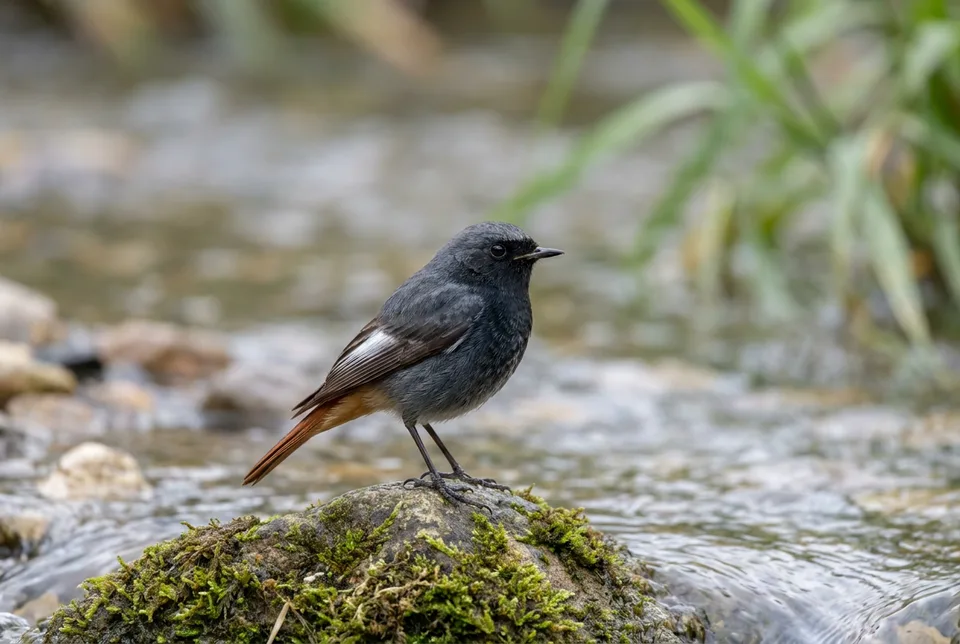
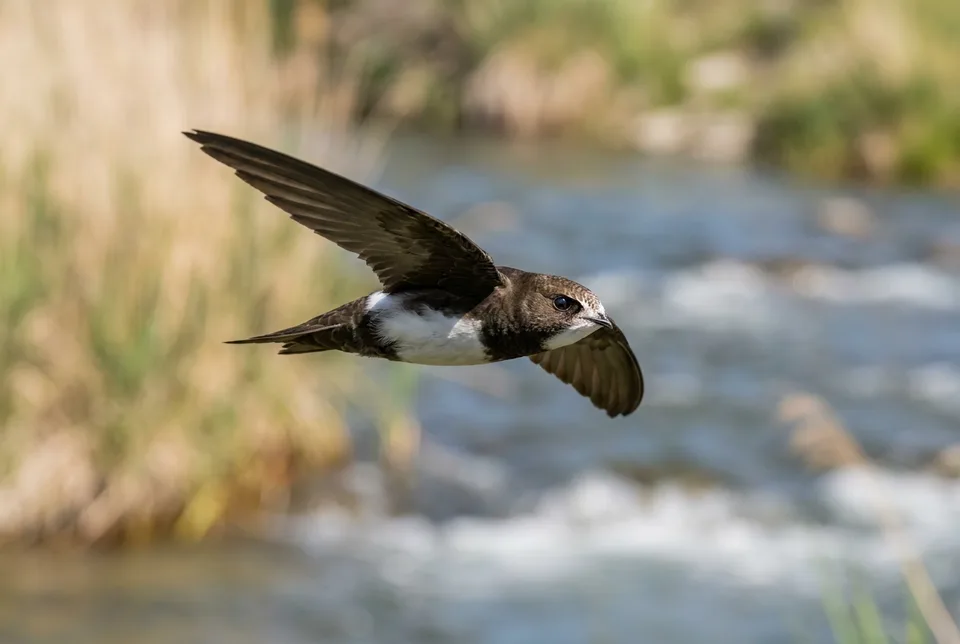
Marsh Tit in una zona umida — Saone, fauna delle crociere fluvialiMarsh TitAlpine Swift in una zona umida — Saone, fauna delle crociere fluvialiAlpine SwiftBlack Redstart in una zona umida — Saone, Douro, fauna delle crociere fluvialiBlack Redstart
Animal groupBirdsAnimal groupBirdsAnimal groupBirds
DestinationsSaoneDestinationsSaoneDestinationsSaone, Douro
Scientific name
Poecile palustris
Scientific name
Scientific name
Previous speciesMallardNext speciesMeadow Pipit
All river wildlife
On this page
  • 01About
  • 02Behaviour & reproduction
  • 03Top wildlife locations
  • 04Fun facts
  • 05Best season
  • 06Season matrix by destination
  • 07Habitat
  • 08Diet
  • 09Species at a glance
  • 10Questions & answers
  • 11Compare

Find your river cruise

Pianifica il tuo viaggio

Find your next river journey

Compare destinations, shore programs and dates with the animals and habitats you would love to see.

  • Daily shore excursions
  • Responsible wildlife watching
  • Boutique river ships
Explore river cruises