Bluerides – Blue Rides - दुनिया भर में लिवअबोर्ड डाइविंग बुक करेंOCEAN ADVENTURES
रिवर क्रूज़नदियाँप्रकृति और वन्यजीवहमारा वादा
रिवर क्रूज़नदियाँप्रकृति और वन्यजीवहमारा वादासाइन इन करें

River गंतव्य

  • River गंतव्य
  • Amazon
  • Danube
  • Rhine
  • Mekong
  • Nile

जहाज़ और प्रस्थान

  • River Cruise खोजें
  • ऑफ़र

प्रकृति और वन्यजीव

  • प्रकृति और वन्यजीव

यात्रा सहायता

  • हमारा वादा
  • संपर्क

संपर्क करें

संपर्क करें

कभी भी संपर्क करें, हम आपकी यात्रा चुनने या किसी भी सवाल में मदद करने को तैयार हैं।

ईमेलहमें लिखें, आमतौर पर कुछ ही घंटों में जवाब देते हैं।
contact@bluerides.com
व्हाट्सएपव्हाट्सएप पर हमसे चैट करें, सोम–शुक्र 10:00–16:00 (CET)।
WhatsApp चैट शुरू करें
फ़ोनहमें कॉल करें, हम खुशी से मदद करेंगे।
फ्री कॉल, सोम–शुक्र 10:00–20:00 (CET)।
यूरोप+49 800 1144 990यूएसए+1 888 557 7735यूके+44 800 707 4152ऑस्ट्रेलिया+61 2 8599 6113कनाडा+1 888 557 7735
Which river journey is yours?Answer 8 quick questions and find the river cruise that fits you.
8 questions, 1 minute·Plus Gift
सुरक्षित भुगतान विधियाँआपके भुगतान AES-256 एन्क्रिप्शन द्वारा पूरी तरह सुरक्षित हैं।
द्वारा संचालितStripeWiseAMEXPayGoogle PaySEPABank
छाप·नियम और शर्तें·गोपनीयता नीति·हमारे बारे में·संपर्क करें·दायित्व अस्वीकरण·संबद्ध कार्यक्रम·Cruise·
यहाँ हमसे जुड़ें

© 2026 Blue Rides. सर्वाधिकार सुरक्षित।·

Bluerides – Blue Rides - दुनिया भर में लिवअबोर्ड डाइविंग बुक करेंOCEAN ADVENTURES
रिवर क्रूज़नदियाँप्रकृति और वन्यजीवहमारा वादा
रिवर क्रूज़नदियाँप्रकृति और वन्यजीवहमारा वादासाइन इन करें
आर्द्रभूमि में Edible frog — Danube, नदी क्रूज़ के वन्यजीव
होम›रिवर क्रूज़›नदी के वन्यजीव›Edible Frog

Edible FrogPelophylax kl. esculentusइन्हें कहाँ और कब देखें

पिछली प्रजातिDunnockअगली प्रजातिEgyptian Goose

Edible Frog एक नज़र में

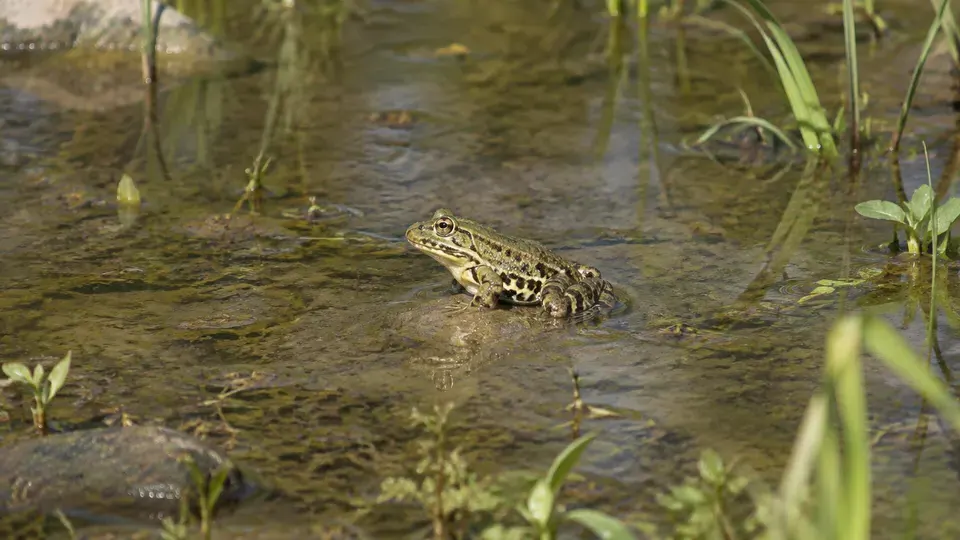
The Edible Frog is not simply another uniformly defined green-frog species. Donau-Auen explains its hybrid relationship with the Pool Frog and Marsh Frog, and the registered scientific name preserves the hybrid notation “kl.”. Its complex reproductive biology makes both naming and identification more demanding than a green colour might suggest. In the national park it occurs throughout the area, connecting the profile specifically with Austrian Danube floodplains east of Vienna towards Hainburg. Water-edge observations and calls are the realistic visitor experience. A photograph of an unidentified green frog should not automatically be assigned to this taxon, even where the park confirms its presence. Species background source: https://www.donauauen.at/en/facts/nature-science/fauna-engl/edible-frog

व्यवहार और प्रजनन

आकार
not verified
वजन
not verified
जीवनकाल
not verified
स्थिति
Protected under environmental legislation according to Donau-Auen. The park reports green frogs as frequent locally but scarce in surrounding farmland; a formal global assessment for this hybrid taxon was not verified.

In summer the park describes these frogs as almost always close to water. A bank-edge animal may remain still until disturbed, then disappear before its markings can be examined. Vocal activity can be more informative: the national park describes a rapid growling or rattling sequence, contrasting with the different rhythms of its parental taxa. Their life is not confined to a pond. The account describes movement to terrestrial hibernation sites and stresses the need for surrounding landscape structure. This combination of aquatic summer activity and terrestrial shelter makes undisturbed bank vegetation, leaf piles and deadwood important parts of the animal's environment.

वन्यजीवों के प्रमुख स्थान

Danube का नदी दृश्य — नदी क्रूज़ के वन्यजीवों का आवास

Danube

Austria: Donau-Auen floodplains east of Vienna towards Hainburg, on Vienna–Bratislava reach; optional shore/backwater excursion, not Passau or Budapest. Viewing: Warm months; water-edge views and calls; hybrid taxon.
रिवर क्रूज एक्सप्लोर करें

गंतव्य प्रजातियों के प्राकृतिक आवास का वर्णन करते हैं, न कि क्रूज के निश्चित पड़ावों का। कुछ जानवरों को देखने के लिए वैकल्पिक अंतर्देशीय भ्रमण की आवश्यकता होती है या वे केवल प्रतिबंधित रिजर्व में पाए जाते हैं।

Edible Frog के बारे में रोचक तथ्य

  • It is a hybrid taxon.
  • Its parental taxa are Pool Frog and Marsh Frog.
  • The scientific name retains the notation kl.
  • Donau-Auen reports it across the park.
  • Its call is described as growling or rattling.
  • Adults eat insects, worms and spiders.
  • Terrestrial cover matters for overwintering.
  • Green colour alone does not identify it.

Edible Frog को देखने का सबसे अच्छा समय

The national park explicitly places the frogs near water during summer and describes movement into hibernation during the autumn. These statements provide useful local seasonal context, but do not establish a complete recurring monthly viewing calendar. Hibernation dates cannot simply be subtracted from the year to manufacture an observation window. The location month array remains empty. A summer visit may offer visible adults or calls, although neither is guaranteed at an individual pond. Ask a guide which public viewpoints currently allow observation without entering sensitive margins. Seasonal changes in water level and vegetation can alter visibility independently of whether frogs remain present.

Edible Frog: गंतव्य के अनुसार सीजन मैट्रिक्स

Highlighted months reflect the stated local evidence, not guaranteed encounters. Neutral months mean no verified monthly viewing window, not absence. Observation records and recommended viewing windows are distinct.

Danube

Summer water-edge activity is supported locally, but a complete numerical monthly observation window was not verified.

जन॰फ़र॰मार्चअप्रैलमईजूनजुल॰अग॰सित॰अक्टू॰नव॰दिस॰
रिवर क्रूज एक्सप्लोर करें

Edible Frog कहाँ रहता है

The relevant setting is the Donau-Auen wetland mosaic, not the fast-flowing main Danube alone. Water-edge habitat supplies feeding and reproductive opportunities, while nearby terrestrial cover supports movement and overwintering. The park specifically mentions leaf piles, deadwood, earth crevices and fallen trees as useful structures. It reports that green frogs remain frequent in the wetlands but have become scarce in surrounding agricultural landscapes. A protected waterbody therefore cannot be understood in isolation from its banks and adjacent land. For cruise visitors, an authorised backwater walk or guided pond visit is more relevant than scanning a distant shipping-channel embankment.

Edible Frog क्या खाता है

Donau-Auen describes a broad animal diet, particularly insects, worms and spiders; it also mentions mosquitoes as food for younger frogs. This supports describing the frog as a small predator, but not inventing local feeding percentages or a preferred prey ranking. The retrieved account does not supply a measured seasonal menu for the Vienna–Hainburg reach. Adult feeding information must also be distinguished from the ecology of aquatic larval stages. Watching a frog wait at the waterline can be informative without observing a strike. Do not supply insects, disturb bank litter or force an animal into the open to demonstrate its feeding behaviour.

प्रजातियों पर एक नज़र

सामान्य नाम
Edible Frog
Scientific name
Pelophylax kl. esculentus
पशु समूह
Amphibians
आकार
not verified
वजन
not verified
जीवनकाल
not verified
स्थिति
Protected under environmental legislation according to Donau-Auen. The park reports green frogs as frequent locally but scarce in surrounding farmland; a formal global assessment for this hybrid taxon was not verified.
पहचान
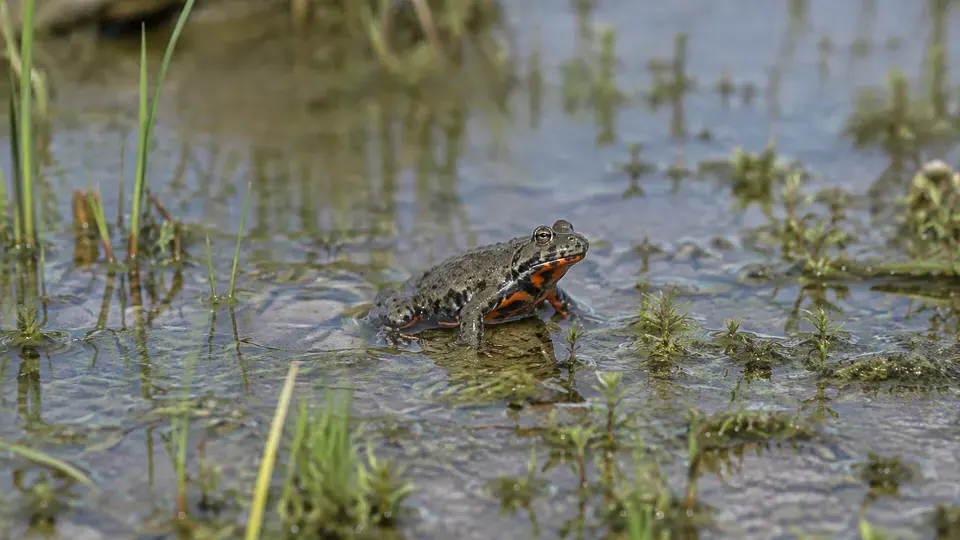
Upperparts vary from green to brown, usually retaining some green around the head or body sides. The underside is generally whitish or light grey and may be marbled. Unlike the brown-frog group, these frogs generally lack a dark temporal patch, though the park notes exceptions. Male vocal sacs are described as greyish. The German and English park accounts disagree about the corresponding parental-species sac colours, so those comparisons are not used here. Calls are useful to practiced observers, while detailed anatomical checks may require prohibited handling. Colour alone is insufficient to distinguish the Edible Frog reliably from its parental taxa.

Edible Frog: अक्सर पूछे जाने वाले प्रश्न

तुम Edible Frog कहाँ देख सकते हो?
Danube. Pause before reaching a pond edge and listen from the path. Locate calling animals with binoculars rather than walking into emergent vegetation. If a frog jumps into the water, wait quietly instead of repeatedly flushing it from one resting place to another. Calls can assist experienced observers, but recordings should be checked carefully against related green frogs. Do not catch an animal to inspect its heel: the national park explicitly notes that capture for this purpose is prohibited. Keep equipment clean between wetland sites and leave eggs and tadpoles untouched. A responsible uncertain record is preferable to a confident identification obtained through disturbance.
Edible Frog देखने का सबसे अच्छा समय कब है?
The national park explicitly places the frogs near water during summer and describes movement into hibernation during the autumn. These statements provide useful local seasonal context, but do not establish a complete recurring monthly viewing calendar. Hibernation dates cannot simply be subtracted from the year to manufacture an observation window. The location month array remains empty. A summer visit may offer visible adults or calls, although neither is guaranteed at an individual pond. Ask a guide which public viewpoints currently allow observation without entering sensitive margins. Seasonal changes in water level and vegetation can alter visibility independently of whether frogs remain present.
Edible Frog कितने बड़े होते हैं?
not verified। वयस्क वजन: not verified। आकार उम्र, लिंग और आबादी के साथ बदलता रहता है।
Edible Frog के आस-पास मुझे कैसा व्यवहार करना चाहिए?
Pause before reaching a pond edge and listen from the path. Locate calling animals with binoculars rather than walking into emergent vegetation. If a frog jumps into the water, wait quietly instead of repeatedly flushing it from one resting place to another. Calls can assist experienced observers, but recordings should be checked carefully against related green frogs. Do not catch an animal to inspect its heel: the national park explicitly notes that capture for this purpose is prohibited. Keep equipment clean between wetland sites and leave eggs and tadpoles untouched. A responsible uncertain record is preferable to a confident identification obtained through disturbance.
Edible Frog क्या खाते हैं?
Donau-Auen describes a broad animal diet, particularly insects, worms and spiders; it also mentions mosquitoes as food for younger frogs. This supports describing the frog as a small predator, but not inventing local feeding percentages or a preferred prey ranking. The retrieved account does not supply a measured seasonal menu for the Vienna–Hainburg reach. Adult feeding information must also be distinguished from the ecology of aquatic larval stages. Watching a frog wait at the waterline can be informative without observing a strike. Do not supply insects, disturb bank litter or force an animal into the open to demonstrate its feeding behaviour.
क्या रिवर क्रूज पर वन्यजीवों का दिखना निश्चित है?
नहीं। जानवर स्वतंत्र रूप से घूमते हैं और मार्ग, मौसम, पहुंच प्रतिबंध और स्थानीय स्थितियां हर यात्रा को प्रभावित करती हैं। बुकिंग से पहले वास्तविक यात्रा कार्यक्रम और तट कार्यक्रम की पुष्टि करें।

उन्हीं गंतव्यों में वन्यजीवों की तुलना करें

इन गंतव्यों में दर्ज अन्य amphibians को एक्सप्लोर करें। समान परिवेश का अर्थ यह नहीं है कि जानवरों की आदतें या देखने का सीजन भी एक जैसा होगा।

पशु समूह और गंतव्य के अनुसार प्रजातियों की तुलना
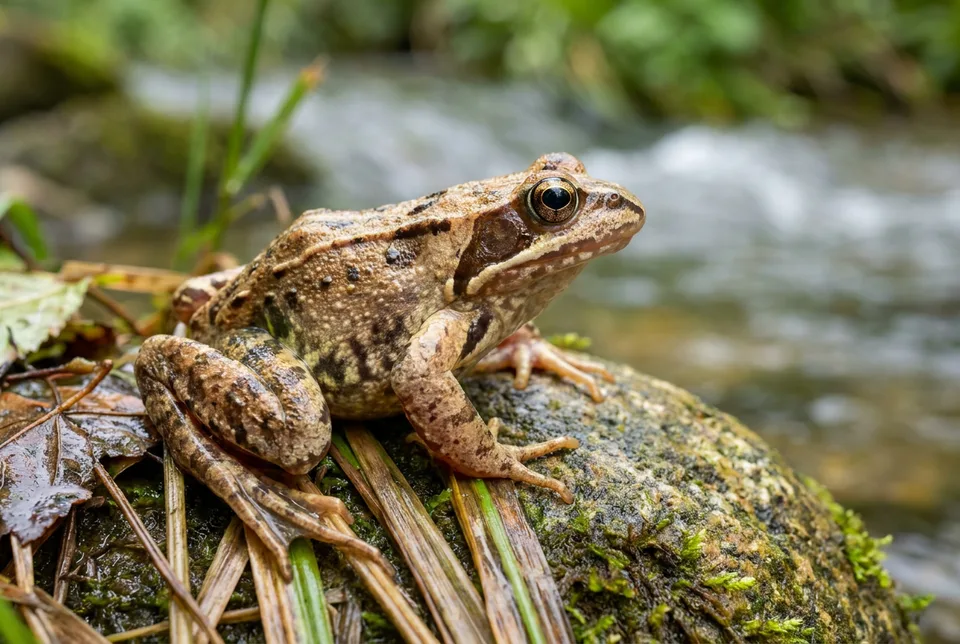
आर्द्रभूमि में Edible frog — Danube, नदी क्रूज़ के वन्यजीवEdible Frogआर्द्रभूमि में Agile Frog — Danube, नदी क्रूज़ के वन्यजीवAgile Frogआर्द्रभूमि में European fire-bellied toad — Danube, नदी क्रूज़ के वन्यजीवEuropean Fire-bellied Toad
पशु समूहAmphibiansपशु समूहAmphibiansपशु समूहAmphibians
डेस्टिनेशनDanubeडेस्टिनेशनDanubeडेस्टिनेशनDanube
Scientific name
Pelophylax kl.

Pelophylax kl. esculentus

Scientific name
Scientific name
आकार
not verified
आकार
आकार
वजन
not verified
वजन
वजन
जीवनकाल
not verified
जीवनकाल
जीवनकाल
स्थिति
Protected under environmental legislation according to Donau-Auen. The park reports green frogs as frequent locally but scarce in surrounding farmland; a formal global assessment for this hybrid taxon was not verified.
स्थिति
स्थिति
पहचान
Upperparts vary from green to brown, usually retaining some green around the head or body sides.

Upperparts vary from green to brown, usually retaining some green around the head or body sides. The underside is generally whitish or light grey and may be marbled. Unlike the brown-frog group, these frogs generally lack a dark temporal patch, though the park notes exceptions. Male vocal sacs are described as greyish. The German and English park accounts disagree about the corresponding parental-species sac colours, so those comparisons are not used here. Calls are useful to practiced observers, while detailed anatomical checks may require prohibited handling. Colour alone is insufficient to distinguish the Edible Frog reliably from its parental taxa.

पहचान
पहचान
आवास
The relevant setting is the Donau-Auen wetland mosaic, not the fast-flowing main Danube alone.

The relevant setting is the Donau-Auen wetland mosaic, not the fast-flowing main Danube alone. Water-edge habitat supplies feeding and reproductive opportunities, while nearby terrestrial cover supports movement and overwintering. The park specifically mentions leaf piles, deadwood, earth crevices and fallen trees as useful structures. It reports that green frogs remain frequent in the wetlands but have become scarce in surrounding agricultural landscapes. A protected waterbody therefore cannot be understood in isolation from its banks and adjacent land. For cruise visitors, an authorised backwater walk or guided pond visit is more relevant than scanning a distant shipping-channel embankment.

आवास
आवास
आहार
Donau-Auen describes a broad animal diet, particularly insects, worms and spiders; it also mentions mosquitoes as food for younger frogs.

Donau-Auen describes a broad animal diet, particularly insects, worms and spiders; it also mentions mosquitoes as food for younger frogs. This supports describing the frog as a small predator, but not inventing local feeding percentages or a preferred prey ranking. The retrieved account does not supply a measured seasonal menu for the Vienna–Hainburg reach. Adult feeding information must also be distinguished from the ecology of aquatic larval stages. Watching a frog wait at the waterline can be informative without observing a strike. Do not supply insects, disturb bank litter or force an animal into the open to demonstrate its feeding behaviour.

आहार
आहार
सबसे अच्छा मौसम
The national park explicitly places the frogs near water during summer and describes movement into hibernation during the autumn.

The national park explicitly places the frogs near water during summer and describes movement into hibernation during the autumn. These statements provide useful local seasonal context, but do not establish a complete recurring monthly viewing calendar. Hibernation dates cannot simply be subtracted from the year to manufacture an observation window. The location month array remains empty. A summer visit may offer visible adults or calls, although neither is guaranteed at an individual pond. Ask a guide which public viewpoints currently allow observation without entering sensitive margins. Seasonal changes in water level and vegetation can alter visibility independently of whether frogs remain present.

सबसे अच्छा मौसम
सबसे अच्छा मौसम
गंतव्य के अनुसार सीजन मैट्रिक्स
DanubeNo verified monthly viewing evidence

Summer water-edge activity is supported locally, but a complete numerical monthly observation window was not verified.

गंतव्य के अनुसार सीजन मैट्रिक्सगंतव्य के अनुसार सीजन मैट्रिक्स
पिछली प्रजातिDunnockअगली प्रजातिEgyptian Goose
नदी के सभी वन्यजीव
On this page
  • 01लगभग
  • 02व्यवहार और प्रजनन
  • 03वन्यजीवों के प्रमुख स्थान
  • 04रोचक तथ्य
  • 05सबसे अच्छा मौसम
  • 06गंतव्य के अनुसार सीजन मैट्रिक्स
  • 07आवास
  • 08आहार
  • 09प्रजातियों पर एक नज़र
  • 10प्रश्न और उत्तर
  • 11तुलना करें

Find your river cruise

अपनी यात्रा की योजना बनाएं

अपना अगला रिवर क्रूज़ सफर खोजो

उन गंतव्यों, तटवर्ती कार्यक्रमों और तारीखों की तुलना करें जहाँ आप अपने पसंदीदा जानवरों और उनके प्राकृतिक आवासों को देख सकें।

  • दैनिक तटवर्ती भ्रमण
  • जिम्मेदारी के साथ वन्यजीव दर्शन
  • बुटीक रिवर शिप्स
रिवर क्रूज एक्सप्लोर करें