Bluerides – Blue Rides - दुनिया भर में लिवअबोर्ड डाइविंग बुक करेंOCEAN ADVENTURES
रिवर क्रूज़नदियाँप्रकृति और वन्यजीवहमारा वादा
रिवर क्रूज़नदियाँप्रकृति और वन्यजीवहमारा वादासाइन इन करें

River गंतव्य

  • River गंतव्य
  • Amazon
  • Danube
  • Rhine
  • Mekong
  • Nile

जहाज़ और प्रस्थान

  • River Cruise खोजें
  • ऑफ़र

प्रकृति और वन्यजीव

  • प्रकृति और वन्यजीव

यात्रा सहायता

  • हमारा वादा
  • संपर्क

संपर्क करें

संपर्क करें

कभी भी संपर्क करें, हम आपकी यात्रा चुनने या किसी भी सवाल में मदद करने को तैयार हैं।

ईमेलहमें लिखें, आमतौर पर कुछ ही घंटों में जवाब देते हैं।
contact@bluerides.com
व्हाट्सएपव्हाट्सएप पर हमसे चैट करें, सोम–शुक्र 10:00–16:00 (CET)।
WhatsApp चैट शुरू करें
फ़ोनहमें कॉल करें, हम खुशी से मदद करेंगे।
फ्री कॉल, सोम–शुक्र 10:00–20:00 (CET)।
यूरोप+49 800 1144 990यूएसए+1 888 557 7735यूके+44 800 707 4152ऑस्ट्रेलिया+61 2 8599 6113कनाडा+1 888 557 7735
Which river journey is yours?Answer 8 quick questions and find the river cruise that fits you.
8 questions, 1 minute·Plus Gift
सुरक्षित भुगतान विधियाँआपके भुगतान AES-256 एन्क्रिप्शन द्वारा पूरी तरह सुरक्षित हैं।
द्वारा संचालितStripeWiseAMEXPayGoogle PaySEPABank
छाप·नियम और शर्तें·गोपनीयता नीति·हमारे बारे में·संपर्क करें·दायित्व अस्वीकरण·संबद्ध कार्यक्रम·Cruise·
यहाँ हमसे जुड़ें

© 2026 Blue Rides. सर्वाधिकार सुरक्षित।·

Bluerides – Blue Rides - दुनिया भर में लिवअबोर्ड डाइविंग बुक करेंOCEAN ADVENTURES
रिवर क्रूज़नदियाँप्रकृति और वन्यजीवहमारा वादा
रिवर क्रूज़नदियाँप्रकृति और वन्यजीवहमारा वादासाइन इन करें
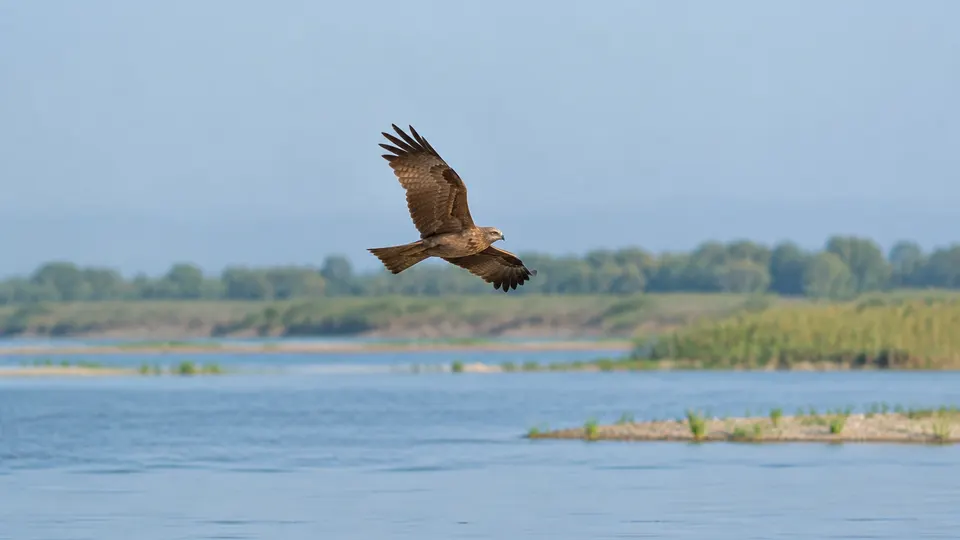
आर्द्रभूमि में Black kite — Danube, Rhine, नदी क्रूज़ के वन्यजीव
होम›रिवर क्रूज़›नदी के वन्यजीव›Black Kite

Black KiteMilvus migransइन्हें कहाँ और कब देखें

पिछली प्रजातिBighorn Sheepअगली प्रजातिBlack Redstart

Black Kite एक नज़र में

The Black Kite is a dark, long-winged bird of prey associated with open landscapes, wooded areas and water. Donau-Auen National Park describes it as approximately buzzard-sized and characteristic of the Danube wetlands, while also noting its rarity among Austrian raptors. That local context is more useful for a river visitor than the species' very large global range. BirdLife lists Milvus migrans as Least Concern, with a stable global population trend in the assessment read; this does not mean that every regional population is common. The River registry contains two separate reaches: the Austrian floodplains east of Vienna toward Hainburg, and the Rhine between Grafenwerth and Königswinter south of Bonn. Each has local occurrence support, but neither source read provides an exact numbered viewing season. A sighting may involve a bird travelling above the landscape rather than resting visibly beside the river.

व्यवहार और प्रजनन

आकार
Buzzard-sized, according to Donau-Auen National Park
वजन
Not verified in the sources read
जीवनकाल
Not verified in the sources read
स्थिति
See sourced assessment

Black Kites spend considerable time on the wing, using soaring and gliding flight to search broad areas. Their long wings and flexible tail help them manoeuvre while scanning for food. They are opportunistic raptors, capable of taking live prey and scavenging, rather than specialists dependent on a single kind of river fish. A bird may circle above floodplain woodland, follow a shoreline or pass quickly over a quay without landing. The official Donau-Auen description connects the species with partly open areas near water and woods. On the Rhine, the local birding account identifies it as a breeding bird of the Grafenwerth–Königswinter area. Neither statement justifies approaching a nest or assuming that a soaring bird is nesting nearby. Observe from established paths or an appropriate boat position and allow the bird to continue its movement. Do not offer food, provoke a response or seek nest locations for closer photography.

वन्यजीवों के प्रमुख स्थान

Danube का नदी दृश्य — नदी क्रूज़ के वन्यजीवों का आवास

Danube

Austria: Donau-Auen floodplains east of Vienna toward Hainburg, on the Vienna–Bratislava reach. Optional shore/backwater excursion; not a Passau or Budapest claim.
रिवर क्रूज एक्सप्लोर करें
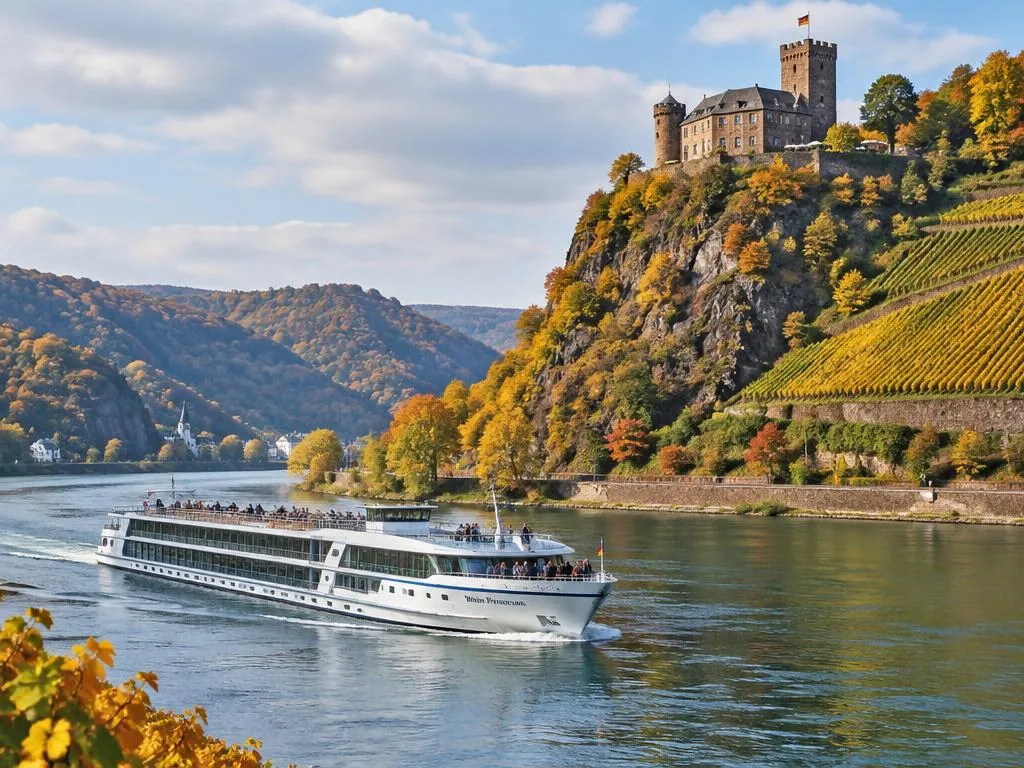
Rhine का नदी दृश्य — नदी क्रूज़ के वन्यजीवों का आवास

Rhine

Rhine: Grafenwerth–Königswinter, south of Bonn/Cologne. The local account describes Black Kite as a breeding bird.

रिवर क्रूज एक्सप्लोर करें

गंतव्य प्रजातियों के प्राकृतिक आवास का वर्णन करते हैं, न कि क्रूज के निश्चित पड़ावों का। कुछ जानवरों को देखने के लिए वैकल्पिक अंतर्देशीय भ्रमण की आवश्यकता होती है या वे केवल प्रतिबंधित रिजर्व में पाए जाते हैं।

Black Kite के बारे में रोचक तथ्य

  • Its scientific name is Milvus migrans.
  • It belongs to the hawk and eagle family.
  • Its plumage is predominantly dark brown.
  • The tail is shallowly forked.
  • It uses soaring flight.
  • It is an opportunistic feeder.
  • Donau-Auen describes it as buzzard-sized.
  • The Rhine account identifies it as a local breeding bird.
  • BirdLife's 2021 assessment lists it as Least Concern.

Black Kite को देखने का सबसे अच्छा समय

Both river locations retain empty month arrays. The Donau-Auen page confirms the species as characteristic of the wetlands but the passage read does not provide exact local arrival, departure or viewing months. The Rhine account calls Black Kite a breeding bird between Grafenwerth and Königswinter, which establishes a breeding association without supplying a numerical monthly calendar. Breeding status alone is insufficient to populate viewing months. BirdLife's broad migratory classification also cannot establish dates for either reach. Before travelling, ask about recent sightings above the actual floodplain or riverbank included in the excursion. For the Danube, confirm that the programme reaches the Austrian Donau-Auen landscape rather than assuming every Danube city stop offers equivalent habitat. For the Rhine, verify access to public observation areas and avoid seeking nests. Qualitative seasonal expectations may guide local enquiries, but they should remain separate from a documented, exact species-specific season.

Black Kite: गंतव्य के अनुसार सीजन मैट्रिक्स

Highlighted months reflect the stated local evidence, not guaranteed encounters. Neutral months mean no verified monthly viewing window, not absence. Observation records and recommended viewing windows are distinct.

Danube

Official local occurrence and habitat information were read, but exact species-specific months were not established.

जन॰फ़र॰मार्चअप्रैलमईजूनजुल॰अग॰सित॰अक्टू॰नव॰दिस॰
रिवर क्रूज एक्सप्लोर करें

Rhine

Breeding status does not by itself establish exact monthly viewing dates.

जन॰फ़र॰मार्चअप्रैलमईजूनजुल॰अग॰सित॰अक्टू॰नव॰दिस॰
रिवर क्रूज एक्सप्लोर करें

Black Kite कहाँ रहता है

A mixture of water, open feeding space and woodland is particularly relevant to the registered European reaches. Donau-Auen National Park explicitly describes open and partly open areas near water and woods as suitable habitat. Its floodplain setting east of Vienna toward Hainburg is therefore a more precise target than the entire Danube corridor. This reach may be visited through an optional shore or backwater excursion on a Vienna–Bratislava itinerary, but should not be extended automatically to Passau or Budapest. The second registry location is the Rhine between Grafenwerth and Königswinter, south of Bonn and Cologne. The local birding account lists Black Kite among breeding birds there. These are landscape-level associations, not published coordinates for guaranteed observation. Woodland edges and open sky may provide views from public paths. Respect nesting areas, access restrictions and private land, and avoid treating a broad riverbank walk as permission to enter islands or floodplain woods.

Black Kite क्या खाता है

Black Kites are opportunistic feeders whose food can include small vertebrates, invertebrates and carrion. Water-associated feeding does not make them equivalent to specialised fishing raptors, and the presence of a river alone does not reveal what an individual is seeking. Their broad searching flights allow them to exploit scattered opportunities across open country and wetland edges. A bird circling over a floodplain may be travelling or inspecting the landscape rather than actively hunting at that moment. The local sources read establish habitat and occurrence, not a quantified diet for either the Austrian or Rhine population. Consequently, no specific prey percentages or local feeding calendar are assigned. Visitors should avoid baiting kites or throwing food from a boat. Such practices can alter behaviour, concentrate birds around people and create misleading expectations for subsequent visitors. Watch any naturally occurring capture or scavenging event from a distance and distinguish observed prey from an assumed food item.

प्रजातियों पर एक नज़र

सामान्य नाम
Black Kite
Scientific name
Milvus migrans
पशु समूह
Birds
आकार
Buzzard-sized, according to Donau-Auen National Park
वजन
Not verified in the sources read
जीवनकाल
Not verified in the sources read
स्थिति
Least Concern, BirdLife species factsheet; assessment year 2021
पहचान
Black Kites are predominantly dark brown rather than uniformly black. Their long wings and relatively long, shallowly forked tail are useful flight features. Donau-Auen National Park compares their size with a buzzard, but size estimates in open sky are unreliable without a reference. Red Kites generally show a more pronounced tail fork and different colour contrasts, while buzzards have a different combination of wing and tail proportions. Tail movement can temporarily conceal a fork, so assess several views rather than rejecting or confirming the species from one moment. The scientific name Milvus migrans connects the Austrian, Rhine and BirdLife accounts to the exact registry key Black kite. Broad taxonomy and migration patterns should not be inferred from a distant photograph beyond what is visible. Where light, distance or viewing angle prevents a confident distinction, record an unidentified raptor rather than upgrading the sighting because the local checklist includes Black Kite.

Black Kite: अक्सर पूछे जाने वाले प्रश्न

तुम Black Kite कहाँ देख सकते हो?
Danube, Rhine. Search the sky above floodplain woodland and open river margins with binoculars, allowing enough time to follow a bird through turns. Tail shape can change with angle and steering, so a single silhouette is often insufficient. Watch for the combination of long wings, dark overall appearance and a shallowly forked tail. On the Austrian Danube, an authorised shore or backwater outing may offer a better angle than a moving vessel in the main channel. On the Rhine, the registered Grafenwerth–Königswinter area has public access possibilities described by the local birding source. Stay on permitted routes and avoid entering wooded islands or private land in pursuit of a closer view. Do not assume that every dark raptor is a kite; buzzards and other birds of prey may share the landscape. Record actual diagnostic features and location, and keep a respectful distance if the bird repeatedly returns to the same wooded area.
Black Kite देखने का सबसे अच्छा समय कब है?
Both river locations retain empty month arrays. The Donau-Auen page confirms the species as characteristic of the wetlands but the passage read does not provide exact local arrival, departure or viewing months. The Rhine account calls Black Kite a breeding bird between Grafenwerth and Königswinter, which establishes a breeding association without supplying a numerical monthly calendar. Breeding status alone is insufficient to populate viewing months. BirdLife's broad migratory classification also cannot establish dates for either reach. Before travelling, ask about recent sightings above the actual floodplain or riverbank included in the excursion. For the Danube, confirm that the programme reaches the Austrian Donau-Auen landscape rather than assuming every Danube city stop offers equivalent habitat. For the Rhine, verify access to public observation areas and avoid seeking nests. Qualitative seasonal expectations may guide local enquiries, but they should remain separate from a documented, exact species-specific season.
Black Kite कितने बड़े होते हैं?
Buzzard-sized, according to Donau-Auen National Park। वयस्क वजन: Not verified in the sources read। आकार उम्र, लिंग और आबादी के साथ बदलता रहता है।
Black Kite के आस-पास मुझे कैसा व्यवहार करना चाहिए?
Search the sky above floodplain woodland and open river margins with binoculars, allowing enough time to follow a bird through turns. Tail shape can change with angle and steering, so a single silhouette is often insufficient. Watch for the combination of long wings, dark overall appearance and a shallowly forked tail. On the Austrian Danube, an authorised shore or backwater outing may offer a better angle than a moving vessel in the main channel. On the Rhine, the registered Grafenwerth–Königswinter area has public access possibilities described by the local birding source. Stay on permitted routes and avoid entering wooded islands or private land in pursuit of a closer view. Do not assume that every dark raptor is a kite; buzzards and other birds of prey may share the landscape. Record actual diagnostic features and location, and keep a respectful distance if the bird repeatedly returns to the same wooded area.
Black Kite क्या खाते हैं?
Black Kites are opportunistic feeders whose food can include small vertebrates, invertebrates and carrion. Water-associated feeding does not make them equivalent to specialised fishing raptors, and the presence of a river alone does not reveal what an individual is seeking. Their broad searching flights allow them to exploit scattered opportunities across open country and wetland edges. A bird circling over a floodplain may be travelling or inspecting the landscape rather than actively hunting at that moment. The local sources read establish habitat and occurrence, not a quantified diet for either the Austrian or Rhine population. Consequently, no specific prey percentages or local feeding calendar are assigned. Visitors should avoid baiting kites or throwing food from a boat. Such practices can alter behaviour, concentrate birds around people and create misleading expectations for subsequent visitors. Watch any naturally occurring capture or scavenging event from a distance and distinguish observed prey from an assumed food item.
क्या रिवर क्रूज पर वन्यजीवों का दिखना निश्चित है?
नहीं। जानवर स्वतंत्र रूप से घूमते हैं और मार्ग, मौसम, पहुंच प्रतिबंध और स्थानीय स्थितियां हर यात्रा को प्रभावित करती हैं। बुकिंग से पहले वास्तविक यात्रा कार्यक्रम और तट कार्यक्रम की पुष्टि करें।

उन्हीं गंतव्यों में वन्यजीवों की तुलना करें

इन गंतव्यों में दर्ज अन्य birds को एक्सप्लोर करें। समान परिवेश का अर्थ यह नहीं है कि जानवरों की आदतें या देखने का सीजन भी एक जैसा होगा।

पशु समूह और गंतव्य के अनुसार प्रजातियों की तुलना
आर्द्रभूमि में Black kite — Danube, Rhine, नदी क्रूज़ के वन्यजीवBlack Kiteआर्द्रभूमि में Black stork — Danube, नदी क्रूज़ के वन्यजीवBlack Storkआर्द्रभूमि में Black Tern — Danube, नदी क्रूज़ के वन्यजीवBlack Tern
पशु समूहBirdsपशु समूहBirdsपशु समूहBirds
डेस्टिनेशनDanube, Rhineडेस्टिनेशनDanubeडेस्टिनेशनDanube
Scientific name
Milvus migrans

Milvus migrans

Scientific name
Scientific name
आकार
Buzzard-sized, according to Donau-Auen National Park
आकार
आकार
वजन
Not verified in the sources read
वजन
वजन
जीवनकाल
Not verified in the sources read
जीवनकाल
जीवनकाल
स्थिति
See sourced assessment
स्थिति
स्थिति
पहचान
Black Kites are predominantly dark brown rather than uniformly black.

Black Kites are predominantly dark brown rather than uniformly black. Their long wings and relatively long, shallowly forked tail are useful flight features. Donau-Auen National Park compares their size with a buzzard, but size estimates in open sky are unreliable without a reference. Red Kites generally show a more pronounced tail fork and different colour contrasts, while buzzards have a different combination of wing and tail proportions. Tail movement can temporarily conceal a fork, so assess several views rather than rejecting or confirming the species from one moment. The scientific name Milvus migrans connects the Austrian, Rhine and BirdLife accounts to the exact registry key Black kite. Broad taxonomy and migration patterns should not be inferred from a distant photograph beyond what is visible. Where light, distance or viewing angle prevents a confident distinction, record an unidentified raptor rather than upgrading the sighting because the local checklist includes Black Kite.

पहचान
पहचान
आवास
A mixture of water, open feeding space and woodland is particularly relevant to the registered European reaches.

A mixture of water, open feeding space and woodland is particularly relevant to the registered European reaches. Donau-Auen National Park explicitly describes open and partly open areas near water and woods as suitable habitat. Its floodplain setting east of Vienna toward Hainburg is therefore a more precise target than the entire Danube corridor. This reach may be visited through an optional shore or backwater excursion on a Vienna–Bratislava itinerary, but should not be extended automatically to Passau or Budapest. The second registry location is the Rhine between Grafenwerth and Königswinter, south of Bonn and Cologne. The local birding account lists Black Kite among breeding birds there. These are landscape-level associations, not published coordinates for guaranteed observation. Woodland edges and open sky may provide views from public paths. Respect nesting areas, access restrictions and private land, and avoid treating a broad riverbank walk as permission to enter islands or floodplain woods.

आवास
आवास
आहार
Black Kites are opportunistic feeders whose food can include small vertebrates, invertebrates and carrion.

Black Kites are opportunistic feeders whose food can include small vertebrates, invertebrates and carrion. Water-associated feeding does not make them equivalent to specialised fishing raptors, and the presence of a river alone does not reveal what an individual is seeking. Their broad searching flights allow them to exploit scattered opportunities across open country and wetland edges. A bird circling over a floodplain may be travelling or inspecting the landscape rather than actively hunting at that moment. The local sources read establish habitat and occurrence, not a quantified diet for either the Austrian or Rhine population. Consequently, no specific prey percentages or local feeding calendar are assigned. Visitors should avoid baiting kites or throwing food from a boat. Such practices can alter behaviour, concentrate birds around people and create misleading expectations for subsequent visitors. Watch any naturally occurring capture or scavenging event from a distance and distinguish observed prey from an assumed food item.

आहार
आहार
सबसे अच्छा मौसम
Both river locations retain empty month arrays.

Both river locations retain empty month arrays. The Donau-Auen page confirms the species as characteristic of the wetlands but the passage read does not provide exact local arrival, departure or viewing months. The Rhine account calls Black Kite a breeding bird between Grafenwerth and Königswinter, which establishes a breeding association without supplying a numerical monthly calendar. Breeding status alone is insufficient to populate viewing months. BirdLife's broad migratory classification also cannot establish dates for either reach. Before travelling, ask about recent sightings above the actual floodplain or riverbank included in the excursion. For the Danube, confirm that the programme reaches the Austrian Donau-Auen landscape rather than assuming every Danube city stop offers equivalent habitat. For the Rhine, verify access to public observation areas and avoid seeking nests. Qualitative seasonal expectations may guide local enquiries, but they should remain separate from a documented, exact species-specific season.

सबसे अच्छा मौसम
सबसे अच्छा मौसम
गंतव्य के अनुसार सीजन मैट्रिक्स
DanubeNo verified monthly viewing evidence

Official local occurrence and habitat information were read, but exact species-specific months were not established.

RhineNo verified monthly viewing evidence

Breeding status does not by itself establish exact monthly viewing dates.

गंतव्य के अनुसार सीजन मैट्रिक्सगंतव्य के अनुसार सीजन मैट्रिक्स
पिछली प्रजातिBighorn Sheepअगली प्रजातिBlack Redstart
नदी के सभी वन्यजीव
On this page
  • 01लगभग
  • 02व्यवहार और प्रजनन
  • 03वन्यजीवों के प्रमुख स्थान
  • 04रोचक तथ्य
  • 05सबसे अच्छा मौसम
  • 06गंतव्य के अनुसार सीजन मैट्रिक्स
  • 07आवास
  • 08आहार
  • 09प्रजातियों पर एक नज़र
  • 10प्रश्न और उत्तर
  • 11तुलना करें

Find your river cruise

अपनी यात्रा की योजना बनाएं

अपना अगला रिवर क्रूज़ सफर खोजो

उन गंतव्यों, तटवर्ती कार्यक्रमों और तारीखों की तुलना करें जहाँ आप अपने पसंदीदा जानवरों और उनके प्राकृतिक आवासों को देख सकें।

  • दैनिक तटवर्ती भ्रमण
  • जिम्मेदारी के साथ वन्यजीव दर्शन
  • बुटीक रिवर शिप्स
रिवर क्रूज एक्सप्लोर करें