
- Stramma et al. (2008) ont documenté une expansion de 4,5 millions de km² du volume des ZMO dans les océans tropicaux sur 50 ans, causée par une ventilation décroissante et une demande croissante en oxygène.
- Diaz & Rosenberg (2008) ont recensé plus de 400 zones mortes côtières dans le monde, se propageant de manière exponentielle depuis les années 1960, la zone hypoxique du golfe du Mexique atteignant 22 720 km² en 2017.
- Kwiatkowski et al. (2020) projettent un déclin de 3,5 % de l'oxygène dissous moyen mondial d'ici 2100 dans des scénarios à fortes émissions, avec des impacts disproportionnés sur les régions tropicales des ZMO.
L'oxygène dissous est la ligne de vie invisible de l'océan. Chaque poisson qui captive un plongeur sur un mur de récif, chaque communauté d'invertébrés tapissant un mont sous-marin, chaque tapis bactérien soutenant un écosystème de suintement froid – tous dépendent de concentrations d'oxygène que des millions d'années de circulation océanique ont établies. Pourtant, cette ligne de vie s'effiloche. Les zones de minimum d'oxygène (ZMO) — des couches de mi-profondeur naturelles où l'oxygène dissous chute à près de zéro — ont augmenté en volume de millions de kilomètres cubes au cours des cinq dernières décennies [1]. Simultanément, les zones mortes côtières causées par le ruissellement des nutriments agricoles se sont propagées de manière exponentielle depuis les années 1960, avec plus de 400 documentées mondialement [2]. Les mécanismes sont différents — les ZMO sont causées par la physique et le réchauffement des océans ; les zones mortes par l'eutrophisation — mais la conséquence biologique est identique : les habitats qui ne peuvent pas supporter une vie animale complexe s'effondrent, les réseaux trophiques se restructurent et la mégafaune marine qui attire les plongeurs vers des destinations emblématiques disparaît. Pour les plongeurs sous-marins, ces phénomènes s'entrecroisent avec l'expérience de plongée de manières qui vont de l'immédiatement perceptible (l'absence de poissons sur un récif affecté par une zone morte ; la distribution compressée des pélagiques au-dessus d'une ZMO) au subtil mais écologiquement profond (productivité réduite dans les systèmes d'upwelling ; mortalité massive de la faune benthique en dessous des profondeurs de plongée récréative). Stramma et al. [1] ont construit des séries chronologiques de 50 ans sur l'oxygène dissous dans les océans tropicaux et ont documenté une tendance indubitable à l'expansion du volume hypoxique. Diaz et Rosenberg [2] ont examiné l'écologie des zones mortes à l'échelle mondiale et ont trouvé le modèle inquiétant : une croissance exponentielle du nombre de zones hypoxiques côtières, directement corrélée à l'expansion de l'agriculture industrielle dans les bassins fluviaux. Cet article examine les deux phénomènes, leurs moteurs et leurs implications pour le monde marin dont dépendent les plongeurs.
Understanding Oxygen Minimum Zones
OMZs are permanent, naturally occurring features of the world ocean, found primarily in the eastern tropical Pacific, the Arabian Sea, and the Bay of Bengal. They form at mid-depth (typically 200–1,000 m) where two processes converge: intense biological oxygen demand from microbes decomposing the rain of organic particles sinking from the productive surface ocean above, and poor ventilation by well-oxygenated deep and intermediate waters from below. The result is a layer where dissolved oxygen (DO) can fall from the surface saturation value of ~8 mg L⁻¹ to below 0.5 mg L⁻¹ — or even to analytical zero in the most intense OMZs, such as the eastern tropical South Pacific off Peru and Chile, where sulphidic conditions develop.
Stramma's 50-Year Time Series
Stramma et al. [1] compiled repeat hydrographic observations from the tropical Atlantic, Pacific, and Indian Oceans spanning 50 years and constructed dissolved oxygen time series at depth. Their analysis revealed a statistically robust expansion of low-oxygen water volume, with the tropical Atlantic OMZ growing by approximately 4.5 million km² over the period. Oxygen loss in the tropical Atlantic at 300–700 m depth averaged 0.36 μmol kg⁻¹ per decade — modest in absolute terms but compounding over decades to produce measureable shoaling of the upper oxycline (the boundary above which oxygen is adequate for most animal life). The physical drivers include reduced oxygen solubility in a warming ocean (warmer water simply holds less dissolved gas) and increased density stratification that suppresses the downward mixing of oxygenated surface water into the thermocline.
Coastal Dead Zones: A Eutrophication Story
While OMZs are features of the open ocean's mid-depth circulation, coastal dead zones are a distinctly anthropogenic phenomenon driven by nutrient pollution. When rivers laden with nitrogen and phosphorus from agricultural fertilisers, sewage effluent, and atmospheric deposition of fossil-fuel combustion products discharge into coastal seas, they fuel explosive blooms of phytoplankton. These blooms eventually die and sink, and the microbial decomposition of this vast quantity of organic matter consumes the dissolved oxygen in bottom water, creating hypoxic or anoxic conditions — bottom-water hypoxia — that persists for weeks to months during summer stratification when warmer, less dense surface water caps the system and prevents reoxygenation from above.
The Gulf of Mexico Hypoxic Zone
The northern Gulf of Mexico hosts the largest dead zone in the Western Hemisphere, fed by the Mississippi-Atchafalaya River system draining 41% of the continental United States — 1.8 million km² of farmland. Each spring, snowmelt and spring rains flush nitrogen-rich runoff from corn and soybean fields into the Mississippi, which delivers an annual nitrogen load of approximately 1.5 million tonnes to the Gulf. By midsummer, the resulting hypoxic zone typically covers 13,000–15,000 km² of the Louisiana-Texas continental shelf bottom; in 2017, it reached a record 22,720 km². Diaz and Rosenberg [2] noted that the Gulf of Mexico dead zone is among the best-documented globally, with monitoring since the mid-1980s showing high interannual variability (driven by river flow) but no long-term improvement in nutrient loading from the watershed.
The Baltic Sea
The Baltic Sea's semi-enclosed basin, shallow sills limiting exchange with the North Sea, and heavily farmed catchment encompassing nine nations make it the world's most eutrophied large sea. Hypoxia in the Baltic's open water is not a seasonal phenomenon but a chronic one: the deep Baltic basins have experienced near-permanent anoxia since at least the mid-20th century, and the hypoxic and euxinic (sulphidic) area has expanded substantially. Conley et al. [4] documented that coastal hypoxia — occurring in the archipelagos and bays previously buffered from open-water anoxia — had become widespread and unprecedented across the Baltic coastline by the early 21st century. Krapf et al. [3] found that hypoxic area in the open Baltic has exceeded 60,000 km² in recent years, with euxinic conditions (complete oxygen depletion with hydrogen sulphide production) covering up to 20,000 km². Meier et al. [5] documented accelerated oxygen consumption rates that amplify deoxygenation — meaning even if nutrient loads were reduced, oxygen recovery would be delayed by decades.
Drivers of OMZ Expansion
Ocean Warming and Stratification
The most fundamental driver of OMZ expansion is ocean warming. Dissolved gas solubility decreases with temperature: the warmer the water, the less oxygen it can hold at saturation. As the ocean surface warms, the oxygen content of water subducted into the thermocline decreases. Simultaneously, stronger thermal stratification reduces the downward mixing of oxygenated surface water and the upward ventilation of OMZ water by deep convection. Kwiatkowski et al. [7] projected from CMIP6 models that global mean dissolved oxygen will decline by approximately 3.5% by 2100 under SSP5-8.5, with the greatest losses in tropical thermocline waters where OMZs are already most intense. This corresponds to a volumetric expansion of hypoxic water in the 200–600 m depth range that would further compress the habitat available to mid-water and upper-mesopelagic organisms.
Nutrient Pollution and Algal Blooms
In coastal systems, the dominant driver of dead-zone expansion is eutrophication — the excessive enrichment of water with nutrients, primarily reactive nitrogen (nitrate, ammonium) and phosphorus. Global reactive nitrogen production has increased more than tenfold since 1900, driven by the Haber-Bosch process for synthetic fertiliser manufacture and the burning of fossil fuels (which releases nitrogen oxides). Agricultural watersheds export far more nitrogen to coastal seas than pre-industrial systems, driving more frequent, more intense, and more geographically extensive hypoxic events. Diaz and Rosenberg [2] found that the number of coastal dead zones had grown exponentially between 1960 and 2008, from fewer than 10 documented globally to more than 400 — a growth trajectory correlated directly with synthetic fertiliser production and nitrogen deposition.
Hypoxia Thresholds: What Biology Tolerates
The canonical ecological hypoxia threshold is 2.0 mg O₂ L⁻¹ (62.5 μmol kg⁻¹). Below this concentration, most demersal fish (bottom-living species such as cod, flatfish, and grouper) evacuate the area or, if unable to escape, die. Mobile invertebrates — shrimp, crabs, lobster — attempt to migrate but are often trapped by the extent of the hypoxic zone. Sessile invertebrates — sponges, bivalves, echinoderms — cannot flee and die in place, sometimes in spectacular mass mortality events. Below 0.5 mg L⁻¹, only certain specialised polychaete worms and anaerobic bacteria can persist. Sweetman et al. [6] reviewed impacts on deep-sea benthic communities and noted that even sub-lethal hypoxia — oxygen concentrations between 2.0 and 4.0 mg L⁻¹ — reduces growth rates, reproductive output, and immune function in benthic invertebrates, compromising community resilience long before mass mortality events occur.
- Above 4.0 mg L⁻¹: Normal function for most marine fauna. Minimum dissolved oxygen for most coral reef fish species.
- 2.0–4.0 mg L⁻¹ (sub-lethal hypoxia): Reduced growth, reproduction, and immune function. Many fish avoid these depths.
- Below 2.0 mg L⁻¹ (hypoxia): Mass fish and invertebrate mortality; ecological dead zone. Standard threshold for declaring a dead zone.
- Below 0.5 mg L⁻¹ (severe hypoxia/anoxia): Virtual absence of macrofauna; sulphur-bacteria mat communities. Hydrogen sulphide gas production possible at complete anoxia.
Ecological Consequences
Habitat Compression and the Squeeze Effect
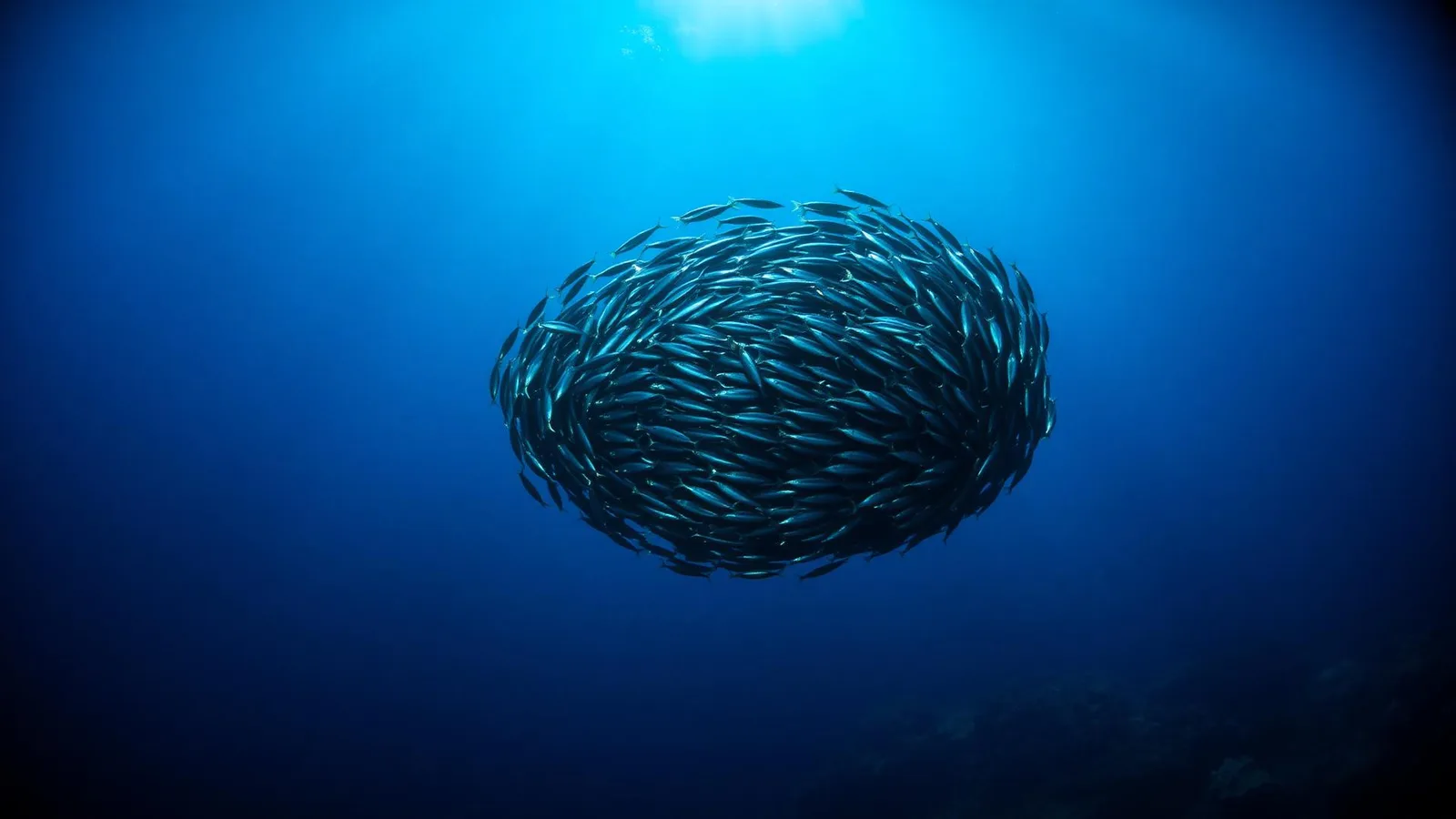
As OMZs expand upward (shoal) toward the surface, commercially important and ecologically significant species — including yellowfin tuna, blue marlin, mahi-mahi, and a range of large squid — are compressed into thinner, well-oxygenated surface layers. This 'habitat squeeze' has been documented empirically using electronic tagging data from tuna in the eastern tropical Pacific, where the OMZ now constrains diving behaviour to the upper 100 m. For divers, this compression effect can create spectacular aggregations of pelagic megafauna near the surface — but these aggregations signal ecological stress, not abundance. They also increase fish vulnerability to surface longline fisheries, potentially accelerating overexploitation of already-stressed stocks.
Benthic Community Collapse and Recovery
Dead zone events kill benthic communities comprehensively. Diaz and Rosenberg [2] estimated that dead zones kill billions of benthic invertebrates annually across the Gulf of Mexico shelf alone, with direct economic losses to commercial shellfish and shrimp fisheries measured in hundreds of millions of dollars per year. Benthic recovery following hypoxic events depends on event intensity, duration, and the availability of larval recruits from surrounding oxygenated areas. After a single moderate event, recovery may begin within weeks as oxygen returns and mobile organisms recolonise from the edges. After repeated or prolonged anoxia — as in the deep Baltic basins — recovery can require decades to centuries, particularly if the sediment has become sulphidic.
Dead zones are now a serious global environmental problem, comparable in importance to biodiversity loss and climate change, with the capacity to fundamentally alter coastal and oceanic ecosystems.— Diaz & Rosenberg, Science, 2008 [2]
What Divers Encounter in OMZ and Dead Zone Regions
Sport divers rarely encounter core OMZ waters directly, since those typically lie below sport diving depths (below 200 m). However, the ecological effects are visible in the upper water column: unusual near-surface aggregations of fish and squid above upwelling OMZ margins; apparent scarcity of certain demersal species on continental shelf slopes; absence of the diverse sponge and crinoid communities that thrive where oxygenated water ventilates seamount walls. In shallow coastal dead zones, divers who venture into summer-stratified Baltic fjords, Chesapeake Bay-adjacent waters, or the northern Gulf of Mexico shelf may detect the characteristic odour of hydrogen sulphide at depth — a result of sulphate-reducing bacteria metabolising in completely anoxic bottom sediments. Visibility frequently collapses in dead-zone waters as bacterial mats and particulate organic matter increase turbidity.
Policy, Recovery, and the Long Road Back
The Baltic Sea's HELCOM Baltic Sea Action Plan, adopted in 2007, established binding national nutrient reduction targets and has produced modest declines in nitrogen loading from some nations. Monitoring shows slight oxygen improvements in a few coastal stations, but open-water hypoxia in the central Baltic remains severe — because the system has a multi-decade lag between nutrient reduction and oxygen response, reflecting the long residence time of nutrients already embedded in the sediment. The Gulf of Mexico dead zone will not meaningfully shrink without major reductions in Mississippi basin nitrogen loads from agriculture — a challenge that has defeated multiple policy frameworks since the 1990s. IMO regulations on ballast water, MARPOL Annex V marine litter provisions, and emerging nutrient trading schemes address some pressures but leave the dominant driver — agricultural runoff — largely unregulated at source.
- Reduce nitrogen and phosphorus loads from agriculture: The single most effective intervention for coastal dead zones. Requires improved nutrient management, cover crops, and riparian buffers in catchments.
- Improve wastewater treatment: Secondary and tertiary treatment dramatically reduces nitrogen and phosphorus loads from urban areas.
- Restore coastal wetlands: Mangroves, salt marshes, and seagrass beds intercept terrestrial nutrient runoff before it reaches the open sea.
- Manage fisheries to maintain food web function: Intact predator communities can suppress algal overgrowth and maintain oxygen balance on shallow reefs.
- Reduce greenhouse gas emissions: The only intervention that addresses the ocean warming component of OMZ expansion is deep decarbonisation.
The Future Ocean Under High Emissions
Sweetman et al. [6] projected that by 2100, up to 70% of the bathyal zone (200–3,000 m depth) — the domain of cold-water corals, fish aggregations on seamounts, and deep-reef dive sites — could experience significant deoxygenation under high-emissions scenarios, fundamentally restructuring the deep-sea communities that are largely unknown to science and completely unexplored by recreational divers. For shallower systems, Kwiatkowski et al. [7] project declining oxygen in tropical thermocline waters under all SSP scenarios, with SSP5-8.5 driving losses large enough to cause permanent expansion of OMZ upper boundaries into the mesopelagic zone where commercial fish species feed. For dive destinations built around the extraordinary productivity of upwelling systems — the Galápagos, Socorro, Cocos Island, Mozambique Channel — OMZ shoaling represents an additional stressor layered on top of thermal bleaching, acidification, and overfishing, compressing the ecological margin within which these world-class dive ecosystems currently function.
Références
- [1] Stramma, L., Johnson, G.C., Sprintall, J., Mohrholz, V. (2008). Expanding oxygen-minimum zones in the tropical oceans. Science. doi:10.1126/science.1153847
- [2] Diaz, R.J., Rosenberg, R. (2008). Spreading dead zones and consequences for marine ecosystems. Science. doi:10.1126/science.1156401
- [3] Krapf, K., Naumann, M., Gräwe, U., Börgel, F., Mohrholz, V. (2022). Investigating hypoxic and euxinic area changes based on various datasets from the Baltic Sea. Frontiers in Marine Science. doi:10.3389/fmars.2022.823476
- [4] Conley, D.J., Carstensen, J., Aigars, J. et al. (2011). Hypoxia is increasing in the coastal zone of the Baltic Sea. Environmental Science & Technology. doi:10.1021/es201212r
- [5] Meier, H.E.M., Andersson, H.C., Arheimer, B. et al. (2018). Recently accelerated oxygen consumption rates amplify deoxygenation in the Baltic Sea. Journal of Geophysical Research: Oceans. doi:10.1029/2017JC013686
- [6] Sweetman, A.K., Thurber, A.R., Smith, C.R. et al. (2017). Major impacts of climate change on deep-sea benthic ecosystems. Elementa: Science of the Anthropocene. doi:10.1525/elementa.203
- [7] Kwiatkowski, L., Torres, O., Bopp, L. et al. (2020). Twenty-first century ocean warming, acidification, deoxygenation, and upper-ocean nutrient and primary production decline from CMIP6 model projections. Biogeosciences. doi:10.5194/bg-17-3439-2020
- [8] IPCC (2022). Climate Change 2022: Impacts, Adaptation and Vulnerability. Contribution of WG II to the Sixth Assessment Report. Cambridge University Press.