Bluerides – Blue Rides - Varaa sukellusristeilyjä maailmanlaajuisestiOCEAN ADVENTURES
JokiristeilytJoetLuonto & eläimistöLupauksemme
JokiristeilytJoetLuonto & eläimistöLupauksemmeKirjaudu

Jokikohteet

  • Jokikohteet
  • Amazon
  • Tonava
  • Rein
  • Mekong
  • Niili

Laivat & lähdöt

  • Jokiristeilyhaku
  • Tarjoukset

Luonto & eläimistö

  • Luonto & eläimistö

Matkustustuki

  • Lupauksemme
  • Ota yhteyttä

Yhteystiedot

Ota yhteyttä

Ota rohkeasti yhteyttä, autamme sinua matkan valinnassa ja kaikissa kysymyksissä.

SähköpostiLähetä viesti, vastaamme yleensä muutamassa tunnissa.
contact@bluerides.com
WhatsAppJuttele kanssamme WhatsAppissa, ma–pe 10:00–16:00 (CET).
Aloita WhatsApp-keskustelu
PuhelinSoita meille, autamme mielellämme.
Ilmainen puhelu, ma–pe 10:00–20:00 (CET).
Eurooppa+49 800 1144 990USA+1 888 557 7735Iso-Britannia+44 800 707 4152Australia+61 2 8599 6113Kanada+1 888 557 7735
Which river journey is yours?Answer 8 quick questions and find the river cruise that fits you.
8 questions, 1 minute·Plus Gift
Turvalliset maksutavatMaksusi on täysin suojattu AES-256-salauksella.
Palvelun tarjoaaStripeWiseAMEXPayGoogle PaySEPABank
Julkaisutiedot·Käyttöehdot·Tietosuojakäytäntö·Meistä·Yhteystiedot·Vastuuvapautus·Kumppaniohjelma·Cruise·
Seuraa meitä täällä

© 2026 Blue Rides. Kaikki oikeudet pidätetään.·

Bluerides – Blue Rides - Varaa sukellusristeilyjä maailmanlaajuisestiOCEAN ADVENTURES
JokiristeilytJoetLuonto & eläimistöLupauksemme
JokiristeilytJoetLuonto & eläimistöLupauksemmeKirjaudu
Coypu kosteikossa — Rhine, jokiristeilyjen eläimet
Etusivu›Jokiristeilyt›Jokien eläimistö›Coypu

CoypuMyocastor coypusMissä ja milloin niitä voi nähdä

Edellinen lajiCommon SwiftSeuraava lajiDalmatian Pelican

Coypu pähkinänkuoressa

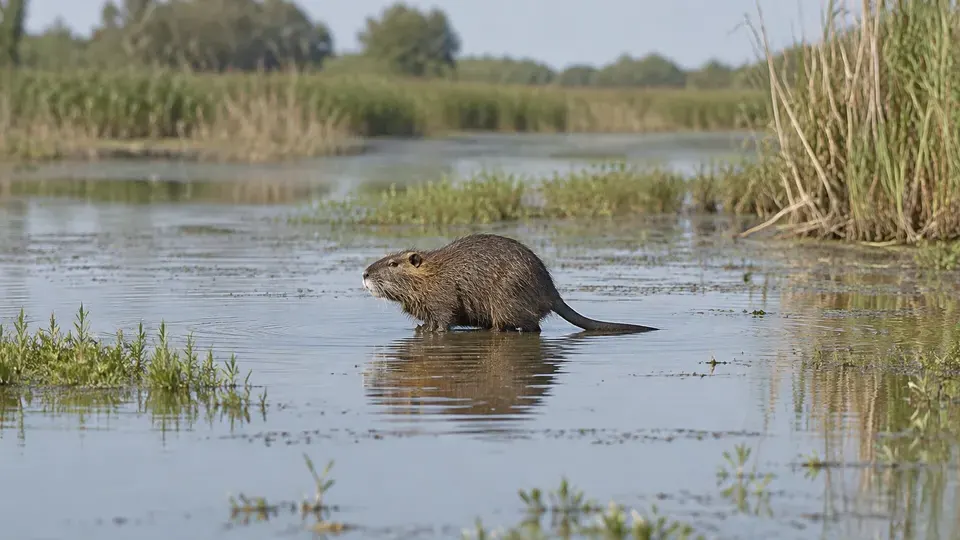
The Coypu, also called Nutria, is a large South American rodent whose European populations derive from human introductions associated with fur farming. Its river-cruise relevance is especially clear at Bislicher Insel near Xanten on the Lower Rhine: the reserve manager explicitly describes animals that visitors can often observe. This is a free-living introduced population, not a captive display. An apparently beaver-like animal in the wetland should therefore not automatically be called a Beaver. The long rounded tail and conspicuous orange incisors provide better clues than brown fur alone. Animal Diversity Web places the species around marshes, lake edges and sluggish streams with suitable bankside vegetation. Species background source: https://www.nationalgeographic.com/animals/mammals/facts/nutria

Käyttäytyminen ja lisääntyminen

Koko
Head and body 17–25 inches; tail 10–16 inches (National Geographic).
Paino
15–22 pounds (National Geographic).
Elinikä
National Geographic reports 8–10 years in the wild; this is not a typical age established for the Rhine population.
Tila
Least Concern as reported by National Geographic; introduced in Europe, native to South America.

Coypus are strong swimmers that move between water and vegetated banks. National Geographic describes burrows or nests close to water and notes that animals may live socially. A swimming individual may show little more than its head and upper back, whereas an animal feeding ashore reveals its body shape and feet. The position of the eyes and ears high on the head suits this semi-aquatic life. Their ability to use both banks and water explains why observers should scan the vegetation fringe rather than only the centre of a lake. Local group size, daily activity peaks and reproductive rates at Bislicher Insel were not verified.

Parhaat luontokohteet

Jokimaisema Rhine — jokiristeilyjen elinympäristö

Rhine

Lower Rhine: Bislicher Insel at Xanten/Wesel downstream of Cologne; optional oxbow wetland excursion. Viewing: Wild introduced population; observable summer and winter.
Tutustu jokiristeilyihin

Kohteet kuvaavat lajin elinympäristöä, eivätkä ne ole taattuja pysähdyspaikkoja risteilyllä. Joidenkin eläinten näkeminen vaatii valinnaisen retken sisämaahan tai ne elävät rajoitetuilla suojelualueilla.

Hauskoja faktoja lajista Coypu

  • Coypu and Nutria are names for the same animal.
  • Its native range is South American.
  • European populations arose through human introductions.
  • The tail is long rather than paddle-shaped.
  • Webbed feet assist swimming.
  • Aquatic plants and roots are important foods.
  • Small molluscs may also be eaten.
  • Bislicher Insel reports observation opportunities in summer and winter.

Paras aika nähdä Coypu

The Regionalverband Ruhr reserve account explicitly says that the South American Nutrias living at Bislicher Insel can often be observed in summer as well as winter. This is recurring local evidence, but it does not specify a numerical monthly range or establish equal visibility throughout the year. Both seasons are retained as written rather than converted into twelve supported months. No verified month-by-month observation calendar was located. The reserve's general year-round accessibility is not itself a species calendar. Plan a quiet shore visit around current access advice and allow time to inspect wetland margins; an animal's presence in the reserve does not guarantee that it will emerge during a particular excursion.

Coypu: sesonkimatriisi kohteittain

Highlighted months reflect the stated local evidence, not guaranteed encounters. Neutral months mean no verified monthly viewing window, not absence. Observation records and recommended viewing windows are distinct.

Rhine

Summer and winter observation are explicitly supported locally, but no numerical monthly calendar was verified.

tammihelmimaalishuhtitoukokesäheinäelosyyslokamarrasjoulu
Tutustu jokiristeilyihin

Missä Coypu elää

The registered Rhine location is an oxbow and floodplain wetland excursion at Bislicher Insel, downstream of Cologne near Xanten and Wesel. The reserve manager describes a varied landscape of flowing-river shores, gravel lakes, reedbeds and muddy edges beside the quieter old Rhine. Coypus generally favour marshes and slow water with emergent vegetation, according to Animal Diversity Web. These requirements make the quieter wetland margins more relevant than the main shipping channel. The species' presence here does not establish that it occurs at every Rhine landing, nor does the South American native range explain its European conservation role. Native-range conservation and introduced-population management are separate questions.

Mitä Coypu syö

Aquatic plants and roots are important foods, although National Geographic also records small animals such as snails and mussels. Calling the Coypu an exclusively grass-eating mammal would therefore oversimplify its diet. Bank vegetation can supply both feeding opportunities and protective cover, so feeding observations may be made along a narrow strip beside the water. A local study quantifying the proportions of roots, shoots or animal food at Bislicher Insel was not verified. Nor was a seasonal Rhine menu established. Watch what a naturally feeding animal selects without offering vegetables or bread: feeding can alter its behaviour and bring wildlife into unnecessary contact with visitors.

Laji pähkinänkuoressa

Yleiskielinen nimi
Coypu
Scientific name
Myocastor coypus
Eläinryhmä
Mammals
Koko
Head and body 17–25 inches; tail 10–16 inches (National Geographic).
Paino
15–22 pounds (National Geographic).
Elinikä
National Geographic reports 8–10 years in the wild; this is not a typical age established for the Rhine population.
Tila
Least Concern as reported by National Geographic; introduced in Europe, native to South America.
Tunnistaminen
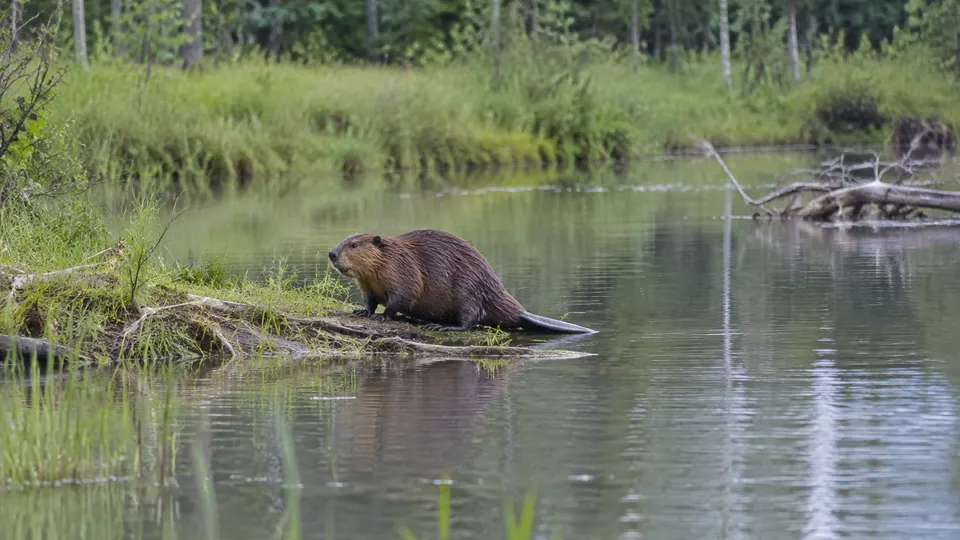
Look for a robust, large rodent with coarse brown outer fur, a substantial head, small ears and orange incisors when the mouth is visible. Its long, approximately cylindrical tail is particularly useful in comparison with the broad flattened tail of a Beaver. National Geographic describes webbed feet, another adaptation to swimming, although these may be hidden in water. A pale muzzle can stand out at close range, but a distant brown head is insufficient evidence by itself. Compare overall proportions, tail shape and movement together. If reeds obscure the diagnostic features, record an unidentified aquatic rodent rather than turning the reserve's known Coypu population into an identification shortcut.

Coypu: usein kysytyt kysymykset

Missä voin nähdä lajin Coypu?
Rhine. Use the designated reserve paths and viewing areas, keeping dogs on leads as required by the manager. Scan muddy banks, reeds and the waterline for movement before looking across the open lakes. Wait for an animal to turn or leave the water if the tail is needed for identification; do not entice it ashore. A zoomed photograph can distinguish a rounded Coypu tail from a Beaver's broad paddle without approaching a burrow. Do not feed or corner an animal. An optional visit to Bislicher Insel offers a more realistic opportunity than hoping for a close view from a passing Rhine cruise vessel.
Milloin on paras aika nähdä Coypu?
The Regionalverband Ruhr reserve account explicitly says that the South American Nutrias living at Bislicher Insel can often be observed in summer as well as winter. This is recurring local evidence, but it does not specify a numerical monthly range or establish equal visibility throughout the year. Both seasons are retained as written rather than converted into twelve supported months. No verified month-by-month observation calendar was located. The reserve's general year-round accessibility is not itself a species calendar. Plan a quiet shore visit around current access advice and allow time to inspect wetland margins; an animal's presence in the reserve does not guarantee that it will emerge during a particular excursion.
Kuinka suureksi Coypu kasvaa?
Head and body 17–25 inches; tail 10–16 inches (National Geographic).. Aikuisen paino: 15–22 pounds (National Geographic).. Koko vaihtelee iän, sukupuolen ja populaation mukaan.
Miten minun tulisi toimia lajin Coypu läheisyydessä?
Use the designated reserve paths and viewing areas, keeping dogs on leads as required by the manager. Scan muddy banks, reeds and the waterline for movement before looking across the open lakes. Wait for an animal to turn or leave the water if the tail is needed for identification; do not entice it ashore. A zoomed photograph can distinguish a rounded Coypu tail from a Beaver's broad paddle without approaching a burrow. Do not feed or corner an animal. An optional visit to Bislicher Insel offers a more realistic opportunity than hoping for a close view from a passing Rhine cruise vessel.
Mitä Coypu syö?
Aquatic plants and roots are important foods, although National Geographic also records small animals such as snails and mussels. Calling the Coypu an exclusively grass-eating mammal would therefore oversimplify its diet. Bank vegetation can supply both feeding opportunities and protective cover, so feeding observations may be made along a narrow strip beside the water. A local study quantifying the proportions of roots, shoots or animal food at Bislicher Insel was not verified. Nor was a seasonal Rhine menu established. Watch what a naturally feeding animal selects without offering vegetables or bread: feeding can alter its behaviour and bring wildlife into unnecessary contact with visitors.
Ovatko villieläinhavainnot taattuja jokiristeilyllä?
Ei. Eläimet liikkuvat vapaasti, ja reitit, sää, pääsyrajoitukset sekä paikalliset olosuhteet vaikuttavat jokaiseen retkeen. Vahvista lopullinen matkaohjelma ja rantaretket ennen varaamista.

Vertaile saman kohteen villieläimiä

Tutustu muihin lajeihin (mammals), joita on tavattu näissä kohteissa. Samankaltainen ympäristö ei tarkoita, että eläimillä on samat elintavat tai sama havainnointisesonki.

Lajivertailu eläinryhmän ja kohteen mukaan
Coypu kosteikossa — Rhine, jokiristeilyjen eläimetCoypuEurasian beaver kosteikossa — Danube, Rhine, Saone, jokiristeilyjen eläimetEurasian Beaver
EläinryhmäMammalsEläinryhmäMammals
KohteetRhineKohteetDanube, Rhine, Saone
Scientific name
Myocastor coypus

Myocastor coypus

Scientific name
Koko
Head and body 17–25 inches; tail 10–16 inches (National Geographic).
Koko
Paino
15–22 pounds (National Geographic).
Paino
Elinikä
National Geographic reports 8–10 years in the wild; this is not a typical age established for the Rhine population.
Elinikä
Tila
Least Concern as reported by National Geographic; introduced in Europe, native to South America.
Tila
Tunnistaminen
Look for a robust, large rodent with coarse brown outer fur, a substantial head, small ears and orange incisors when the mouth is visible.

Look for a robust, large rodent with coarse brown outer fur, a substantial head, small ears and orange incisors when the mouth is visible. Its long, approximately cylindrical tail is particularly useful in comparison with the broad flattened tail of a Beaver. National Geographic describes webbed feet, another adaptation to swimming, although these may be hidden in water. A pale muzzle can stand out at close range, but a distant brown head is insufficient evidence by itself. Compare overall proportions, tail shape and movement together. If reeds obscure the diagnostic features, record an unidentified aquatic rodent rather than turning the reserve's known Coypu population into an identification shortcut.

Tunnistaminen
Elinympäristö
The registered Rhine location is an oxbow and floodplain wetland excursion at Bislicher Insel, downstream of Cologne near Xanten and Wesel.

The registered Rhine location is an oxbow and floodplain wetland excursion at Bislicher Insel, downstream of Cologne near Xanten and Wesel. The reserve manager describes a varied landscape of flowing-river shores, gravel lakes, reedbeds and muddy edges beside the quieter old Rhine. Coypus generally favour marshes and slow water with emergent vegetation, according to Animal Diversity Web. These requirements make the quieter wetland margins more relevant than the main shipping channel. The species' presence here does not establish that it occurs at every Rhine landing, nor does the South American native range explain its European conservation role. Native-range conservation and introduced-population management are separate questions.

Elinympäristö
Ravinto
Aquatic plants and roots are important foods, although National Geographic also records small animals such as snails and mussels.

Aquatic plants and roots are important foods, although National Geographic also records small animals such as snails and mussels. Calling the Coypu an exclusively grass-eating mammal would therefore oversimplify its diet. Bank vegetation can supply both feeding opportunities and protective cover, so feeding observations may be made along a narrow strip beside the water. A local study quantifying the proportions of roots, shoots or animal food at Bislicher Insel was not verified. Nor was a seasonal Rhine menu established. Watch what a naturally feeding animal selects without offering vegetables or bread: feeding can alter its behaviour and bring wildlife into unnecessary contact with visitors.

Ravinto
Paras sesonki
The Regionalverband Ruhr reserve account explicitly says that the South American Nutrias living at Bislicher Insel can often be observed in summer as well as winter.

The Regionalverband Ruhr reserve account explicitly says that the South American Nutrias living at Bislicher Insel can often be observed in summer as well as winter. This is recurring local evidence, but it does not specify a numerical monthly range or establish equal visibility throughout the year. Both seasons are retained as written rather than converted into twelve supported months. No verified month-by-month observation calendar was located. The reserve's general year-round accessibility is not itself a species calendar. Plan a quiet shore visit around current access advice and allow time to inspect wetland margins; an animal's presence in the reserve does not guarantee that it will emerge during a particular excursion.

Paras sesonki
Kausitaulukko kohteittain
RhineNo verified monthly viewing evidence

Summer and winter observation are explicitly supported locally, but no numerical monthly calendar was verified.

Kausitaulukko kohteittain
Edellinen lajiCommon SwiftSeuraava lajiDalmatian Pelican
Kaikki joen villieläimet
On this page
  • 01Noin
  • 02Käyttäytyminen ja lisääntyminen
  • 03Parhaat luontokohteet
  • 04Mielenkiintoisia faktoja
  • 05Paras sesonki
  • 06Kausitaulukko kohteittain
  • 07Elinympäristö
  • 08Ravinto
  • 09Laji pähkinänkuoressa
  • 10Kysymyksiä ja vastauksia
  • 11Vertaa

Find your river cruise

Suunnittele matkasi

Löydä seuraava jokimatkasi

Vertaile kohteita, rantaretkiä ja ajankohtia nähdäksesi juuri ne eläimet ja elinympäristöt, joita rakastat.

  • Päivittäiset rantaretket
  • Vastuullinen eläinten tarkkailu
  • Boutique-jokilaivat
Tutustu jokiristeilyihin