Bluerides – Blue Rides - Varaa sukellusristeilyjä maailmanlaajuisestiOCEAN ADVENTURES
Seikkailuristeilyt

Adventure Cruise destinations

Small ships, remarkable places and unforgettable wildlife.

  • AlaskaAlaskaAmericas
  • Costa RicaCosta RicaAmericas
  • FloridaFloridaAmericas
  • GalápagosGalápagosAmericas
  • MexicoMexicoAmericas
  • New EnglandNew EnglandAmericas
  • Cape VerdeCape VerdeEMEA
  • CroatiaCroatiaEMEA
Adventure CruisesAdventure Cruise search
TarjouksetLuonto ja eläimetLupauksemmeYhteystiedot
SeikkailuristeilytTarjouksetLuonto ja eläimetLupauksemmeYhteystiedotKirjaudu

Matkakohteet

  • Matkakohteet
  • Alaska
  • Galápagos
  • Antarctica
  • Arctic

Alukset ja lähdöt

  • Adventure Cruise search
  • Tarjoukset
  • Pienet retkikunta-alukset

Luonto ja villieläimet

  • Luonto ja villieläimet

Matkatuki

  • Asiantuntevat oppaat
  • Lupauksemme
  • Yhteystiedot

Yhteystiedot

Ota yhteyttä

Ota rohkeasti yhteyttä, autamme sinua matkan valinnassa ja kaikissa kysymyksissä.

SähköpostiLähetä viesti, vastaamme yleensä muutamassa tunnissa.
contact@bluerides.com
WhatsAppJuttele kanssamme WhatsAppissa, ma–pe 10:00–16:00 (CET).
Aloita WhatsApp-keskustelu
PuhelinSoita meille, autamme mielellämme.
Ilmainen puhelu, ma–pe 10:00–20:00 (CET).
Eurooppa+49 800 1144 990USA+1 888 557 7735Iso-Britannia+44 800 707 4152Australia+61 2 8599 6113Kanada+1 888 557 7735
Which expedition is yours?Answer 8 quick questions and find the adventure cruise that fits you.
8 questions, 1 minute·Plus Gift
Turvalliset maksutavatMaksusi on täysin suojattu AES-256-salauksella.
Palvelun tarjoaaStripeWiseAMEXPayGoogle PaySEPABank
Julkaisutiedot·Käyttöehdot·Tietosuojakäytäntö·Meistä·Yhteystiedot·Vastuuvapautus·Kumppaniohjelma·Cruise·
Seuraa meitä täällä

© 2026 Blue Rides. Kaikki oikeudet pidätetään.·

Bluerides – Blue Rides - Varaa sukellusristeilyjä maailmanlaajuisestiOCEAN ADVENTURES
Seikkailuristeilyt

Adventure Cruise destinations

Small ships, remarkable places and unforgettable wildlife.

  • AlaskaAlaskaAmericas
  • Costa RicaCosta RicaAmericas
  • FloridaFloridaAmericas
  • GalápagosGalápagosAmericas
  • MexicoMexicoAmericas
  • New EnglandNew EnglandAmericas
  • Cape VerdeCape VerdeEMEA
  • CroatiaCroatiaEMEA
Adventure CruisesAdventure Cruise search
TarjouksetLuonto ja eläimetLupauksemmeYhteystiedot
SeikkailuristeilytTarjouksetLuonto ja eläimetLupauksemmeYhteystiedotKirjaudu
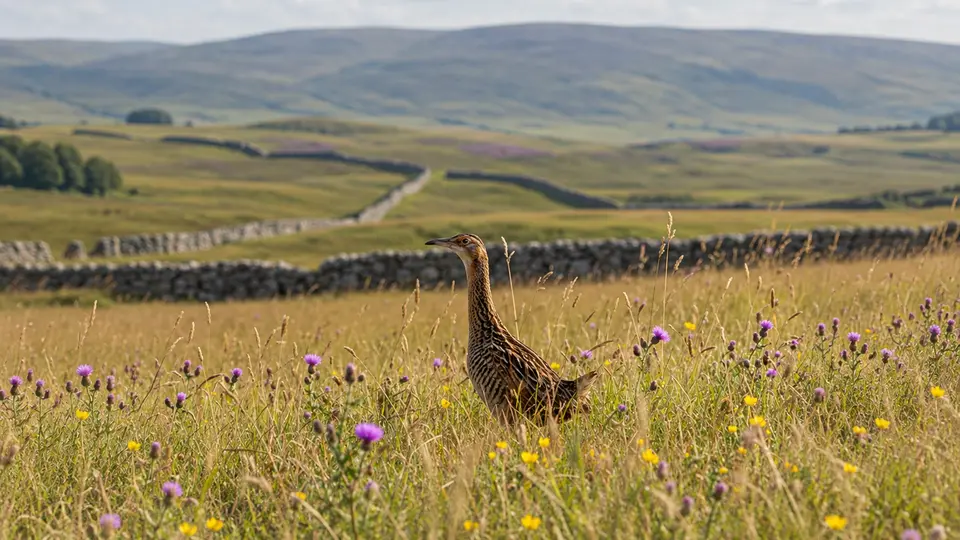
Corncrake in its natural habitat
Etusivu›Adventure Cruises›Nature & Wildlife›Corncrake

CorncrakeCrex crexMissä ja milloin niitä voi nähdä

Previous speciesCook's petrelNext speciesCory's Shearwater

Corncrake at a glance

The corncrake is a migratory rail that lives in tall grass rather than the conspicuous open shallows associated with many waterbirds. In Scotland, its rasping call is a characteristic but increasingly localized sound of western crofting landscapes. Birds return from sub-Saharan Africa to breed in cover-rich meadows and field margins. Global status masks serious regional declines, and sympathetic mowing practices are essential because nests and flightless young are vulnerable to agricultural machinery.

Behaviour & reproduction

Size
27–30 cm long
Weight
130–210 g
Lifespan
Not reliably established
Status
Least Concern

Corncrakes usually move unseen through dense vegetation, slipping between stems with the body held low. Males advertise with a repetitive two-part rasp, often calling for long periods at night. Females build concealed ground nests and raise the chicks, while males may seek additional mates. Adults prefer running to flying when disturbed, but their unobtrusive appearance hides a capacity for long-distance migration between European or Asian breeding grounds and African nonbreeding areas. Adults prefer running to flying when disturbed, but their unobtrusive appearance hides a capacity for long-distance migration between European or Asian breeding grounds and African nonbreeding areas. Males often maintain small territories, moving between several calling posts within their chosen patch of vegetation. Unlike many birds, they are more active vocally during the night, utilizing the cover of darkness to avoid predators.

Top wildlife locations

Scotland wildlife habitat

Scotland

Western island croft fields and coastal hay meadows offer plausible listening habitat beside public routes. Birds are localized and rarely visible; a short inland excursion from the shore is usually necessary.
Adventure cruises in Scotland

Destinations describe the species' habitat, not guaranteed cruise stops. Some animals require an optional inland excursion or are found in restricted reserves.

Fun facts about the Corncrake

  • The male's call is commonly compared with a comb being scraped.
  • Despite its reluctance to fly locally, it migrates to sub-Saharan Africa.
  • Females may produce two broods in a favourable breeding season.
  • Mowing from the centre of a field outward can help chicks escape into surrounding cover.

Best time to see the Corncrake

May and June are the strongest months for hearing territorial males in Scotland, with some activity extending into July. Calling intensity varies with weather, time and breeding stage. This is a breeding-season listening window, not a promise of seeing birds emerge. Calling intensity varies with weather, time and breeding stage. This is a breeding-season listening window, not a promise of seeing birds emerge. Peak calling activity typically occurs from late evening until dawn, making early morning or late evening excursions most rewarding for detection.

Corncrake: season matrix by destination

Travel and observation windows vary by region. Highlighted months are an orientation for planning, not confirmed sightings or a guarantee of access.

Scotland

These months overlap Scottish breeding and calling activity, particularly May and June; local occupancy and visibility vary.

tammihelmimaalishuhtitoukokesäheinäelosyyslokamarrasjoulu
Cruise ships in Scotland

Where the Corncrake lives

Breeding birds need tall, penetrable vegetation that provides concealment without becoming an impenetrable mat. Scottish habitats include hay meadows, croft fields, nettle patches and iris beds. Coastal farmland can be suitable, but beaches and bare shorelines are not normal viewing habitat. Coastal farmland can be suitable, but beaches and bare shorelines are not normal viewing habitat. Optimal breeding conditions also require a mosaic of different sward heights and densities to support various life stages. Within these areas, they typically favour damp or rushy patches over drier, uniform grasslands.

What the Corncrake eats

Corncrakes eat insects, spiders, earthworms, slugs and other small invertebrates found within grassland vegetation or on the soil. Seeds and other plant material also contribute. Chicks initially depend heavily on animal prey, making insect-rich, structurally varied fields especially valuable. Seeds and other plant material also contribute. Chicks initially depend heavily on animal prey, making insect-rich, structurally varied fields especially valuable. During migration, their diet may also incorporate berries and grains to fuel their long journeys.

Species at a glance

Common name
Corncrake
Scientific name
Crex crex
Animal group
Birds
Size
27–30 cm long
Weight
130–210 g
Lifespan
Not reliably established
Status
Least Concern
Identification
Its chestnut wings, greyish face and dry, repeated rasp distinguish it from the longer-billed water rail and the smaller, spotted crake. Its chestnut wings, greyish face and dry, repeated rasp distinguish it from the longer-billed water rail and the smaller, spotted crake. The adult has distinctive black streaking on its crown and back, contrasting with its plain grey underparts. Juveniles are duller, lacking the strong grey on the face and breast.

Corncrake: frequently asked questions

Where can I see the Corncrake?
Scotland. Listen from public paths beside suitable fields, especially around dusk. Do not enter tall vegetation, use playback or pursue a calling bird, since concealed nests and chicks are easily disturbed or trampled. Do not enter tall vegetation, use playback or pursue a calling bird, since concealed nests and chicks are easily disturbed or trampled. While direct visual encounters are rare, patient observers may occasionally glimpse a bird at the edge of cover, particularly in low light. Binoculars are essential for any potential visual confirmation, even at a distance.
When is the best time to see the Corncrake?
May and June are the strongest months for hearing territorial males in Scotland, with some activity extending into July. Calling intensity varies with weather, time and breeding stage. This is a breeding-season listening window, not a promise of seeing birds emerge. Calling intensity varies with weather, time and breeding stage. This is a breeding-season listening window, not a promise of seeing birds emerge. Peak calling activity typically occurs from late evening until dawn, making early morning or late evening excursions most rewarding for detection.
How big does the Corncrake get?
27–30 cm long. Adult weight: 130–210 g. Size varies with age, sex and population.
How should I behave around the Corncrake?
Listen from public paths beside suitable fields, especially around dusk. Do not enter tall vegetation, use playback or pursue a calling bird, since concealed nests and chicks are easily disturbed or trampled. Do not enter tall vegetation, use playback or pursue a calling bird, since concealed nests and chicks are easily disturbed or trampled. While direct visual encounters are rare, patient observers may occasionally glimpse a bird at the edge of cover, particularly in low light. Binoculars are essential for any potential visual confirmation, even at a distance.
What does the Corncrake eat?
Corncrakes eat insects, spiders, earthworms, slugs and other small invertebrates found within grassland vegetation or on the soil. Seeds and other plant material also contribute. Chicks initially depend heavily on animal prey, making insect-rich, structurally varied fields especially valuable. Seeds and other plant material also contribute. Chicks initially depend heavily on animal prey, making insect-rich, structurally varied fields especially valuable. During migration, their diet may also incorporate berries and grains to fuel their long journeys.
Are wildlife sightings guaranteed on an adventure cruise?
No. Animals move freely and routes, weather, access restrictions and local conditions influence every outing. Confirm the actual itinerary and shore program before booking.

Compare wildlife in the same destinations

Explore other birds recorded in these destinations. Similar surroundings do not mean the animals share the same habits or viewing season.

Species comparison by animal group and destination
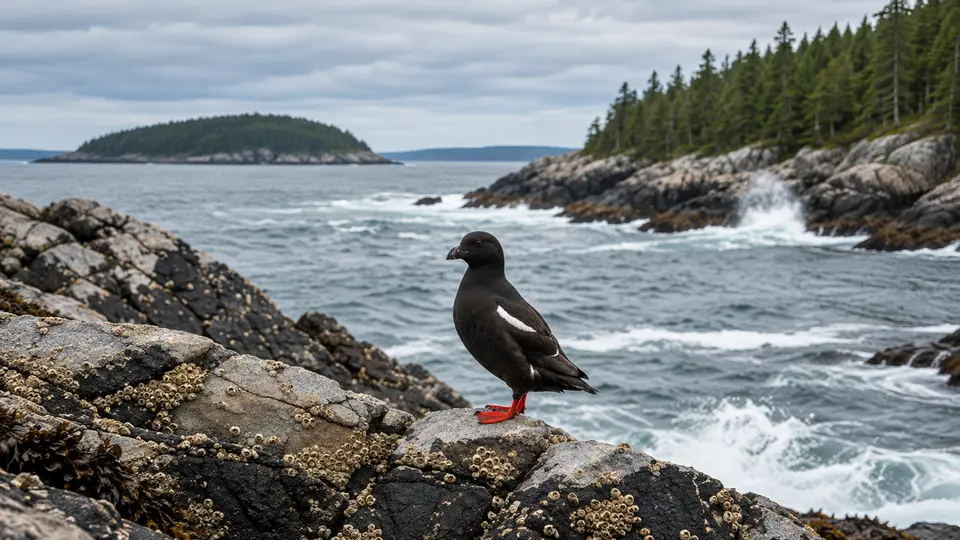
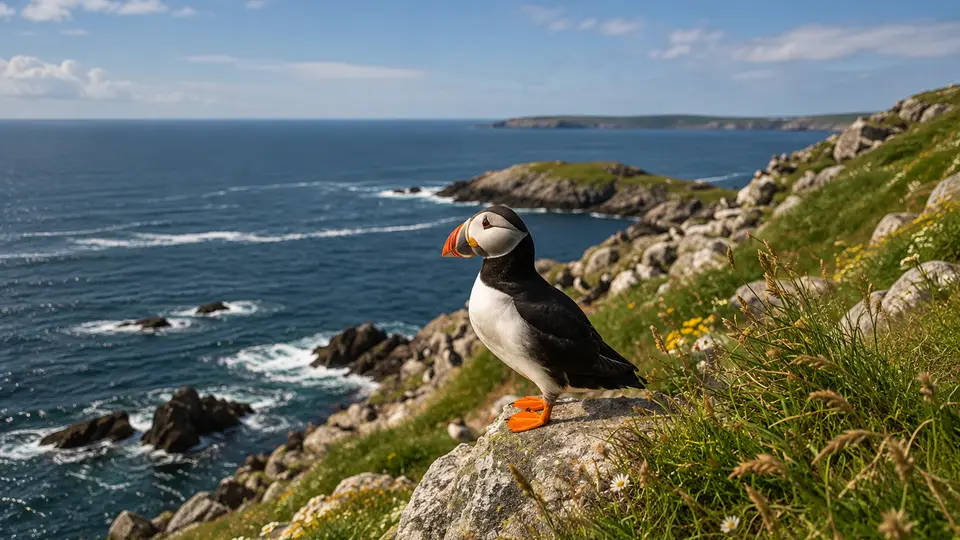
CorncrakeCorncrakeAtlantic PuffinAtlantic PuffinBlack GuillemotBlack Guillemot
Animal groupBirdsAnimal groupBirdsAnimal groupBirds
DestinationsScotlandDestinationsNew England, Norway, Scotland, ArcticDestinationsNew England, Norway, Scotland
Previous speciesCook's petrelNext speciesCory's Shearwater
All wildlife destinations
On this page
  • 01About
  • 02Behaviour & reproduction
  • 03Top wildlife locations
  • 04Fun facts
  • 05Best season
  • 06Season matrix by destination
  • 07Habitat
  • 08Diet
  • 09Species at a glance
  • 10Questions & answers
  • 11Compare

Find your wildlife cruise

Suunnittele matkasi

Find your next wildlife adventure

Compare destinations, shore programs and dates with the animals and habitats you would love to see.

  • Naturalist-led shore excursions
  • Responsible wildlife watching
  • Small expedition ships
Search wildlife cruises