Sobre Camano Islet
El Islote Camano ofrece una experiencia de buceo accesible y suave dentro del archipiélago de las Galápagos, destacándose como un lugar ideal para buceadores con menos experiencia. A diferencia de muchos de los sitios más desafiantes de la región, brinda una oportunidad para que los buceadores más nuevos descubran la rica biodiversidad submarina de las Galápagos en un entorno tranquilo y cómodo. La topografía suele presentar corrientes suaves y profundidades menores, creando un entorno relajado para quienes tienen menos inmersiones registradas. Esta configuración permite a los buceadores explorar cómodamente el paisaje submarino sin las condiciones exigentes que se encuentran en otras partes de las islas. Aunque las fuentes no proporcionan detalles estructurales específicos, la descripción general sugiere un entorno tipo arrecife que facilita la exploración. Aunque no se detallan avistamientos específicos de vida marina para el Islote Camano, los sitios aptos para principiantes en las Galápagos generalmente albergan una variedad de peces de arrecife coloridos y tortugas marinas. También es posible encontrar especies de tiburones residentes, lo que permite a los buceadores apreciar la fauna icónica de las Galápagos en un entorno tranquilo. En la práctica, el sitio se caracteriza por corrientes generalmente suaves, lo que lo convierte en una inmersión relajada y apta para la mayoría de los buceadores certificados. Este entorno de baja exigencia permite una entrada cómoda y una inmersión agradable, en contraste con las corrientes a menudo fuertes que se encuentran en otros lugares de las Galápagos. Representa un lugar privilegiado para los buceadores que buscan una introducción más suave al famoso mundo submarino de la región.
Destacados
Destino de buceo todo el añoConfluencia de grandes corrientes oceánicasTiburones ballena (estacional)Bancos de tiburones martilloLobos marinos de GalápagosIguanas marinas (estacional)Fuertes corrientes y termoclinasBiodiversidad marina excepcional
Calendario por meses
Mejores meses para bucear
Ene
Feb
Mar
Abr
May
Jun
Jul
Ago
Sep
Oct
Nov
Dic
Excelente
Bueno
Temporada Baja
Jun – Nov
Temporada fría con tiburones ballena en Darwin y Wolf. Las corrientes más fuertes traen abundante vida marina.
Abr – May & Dic
Períodos de transición con buena diversidad. Tiburones martillo presentes todo el año.
Ene – Mar
Temporada cálida con mares más tranquilos. Menos actividad pelágica pero mejor para snorkel y excursiones terrestres.
Datos del punto de buceo: Camano Islet
- Profundidad
- 70–114 ft
- Corriente
- Moderada a Muy fuerte
- Visibilidad
- 15–30 m
- Temperatura del agua
- 19–26°C
- Entrada
- Liveaboard / Lancha auxiliar
- Nivel
- Avanzado, experiencia en corrientes imprescindible
- Tipo de buceo
- Big animals, Deriva, Pelágico
- Región / puerto
- Galápagos Islands
- Coordenadas
- -0.28386, -91.070359
Condiciones y corrientes
En el Islote Camano, las corrientes suelen ser suaves, lo que contribuye a un entorno de buceo relajado y adecuado para la mayoría de los buceadores certificados. Esto contrasta marcadamente con muchos otros sitios de Galápagos que a menudo presentan corrientes fuertes, especialmente durante la temporada fría de junio a noviembre. Las condiciones más tranquilas significan que los buceadores menos avanzados pueden controlar cómodamente su flotabilidad y navegación sin necesidad de técnicas avanzadas de buceo en corrientes, como entradas negativas o ganchos de arrecife. La visibilidad puede variar en las Galápagos, pero las condiciones suaves del Islote Camano generalmente permiten una experiencia agradable. Esto lo convierte en un lugar ideal para los buceadores que prefieren una exploración más tranquila, sin oleaje significativo ni los desafíos que plantean las fuertes autopistas pelágicas, garantizando una experiencia de buceo placentera.
Vida marina y probabilidad de avistamiento

Hammerhead sharks
Year-round, larger schools Dec-May · frecuente
Whale sharks
June-November · ocasional
Manta rays
March-May · ocasional
Galapagos sharks
Year-round · frecuente
Silky sharks
Year-round · ocasional
Sea lions
Year-round · frecuente
Green sea turtles
Year-round · frecuente
Moray eels
Year-round · frecuente
White-tip reef sharks
Year-round · frecuente
Galapagos grunts
Year-round · frecuente
Bluestripe snappers
Year-round · frecuentePerfil de la inmersión
Galápagos diving often involves negative entries into strong currents, with dive leaders typically assessing the prevailing conditions to determine the best approach. Divers should expect to drift with the current for much of the dive, using reef hooks when observing marine life in stationary positions. The dive profile is often multi-level, starting deeper to seek out pelagics and then gradually ascending along reefs or walls. Given the strong surge and potential for downcurrents, maintaining neutral buoyancy and being prepared for rapid depth changes is crucial. Safety stops are typically performed in the blue, potentially deploying a surface marker buoy (SMB) upon ascent, as currents can carry divers a considerable distance from the initial entry point. Dive times are often limited by air consumption in strenuous conditions and cold water.
Fotografía submarina
Galápagos diving, with its strong currents and large pelagic subjects, demands careful planning for photography. Wide-angle lenses are essential for capturing schooling hammerheads, manta rays, and whale sharks. Due to often-turbid waters from nutrient-rich currents, close focus wide-angle techniques are beneficial. Strobes are crucial to add color and contrast, especially for deeper subjects or when visibility is reduced. Buoyancy control and efficient movement are paramount; flailing or uncontrolled movements will disturb marine life and compromise shot stability. Keeping a low profile close to rocks can help wildlife approach, but always be aware of potential hazards like scorpionfish. Photographing in strong surge requires anticipation and timing, often using the natural sway to position for shots.
Combina con estos puntos cercanos
- North Seymour
Often a checkout dive site with diverse marine life and land tours.
- Gordon Rocks
Known for strong currents and hammerhead sharks.
- Cousin's Rock
Pinnacle dive with abundant reef fish and pelagic encounters.
- Kicker Rock (León Dormido)
Famous for shark encounters, including hammerheads and Galápagos sharks.
- Isla Tortuga - South Wall
Wall diving with potential for pelagic sightings.
Cómo llegar y logística
Access to the Galápagos Islands typically begins with international flights into mainland Ecuador, either Guayaquil (GSP) or Quito (UIO), followed by a domestic flight to Baltra Island (GPS) or San Cristóbal Island (SCY). Most diving at premier sites, including Camano Islet, is conducted via liveaboard vessels, offering trips typically ranging from 7 to 10 nights. Liveaboards depart from and return to Baltra Island, near Santa Cruz, or San Cristóbal. Upon arrival at Baltra, divers transfer directly to their liveaboard. Park entry fees are required for all visitors to the Galápagos National Park, and a transit control card must also be purchased. Itineraries often combine dives at central islands with longer transits to more remote northern sites like Wolf and Darwin.
Seguridad y medio ambiente
Diving in the Galápagos demands a high level of diver preparedness due to strong currents, significant surge, and cold water thermoclines. Divers should hold advanced certifications and possess extensive experience in current diving. It is highly recommended to carry a surface marker buoy (SMB), an Emergency Position Indicating Radio Beacon (EPIRB), or a personal locator device for safety in case of separation from the group or boat. Decompression sickness is a risk, so strict adherence to dive plans and slow ascents are critical. The nearest recompression chamber is located in Puerto Ayora on Santa Cruz Island. Medical evacuation from remote dive sites can be challenging and time-consuming. Comprehensive dive accident insurance and travel insurance with emergency evacuation coverage are essential for all divers visiting the Galápagos.
Para quién sí, y para quién no
Recomendado para
- Experienced divers comfortable with strong currents
- Advanced Open Water Divers
- Divers seeking large pelagic encounters
- Underwater photographers with wide-angle setups
- Those equipped for cold water and thermoclines
Menos indicado para
- Beginner divers or those with limited experience
- Divers uncomfortable with negative entries
- Individuals prone to seasickness in choppy conditions
- Divers without excellent buoyancy control skills
- Those without proper thermal protection for cold water
Preguntas frecuentes
Preguntas sobre Camano Islet
What is the best time of year to dive in the Galápagos for whale sharks?
The peak season for whale shark encounters in the Galápagos is generally from June to November. During these cooler months, the nutrient-rich upwellings attract these majestic creatures to the islands. While sightings are never guaranteed, this period offers the highest probability for divers hoping to swim with whale sharks.
How strong are the currents in the Galápagos?
The currents in the Galápagos can be very strong, often exceeding 5 knots at popular dive sites. These powerful currents are a result of major oceanic flows converging around the islands. Divers must be proficient in drift diving techniques and prepared for vigorous conditions, sometimes requiring the use of reef hooks to stay in place.
Is the water cold in the Galápagos, and what wetsuit should I bring?
Water temperatures in the Galápagos can vary significantly, ranging from 19-23°C (66-73°F) during the cooler season (June-November) and 22-26°C (72-79°F) in the warmer months (December-May). Additionally, thermoclines can cause sudden drops to 12-15°C. A 7mm wetsuit, possibly with a hood and gloves, is highly recommended for thermal comfort, especially during the colder months or longer dives.
Do I need special certifications to dive in the Galápagos?
While PADI or SSI certification is mandatory, the Galápagos generally requires divers to be Advanced Open Water certified or equivalent, with significant experience in strong currents. Some sites may have minimum logged dive requirements of 10, 15, or even 30 dives. Beginner divers may find easier sites during the warmer months, but the destination is primarily suited for experienced divers.
What kind of marine life can I expect to see while diving in the Galápagos?
The Galápagos Islands are a hotspot for diverse marine life. Divers frequently encounter schooling hammerhead sharks, Galápagos sharks, and white-tip reef sharks. Depending on the season, you might also see whale sharks, giant manta rays, marine iguanas, playful sea lions, green sea turtles, and various schooling fish like bluestripe snappers and Galápagos grunts.
¿Por qué bucear Camano Islet en liveaboard?
Camano Islet es uno de los sitios emblemáticos de Galápagos. Un liveaboard te aloja en el agua y te ofrece de tres a cuatro inmersiones guiadas al día, incluyendo amanecer y nocturnas que los operadores de día rara vez ofrecen. Evitas el regreso diario a puerto y alcanzas sitios más tranquilos en la misma región en un solo viaje.
Abajo están los liveaboards que incluyen Camano Islet en sus itinerarios por Galápagos.
Liveaboards en Camano Islet
Estos barcos de buceo pueden visitar Camano Islet en itinerarios seleccionados: los puntos exactos dependen de la salida, el clima y las condiciones.
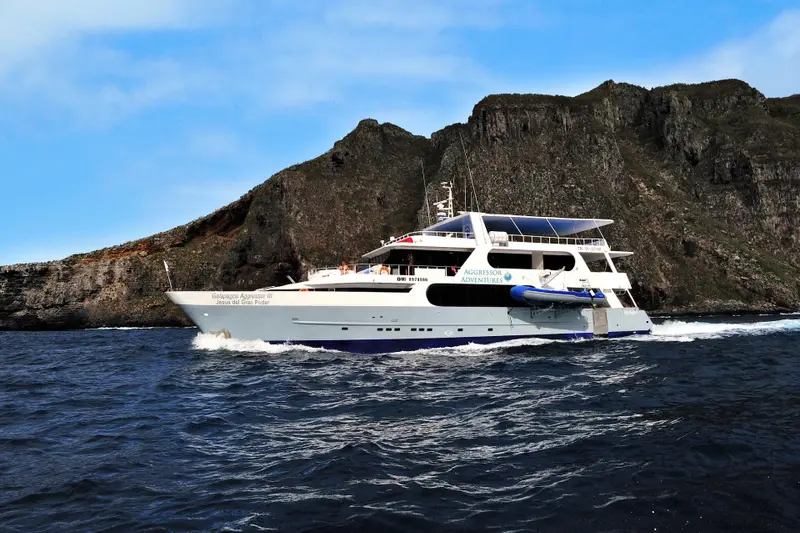
Galapagos Aggressor III
Galápagos
16 huéspedes31 m
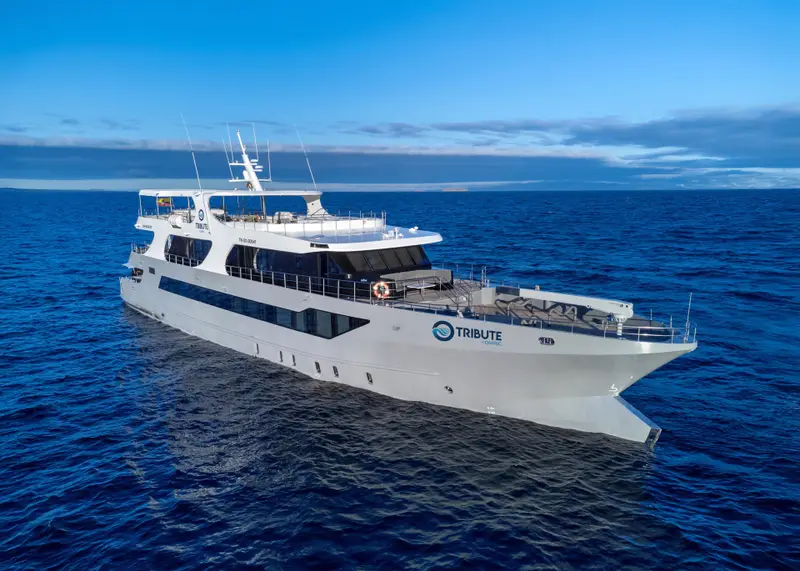
Tribute
Galápagos
16 huéspedes42 m
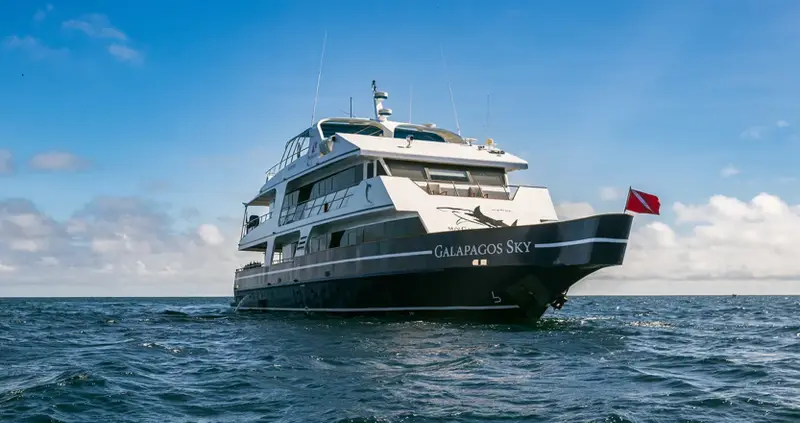
Galapagos Sky
Galápagos
16 huéspedes
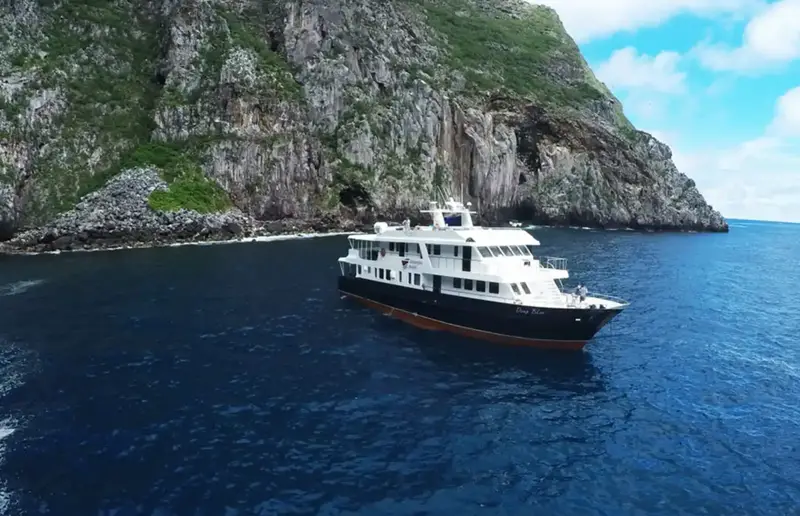
Galapagos Master
Galápagos
16 huéspedes
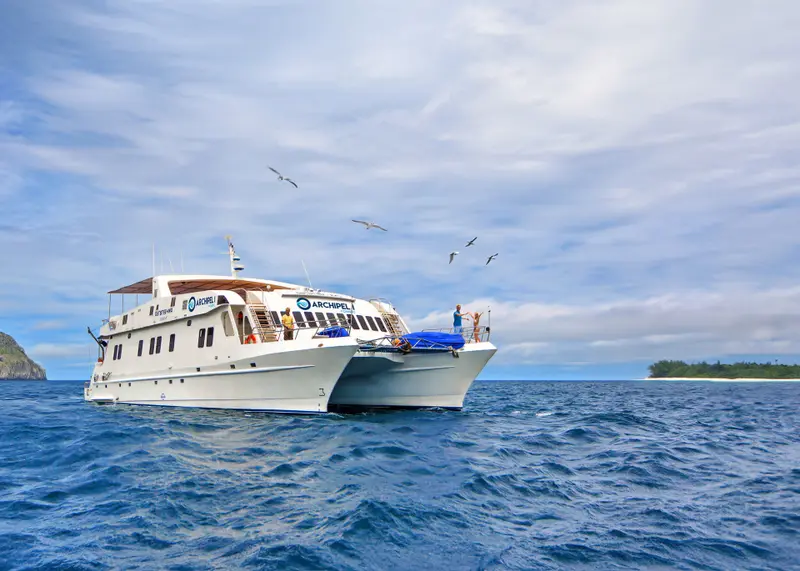
Archipel I
Galápagos
16 huéspedes27 m

Humboldt Explorer
Galápagos
16 huéspedes
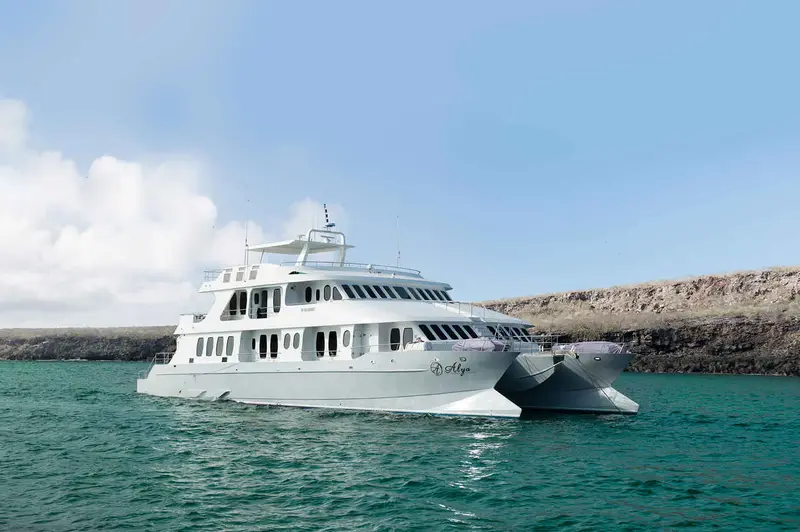
Alya
Galápagos
16 huéspedes32 m
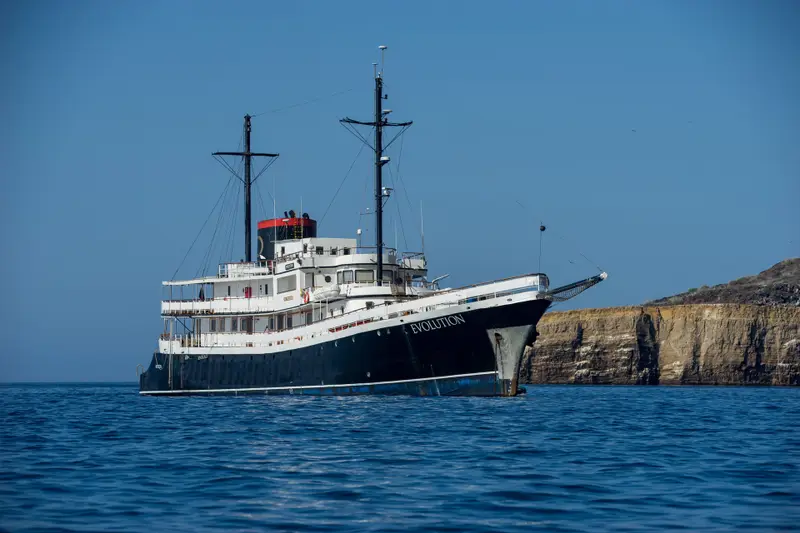
Evolution
Galápagos
32 huéspedes60 m
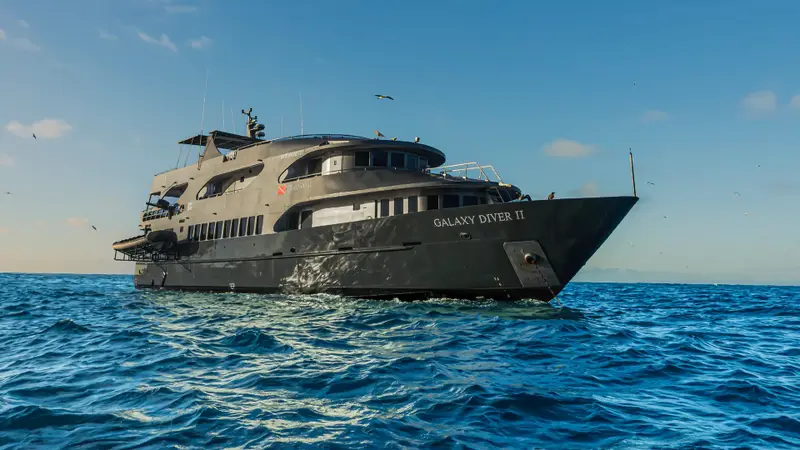
Galaxy Diver II
Galápagos
16 huéspedes29 m
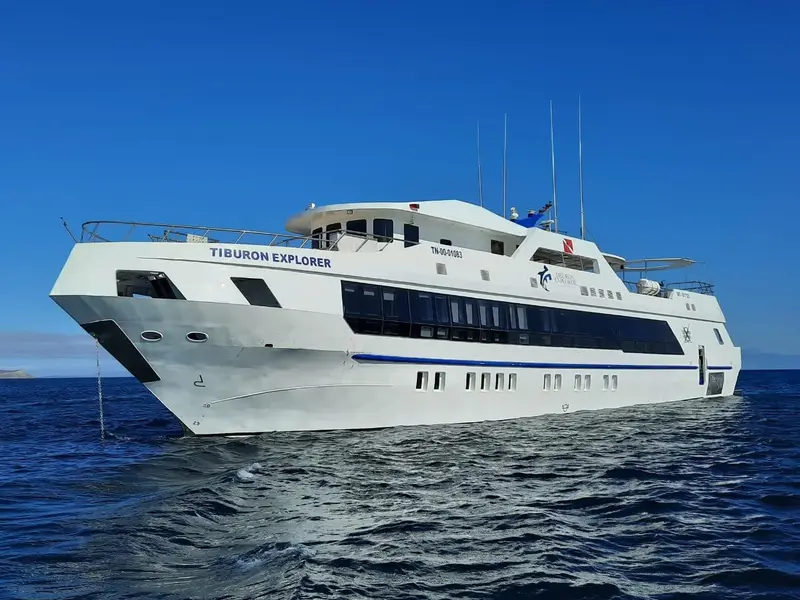
Tiburon Explorer
Galápagos
16 huéspedes
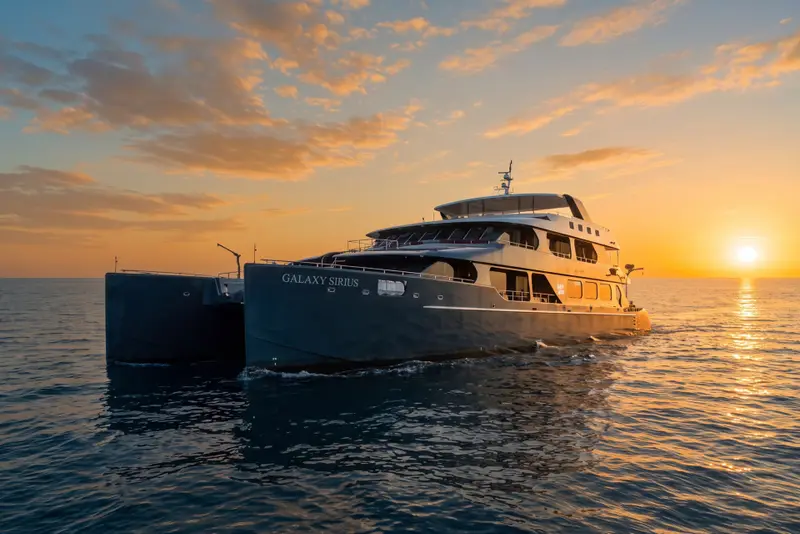
Galaxy Sirius
Galápagos
16 huéspedes36 m
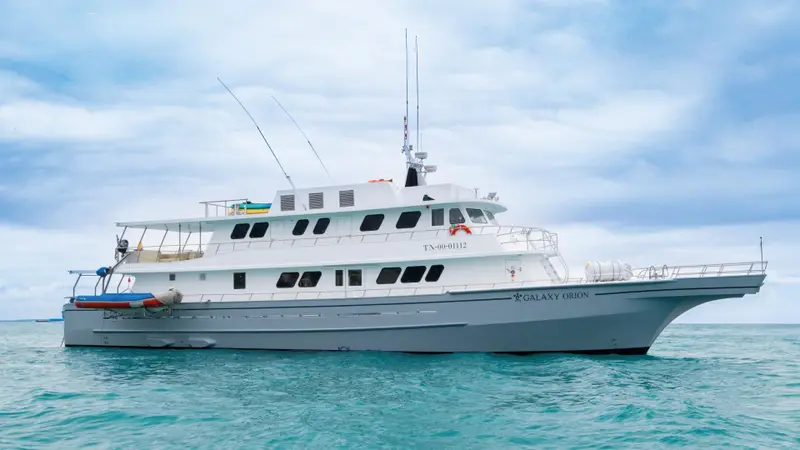
Galaxy Orion
Galápagos
14 huéspedes29 m
Sitios de buceo parecidos a Camano Islet
Mismo carácter, mismas aguas: seis sitios más que enamoran por lo mismo.Compara temporadas, accesos y rutas de liveaboard para elegir el sitio ideal para tu viaje.
© EsriMaxar, Earthstar, GIS
Pecio Agustín Melgar
México
El pecio Agustín Melgar es un intrigante arrecife artificial situado cerca de Isla Danzante, que ofrece una experiencia de buceo única en las protegidas aguas de Loreto.
- Apto para
- Intermedio
- Corriente
- Suave
- Acceso
- Solo liveaboard
- Profundidad
- 12–24 m
- Tema
- Pecio
Arco Iris, o "Rainbow" en inglés, es un sitio de buceo prominente ubicado cerca de la Isla Brumel (Penahuaste), aproximadamente a 8 km al norte de Playa Potrero en Costa Rica.
- Apto para
- Principiante
- Corriente
- Moderada
- Acceso
- Barco diario
- Profundidad
- 9–30 m
- Tema
- Arrecife
© EsriMaxar, Earthstar, GIS
Bahía de La Paz
México
La Bahía de La Paz es la capital de Baja California Sur y la puerta de entrada principal al Mar de Cortés, una región que Jacques Cousteau apodó el «acuario del mundo» por su excepcional biodiversidad.
- Apto para
- Avanzado
- Corriente
- Suave
- Acceso
- Barco diario
- Profundidad
- 17–27 m
- Tema
- Grandes animales / Arrecife
© EsriMaxar, Earthstar, GIS
Bahía de los Ángeles
México
Bahía de los Ángeles, enclavada en el norte del Mar de Cortés, es un destino de buceo extraordinario conocido principalmente por sus concentraciones estacionales de tiburones ballena.
- Apto para
- Intermedio
- Corriente
- Moderada
- Acceso
- Solo liveaboard
- Profundidad
- 3–15 m
- Tema
- Arrecife
© EsriMaxar, Earthstar, GIS
Bajo Alcyone
Costa Rica
Bajo Alcyone, un monte submarino sumergido cerca de la Isla del Coco, es un sitio de buceo de renombre mundial.
- Apto para
- Avanzado
- Corriente
- Fuerte
- Acceso
- Solo liveaboard
- Profundidad
- 25–40 m
- Tema
- Deriva / Monte submarino
© EsriMaxar, Earthstar, GIS
Bajo de la Ballena
México
El Bajo, a menudo conocido como Bajo de la Ballena, es un destacado monte submarino situado aproximadamente a ocho millas al noreste de La Paz, México.
- Apto para
- Avanzado
- Corriente
- Fuerte
- Acceso
- Liveaboard o barco diario
- Profundidad
- 18–35 m
- Tema
- Pináculo