Bluerides – Blue Rides - Reserva cruceros de buceo en todo el mundoOCEAN ADVENTURES
River CruisesRiversNature & WildlifeOur Promise
River CruisesRiversNature & WildlifeOur PromiseIniciar sesión

Destinos fluviales

  • Destinos fluviales
  • Amazonas
  • Danubio
  • Rin
  • Mekong
  • Nilo

Barcos y salidas

  • Buscar cruceros fluviales
  • Ofertas

Naturaleza y vida salvaje

  • Naturaleza y vida salvaje

Asistencia para viajes

  • Nuestro compromiso
  • Contacto

Contacto

Contáctanos

Escríbenos cuando quieras: te ayudamos a elegir el viaje o a resolver cualquier duda.

Correo electrónicoEscríbenos: solemos responder en pocas horas.
contact@bluerides.com
WhatsAppEscríbenos por WhatsApp, lun–vie 10:00–16:00 (CET).
Iniciar chat de WhatsApp
TeléfonoLlámanos, estaremos encantados de ayudarte.
Llamada gratuita, lun–vie 10:00–20:00 (CET).
Europa+49 800 1144 990EE. UU.+1 888 557 7735Reino Unido+44 800 707 4152Australia+61 2 8599 6113Canadá+1 888 557 7735
Which river journey is yours?Answer 8 quick questions and find the river cruise that fits you.
8 questions, 1 minute·Plus Gift
Métodos de pago segurosSus pagos están completamente protegidos con cifrado AES-256.
Desarrollado porStripeWiseAMEXPayGoogle PaySEPABank
Aviso legal·Términos y condiciones·Política de privacidad·Sobre nosotros·Contacto·Exención de Responsabilidad·Programa de afiliados·Cruise·
Visítanos aquí

© 2026 Blue Rides. Todos los derechos reservados.·

Bluerides – Blue Rides - Reserva cruceros de buceo en todo el mundoOCEAN ADVENTURES
River CruisesRiversNature & WildlifeOur Promise
River CruisesRiversNature & WildlifeOur PromiseIniciar sesión
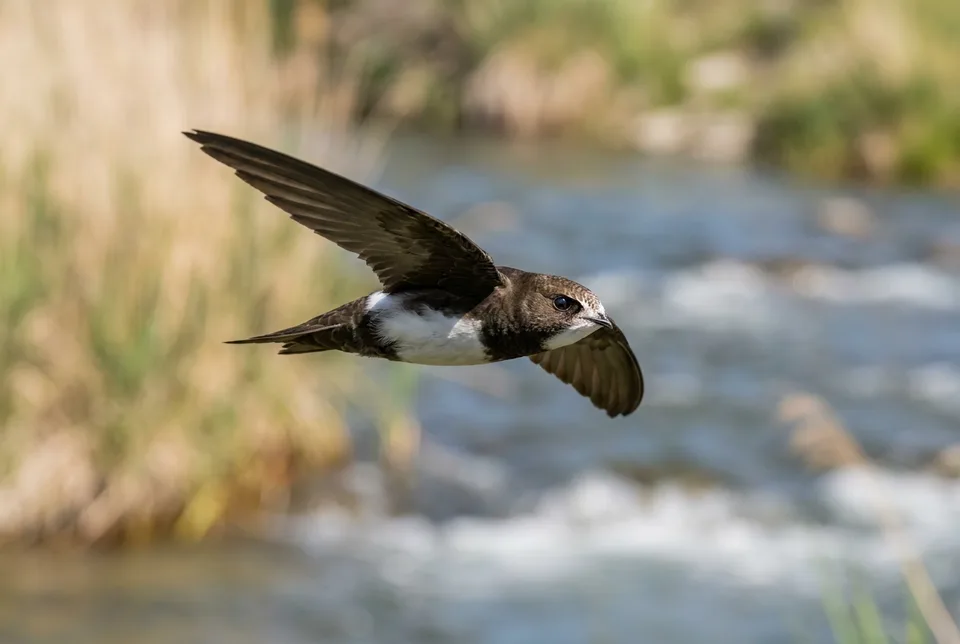
Alpine Swift en un humedal — Saone, fauna de cruceros fluviales
Inicio›River Cruises›River Wildlife›Alpine Swift

Alpine SwiftTachymarptis melbaDónde y cuándo verlos

Previous speciesAgile FrogNext speciesAmazon Kingfisher

Alpine Swift at a glance

The Alpine Swift is a large aerial insectivore whose white belly and throat interrupt an otherwise dark, streamlined silhouette. Despite its name, it is not confined to alpine scenery, and the River registry associates it with the municipality of Mâcon on the Saône. The regional wildlife atlas lists the species for that commune; this is municipal-scale occurrence evidence rather than a record from a particular quay or stretch of riverbank. Swifts belong to a different family from swallows and martins, although all can be seen hunting insects in the same airspace. The Alpine Swift's long wings, rapid flight and periods of gliding are adaptations to a life conducted largely in the air. A river cruise stop may provide an open view of the sky, but the bird's ecological connection is to aerial food and suitable nesting structures rather than to the navigation channel. Local records should therefore guide expectations without becoming a deck-view promise.
Behaviour & reproduction

Size
Species-specific length and wingspan not verified in the retrieved authoritative material.
Weight
Not verified
Lifespan
Species-specific lifespan not verified.
Status
See sourced assessment

Alpine Swifts obtain their food in flight, combining sustained wingbeats with gliding and rapid changes of direction. Their movements can make an apparently empty sky productive a few moments later, especially when birds pass through a limited viewing window between buildings. The species is migratory across its European range, so occurrence involves both seasonal movement and shorter-term responses to weather and insect availability. A bird circling above a town may be feeding rather than travelling directly towards a distant destination. Swifts also use elevated nesting situations, which helps explain why urban environments can be relevant even away from mountain cliffs. The Mâcon municipal record does not itself establish a nest location, colony size or breeding timetable. When watching repeated passes around a building, avoid interpreting every approach as nest attendance. Concentrate on flight pattern, plumage and the wider setting, leaving any suspected breeding-site inspection to appropriately experienced local observers.

Top wildlife locations

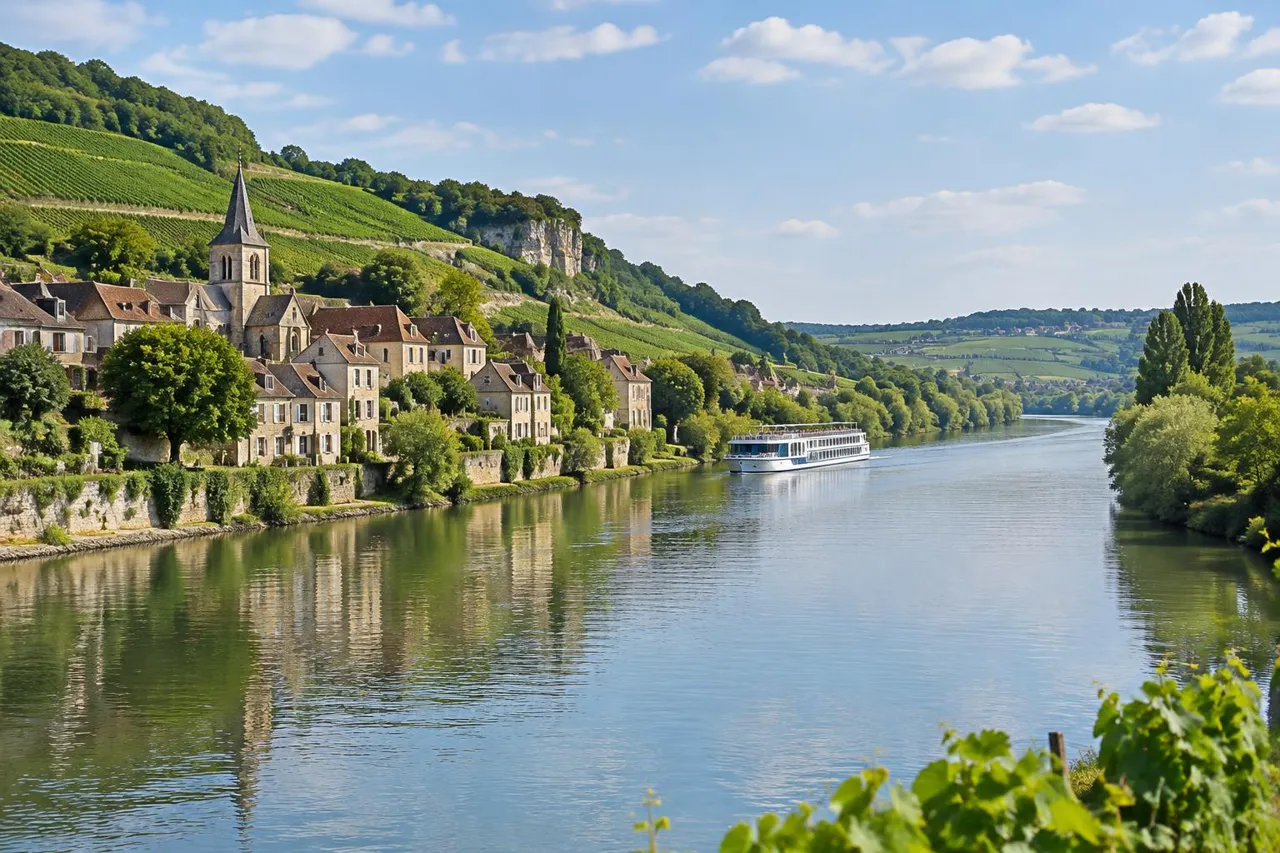
Paisaje fluvial de Saone — hábitat en cruceros fluviales

Saone

Mâcon municipal stop on the Saône. Atlas evidence is commune-wide, not a specific riverbank sighting or confirmed cruise-berth colony.
Explore river cruises

Destinations describe the species' habitat, not guaranteed cruise stops. Some animals require an optional inland excursion or are found in restricted reserves.

Fun facts about the Alpine Swift

  • It belongs to the swift family, Apodidae, rather than the swallow family.
  • Its name does not mean it occurs only in alpine landscapes.
  • The white belly is an important field mark.
  • A dark breast band separates the pale throat and belly.
  • It catches food in the air.
  • BTO describes it as much larger than the Common Swift.
  • BirdLife characterises it as migratory.
  • The registered Saône evidence is municipal-scale Mâcon occurrence.
  • An open view of the sky can matter more than proximity to the water.

Best time to see the Alpine Swift

The River registry describes spring and summer overhead viewing, while BirdLife characterises the species as migratory. These two forms of information have different scopes: the first is registry guidance, and the second is broad species biology. The original Mâcon atlas page establishes municipal occurrence but the retrieved material does not supply an original species-and-place monthly calendar. No numerical months are therefore assigned. British or Irish peaks reported by BTO are unsuitable substitutes, because passage patterns there do not define the season at a French breeding-range locality. At Mâcon, ask a regional bird guide about current activity and choose a viewing period with good visibility and safe access. Wind, rain and insect conditions can alter aerial activity within a day even when birds are seasonally present. A productive stop depends more on current local conditions and patience than on treating a general European migration pattern as a precise river-cruise schedule.

Alpine Swift: season matrix by destination

Highlighted months reflect the stated local evidence, not guaranteed encounters. Neutral months mean no verified monthly viewing window, not absence. Observation records and recommended viewing windows are distinct.

Saone

The registry suggests spring/summer overhead observation. The original municipal atlas establishes occurrence but supplies no verified local monthly calendar in the material read.

enefebmarabrmayjunjulagoseptoctnovdic
Explore river cruises

Where the Alpine Swift lives

For an Alpine Swift, usable habitat includes the airspace over a landscape as well as the structures where birds can rest or breed. Open views across the Saône may make birds easier to detect, but the river is not a required feeding surface in the way it is for a diving waterbird. Insects can be taken above towns, woodland, fields or water, depending on local conditions. The registered association is Mâcon municipality, where the Bourgogne atlas documents the species without restricting the records to the riverfront. It would therefore be inaccurate to turn the commune listing into a claim about a particular cruise berth. Urban buildings can provide elevated surfaces and cavities, while natural rocky environments are important elsewhere in the range. For itinerary planning, the useful question is whether there is safe public access to an open sky view and current local information, not whether every riverside stop contains equivalent swift habitat.

What the Alpine Swift eats

Alpine Swifts feed on airborne invertebrates, catching food while flying rather than searching the riverbed or diving beneath the surface. Their long wings allow them to cover large areas of airspace efficiently, while changes in flight direction can accompany pursuit of concentrated prey. The relationship with a river is therefore indirect: water and nearby vegetation may influence insect production, but a bird seen above the Saône is not necessarily feeding on insects that originated there. No Mâcon-specific diet study, prey proportions or seasonal prey inventory was verified for this draft. Those unknowns should not be replaced by precise lists borrowed from other swift species or populations. For observers, repeated circling and manoeuvring may provide clues to feeding activity, although individual prey will usually be too small to see. Never release insects or use food to attract birds. A natural aerial feeding sequence is best appreciated from a stationary public viewpoint with an unobstructed view.

Species at a glance

Common name
Alpine Swift
Scientific name
Tachymarptis melba
Animal group
Birds
Size
Species-specific length and wingspan not verified in the retrieved authoritative material.
Weight
100.5 g, the representative value presented by BTO BirdFacts; not a local measurement or range.
Lifespan
Species-specific lifespan not verified.
Status
The BirdLife factsheet read for this research presents a 2024 Least Concern assessment. This dated assessment is not a statement about local breeding success in Mâcon.
Identification
The combination of a large swift silhouette, long swept wings and a conspicuous pale underside is central to recognising an Alpine Swift. The white throat and white belly are separated by a darker breast band, unlike the more uniformly dark appearance of a Common Swift. BTO highlights its larger size and pale belly as useful first impressions. Size alone is unreliable when birds are distant or flying without companions, so wait for an angle that reveals the underside clearly. Swallows and martins can also show contrasting pale underparts, but their proportions, flight and pattern should be assessed separately rather than treating any black-and-white aerial bird as a swift. Strong backlighting can conceal the white areas and make the bird appear entirely dark. Record several passes if possible, including the wing shape and breast pattern. The Mâcon occurrence record supplies geographical context, but identification still rests on visible features rather than expectation.

Alpine Swift: frequently asked questions

Where can I see the Alpine Swift?
Saone. Choose a public riverside or town viewpoint with a broad view above roof level, then watch for several minutes before moving on. Alpine Swifts can pass quickly, so first follow the whole silhouette with the naked eye and raise binoculars only after locating a bird. Look for repeated glides that expose the underside, when the white belly and dark breast band may become easiest to assess. Avoid tracking birds while walking close to quay edges, traffic or steps. If activity concentrates around a building, remain in public space and do not approach entrances, climb structures or interfere with possible nesting sites. The atlas record is for Mâcon municipality, not a guaranteed viewing point, and a negative scan from the ship does not contradict that record. Keep identification notes about plumage and proportions; a distant swift should not be named solely because the species has been recorded in the town.
When is the best time to see the Alpine Swift?
The River registry describes spring and summer overhead viewing, while BirdLife characterises the species as migratory. These two forms of information have different scopes: the first is registry guidance, and the second is broad species biology. The original Mâcon atlas page establishes municipal occurrence but the retrieved material does not supply an original species-and-place monthly calendar. No numerical months are therefore assigned. British or Irish peaks reported by BTO are unsuitable substitutes, because passage patterns there do not define the season at a French breeding-range locality. At Mâcon, ask a regional bird guide about current activity and choose a viewing period with good visibility and safe access. Wind, rain and insect conditions can alter aerial activity within a day even when birds are seasonally present. A productive stop depends more on current local conditions and patience than on treating a general European migration pattern as a precise river-cruise schedule.
How big does the Alpine Swift get?
Species-specific length and wingspan not verified in the retrieved authoritative material.. Adult weight: 100.5 g, the representative value presented by BTO BirdFacts; not a local measurement or range.. Size varies with age, sex and population.
How should I behave around the Alpine Swift?
Choose a public riverside or town viewpoint with a broad view above roof level, then watch for several minutes before moving on. Alpine Swifts can pass quickly, so first follow the whole silhouette with the naked eye and raise binoculars only after locating a bird. Look for repeated glides that expose the underside, when the white belly and dark breast band may become easiest to assess. Avoid tracking birds while walking close to quay edges, traffic or steps. If activity concentrates around a building, remain in public space and do not approach entrances, climb structures or interfere with possible nesting sites. The atlas record is for Mâcon municipality, not a guaranteed viewing point, and a negative scan from the ship does not contradict that record. Keep identification notes about plumage and proportions; a distant swift should not be named solely because the species has been recorded in the town.
What does the Alpine Swift eat?
Alpine Swifts feed on airborne invertebrates, catching food while flying rather than searching the riverbed or diving beneath the surface. Their long wings allow them to cover large areas of airspace efficiently, while changes in flight direction can accompany pursuit of concentrated prey. The relationship with a river is therefore indirect: water and nearby vegetation may influence insect production, but a bird seen above the Saône is not necessarily feeding on insects that originated there. No Mâcon-specific diet study, prey proportions or seasonal prey inventory was verified for this draft. Those unknowns should not be replaced by precise lists borrowed from other swift species or populations. For observers, repeated circling and manoeuvring may provide clues to feeding activity, although individual prey will usually be too small to see. Never release insects or use food to attract birds. A natural aerial feeding sequence is best appreciated from a stationary public viewpoint with an unobstructed view.
Are wildlife sightings guaranteed on a river cruise?
No. Animals move freely and routes, weather, access restrictions and local conditions influence every outing. Confirm the actual itinerary and shore program before booking.

Compare wildlife in the same destinations

Explore other birds recorded in these destinations. Similar surroundings do not mean the animals share the same habits or viewing season.

Species comparison by animal group and destination
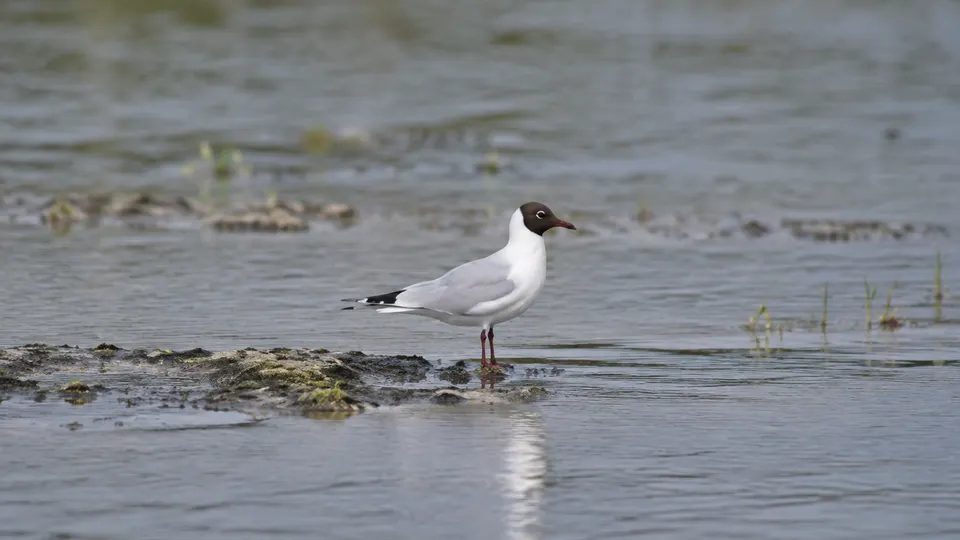
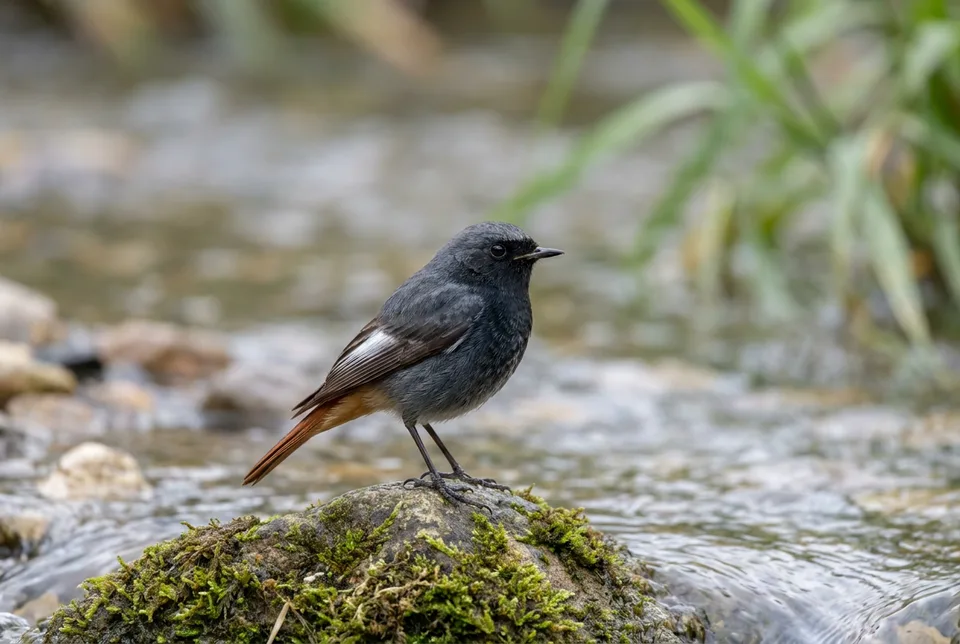
Alpine Swift en un humedal — Saone, fauna de cruceros fluvialesAlpine SwiftBlack Redstart en un humedal — Saone, Douro, fauna de cruceros fluvialesBlack RedstartBlack-headed gull en un humedal — Saone, Seine, Nile, Douro, fauna de cruceros fluvialesBlack-Headed Gull
Animal groupBirdsAnimal groupBirdsAnimal groupBirds
DestinationsSaoneDestinationsSaone, DouroDestinationsSaone, Seine, Nile, Douro
Scientific name
Tachymarptis melba

Tachymarptis melba

Scientific name
Scientific name
Size
Species-specific length and wingspan not verified in the retrieved authoritative material.
Size
Size
Weight
Not verified
Weight
Weight
Lifespan
Species-specific lifespan not verified.
Lifespan
Lifespan
Status
See sourced assessment
Status
Status
Identification
The combination of a large swift silhouette, long swept wings and a conspicuous pale underside is central to recognising an Alpine Swift.

The combination of a large swift silhouette, long swept wings and a conspicuous pale underside is central to recognising an Alpine Swift. The white throat and white belly are separated by a darker breast band, unlike the more uniformly dark appearance of a Common Swift. BTO highlights its larger size and pale belly as useful first impressions. Size alone is unreliable when birds are distant or flying without companions, so wait for an angle that reveals the underside clearly. Swallows and martins can also show contrasting pale underparts, but their proportions, flight and pattern should be assessed separately rather than treating any black-and-white aerial bird as a swift. Strong backlighting can conceal the white areas and make the bird appear entirely dark. Record several passes if possible, including the wing shape and breast pattern. The Mâcon occurrence record supplies geographical context, but identification still rests on visible features rather than expectation.

Identification
Identification
Habitat
For an Alpine Swift, usable habitat includes the airspace over a landscape as well as the structures where birds can rest or breed.

For an Alpine Swift, usable habitat includes the airspace over a landscape as well as the structures where birds can rest or breed. Open views across the Saône may make birds easier to detect, but the river is not a required feeding surface in the way it is for a diving waterbird. Insects can be taken above towns, woodland, fields or water, depending on local conditions. The registered association is Mâcon municipality, where the Bourgogne atlas documents the species without restricting the records to the riverfront. It would therefore be inaccurate to turn the commune listing into a claim about a particular cruise berth. Urban buildings can provide elevated surfaces and cavities, while natural rocky environments are important elsewhere in the range. For itinerary planning, the useful question is whether there is safe public access to an open sky view and current local information, not whether every riverside stop contains equivalent swift habitat.

Habitat
Habitat
Diet
Alpine Swifts feed on airborne invertebrates, catching food while flying rather than searching the riverbed or diving beneath the surface.

Alpine Swifts feed on airborne invertebrates, catching food while flying rather than searching the riverbed or diving beneath the surface. Their long wings allow them to cover large areas of airspace efficiently, while changes in flight direction can accompany pursuit of concentrated prey. The relationship with a river is therefore indirect: water and nearby vegetation may influence insect production, but a bird seen above the Saône is not necessarily feeding on insects that originated there. No Mâcon-specific diet study, prey proportions or seasonal prey inventory was verified for this draft. Those unknowns should not be replaced by precise lists borrowed from other swift species or populations. For observers, repeated circling and manoeuvring may provide clues to feeding activity, although individual prey will usually be too small to see. Never release insects or use food to attract birds. A natural aerial feeding sequence is best appreciated from a stationary public viewpoint with an unobstructed view.

Diet
Diet
Best season
The River registry describes spring and summer overhead viewing, while BirdLife characterises the species as migratory.

The River registry describes spring and summer overhead viewing, while BirdLife characterises the species as migratory. These two forms of information have different scopes: the first is registry guidance, and the second is broad species biology. The original Mâcon atlas page establishes municipal occurrence but the retrieved material does not supply an original species-and-place monthly calendar. No numerical months are therefore assigned. British or Irish peaks reported by BTO are unsuitable substitutes, because passage patterns there do not define the season at a French breeding-range locality. At Mâcon, ask a regional bird guide about current activity and choose a viewing period with good visibility and safe access. Wind, rain and insect conditions can alter aerial activity within a day even when birds are seasonally present. A productive stop depends more on current local conditions and patience than on treating a general European migration pattern as a precise river-cruise schedule.

Best season
Best season
Season matrix by destination
SaoneNo verified monthly viewing evidence

The registry suggests spring/summer overhead observation. The original municipal atlas establishes occurrence but supplies no verified local monthly calendar in the material read.

Season matrix by destinationSeason matrix by destination
Previous speciesAgile FrogNext speciesAmazon Kingfisher
All river wildlife
On this page
  • 01About
  • 02Behaviour & reproduction
  • 03Top wildlife locations
  • 04Fun facts
  • 05Best season
  • 06Season matrix by destination
  • 07Habitat
  • 08Diet
  • 09Species at a glance
  • 10Questions & answers
  • 11Compare

Find your river cruise

Planifica tu viaje

Find your next river journey

Compare destinations, shore programs and dates with the animals and habitats you would love to see.

  • Daily shore excursions
  • Responsible wildlife watching
  • Boutique river ships
Explore river cruises