Roatán, Utila y Cayo Cochinos (French Harbor - French Harbor)
Roatan Aggressor · Honduras · 7 noches
Sobre esta ruta
Esta aventura de vida a bordo explora los vibrantes puntos de buceo de Roatán, Utila y Cayo Cochinos, ofreciendo un recorrido completo por las Islas de la Bahía de Honduras. Los buceadores pueden esperar encontrar una diversa vida marina en impresionantes formaciones de arrecifes, desde paredes espectaculares hasta jardines poco profundos y coloridos. El itinerario incluye oportunidades para buceo en pecios, exploración de montes submarinos y buceos nocturnos, prometiendo una rica experiencia submarina.
Regiones en esta ruta
Destacados
Black Hills
A popular site among divers, Black Hills is known for schooling fish such as Creole wrasse, Atlantic spadefish, and Southern sennets. Scorpionfish, toadfish, and the rare frogfish also frequent this seamount. A resident turtle often interacts with divers, adding to the memorable experience.
- Schools of fish
- Rare frogfish
- Resident turtle
- Seamount diving
Cannery Bank
Cannery Bank is a premier location for witnessing large pelagic fish in open waters. The site boasts vibrant colors on its mounts, with depths ranging from 25 to 110 feet, creating a dynamic environment for diverse marine encounters.
- Large pelagic fish
- Vibrant colors
- Dynamic environment
Cayos Cochinos
The Cayos Cochinos dive sites offer a rich tapestry of marine life, from macro creatures to patrolling barracuda and sharks. The area is known for its spectacular coral gardens and clear waters.
- Macro life
- Coral gardens
- Barracuda patrols
- Clear waters
CJ's Drop-off
Known as an excellent site for deep diving, CJ's Drop-off is home to spiny Caribbean lobster, golden tail moray eels, and schools of jacks. The vibrant marine life here makes it a rewarding experience for those exploring its depths.
- Deep diving
- Caribbean lobster
- Golden tail moray
- Schools of jacks
Duppy Waters
Duppy Waters begins with a vibrant coral garden at about 20 feet, which then slopes down into deeper blue waters. This site is rich with eagle rays, stingrays, octopuses, and schools of Creole wrasse and blue tang, creating a dynamic and colorful underwater scene.
- Coral garden
- Sloping walls
- Eagle rays
- Octopuses
Halliburton Wreck
This artificial reef, sunk in 1998, starts with the wheelhouse at 65 feet and extends to the vessel bottom at 100 feet. Green morays, spotted drum, yellowline arrow crabs, channel clinging crabs, and bearded fire worms are commonly seen. Porcupine fish and pipefish also frequent this exceptional dive site.
- Artificial reef
- Green morays
- Arrow crabs
- Porcupine fish
Hawksbill Bank
Hawksbill Bank is a seamount beginning at 40 feet and sloping down to 80 feet, named after the rare fingerprints it contains. Bluebell tunicates are abundant, and rare fingerprint corals can also be found. A resident hawksbill turtle gives the site its name.
- Seamount diving
- Sloping reef
- Bluebell tunicates
- Hawksbill turtle
Jack Neil Point
Featuring sand, walls, and individual coral heads, Jack Neil Point is a must-dive site. Divers can expect to see stout seahorse, large-eye toadfish, flying gurnards, and octopus, making it one of the best night diving locations in the area.
- Sand and walls
- Stout seahorse
- Flying gurnards
- Night diving
Mary’s Place
One of Roatan's most famous dive sites, Mary's Place is a lush reef characterized by numerous crevices and tunnels. These intricate formations invite exploration and provide excellent photographic opportunities, making it a favorite for many divers.
- Lush reef
- Crevices and tunnels
- Photo opportunities
Odyssey Wreck
The Odyssey Wreck is Roatan's largest shipwreck, a formidable freighter measuring 300 feet long, 50 feet wide, and 85 feet tall. As one of the Caribbean's largest wrecks, it offers an expansive and dramatic dive site for exploration.
- Largest Roatan wreck
- 300 ft freighter
- Caribbean wreck diving
Old Bank
Old Bank is a very shallow dive site, notable for its rare elkhorn coral flourishes and diverse small critters. It is also a prime location to spot the elusive yellowhead jawfish peering out from its hole, making it a favorite for macro enthusiasts.
- Shallow dive
- Elkhorn coral
- Small critters
- Yellowhead jawfish
Pelican Point
Pelican Point is a rich reef, featuring French and queen angelfish, butterflyfish, tangs, and parrotfish. On the outer edge of the reef, divers can often spot sharks and barracudas patrolling, adding an exciting dimension to the dive.
- Rich reef
- Angelfish
- Sharks
- Barracuda patrols
Raggedy Cay
This popular site offers diving at depths between 30 and 130 feet, where majestic eagle rays often sweep through the soft corals. Octopuses can be found around the sand channels, while spotted moray eels inhabit the coral garden, creating a lively underwater spectacle.
- Soft corals
- Majestic eagle rays
- Sand channels
- Spotted moray eels
Roatan, Bay Islands of Honduras
The dive sites around Roatan represent the vibrant underwater landscape of the Bay Islands, offering divers sheer walls, beautiful shallow reefs, and impressive wrecks. These pristine seamounts and reefs provide a frontier rarely explored, rich in marine life and photographic opportunities.
- Sheer walls
- Shallow reefs
- Spectacular wrecks
- Offshore seamounts
Taviana’s Wall
Known for its abundant turtle population, Taviana's Wall is a vibrant site that offers great night diving experiences. Divers can often spot octopus, crabs, and lobsters during evening descents, adding to the magic of this unique location.
- Turtle encounters
- Night dives
- Octopus and crabs
- Lobsters
Toon Town
Known for its excellent macro life, Toon Town, off Cayos Cochinos, is filled with dense clumps of bluebell tunicates, small crabs, and vibrant flamingo tongue cowries. This site is a photographer's dream, showcasing the tiny wonders of the tunicate kingdom.
- Macro dive
- Bluebell tunicates
- Small crabs
- Flamingo tongue cowries
Utila
Utila's dive sites are characterized by breathtaking reefs and a reputation for large pelagic encounters. The area often features schools of Creole wrasse, Atlantic spadefish, and horse-eye jacks. It is also known for sightings of majestic marine creatures like manta rays, marlin, and even whale sharks, making it a thrilling destination for divers.
- Breathtaking reefs
- Large pelagic sightings
- Manta rays
- Whale sharks
Wreck of the Aguila
This shipwreck has become a thriving artificial reef, home to numerous large groupers and a striking blue parrotfish. A significant green moray eel is also a resident here, known for its playful interactions with divers. The wreck provides a fascinating environment for marine life.
- Large groupers
- Blue parrotfish
- Green moray eel
- Artificial reef
Requisitos
- CertificaciónOpen Water
- ExperienciaNo se requiere un mínimo de inmersiones registradas.
Bueno saber
- Diver certification: Open Water with no minimum logged dives required.
- Fly-after-dive: Divers are recommended to wait 24 hours before flying after the last dive.
- Depth Range: 30 – 130 ft (9m – 40m).
- Wetsuit: 3-5 mm wetsuit recommended.
- Water temperatures: 78-84F (summer), 75-80F (winter).
Plan día a día
Día 1: Día de embarque – Roatan Yacht Club & Marina
Se da la bienvenida a los huéspedes a bordo del Roatan Aggressor en el Roatan Yacht Club & Marina. Tras instalarse en los camarotes y recibir una sesión informativa de seguridad, la embarcación se prepara para zarpar. La cena se sirve a bordo.
Día 2: Roatán – Exploración del West End y Lado Sur
El día se centra en los impresionantes sitios de buceo del West End o Lado Sur de Roatán, conocidos por sus exuberantes arrecifes, paredes dramáticas y ecosistemas marinos saludables. Los buzos exploran ricas formaciones de coral, grietas y túneles que caracterizan estas áreas. Estas ubicaciones a menudo albergan una abundancia de peces de arrecife e invertebrados.
Día 3: Roatán – Montes Submarinos y Cayos Cochinos
El buceo de hoy incluye la exploración de los montes submarinos de Roatán y las aguas prístinas que rodean los Cayos Cochinos. Estas áreas se caracterizan por vibrantes formaciones de coral y abundante vida macro. Los montes submarinos a menudo atraen especies pelágicas más grandes, mientras que Cayos Cochinos ofrece diversos entornos de arrecife ricos en pequeñas criaturas y coloridos peces de arrecife.
Día 4: Utila – Arrecifes Diversos y Buceos en Pecios
El buceo alrededor de Utila muestra su diversa topografía submarina, desde arrecifes poco profundos hasta paredes más profundas e impresionantes pecios. Los sitios aquí son conocidos por cardúmenes de peces, grandes pelágicos y criaturas únicas. El entorno de Utila a menudo presenta corrientes dinámicas, lo que contribuye a la salud y diversidad de sus vibrantes ecosistemas coralinos.
Día 5: Utila / Roatán – Exploración Continua
El quinto día continúa la exploración de los sitios de buceo de Utila o Roatán, basándose en los descubrimientos de los días anteriores. Los buzos pueden esperar más oportunidades para experiencias variadas, desde la búsqueda de criaturas en parches de arena hasta buceos a la deriva a lo largo de vibrantes paredes. El enfoque sigue siendo sumergirse en la rica biodiversidad y las características geológicas únicas de las Islas de la Bahía.
Día 6: Roatán – Buceo en West End o Southside
El día regresa a los espectaculares arrecifes de Roatán, centrándose en West End o Southside, ofreciendo diferentes perspectivas de buceo. Los buzos disfrutan de más encuentros con la abundante vida marina y exploran más de los célebres sitios de buceo de la isla. Estas áreas son reconocidas por sus saludables ecosistemas coralinos y diversas poblaciones de peces.
Día 7: Regreso a Roatan – Últimas inmersiones y cena de despedida
El último día de buceo tiene lugar cerca de Roatán. Se realizan dos inmersiones antes de que la embarcación regrese al muelle. Por la noche, los huéspedes disfrutan de un cóctel de despedida y una cena en tierra.
Día 8: Desembarque – Roatan Yacht Club & Marina
Los huéspedes realizan el check-out del Roatan Aggressor en el Roatan Yacht Club & Marina. Se organizan los traslados para la partida.
Próximas salidas
- 2026-11-21 – 2026-11-28desde 3,295 USDReservar
- 2026-11-28 – 2026-12-05desde 2,295 USDReservar
- 2026-12-05 – 2026-12-12desde 2,295 USDReservar
- 2026-12-12 – 2026-12-19desde 1,795 USDReservar
- 2026-12-19 – 2026-12-26desde 2,295 USDReservar
- 2026-12-26 – 2027-01-02desde 2,295 USDReservar
- 2027-01-02 – 2027-01-09desde 2,295 USDReservar
- 2027-01-09 – 2027-01-16desde 2,295 USDReservar
- 2027-01-16 – 2027-01-23desde 3,295 USDReservar
- 2027-01-23 – 2027-01-30desde 3,295 USDReservar
- 2027-01-30 – 2027-02-06desde 2,471 USDReservar
- 2027-02-06 – 2027-02-13desde 3,295 USDReservar
Sobre el barco
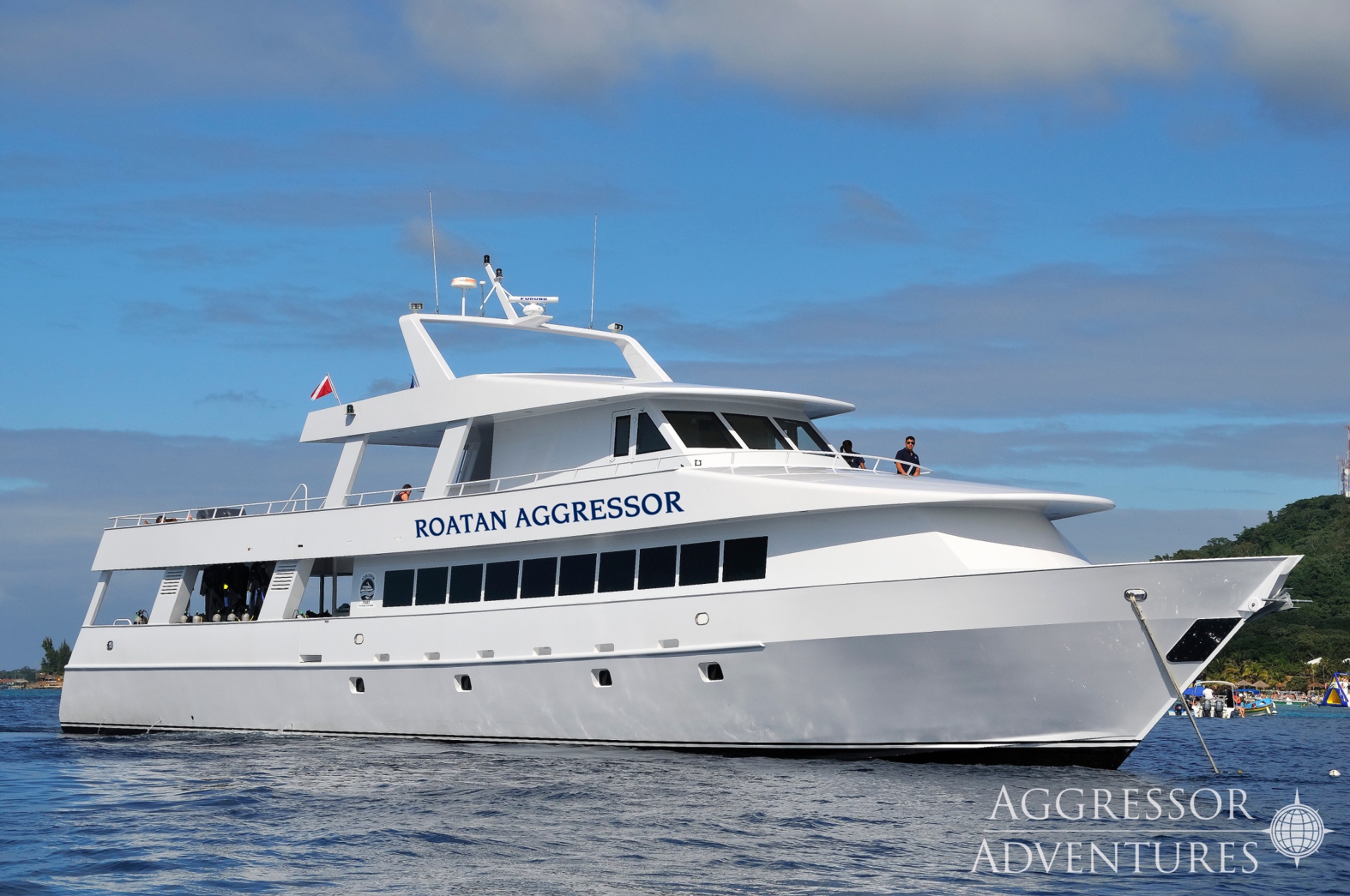 Roatan AggressorHonduras