Norte del Mar Rojo, Ras Mohamed, Estrechos de Tirán (Hurghada - Hurghada)
Red Sea Aggressor II · Egipto · 8D7N
Sobre esta ruta
Este itinerario explora el norte del Mar Rojo, una región famosa por sus vibrantes arrecifes de coral, pecios históricos y abundante vida marina. Los buceadores pueden esperar una mezcla de emocionantes exploraciones de pecios, espectaculares inmersiones en pared y encuentros con grandes especies pelágicas. Los destinos clave incluyen el famoso pecio del SS Thistlegorm, el 'cementerio de barcos' de Abu Nuhas, los prístinos arrecifes del Parque Nacional Ras Mohamed y los Estrechos de Tirán, barridos por la corriente. El viaje promete paisajes submarinos diversos y una experiencia de buceo inolvidable en el Mar Rojo.
Regiones en esta ruta
Destacados
Carless Reef
Carless Reef is a well-known reef featuring both hard and soft corals, alongside abundant marine life. The plateau ranges from 16 to 25 meters, dropping to 50 meters, with a significant population of moray eels. The reef attracts butterflyfish, nudibranchs, and sea turtles, and is known for its beautiful soft coral walls.
- Hard and soft corals
- Moray eels
- Soft coral walls
Carnatic
The Carnatic is a 19th-century British vessel that sank in 1869, making it one of the oldest wrecks in the Red Sea. Its wooden hull has largely decayed, but the iron frame is still intact, encrusted with corals. The holds are filled with glassfish and various other reef inhabitants. Depths range from 20 to 27 meters, offering a glimpse into maritime history.
- Oldest Red Sea wreck
- Iron frame intact
- Glassfish filled holds
Chrisoula K
The Chrisoula K is another famous wreck in Abu Nuhas, carrying floor tiles before it sank. The wreck lies at depths between 16 and 25 meters, offering opportunities to explore its bridge, engine room, and cargo holds. It has become an artificial reef, attracting various reef fish and providing an interesting dive experience.
- Floor tiles cargo
- Bridge exploration
- Artificial reef
Giannis D
The Giannis D, a Greek cargo ship, ran aground in 1983 and now lies in three main sections. The stern and mid-section offer interesting penetration opportunities, with engine rooms and cargo holds still accessible. The wreck is teeming with glassfish, scorpionfish, and parrotfish, providing a diverse marine habitat. Depths range from 15 to 27 meters.
- Greek cargo ship
- Wreck penetration
- Abundant fish life
Gordon Reef
Gordon Reef is the most southerly of the four reefs in the Straits of Tiran, distinguished by a shallow plateau and deep drop-offs. It features a great diversity of reef fishes and the chance to see schooling whitetip reef sharks on sandy patches. The reef also has an eel garden and a population of moray eels, with depths ranging from 4 to 30 meters.
- Shallow plateau
- Eel garden
- Whitetip reef sharks
Jackson Reef
Jackson Reef is the northernmost reef in the Straits of Tiran, known for the Cypriot cargo ship Lara that sank in 1985; some remains of the wreckage can still be seen on top of the reef. The west side has a forest of spectacular gorgonian fan corals. The diverse coral formations and numerous fish species make it a vibrant dive site, with depths ranging from 5 to 30 meters.
- Gorgonian fan corals
- Wreckage remains
- Diverse coral formations
Ras Mohamed
Ras Mohamed National Park, located at the tip of the Sinai Peninsula, is Egypt's first protected marine area. The reef crowns the top of coral mountains that rise from the seabed, offering incredible biodiversity. Shark Reef and Yolanda Reef are major highlights, known for their sheer walls, strong currents, and abundant fish life, including schools of barracuda and jacks.
- Protected marine park
- Wall dives
- Schools of fish
Shaab Ali Erg
Shaab Ali Erg, also known as 'Dolphin House,' is a fantastic spot for dolphin sightings. It is not uncommon for a school of dolphins to choose this area for their daily routine. The reef drops down to a coral garden at 12 meters, teeming with marine life such as nudibranchs, tunas, jewelfish, jacks, and scorpionfish.
- Dolphin sightings
- Coral garden
- Nudibranchs
Shaab Umm Usk
Shaab Umm Usk features an awesome coral garden with many different soft and hard coral species. Acropora corals are present in different forms, such as antler, table, and mushroom corals. The area is known for an abundance of parrotfish, snapper, grouper, butterflyfish, and angelfish, with occasional sightings of big groupers. This site is excellent for macro life and is known for its population of bottlenose dolphins at depths up to 20 meters.
- Coral garden
- Macro life
- Bottlenose dolphins
SS Thistlegorm
The SS Thistlegorm is one of the most famous and best-preserved wrecks in the world. This British cargo ship was sunk in 1941 and now lies at 32 meters. Its cargo holds are still packed with military supplies, including motorcycles, trucks, and rifles, offering a unique historical dive. The wreck is now an artificial reef, teeming with snappers and other marine life.
- World War II wreck
- Military cargo
- Artificial reef
Woodhouse Reef
Woodhouse Reef is one of the longest reefs in the Straits of Tiran, offering thrilling drift dives along its walls. It is characterized by beautiful coral gardens and is a good spot to observe eagle rays. The reef's topography includes a canyon at around 25 meters, leading into the main channel, with depths up to 100 meters.
- Longest reef
- Drift dives
- Eagle ray sightings
Requisitos
- CertificaciónOpen Water
- ExperienciaNo se requiere un mínimo de inmersiones registradas.
Bueno saber
- Open water divers require no minimum logged dives.
- Divers are recommended to wait 24 hours before flying after their last dive.
Plan día a día
Día 1: Embarque en Hurghada
Se da la bienvenida a los huéspedes a bordo en El Foly Marina en Hurghada entre las 3 PM y las 6 PM. Después del check-in, los buceadores se instalan en sus camarotes y asisten a una orientación sobre el camarote. Antes de la cena, se realiza una configuración inicial del equipo de buceo y una sesión informativa de bienvenida y seguridad. Las autorizaciones de la autoridad portuaria se finalizan esta noche.
Día 2: Inmersiones Locales y Tránsito al Norte
El día comienza con la salida de la marina, previa autorización de la autoridad portuaria, y una sesión informativa inicial de buceo. Los buceadores realizan sus primeras inmersiones del viaje, probablemente en sitios locales cerca de Hurgada, para asegurar que todo el equipo funciona correctamente y para realizar inmersiones de comprobación. Luego, la embarcación transita hacia el norte, hacia las principales zonas de buceo del Mar Rojo Septentrional, con aproximadamente 3-4 inmersiones planificadas a lo largo del día, incluyendo inmersiones nocturnas.
Día 3: Abu Nuhas – Cementerio de Barcos
Hoy se centra en el 'Cementerio de Barcos' de Abu Nuhas, un arrecife sumergido conocido por su colección de famosos naufragios. Las inmersiones suelen planificarse en varios de ellos, incluyendo el Giannis D, un carguero griego, y el Carnatic, un buque británico del siglo XIX. Estos sitios históricos son ahora vibrantes arrecifes artificiales, completamente cubiertos de corales y hogar de diversas poblaciones de peces residentes. Se planifican aproximadamente 3-4 inmersiones para el día.
Día 4: SS Thistlegorm – Exploración del Pecio de la Segunda Guerra Mundial
Este día está dedicado a explorar el icónico SS Thistlegorm, un carguero armado de la Segunda Guerra Mundial hundido en 1941. El pecio yace a una profundidad de 32 metros y es famoso por su carga bien conservada de vehículos militares, motocicletas y rifles. Típicamente se realizan múltiples inmersiones para explorar a fondo tanto el exterior como las bodegas de carga interiores, ofreciendo una experiencia histórica y biológica única, ya que los corales blandos ahora adornan su estructura. Se esperan 3-4 inmersiones en este impresionante sitio.
Día 5: Parque Nacional Ras Mohamed – Inmersiones en Arrecifes y Paredes
El itinerario continúa hacia el Parque Nacional Ras Mohamed, un área protegida conocida por sus espectaculares inmersiones en paredes y vibrantes jardines de coral. Los sitios aquí a menudo presentan caídas verticales, fuertes corrientes y una rica diversidad de vida marina. Los buceadores pueden esperar encontrar grandes cardúmenes de peces de arrecife y potencialmente especies pelágicas a lo largo de las paredes. Los sitios típicos en esta área ofrecen una topografía submarina impresionante y un abundante crecimiento de coral.
Día 6: Estrechos de Tirán – Arrecifes Barridos por Corrientes
Hoy está dedicado a los renombrados arrecifes en los Estrechos de Tirán, incluyendo los arrecifes Jackson, Woodhouse, Thomas y Gordon. Estos sitios son famosos por sus fuertes corrientes, que atraen una amplia variedad de vida marina y crean emocionantes oportunidades de buceo a la deriva. Los arrecifes presentan impresionantes formaciones coralinas, que van desde mesetas poco profundas hasta paredes dramáticas. Se esperan inmersiones emocionantes con la posibilidad de avistar diversas especies pelágicas.
Día 7: Últimas Inmersiones y Regreso a Hurgada
El último día de buceo incluye dos inmersiones matutinas, a menudo en un lugar seleccionado en el Estrecho de Tirán u otro arrecife local adecuado en el camino de regreso a Hurgada. Después de estas últimas exploraciones submarinas, el yate comienza su viaje de regreso a la Marina El Foly. La tarde es libre para que los huéspedes se relajen, empaquen sus pertenencias y disfruten de un cóctel a bordo antes de la cena. Los huéspedes también pueden optar por desembarcar en Hurgada.
Día 8: Desembarque en Hurghada
En la mañana final, los huéspedes disfrutan del desayuno a bordo antes de prepararse para el desembarque. Todos los huéspedes deben hacer el check-out y salir del yate a las 8:00 AM en El Foly Marina en Hurghada. Se recomienda a los buceadores esperar 24 horas antes de volar después de su última inmersión.
Próximas salidas
- 2026-11-21 – 2026-11-28desde 999 USDReservar
- 2026-12-05 – 2026-12-12desde 999 USDReservar
- 2026-12-12 – 2026-12-19desde 849 USDReservar
- 2026-12-19 – 2026-12-26desde 849 USDReservar
- 2026-12-26 – 2027-01-02desde 849 USDReservar
- 2027-02-27 – 2027-03-06desde 999 USDReservar
- 2027-03-06 – 2027-03-13desde 999 USDReservar
- 2027-03-13 – 2027-03-20desde 999 USDReservar
- 2027-03-20 – 2027-03-27desde 999 USDReservar
- 2027-03-27 – 2027-04-03desde 999 USDReservar
- 2027-04-03 – 2027-04-10desde 999 USDReservar
- 2027-04-10 – 2027-04-17desde 999 USDReservar
Todas las rutas de este barco
Sobre el barco
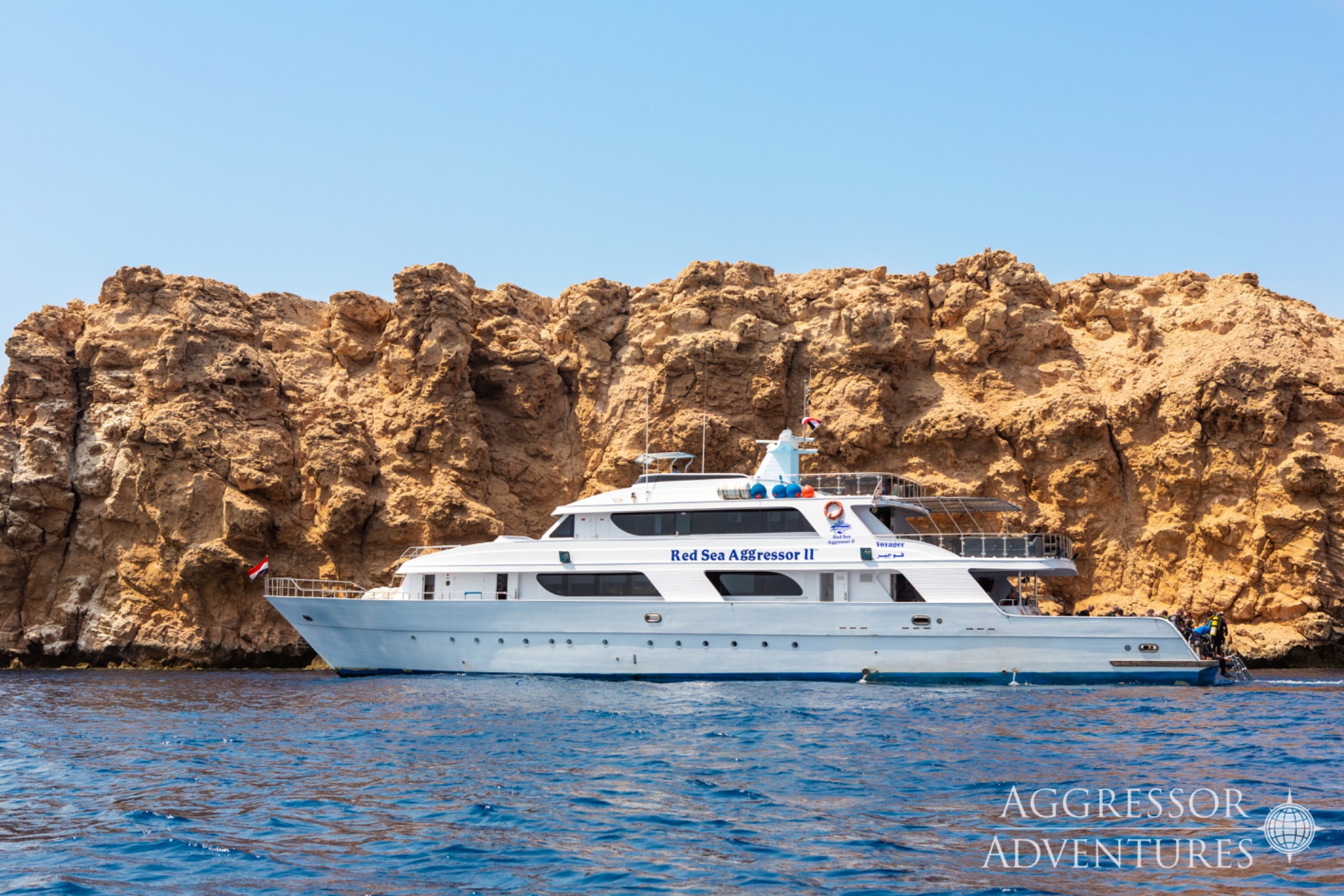 Red Sea Aggressor IIEgipto