Itinerary B Naturalist Cruise (Santa Cruz - Seymour)
Galaxy Orion · Galápagos · 7 nights
Sobre esta ruta
Discover the incredible biodiversity of the Galapagos on an 8-day naturalist cruise through the archipelago's central and western islands. This expedition navigates from the lush highlands of Santa Cruz to the remote bird sanctuaries of Genovesa and the volcanic landscapes of Isabela. Guided by certified naturalists, guests explore pristine mangrove ecosystems, hike massive volcanic craters, and observe endemic wildlife found nowhere else on Earth. The route is perfectly balanced between land-based wildlife observation and immersive snorkeling sessions in nutrient-rich volcanic waters.
Regiones en esta ruta
Destacados
Genovesa Island
Known as Bird Island, this collapsed caldera offers exceptional birdwatching and cliffside snorkeling. The area features deep blue waters where rays and sharks are frequently spotted along the steep volcanic walls.
- Red-footed boobies
- Storm petrel colonies
- Cliff snorkeling
Isabela Island
The largest island in the chain, featuring active volcanoes and diverse wetlands. Its coastal waters at Tintoreras are famous for white-tipped reef sharks and Galapagos penguins.
- Sierra Negra Volcano
- Tintoreras sharks
- Flamingo lagoons
North Seymour
This uplifted island is a hub for avian activity, particularly the courtship displays of frigatebirds and blue-footed boobies. The low scrub vegetation and rocky coastline provide an accessible look at the island's unique fauna.
- Frigatebird nesting
- Blue-footed booby dances
- Land iguana encounters
Santiago Island
Santiago features spectacular geological formations, including the tuff cones of Buccaneer Cove and the fur seal grottos of Egas Point. The intertidal zones are teeming with life, from marine iguanas to colorful Sally Lightfoot crabs.
- Galapagos fur seal grottos
- Buccaneer Cove tuff formations
- Egas Point tide pools
Excursiones en tierra
- Hike through the Santa Cruz highlands to see Giant Tortoises in their natural habitat.
- Explore volcanic lava tunnels to learn about the geological history of the archipelago.
- Trek across the lunar-like landscape of Sierra Negra, one of the world's largest volcanic craters.
- Visit the Isabela Island Interpretation Center to learn about conservation efforts.
- Guided walk through the Palo Santo forest at Tagus Cove to Darwin Lake.
- Birdwatching at Darwin Bay to observe frigatebirds and red-footed boobies.
- Witness the courtship dance of blue-footed boobies on North Seymour Island.
- Trek to the rim of Sierra Negra, one of the world's largest active volcanic craters on Isabela Island.
- Explore the historic Tagus Cove, featuring graffiti from 1800s whalers and views of Darwin Lake.
- Observe massive colonies of frigatebirds and blue-footed boobies on the trails of North Seymour.
- Ascend the steep Prince Philip's Steps (El Barranco) for birdwatching on Genovesa Island.
Bueno saber
- Itinerary is subject to change based on local regulations and Captain's discretion.
- Check-in and check-out times will be confirmed upon booking.
- Activities include both dry and wet landings requiring appropriate footwear.
- Certified National Park guides accompany all land excursions and snorkeling activities.
- Landings vary between dry (pier/rock) and wet (beach/shallow water) requiring appropriate footwear.
- Hiking trails range from easy beach walks to challenging uneven volcanic terrain up to 6km.
- Naturalist cruises focus on terrestrial wildlife and snorkeling rather than scuba diving.
Plan día a día
Día 1: Embarkation – Santa Cruz Highlands
Your Galapagos journey begins with a arrival at Baltra Airport followed by a transfer to the Santa Cruz highlands. The region is famous for its lush greenery and freshwater ponds where massive tortoises are frequently observed in their natural habitat. Travelers can also explore the fascinating geological formations of underground lava tunnels while looking for endemic bird species in the surrounding forest.
Día 2: Isabela Island – Volcanic Landscapes
The day focuses on the geological and biological wonders of Isabela Island, starting with the white-tipped shark colonies at Tintoreras. A hike to the rim of Sierra Negra provides views of one of the planet's largest active calderas, surrounded by stark volcanic terrain. The area is known for its diverse habitats, ranging from marine channels to brackish lagoons that support vibrant flamingo populations and unique shorebirds.
Sitios de buceo: Tintoreras, Sierra Negra Volcano
Día 3: Moreno Point & Elizabeth Bay
Explore the jagged lava fields and hidden lagoons of Moreno Point, where the stark black rock contrasts with emerald waters. The coastal mangroves of Elizabeth Bay offer a tranquil setting for panga rides to observe marine life in the shallow channels. This region is a prime location for spotting flightless cormorants and marine iguanas resting along the shoreline or feeding in the nutrient-rich currents.
Sitios de buceo: Moreno Point, Elizabeth Bay
Día 4: Fernandina & Urbina Bay
Mangle Point on Fernandina provides an intimate look at one of the most pristine mangrove ecosystems in the archipelago, ideal for shallow-water exploration. Later, visit Urbina Bay to witness the dramatic results of geological uplift, where coral heads now sit far above the tide line. The area is well-known for its resident land iguanas and giant tortoises that inhabit the coastal brush near the nesting sites of Galapagos hawks.
Sitios de buceo: Mangle Point, Urbina Bay
Día 5: Tagus Cove & Espinoza Point
Walk through the historic Palo Santo forests of Tagus Cove, where graffiti from 19th-century whalers remains visible near the trail to Darwin Lake. The expedition continues to Espinoza Point on Fernandina, home to an enormous colony of marine iguanas basking on the dark lava. The nutrient-dense waters here often feature penguins and cormorants darting through the surf while sea lions lounge on the rocky outcrops.
Sitios de buceo: Tagus Cove, Espinoza Point
Día 6: Santiago Island – Coves and Fur Seals
Discover the grottos of Egas Point, where the volcanic coastline creates natural shelters for the endemic Galapagos fur seal. The afternoon is spent exploring the golden sands of Espumilla Beach and the dramatic tuff formations of Buccaneer Cove, a site rich in pirate history. Snorkeling in these coves often reveals curious sea lions, reef sharks, and a variety of rays moving across the sandy bottom.
Sitios de buceo: Egas Point, Espumilla Beach, Buccaneer Cove
Día 7: Genovesa Island – The Bird Sanctuary
Scale the volcanic steps of El Barranco to reach a plateau teeming with storm petrels, owls, and red-footed boobies. Darwin Bay offers a contrasting experience with a white-sand beach and mangroves that serve as nesting grounds for frigatebirds and night herons. The deep, vertical walls along the island's edge provide dramatic snorkeling opportunities where pelagic species and rays are commonly sighted.
Sitios de buceo: El Barranco, Darwin Bay
Día 8: North Seymour & Disembarkation
The final morning is spent on North Seymour Island, where a flat trail leads through colonies of blue-footed boobies and magnificent frigatebirds. After observing the elaborate courtship rituals of these iconic birds, you will transfer back to Baltra Airport for your flight to the mainland. This concludes your naturalist expedition through the volcanic wonders of the Galapagos archipelago.
Sitios de buceo: North Seymour
Próximas salidas
- 2026-12-26 – 2027-01-02desde 6,300 USDReservar
- 2027-02-06 – 2027-02-13desde 4,600 USDReservar
- 2027-04-17 – 2027-04-24desde 4,600 USDReservar
- 2027-05-01 – 2027-05-08desde 4,600 USDReservar
- 2027-05-15 – 2027-05-22desde 4,600 USDReservar
- 2027-05-29 – 2027-06-05desde 4,600 USDReservar
- 2027-06-12 – 2027-06-19desde 4,600 USDReservar
- 2027-07-10 – 2027-07-17desde 4,510 USDReservar
- 2027-07-24 – 2027-07-31desde 4,510 USDReservar
Todas las rutas de este barco
Sobre el barco
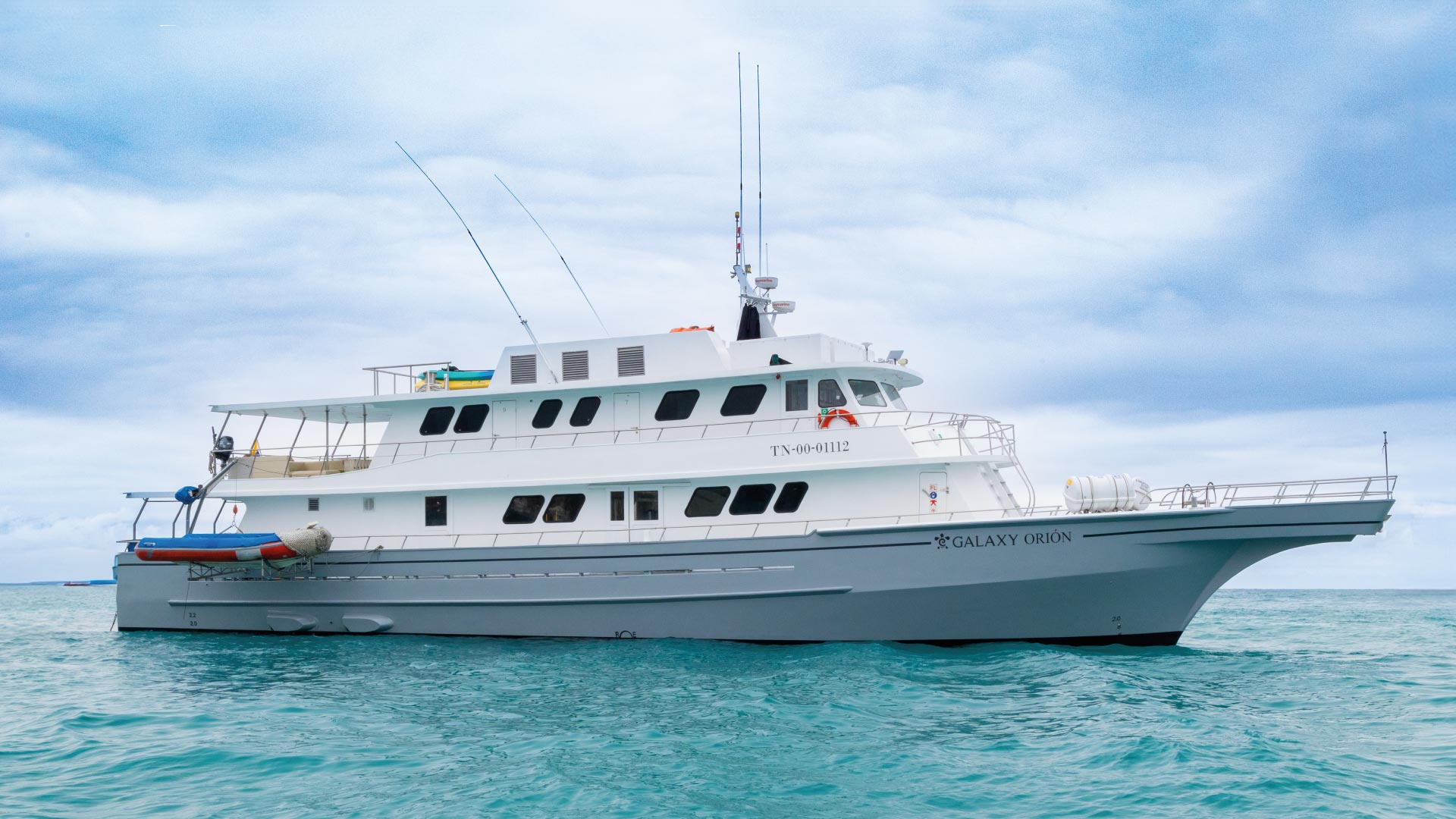 Galaxy OrionGalápagos