Explorar Maldivas (Male - Male)
Ariyal · Maldivas · 7 noches
Sobre esta ruta
Esta aventura de vida a bordo en las Maldivas explora los vibrantes atolones de North Male y Ari. Los huéspedes pueden esperar una mezcla de emocionantes inmersiones a la deriva, encuentros con grandes especies pelágicas e impresionantes inmersiones en arrecifes. El viaje promete oportunidades para avistar mantarrayas, tiburones ballena y varios tiburones de arrecife entre coloridos jardines de coral. Este itinerario es ideal para buceadores que buscan una experiencia clásica de las Maldivas con diversos encuentros marinos.
Regiones en esta ruta
Destacados
Alimatha House Reef
This site is considered one of the best night dives in the Maldives. It showcases a grand performance by a large number of nurse sharks, stingrays, and massive jacks. The nocturnal activity is a highlight, offering a unique perspective on the reef's inhabitants. Divers can observe various predators hunting and interacting under the cover of darkness.
- Best night dive in Maldives
- Nurse sharks at night
- Stingray feeding
- Large jacks
Bathalaamaagaa Kanthila
This long coral ridge, situated in the middle of a channel, extends from the outer reef and gently slopes to deeper waters. It offers good conditions for observing grey reef sharks, whitetip reef sharks, and eagle rays, as well as schools of jacks and fusiliers. The site is active during both incoming and outgoing currents, though more challenging during outgoing currents of the northeast monsoon. Negative entry is sometimes required, and divers are advised to hide behind the depth of the top reef to protect themselves from the current.
- Coral ridge
- Grey and whitetip reef sharks
- Eagle rays and schooling fish
- Channel diving
Fish Head
One of the major attractions of the atoll, Fish Head is known for the abundance of big schools of jacks and fusiliers on the up-current side. This site is a highlight for observing countless blue-striped snappers hiding among the strong currents. The area is also popular with grey reef sharks, schools of barracuda, and dogtooth tuna. Strong negative entry is often recommended due to the powerful currents.
- Big schools of jacks
- Blue-striped snappers
- Grey reef sharks
- Strong current diving
Kandooma Thila
Considered one of the best dive sites in South Male Atoll, Kandooma Thila is a number one ranked site. This pinnacle is located in the middle of the channel, offering spectacular conditions to observe grey reef sharks, whitetip reef sharks, eagle rays, and large schools of jacks. The north side of the pinnacle is densely covered with soft corals, while the top of the reef hosts many reef fish and green turtles.
- Pinnacle reef
- Grey reef sharks
- Eagle rays and jacks
- Soft coral formations
Kudhi Maa Wreck
The Kudhi Maa Wreck is a 150-foot-long cargo ship lying on its side. It was sunk intentionally and provides an excellent habitat for diverse marine life. The wreck is largely intact, with several entry points allowing penetration into the cargo holds and around the wheelhouse. The site is often frequented by nurse sharks, batfish, stonefish, lionfish, and moray eels.
- 150-foot cargo ship wreck
- Wreck penetration
- Nurse sharks and batfish
- Lionfish and moray eels
Kudrarah Thila
Kudrarah Thila is part of a Marine Protected Area and is a beautiful site with exceptional diving conditions. Overhangs rich in sea fans and the top reef, which is covered with healthy soft corals, make it a highlight. It is also known for big schools of blue-striped and midnight snappers, fusiliers, and jacks, making it a great place to find larger groupers hiding in small caves.
- Marine Protected Area
- Sea fan overhangs
- Soft coral reef top
- Schooling fish and groupers
Lankan Beyru (Manta Point)
This site is a main dive area for manta ray encounters, as they come to the cleaning station situated along the southwest monsoon path. It features a large coral block covered with anemones and full of diverse reef fish. The area is also known for sightings of whitetip reef sharks, turtles, and napoleons.
- Manta ray cleaning station
- Whitetip reef sharks
- Turtles and napoleons
- Coral block formation
Maamigili Beyru (Whale Shark)
Located on the southern tip of South Ari Atoll, Maamigili Beyru is a Marine Protected Area recognized as one of the best locations in the Maldives for spotting whale sharks. Whale sharks are often seen cruising along the reef wall, providing unforgettable encounters. Divers typically enter the water from the boat and swim along with these majestic creatures.
- Whale shark encounters
- Marine Protected Area
- Reef wall cruises
- Southernmost Ari Atoll
Maaya Thila
This pinnacle, approximately 240 feet wide, is often cited as one of the best night dives in the Maldives. The current can be strong, but the site is easily accessible. Regularly spotted species include whitetip reef sharks, stingrays, and moray eels. A few separated coral blocks south of the thila create a small reef full of beautiful coral formations, making it an excellent spot for grey reef sharks as well.
- Pinnacle night dive
- Whitetip reef sharks
- Stingrays and morays
- Coral blocks with grey reef sharks
Miyaru Kandu
One of the channel dives that you don't want to miss in Vaavu Atoll. This site is known for strong incoming currents that attract a diverse range of marine life. Divers can expect to see grey reef sharks, whitetip reef sharks, eagle rays, and napoleons. The visibility is usually excellent, often exceeding 120 feet during the northeast monsoon, enhancing the overall dive experience.
- Channel drift dive
- Grey reef sharks
- Whitetip reef sharks
- Excellent visibility (seasonal)
Moofushi Kandu (Manta Point)
This dive site is a well-known manta cleaning station in the South Ari Atoll, particularly active during the northeast monsoon. Divers have a good chance to see mantas congregating around a large rock formation. Whitetip reef sharks are common visitors around this area, as are fusiliers and schooling snappers, adding to the dynamic marine environment.
- Manta cleaning station
- Northeast monsoon manta sightings
- Whitetip reef sharks
- Schooling fusiliers
Rasdhoo Madivaru
The dive channel between Rasdhoo Island and Madivaru offers a spectacular ridge facing the ocean, where divers can observe strong incoming currents and abundant marine life. The area is known for grey reef sharks, whitetip reef sharks, eagle rays, and dogtooth tuna. Moray eels are often visible, and it's also common to see stingrays. If dived during the first rays of the sun, with an incoming current, the chance of seeing hammerhead sharks is significantly increased.
- Shark encounters
- Hammerhead sharks (seasonal)
- Strong currents
- Dogtooth tuna
Rasfari Corner
A large and shallow plateau (10-20 ft) on the west side of this atoll, right next to the wide lagoon of Rasfari. It is covered with hard corals and hosts a cleaning station during the northeast monsoon. The most common way to dive here is to start at the top of the reef, which is protected from currents, and after spending some time with the mantas, continue the dive towards the wall that drops down to about 75 feet. The wall is richly covered with hard corals, vibrant fish life, and often frequented by turtles.
- Manta cleaning station
- Hard coral plateau
- Wall dive to 75 feet
- Rich fish life
Requisitos
- CertificaciónOpen Water
- Inmersiones mínimas registradas10
- ExperienciaLos buzos deben tener un mínimo de 10 inmersiones registradas.
Bueno saber
- The last dive will be on the penultimate day of the trip around 11:00.
- Divers are recommended to wait for 24 hours before flying after the last dive.
Plan día a día
Día 1: Embarque – Male Atoll
Los huéspedes embarcan en el buque alrededor de las 13:00, seguido de importantes presentaciones y una sesión informativa sobre el viaje. También se realiza la preparación del equipo. El barco zarpa hacia el atolón North Ari después del check-in, marcando el comienzo de la aventura de buceo de la semana.
Día 2: Atolón Ari Norte – Sitios de Buceo Reconocidos
Las inmersiones de hoy se centran en el Atolón Ari Norte, conocido por sus fuertes corrientes y rica biodiversidad marina. Sitios como Bathalaamaagaa Kanthila presentan arrecifes exteriores extensos que descienden gradualmente a aguas más profundas. Los buzos pueden anticipar encuentros con varios tiburones de arrecife, tiburones de punta blanca y rayas águila, a menudo agrupándose en las corrientes.
Día 3: Atolón Ari Sur – Puntos Calientes de Mantas y Tiburones Ballena
El Atolón Ari Sur es una ubicación privilegiada para encontrar la icónica vida marina maldiva, centrándose en sitios como Moofushi Kandu, una conocida estación de limpieza de mantas. Maamigili Beyru es un área protegida famosa por los avistamientos de tiburones ballena, ofreciendo oportunidades para nadar junto a estos gentiles gigantes. Las corrientes en esta área atraen una diversidad de especies pelágicas.
Día 4: Atolón de Malé Norte – Exploración de Arrecifes y Canales
Las inmersiones de hoy exploran el Atolón de Malé Norte, centrándose en sitios como Kandhooma Thila, conocido por sus vibrantes ecosistemas de arrecife y fuertes corrientes. Rasfari Corner ofrece extensos hábitats de coral duro y es un lugar conocido para tiburones de arrecife de punta blanca y otros pelágicos. Los buceadores pueden esperar inmersiones dinámicas en canales con diversas formaciones coralinas.
Día 5: Atolón de Vaavu – Vibrantes Arrecifes de Coral y Canales
El Atolón de Vaavu ofrece excelentes oportunidades de buceo con sus canales prístinos y vibrantes sistemas de arrecifes. Miyaru Kandu es un sitio bien conocido para observar tiburones grises de arrecife, tiburones de arrecife de punta blanca y rayas águila, a menudo agrupándose en las fuertes corrientes. Alimatha House Reef ofrece espectaculares inmersiones nocturnas, mostrando tiburones nodriza y rayas cazando en el arrecife.
Día 6: Atolón de Rasdhoo – Acción Pelágica y Paredes de Arrecife
Bucear en el Atolón de Rasdhoo ofrece oportunidades para observar una diversa gama de especies pelágicas. Rasdhoo Madivaru es un sitio popular para encontrar tiburones grises de arrecife, tiburones de arrecife de punta blanca y atunes diente de perro. Las fuertes corrientes a menudo traen fusileros, que a su vez atraen a depredadores más grandes. Los buceadores también pueden avistar mantarrayas y varias rayas en la zona.
Día 7: Atolón Malé Norte – Sitios de Buceo Icónicos
En el último día de buceo, el itinerario revisita el Atolón Malé Norte para explorar sus sitios icónicos. Maaya Thila es un pináculo de buceo reconocido, a menudo con tiburones de punta blanca, rayas y morenas. Fish Head es otro sitio prominente conocido por grandes cardúmenes de jureles y fusileros, que a menudo atraen a varios depredadores pelágicos. La zona promete vibrantes ecosistemas de arrecife y diversa vida marina.
Día 8: Desembarco – Male
El check-out y el traslado al aeropuerto están programados entre las 08:00 y las 09:00 a. m. Los huéspedes desembarcan, concluyendo su viaje de buceo en las Maldivas.
Próximas salidas
- 2026-11-22 – 2026-11-29desde 2,397 USDReservar
- 2026-11-29 – 2026-12-06desde 2,397 USDReservar
- 2026-12-06 – 2026-12-13desde 2,397 USDReservar
- 2026-12-13 – 2026-12-20desde 1,998 USDReservar
- 2026-12-20 – 2026-12-27desde 2,397 USDReservar
- 2026-12-27 – 2027-01-03desde 3,995 USDReservar
- 2027-01-03 – 2027-01-10desde 3,995 USDReservar
- 2027-01-10 – 2027-01-17desde 3,995 USDReservar
- 2027-01-17 – 2027-01-24desde 3,995 USDReservar
- 2027-01-24 – 2027-01-31desde 2,397 USDReservar
- 2027-01-31 – 2027-02-07desde 3,995 USDReservar
- 2027-03-28 – 2027-04-04desde 3,995 USDReservar
Todas las rutas de este barco
- Baa Atoll Hanifaru - North/South Ari Atoll - South Male Atoll (Male - Male) · 8 días / 7 noches
- Deep South (Gan - Kooddoo) · 7 noches
- Extremo Sur (Koodoo - Gan) · 7 noches
- Itinerario de Muestra · 10 días / 9 noches
- Sur Profundo de Maldivas · 10 días / 9 noches
- Extremo Sur de Gan a Malé · 9 noches
- Sur Profundo de Male a Gan · 9 noches
- Extremo Sur de Gan a Malé · 9 noches
Sobre el barco
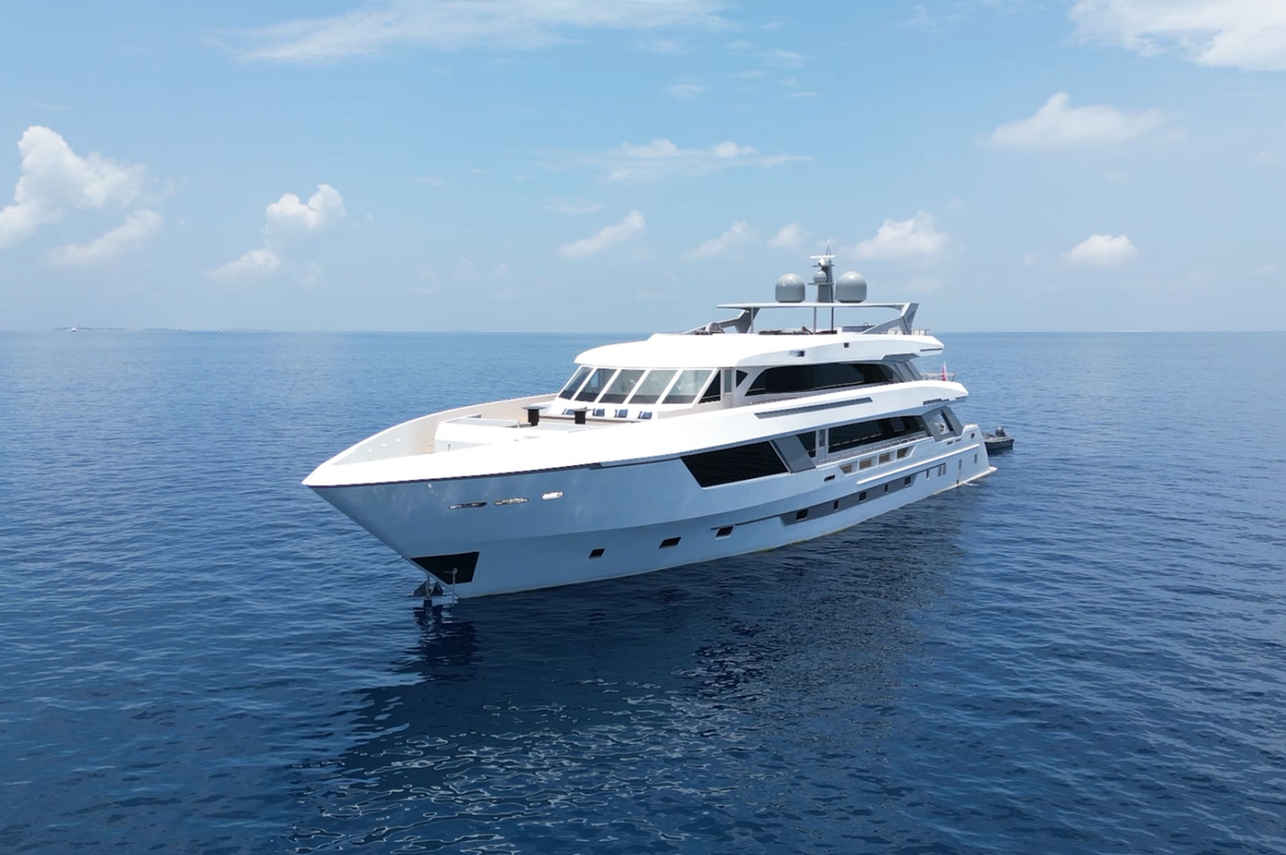 AriyalMaldivas