North Wrecks, Ras Mohamed, Tiran, Brothers, Safaga (Hurghada - Hurghada)
Discovery I · Ägypten · 8 Tage/7 Nächte
Über diese Route
Diese Rotes-Meer-Tauchkreuzfahrt erkundet eine Mischung aus nördlichen Wracks, lebhaften Riffen und vorgelagerten Inseln. Die Route führt Taucher durch die berühmten Gebiete Ras Mohammed und Tiran, weiter südlich zu den Brother Islands und zu den Riffen bei Safaga. Es sind Begegnungen mit einer vielfältigen Unterwasserwelt zu erwarten, darunter verschiedene Haiarten, Mantarochen und Fischschwärme, vor dem Hintergrund dramatischer Unterwassertopografie und historischer Wracks. Eine Woche unglaublichen Tauchens in Ägyptens berühmten Gewässern steht bevor.
Regionen auf dieser Route
Highlights
Carnatic
The Carnatic, a 90-meter-long sail and engine steamer, sank in 1869 while carrying a cargo of wine and 'London soda water'. The wreck is largely intact and lies at approximately 26 meters, offering excellent penetrations into its cargo holds. Its wooden hull has decayed, revealing its iron framework, which is now heavily adorned with soft corals, attracting various marine life including groupers and octopuses.
- 19th-century steamer
- Intact structure
- Penetration opportunities
- Soft coral growth
Dunraven
The Dunraven wreck, a 72m-long English steamer, sank in 1876 on Sha'ab Mahmoud. It lies upside down at a maximum depth of 29m. The wreck is heavily encrusted with corals, attracting a wide variety of marine life including glassfish and moray eels. It offers an excellent opportunity for exploring a historical site that has become a thriving artificial reef.
- 19th-century steamer
- Upside-down position
- Coral encrusted
- Abundant marine life
Giannis D
The Giannis D is a large Greek freighter that sank in 1983. The wreck is split into two sections, lying at a maximum depth of 28m. Divers can explore the engine room, bridge, and cabins, which are now heavily encrusted with soft corals. The wreck is teeming with glassfish, snapper, jacks, and moray eels, making it a captivating dive site for both its historical aspect and marine life.
- Greek freighter wreck
- Penetration dives
- Engine room exploration
- Abundant glassfish
Ras Mohamed
Ras Mohamed National Park is celebrated for its exceptional reef ecosystems, found at the tip of the Sinai where the Red Sea meets the Gulf of Suez and the Gulf of Aqaba. This national park offers some of the best diving in the region, known for its healthy reefs, abundant marine life, and dramatic underwater topography. It's an ideal location for both vibrant reef exploration and wall diving.
- Pristine reefs
- Diverse marine life
- Wall diving
- National park status
Red Sea
The Red Sea is globally renowned for its exceptional marine biodiversity, crystal-clear waters, and stunning coral reefs. It is home to thousands of invertebrate species and over a thousand types of fish, many of which are endemic. The nutrient-rich waters support vibrant ecosystems, making it a prime destination for divers seeking encounters with reef sharks, dugongs, and a myriad of colorful reef fish.
- Exceptional biodiversity
- Crystal-clear waters
- Endemic species
- Vibrant coral reefs
Safaga
Safaga is a port town known for its accessible and diverse dive sites, offering a mix of vibrant reefs and historical wrecks. The sites around Safaga generally feature rich hard and soft coral formations, with a variety of reef fish and occasional larger marine life. It's a key area for exploring both natural reef beauty and submerged history in the Red Sea.
- Coral diversity
- Reef exploration
- Accessible wrecks
- Varied marine habitats
Salam Express
The Salam Express is a relatively recent wreck, sinking in 1976 after an overnight journey from Hurghada to Safaga. The vessel, lying on its side, extends to a maximum depth of 29m. It is completely covered in corals and is home to a wide variety of marine life, including glassfish and moray eels. This wreck offers an excellent deep reef dive experience.
- Recent wreck
- Coral-covered structure
- Glassfish schools
- Moray eels
Sha'ab Ali Abu Nuhas
Sha'ab Ali, near Abu Nuhas, is a great reef area offering diverse marine habitats. This site is known for its shallow, healthy reef systems that provide excellent opportunities for observing a variety of reef fish and some larger pelagic species. The area is particularly famous for its 'Yellow Fish Reef', which is often blanketed by schools of yellow fish, creating stunning visual displays.
- Healthy reef systems
- Diverse fish species
- Shallow depths
- Yellow Fish Reef
SS Thistlegorm
The SS Thistlegorm is one of the most famous and best-preserved wrecks in the world. This British war vessel, sunk in 1941, carried a significant cargo of wartime supplies like trucks, motorbikes, and rifles. Lying at a depth of 30 meters, the wreck offers incredible penetration possibilities and is now home to a diverse marine ecosystem, making it a highlight for any Red Sea itinerary.
- World War II wreck
- Cargo holds
- Motorbikes and trucks
- Penetration opportunities
The Brothers Islands
The Brother Islands are renowned for their twin pinnacles emerging from the deep abyss, located about 60 miles offshore from El Quseir. As part of the Marine Park Islands National Park, these islands offer spectacular wall diving with vibrant soft corals and dense gorgonian forests. The area is a hotspot for large pelagics, including various shark species and manta rays, with occasional thresher sharks sighted on the North and South plateaus of Small Brother.
- Pelagic encounters
- Shark schools
- Soft coral walls
- Gorgonian forests
Thomas Reef
Thomas Reef is part of the Tiran Strait, recognized for its stunning wall dives and deep canyon. The reef boasts impressive hard and soft coral gardens, attracting a wide array of reef fish and pelagic species. Strong currents often characterize this site, making it an exciting drift dive with abundant marine life.
- Deep canyon
- Wall dives
- Coral gardens
- Drift diving
Voraussetzungen
- BrevetierungAdvanced Open Water
- Min. geloggte Tauchgänge10
- ErfahrungTaucher sollten mindestens 10 geloggte Tauchgänge haben.
Gut zu wissen
- An Advanced Open Water certification is recommended to maximize enjoyment of the trip, especially for deeper sites and potential currents.
- Beginner divers may find some dives challenging and might be asked by the Cruise Director to skip certain dives.
- Divers are recommended to wait for 24 hours before flying after their last dive.
- Transfers are generally from/to Hurghada or RMF airport for Saturday, the first and last day of the trip. Additional charges may apply for transfers on other days or from Marsa Alam.
- Guests must be on board by Sunday before 05:00. The boat typically departs on Sunday and returns to port on Friday at about 15:30.
Tag-für-Tag-Plan
Tag 1: Einschiffung – Hurghada
Die Einschiffung beginnt in Hurghada. Die Gäste beziehen ihre Kabinen und erhalten eine umfassende Sicherheitseinweisung, bevor das Schiff zur Abfahrt vorbereitet wird. Der erste Abend wird im Yachthafen verbracht, was Zeit zur Entspannung und Vorfreude auf die bevorstehende Tauchwoche bietet.
Tag 2: Nördliche Wracks & Ras Mohamed – Tauchabenteuer
Das heutige Tauchen konzentriert sich auf das nördliche Rote Meer, möglicherweise einschließlich berühmter Wracks wie der SS Thistlegorm, die als einer der besten Wracktauchgänge weltweit gilt. Das Gebiet bietet reiche historische Einblicke und Möglichkeiten, unglaubliche künstliche Riffe zu erkunden. Nach den Wracktauchgängen geht die Reise weiter zum Ras Mohamed Nationalpark, bekannt für seine unberührten Riffe und vielfältigen marinen Ökosysteme, die Steilwandtauchgänge und lebendige Korallengärten bieten.
Tag 3: Tiran – Riff-Erkundung
Der Tag ist der Erkundung der beeindruckenden Riffe des Tiran-Gebiets gewidmet, einschließlich der Riffe Gordon, Thomas, Woodhouse und Jackson. Diese Orte sind bekannt für ihre dramatischen Steilwände, lebendigen Korallengärten und starken Strömungen, die pelagische Arten anziehen. Taucher erwartet eine dynamische Umgebung mit potenziellen Strömungstauchgängen entlang atemberaubender Wandformationen, die die Möglichkeit bieten, Schwärme von Fischen und größere Meereslebewesen zu beobachten, die von den nährstoffreichen Gewässern angezogen werden.
Tag 4: Brother Islands – Begegnungen mit Pelagischen Fischen
Heute erreichen Sie die ikonischen Brother Islands, bestehend aus Big Brother und Small Brother. Diese abgelegenen Felsnadeln erheben sich aus der Tiefe und sind bekannt für ihre pelagischen Begegnungen und unberührten Wände, die mit Weichkorallen und Gorgonienwäldern geschmückt sind. Das Gebiet ist für starke Strömungen bekannt und bietet spektakuläre Strömungstauchgänge, bei denen Taucher häufig verschiedene Haiarten, einschließlich Hammerhaie und Hochsee-Weißspitzenhaie, antreffen.
Tag 5: Brother Islands – Wracks und Riffe
Die Erkundung der Brother Islands wird fortgesetzt, und Taucher haben weitere Gelegenheiten, das reiche Meeresleben rund um diese isolierten Seeberge zu erkunden. Der Tag kann auch Tauchgänge zu den Wracks der Aida II und Numidia bei Big Brother umfassen, die eine faszinierende Mischung aus historischer Erkundung und lebhaften Riffökosystemen bieten. Diese Orte beherbergen oft große Fischschwärme und eine Vielzahl von Riffhaien.
Tag 6: Safaga – Riffe und Nördliche Wracks
Die Reise führt weiter südlich in die Region Safaga, die vielfältige Tauchplätze mit wunderschönen Korallenformationen und potenziellen Wracktauchgängen bietet. Dieses Gebiet weist oft lebendige Riffsysteme mit zahlreichen Riffischen auf, und einige Plätze zeichnen sich durch dramatische Topographie wie Wände und Felsnadeln aus. Die Erkundung kann beliebte lokale Riffe und flachere Wracks umfassen, was ein entspanntes und dennoch fesselndes Taucherlebnis bietet.
Tag 7: Safaga – Letzte Erkundung
Der letzte volle Tauchtag findet weiterhin im Safaga-Gebiet statt, wobei der Fokus auf der weiteren Erkundung seiner bekannten Tauchplätze liegt. Diese Region ist berühmt für ihre relativ ruhigen Bedingungen im Vergleich zum offenen Meer, was sie ideal für die Erkundung ausgedehnter Riffsysteme macht, einschließlich Hart- und Weichkorallen. Taucher entdecken vielfältige Meereslebensräume, von flachen Korallengärten bis hin zu tieferen Pinnacles, die von Makroleben und farbenfrohen Schwarmfischen wimmeln, bevor das Schiff seine Rückreise beginnt.
Tag 8: Ausschiffung – Hurghada
Nach dem Frühstück erfolgt die Ausschiffung der Gäste in Hurghada. Transfers werden entsprechend der individuellen Reisepläne arrangiert und beenden eine unvergessliche Tauchkreuzfahrt durch das Rote Meer.
Nächste Abfahrten
- 2027-01-09 – 2027-01-16ab 930 USDBuchen
- 2027-01-23 – 2027-01-30ab 930 USDBuchen
- 2027-02-13 – 2027-02-20ab 930 USDBuchen
- 2027-02-27 – 2027-03-06ab 930 USDBuchen
- 2027-04-17 – 2027-04-24ab 1,037 USDBuchen
- 2027-05-22 – 2027-05-29ab 1,037 USDBuchen
- 2027-09-25 – 2027-10-02ab 1,277 USDBuchen
- 2027-10-16 – 2027-10-23ab 1,277 USDBuchen
- 2027-11-13 – 2027-11-20ab 1,277 USDBuchen
- 2028-01-08 – 2028-01-15ab 988 USDBuchen
- 2028-01-22 – 2028-01-29ab 988 USDBuchen
- 2028-02-12 – 2028-02-19ab 988 USDBuchen
Alle Routen dieser Tauchsafari
- Nördliche Wracks, Ras Mohamed, Tiran (Hurghada - Hurghada) · 8T7N
- Brothers - Daedalus - Elphinstone (Port Ghalib) (Port Ghalib → Port Ghalib) · 8D7N
- Brothers - Daedalus - Elphinstone (Hurghada) (Hurghada → Hurghada) · 8D7N
- St. John's, Fury Shoal, Elphinstone (Port Ghalib - Port Ghalib) · 8T7N
- Brothers - Daedalus - Elphinstone (Hurghada → Port Ghalib) · 8D7N
- Brothers - Daedalus - Elphinstone (Port Ghalib → Hurghada) · 8D7N
- Brothers - Daedalus - Elphinstone · 7 Nächte
- Brothers, Daedalus, Elphinstone (Hurghada - Hurghada) · 7 Nächte
- Daedalus, Rocky, Zabargad, Elphinstone (Port Ghalib - Port Ghalib) · 7 Nächte
Über das Schiff
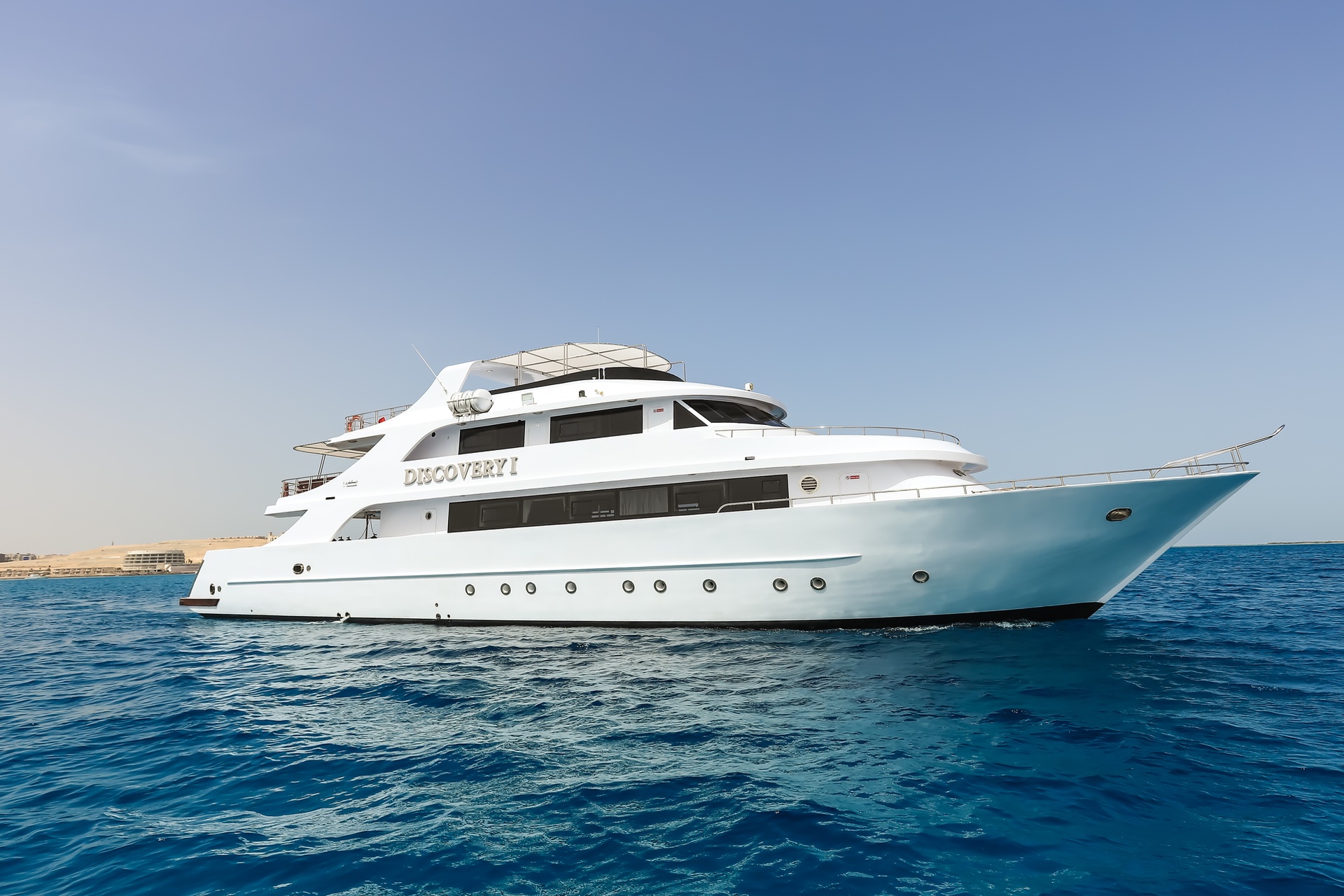 Discovery IÄgypten