Malediven erkunden (Male - Male)
Ariyal · Malediven · 7 Nächte
Über diese Route
Dieses Tauchsafari-Abenteuer auf den Malediven erkundet die lebhaften Atolle Nord-Male und Ari. Die Gäste können eine Mischung aus aufregenden Strömungstauchgängen, Begegnungen mit großen pelagischen Arten und beeindruckenden Riff-Tauchgängen erwarten. Die Reise verspricht Gelegenheiten, Mantarochen, Walhaie und verschiedene Riffhaie inmitten farbenfroher Korallengärten zu sichten. Diese Reiseroute ist gut geeignet für Taucher, die ein klassisches Malediven-Erlebnis mit vielfältigen Meeresbegegnungen suchen.
Regionen auf dieser Route
Highlights
Alimatha House Reef
This site is considered one of the best night dives in the Maldives. It showcases a grand performance by a large number of nurse sharks, stingrays, and massive jacks. The nocturnal activity is a highlight, offering a unique perspective on the reef's inhabitants. Divers can observe various predators hunting and interacting under the cover of darkness.
- Best night dive in Maldives
- Nurse sharks at night
- Stingray feeding
- Large jacks
Bathalaamaagaa Kanthila
This long coral ridge, situated in the middle of a channel, extends from the outer reef and gently slopes to deeper waters. It offers good conditions for observing grey reef sharks, whitetip reef sharks, and eagle rays, as well as schools of jacks and fusiliers. The site is active during both incoming and outgoing currents, though more challenging during outgoing currents of the northeast monsoon. Negative entry is sometimes required, and divers are advised to hide behind the depth of the top reef to protect themselves from the current.
- Coral ridge
- Grey and whitetip reef sharks
- Eagle rays and schooling fish
- Channel diving
Fish Head
One of the major attractions of the atoll, Fish Head is known for the abundance of big schools of jacks and fusiliers on the up-current side. This site is a highlight for observing countless blue-striped snappers hiding among the strong currents. The area is also popular with grey reef sharks, schools of barracuda, and dogtooth tuna. Strong negative entry is often recommended due to the powerful currents.
- Big schools of jacks
- Blue-striped snappers
- Grey reef sharks
- Strong current diving
Kandooma Thila
Considered one of the best dive sites in South Male Atoll, Kandooma Thila is a number one ranked site. This pinnacle is located in the middle of the channel, offering spectacular conditions to observe grey reef sharks, whitetip reef sharks, eagle rays, and large schools of jacks. The north side of the pinnacle is densely covered with soft corals, while the top of the reef hosts many reef fish and green turtles.
- Pinnacle reef
- Grey reef sharks
- Eagle rays and jacks
- Soft coral formations
Kudhi Maa Wreck
The Kudhi Maa Wreck is a 150-foot-long cargo ship lying on its side. It was sunk intentionally and provides an excellent habitat for diverse marine life. The wreck is largely intact, with several entry points allowing penetration into the cargo holds and around the wheelhouse. The site is often frequented by nurse sharks, batfish, stonefish, lionfish, and moray eels.
- 150-foot cargo ship wreck
- Wreck penetration
- Nurse sharks and batfish
- Lionfish and moray eels
Kudrarah Thila
Kudrarah Thila is part of a Marine Protected Area and is a beautiful site with exceptional diving conditions. Overhangs rich in sea fans and the top reef, which is covered with healthy soft corals, make it a highlight. It is also known for big schools of blue-striped and midnight snappers, fusiliers, and jacks, making it a great place to find larger groupers hiding in small caves.
- Marine Protected Area
- Sea fan overhangs
- Soft coral reef top
- Schooling fish and groupers
Lankan Beyru (Manta Point)
This site is a main dive area for manta ray encounters, as they come to the cleaning station situated along the southwest monsoon path. It features a large coral block covered with anemones and full of diverse reef fish. The area is also known for sightings of whitetip reef sharks, turtles, and napoleons.
- Manta ray cleaning station
- Whitetip reef sharks
- Turtles and napoleons
- Coral block formation
Maamigili Beyru (Whale Shark)
Located on the southern tip of South Ari Atoll, Maamigili Beyru is a Marine Protected Area recognized as one of the best locations in the Maldives for spotting whale sharks. Whale sharks are often seen cruising along the reef wall, providing unforgettable encounters. Divers typically enter the water from the boat and swim along with these majestic creatures.
- Whale shark encounters
- Marine Protected Area
- Reef wall cruises
- Southernmost Ari Atoll
Maaya Thila
This pinnacle, approximately 240 feet wide, is often cited as one of the best night dives in the Maldives. The current can be strong, but the site is easily accessible. Regularly spotted species include whitetip reef sharks, stingrays, and moray eels. A few separated coral blocks south of the thila create a small reef full of beautiful coral formations, making it an excellent spot for grey reef sharks as well.
- Pinnacle night dive
- Whitetip reef sharks
- Stingrays and morays
- Coral blocks with grey reef sharks
Miyaru Kandu
One of the channel dives that you don't want to miss in Vaavu Atoll. This site is known for strong incoming currents that attract a diverse range of marine life. Divers can expect to see grey reef sharks, whitetip reef sharks, eagle rays, and napoleons. The visibility is usually excellent, often exceeding 120 feet during the northeast monsoon, enhancing the overall dive experience.
- Channel drift dive
- Grey reef sharks
- Whitetip reef sharks
- Excellent visibility (seasonal)
Moofushi Kandu (Manta Point)
This dive site is a well-known manta cleaning station in the South Ari Atoll, particularly active during the northeast monsoon. Divers have a good chance to see mantas congregating around a large rock formation. Whitetip reef sharks are common visitors around this area, as are fusiliers and schooling snappers, adding to the dynamic marine environment.
- Manta cleaning station
- Northeast monsoon manta sightings
- Whitetip reef sharks
- Schooling fusiliers
Rasdhoo Madivaru
The dive channel between Rasdhoo Island and Madivaru offers a spectacular ridge facing the ocean, where divers can observe strong incoming currents and abundant marine life. The area is known for grey reef sharks, whitetip reef sharks, eagle rays, and dogtooth tuna. Moray eels are often visible, and it's also common to see stingrays. If dived during the first rays of the sun, with an incoming current, the chance of seeing hammerhead sharks is significantly increased.
- Shark encounters
- Hammerhead sharks (seasonal)
- Strong currents
- Dogtooth tuna
Rasfari Corner
A large and shallow plateau (10-20 ft) on the west side of this atoll, right next to the wide lagoon of Rasfari. It is covered with hard corals and hosts a cleaning station during the northeast monsoon. The most common way to dive here is to start at the top of the reef, which is protected from currents, and after spending some time with the mantas, continue the dive towards the wall that drops down to about 75 feet. The wall is richly covered with hard corals, vibrant fish life, and often frequented by turtles.
- Manta cleaning station
- Hard coral plateau
- Wall dive to 75 feet
- Rich fish life
Voraussetzungen
- BrevetierungOpen Water
- Min. geloggte Tauchgänge10
- ErfahrungTaucher sollten mindestens 10 geloggte Tauchgänge haben.
Gut zu wissen
- The last dive will be on the penultimate day of the trip around 11:00.
- Divers are recommended to wait for 24 hours before flying after the last dive.
Tag-für-Tag-Plan
Tag 1: Einschiffung – Male Atoll
Die Gäste gehen gegen 13:00 Uhr an Bord. Es folgen wichtige Vorstellungen und eine Einweisung in die Reise. Auch die Ausrüstung wird vorbereitet. Nach dem Check-in legt das Boot in Richtung des Nord-Ari-Atolls ab.
Tag 2: Nord-Ari-Atoll – Renommierte Tauchplätze
Die heutigen Tauchgänge konzentrieren sich auf das Nord-Ari-Atoll, bekannt für seine starken Strömungen und reiche marine Artenvielfalt. Tauchplätze wie Bathalaamaagaa Kanthila weisen ausgedehnte Außenriffe auf, die allmählich in tiefere Gewässer abfallen. Taucher können verschiedene Riffhaie, Weißspitzen-Riffhaie und Adlerrochen erwarten, die oft in den Strömungen schwärmen.
Tag 3: Süd-Ari-Atoll – Hotspots für Mantas und Walhaie
Das Süd-Ari-Atoll ist ein erstklassiger Ort für Begegnungen mit der ikonischen maledivischen Meeresfauna, wobei der Fokus auf Tauchplätzen wie Moofushi Kandu liegt, einer bekannten Manta-Putzstation. Maamigili Beyru ist ein geschütztes Gebiet, das für Walhai-Sichtungen berühmt ist und Gelegenheiten bietet, mit diesen sanften Riesen zu schwimmen. Die Strömungen in diesem Gebiet ziehen eine Vielfalt pelagischer Arten an.
Tag 4: Nord-Malé-Atoll – Riff- und Kanalerkundung
Die heutigen Tauchgänge erkunden das Nord-Malé-Atoll und konzentrieren sich auf Tauchplätze wie Kandhooma Thila, bekannt für seine lebhaften Riffökosysteme und starken Strömungen. Rasfari Corner bietet ausgedehnte Hartkorallenhabitate und ist ein bekannter Ort für Weißspitzen-Riffhaie und andere Pelagier. Taucher erwarten dynamische Kanaltauchgänge mit vielfältigen Korallenformationen.
Tag 5: Vaavu-Atoll – Lebhafte Korallenriffe und Kanäle
Das Vaavu-Atoll bietet exzellente Tauchmöglichkeiten mit seinen unberührten Kanälen und lebhaften Riffsystemen. Miyaru Kandu ist ein bekannter Tauchplatz zur Beobachtung von Grauen Riffhaien, Weißspitzen-Riffhaien und Adlerrochen, die oft in den starken Strömungen schwärmen. Alimatha House Reef bietet spektakuläres Nachttauchen, bei dem Ammenhaie und Stachelrochen bei der Jagd am Riff zu sehen sind.
Tag 6: Rasdhoo-Atoll – Pelagische Aktion und Riffwände
Das Tauchen im Rasdhoo-Atoll bietet Gelegenheiten, eine vielfältige Auswahl an pelagischen Arten zu beobachten. Rasdhoo Madivaru ist ein beliebter Tauchplatz für Begegnungen mit Grauen Riffhaien, Weißspitzen-Riffhaien und Hundszahn-Thunfischen. Starke Strömungen bringen oft Füseliere mit sich, die wiederum größere Raubfische anlocken. Taucher können in diesem Gebiet auch Mantarochen und verschiedene Stachelrochen entdecken.
Tag 7: Nord-Malé-Atoll – Ikonische Tauchplätze
Am letzten Tauchtag kehrt die Route zum Nord-Malé-Atoll zurück, um dessen ikonische Tauchplätze zu erkunden. Maaya Thila ist ein bekannter Pinnakel-Tauchplatz, der oft Weißspitzen-Riffhaie, Stachelrochen und Muränen zeigt. Fish Head ist ein weiterer prominenter Ort, bekannt für große Schwärme von Makrelen und Füsilieren, die oft verschiedene pelagische Raubtiere anziehen. Das Gebiet verspricht lebendige Riffökosysteme und eine vielfältige Meereswelt.
Tag 8: Ausschiffung – Male
Der Check-out und der Transfer zum Flughafen finden zwischen 08:00 und 09:00 Uhr statt. Anschließend erfolgt die Abreise der Gäste.
Nächste Abfahrten
- 2026-11-22 – 2026-11-29ab 2,397 USDBuchen
- 2026-11-29 – 2026-12-06ab 2,397 USDBuchen
- 2026-12-06 – 2026-12-13ab 2,397 USDBuchen
- 2026-12-13 – 2026-12-20ab 1,998 USDBuchen
- 2026-12-20 – 2026-12-27ab 2,397 USDBuchen
- 2026-12-27 – 2027-01-03ab 3,995 USDBuchen
- 2027-01-03 – 2027-01-10ab 3,995 USDBuchen
- 2027-01-10 – 2027-01-17ab 3,995 USDBuchen
- 2027-01-17 – 2027-01-24ab 3,995 USDBuchen
- 2027-01-24 – 2027-01-31ab 2,397 USDBuchen
- 2027-01-31 – 2027-02-07ab 3,995 USDBuchen
- 2027-03-28 – 2027-04-04ab 3,995 USDBuchen
Alle Routen dieser Tauchsafari
- Baa Atoll Hanifaru - North/South Ari Atoll - South Male Atoll (Male - Male) · 8 Tage / 7 Nächte
- Tiefer Süden (Gan - Kooddoo) · 7 Nächte
- Tiefer Süden (Koodoo - Gan) · 7 Nächte
- Beispiel-Reiseverlauf · 10 Tage / 9 Nächte
- Malediven Tiefer Süden · 10 Tage / 9 Nächte
- Tiefer Süden von Gan nach Male · 9 Nächte
- Tiefer Süden von Malé nach Gan · 9 Nächte
- Tiefer Süden von Gan nach Male · 9 Nächte
Über das Schiff
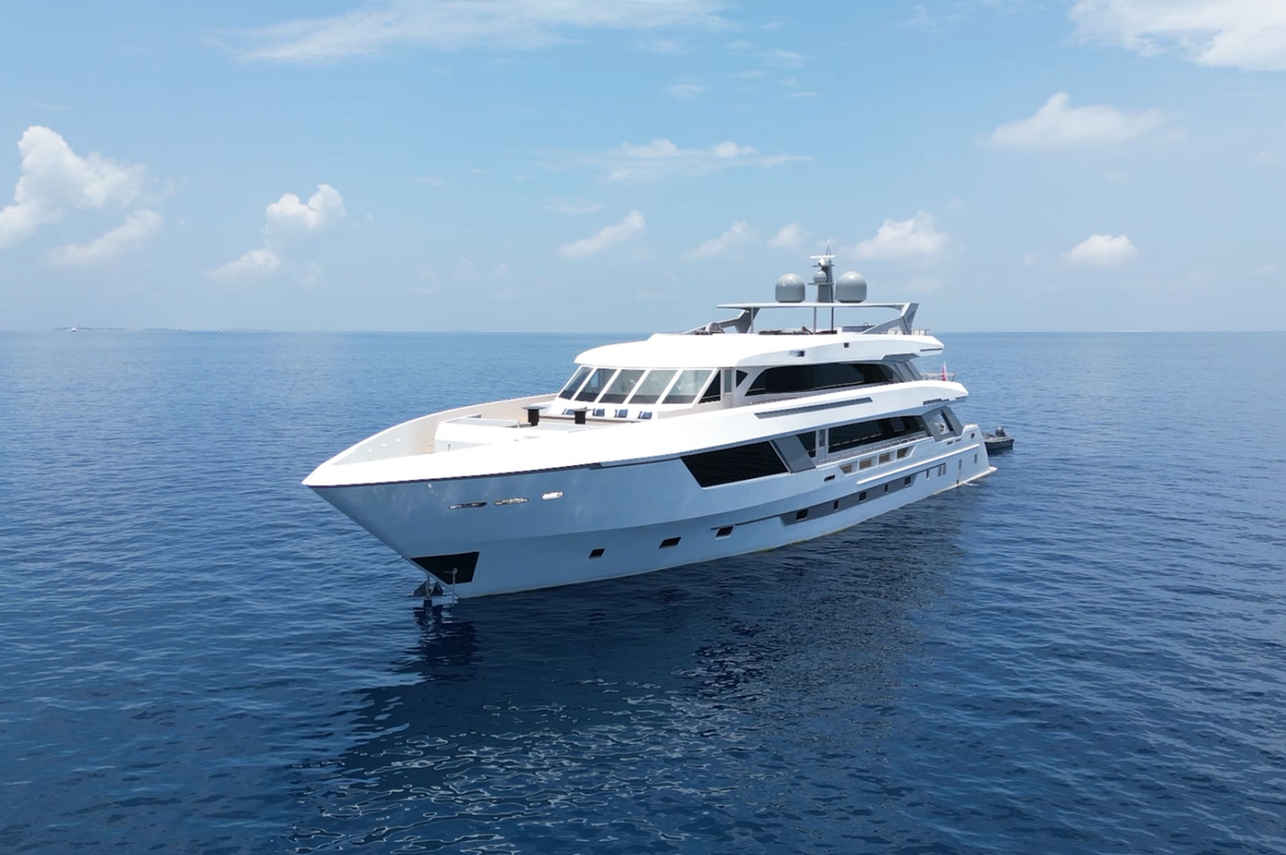 AriyalMalediven