Bluerides – Blue Rides - Tauchsafaris weltweit buchenOCEAN ADVENTURES
FlusskreuzfahrtenFlüsseNatur & TierweltUnser Versprechen
FlusskreuzfahrtenFlüsseNatur & TierweltUnser VersprechenAnmelden

Flussreiseziele

  • Flussreiseziele
  • Amazonas
  • Donau
  • Rhein
  • Mekong
  • Nil

Schiffe & Abfahrten

  • Flusskreuzfahrt-Suche
  • Angebote

Natur & Tierwelt

  • Natur & Tierwelt

Reiseunterstützung

  • Unser Versprechen
  • Kontakt

Kontakt

Kontaktiere uns

Melde dich jederzeit, wir helfen dir gerne weiter, egal ob Reisewahl oder offene Frage.

E-MailSchreib uns, meist antworten wir binnen weniger Stunden.
kontakt@bluerides.com
WhatsAppSchreib uns per WhatsApp, Mo–Fr 10:00–16:00 Uhr (MEZ).
WhatsApp-Chat starten
TelefonRuf uns an, wir helfen dir gerne weiter.
Kostenlos anrufen, Mo–Fr 10–20 Uhr (MEZ).
Europa+49 800 1144 990USA+1 888 557 7735UK+44 800 707 4152Australien+61 2 8599 6113Kanada+1 888 557 7735
Which river journey is yours?Answer 8 quick questions and find the river cruise that fits you.
8 questions, 1 minute·Plus Gift
Sichere ZahlungsmethodenDeine Zahlungen sind vollständig geschützt durch AES-256-Verschlüsselung.
Unterstützt vonStripeWiseAMEXPayGoogle PaySEPABank
Impressum·AGB·Datenschutz·Über uns·Kontakt·Haftungsausschluss·Partnerprogramm·Cruise·
Besucht uns hier

© 2026 Blue Rides. Alle Rechte vorbehalten.·

Bluerides – Blue Rides - Tauchsafaris weltweit buchenOCEAN ADVENTURES
FlusskreuzfahrtenFlüsseNatur & TierweltUnser Versprechen
FlusskreuzfahrtenFlüsseNatur & TierweltUnser VersprechenAnmelden
Coypu im Feuchtgebiet — Rhine, Tierwelt auf Flusskreuzfahrten
Startseite›Flusskreuzfahrten›Flussfauna›Coypu

CoypuMyocastor coypusWo und wann du sie sehen kannst

Vorherige ArtCommon SwiftNächste ArtDalmatian Pelican

Coypu auf einen Blick

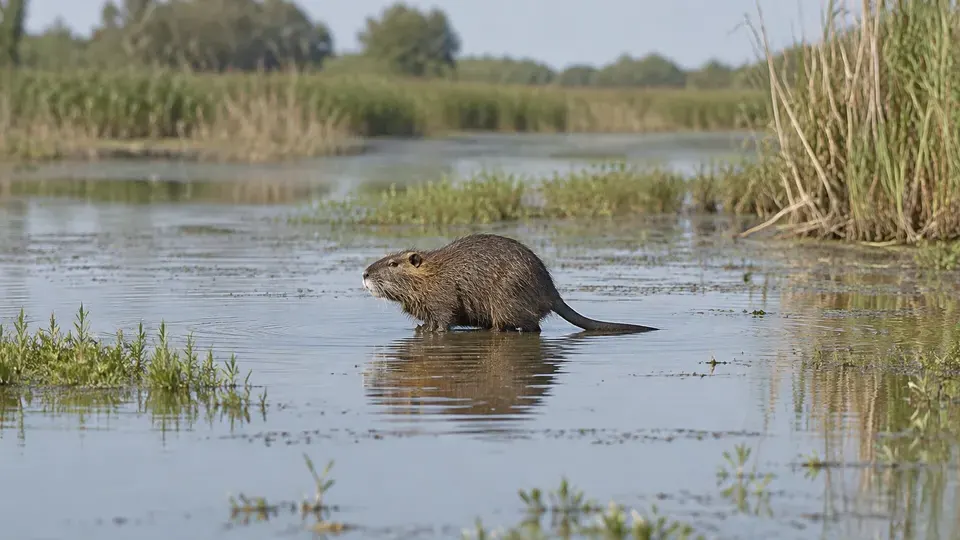
The Coypu, also called Nutria, is a large South American rodent whose European populations derive from human introductions associated with fur farming. Its river-cruise relevance is especially clear at Bislicher Insel near Xanten on the Lower Rhine: the reserve manager explicitly describes animals that visitors can often observe. This is a free-living introduced population, not a captive display. An apparently beaver-like animal in the wetland should therefore not automatically be called a Beaver. The long rounded tail and conspicuous orange incisors provide better clues than brown fur alone. Animal Diversity Web places the species around marshes, lake edges and sluggish streams with suitable bankside vegetation. Species background source: https://www.nationalgeographic.com/animals/mammals/facts/nutria

Verhalten & Fortpflanzung

Größe
Head and body 17–25 inches; tail 10–16 inches (National Geographic).
Gewicht
15–22 pounds (National Geographic).
Lebenserwartung
National Geographic reports 8–10 years in the wild; this is not a typical age established for the Rhine population.
Status
Least Concern as reported by National Geographic; introduced in Europe, native to South America.

Coypus are strong swimmers that move between water and vegetated banks. National Geographic describes burrows or nests close to water and notes that animals may live socially. A swimming individual may show little more than its head and upper back, whereas an animal feeding ashore reveals its body shape and feet. The position of the eyes and ears high on the head suits this semi-aquatic life. Their ability to use both banks and water explains why observers should scan the vegetation fringe rather than only the centre of a lake. Local group size, daily activity peaks and reproductive rates at Bislicher Insel were not verified.

Beste Orte für Tierbeobachtungen

Flusslandschaft Rhine — Lebensraum auf Flusskreuzfahrten

Rhine

Lower Rhine: Bislicher Insel at Xanten/Wesel downstream of Cologne; optional oxbow wetland excursion. Viewing: Wild introduced population; observable summer and winter.
Flusskreuzfahrten erkunden

Die Zielgebiete beschreiben den Lebensraum der Arten, nicht garantierte Haltepunkte der Kreuzfahrt. Einige Tiere erfordern einen optionalen Landausflug ins Binnenland oder sind in geschützten Reservaten zu finden.

Wissenswertes über der/die/das Coypu

  • Coypu and Nutria are names for the same animal.
  • Its native range is South American.
  • European populations arose through human introductions.
  • The tail is long rather than paddle-shaped.
  • Webbed feet assist swimming.
  • Aquatic plants and roots are important foods.
  • Small molluscs may also be eaten.
  • Bislicher Insel reports observation opportunities in summer and winter.

Beste Zeit, um der/die/das Coypu zu sehen

The Regionalverband Ruhr reserve account explicitly says that the South American Nutrias living at Bislicher Insel can often be observed in summer as well as winter. This is recurring local evidence, but it does not specify a numerical monthly range or establish equal visibility throughout the year. Both seasons are retained as written rather than converted into twelve supported months. No verified month-by-month observation calendar was located. The reserve's general year-round accessibility is not itself a species calendar. Plan a quiet shore visit around current access advice and allow time to inspect wetland margins; an animal's presence in the reserve does not guarantee that it will emerge during a particular excursion.

Coypu: Saison-Matrix nach Zielgebiet

Highlighted months reflect the stated local evidence, not guaranteed encounters. Neutral months mean no verified monthly viewing window, not absence. Observation records and recommended viewing windows are distinct.

Rhine

Summer and winter observation are explicitly supported locally, but no numerical monthly calendar was verified.

JanFebMärAprMaiJunJulAugSepOktNovDez
Flusskreuzfahrten erkunden

Wo der/die/das Coypu lebt

The registered Rhine location is an oxbow and floodplain wetland excursion at Bislicher Insel, downstream of Cologne near Xanten and Wesel. The reserve manager describes a varied landscape of flowing-river shores, gravel lakes, reedbeds and muddy edges beside the quieter old Rhine. Coypus generally favour marshes and slow water with emergent vegetation, according to Animal Diversity Web. These requirements make the quieter wetland margins more relevant than the main shipping channel. The species' presence here does not establish that it occurs at every Rhine landing, nor does the South American native range explain its European conservation role. Native-range conservation and introduced-population management are separate questions.

Was der/die/das Coypu frisst

Aquatic plants and roots are important foods, although National Geographic also records small animals such as snails and mussels. Calling the Coypu an exclusively grass-eating mammal would therefore oversimplify its diet. Bank vegetation can supply both feeding opportunities and protective cover, so feeding observations may be made along a narrow strip beside the water. A local study quantifying the proportions of roots, shoots or animal food at Bislicher Insel was not verified. Nor was a seasonal Rhine menu established. Watch what a naturally feeding animal selects without offering vegetables or bread: feeding can alter its behaviour and bring wildlife into unnecessary contact with visitors.

Art im Überblick

Trivialname
Coypu
Scientific name
Myocastor coypus
Tiergruppe
Mammals
Größe
Head and body 17–25 inches; tail 10–16 inches (National Geographic).
Gewicht
15–22 pounds (National Geographic).
Lebenserwartung
National Geographic reports 8–10 years in the wild; this is not a typical age established for the Rhine population.
Status
Least Concern as reported by National Geographic; introduced in Europe, native to South America.
Identifizierung
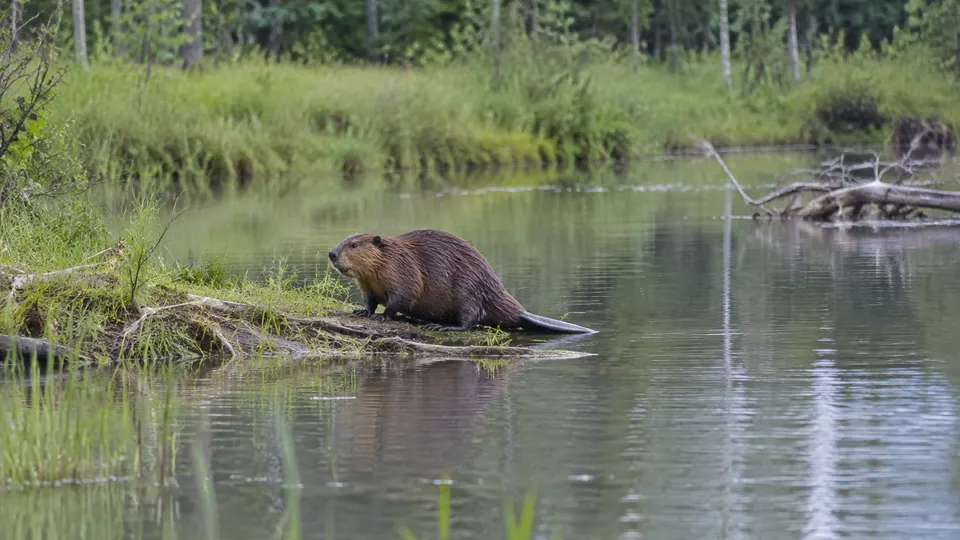
Look for a robust, large rodent with coarse brown outer fur, a substantial head, small ears and orange incisors when the mouth is visible. Its long, approximately cylindrical tail is particularly useful in comparison with the broad flattened tail of a Beaver. National Geographic describes webbed feet, another adaptation to swimming, although these may be hidden in water. A pale muzzle can stand out at close range, but a distant brown head is insufficient evidence by itself. Compare overall proportions, tail shape and movement together. If reeds obscure the diagnostic features, record an unidentified aquatic rodent rather than turning the reserve's known Coypu population into an identification shortcut.

Coypu: Häufig gestellte Fragen

Wo kann ich der/die/das Coypu sehen?
Rhine. Use the designated reserve paths and viewing areas, keeping dogs on leads as required by the manager. Scan muddy banks, reeds and the waterline for movement before looking across the open lakes. Wait for an animal to turn or leave the water if the tail is needed for identification; do not entice it ashore. A zoomed photograph can distinguish a rounded Coypu tail from a Beaver's broad paddle without approaching a burrow. Do not feed or corner an animal. An optional visit to Bislicher Insel offers a more realistic opportunity than hoping for a close view from a passing Rhine cruise vessel.
Wann ist die beste Zeit, um der/die/das Coypu zu sehen?
The Regionalverband Ruhr reserve account explicitly says that the South American Nutrias living at Bislicher Insel can often be observed in summer as well as winter. This is recurring local evidence, but it does not specify a numerical monthly range or establish equal visibility throughout the year. Both seasons are retained as written rather than converted into twelve supported months. No verified month-by-month observation calendar was located. The reserve's general year-round accessibility is not itself a species calendar. Plan a quiet shore visit around current access advice and allow time to inspect wetland margins; an animal's presence in the reserve does not guarantee that it will emerge during a particular excursion.
Wie groß wird der/die/das Coypu?
Head and body 17–25 inches; tail 10–16 inches (National Geographic).. Gewicht ausgewachsener Tiere: 15–22 pounds (National Geographic).. Die Größe variiert je nach Alter, Geschlecht und Population.
Wie sollte ich mich in der Nähe von der/die/das Coypu verhalten?
Use the designated reserve paths and viewing areas, keeping dogs on leads as required by the manager. Scan muddy banks, reeds and the waterline for movement before looking across the open lakes. Wait for an animal to turn or leave the water if the tail is needed for identification; do not entice it ashore. A zoomed photograph can distinguish a rounded Coypu tail from a Beaver's broad paddle without approaching a burrow. Do not feed or corner an animal. An optional visit to Bislicher Insel offers a more realistic opportunity than hoping for a close view from a passing Rhine cruise vessel.
Was frisst der/die/das Coypu?
Aquatic plants and roots are important foods, although National Geographic also records small animals such as snails and mussels. Calling the Coypu an exclusively grass-eating mammal would therefore oversimplify its diet. Bank vegetation can supply both feeding opportunities and protective cover, so feeding observations may be made along a narrow strip beside the water. A local study quantifying the proportions of roots, shoots or animal food at Bislicher Insel was not verified. Nor was a seasonal Rhine menu established. Watch what a naturally feeding animal selects without offering vegetables or bread: feeding can alter its behaviour and bring wildlife into unnecessary contact with visitors.
Sind Wildtiersichtungen auf einer Flusskreuzfahrt garantiert?
Nein. Tiere bewegen sich frei, und Routen, Wetter, Zugangsbeschränkungen sowie lokale Bedingungen beeinflussen jeden Ausflug. Bestätige den tatsächlichen Reiseverlauf und das Landprogramm vor der Buchung.

Wildtiere in denselben Zielgebieten vergleichen

Entdecke weitere mammals, die in diesen Zielgebieten verzeichnet sind. Eine ähnliche Umgebung bedeutet nicht, dass die Tiere dieselben Gewohnheiten oder die gleiche Beobachtungssaison haben.

Artenvergleich nach Tiergruppe und Zielgebiet
Coypu im Feuchtgebiet — Rhine, Tierwelt auf FlusskreuzfahrtenCoypuEurasian beaver im Feuchtgebiet — Danube, Rhine, Saone, Tierwelt auf FlusskreuzfahrtenEurasian Beaver
TiergruppeMammalsTiergruppeMammals
ReisezieleRhineReisezieleDanube, Rhine, Saone
Scientific name
Myocastor coypus

Myocastor coypus

Scientific name
Größe
Head and body 17–25 inches; tail 10–16 inches (National Geographic).
Größe
Gewicht
15–22 pounds (National Geographic).
Gewicht
Lebenserwartung
National Geographic reports 8–10 years in the wild; this is not a typical age established for the Rhine population.
Lebenserwartung
Status
Least Concern as reported by National Geographic; introduced in Europe, native to South America.
Status
Identifizierung
Look for a robust, large rodent with coarse brown outer fur, a substantial head, small ears and orange incisors when the mouth is visible.

Look for a robust, large rodent with coarse brown outer fur, a substantial head, small ears and orange incisors when the mouth is visible. Its long, approximately cylindrical tail is particularly useful in comparison with the broad flattened tail of a Beaver. National Geographic describes webbed feet, another adaptation to swimming, although these may be hidden in water. A pale muzzle can stand out at close range, but a distant brown head is insufficient evidence by itself. Compare overall proportions, tail shape and movement together. If reeds obscure the diagnostic features, record an unidentified aquatic rodent rather than turning the reserve's known Coypu population into an identification shortcut.

Identifizierung
Lebensraum
The registered Rhine location is an oxbow and floodplain wetland excursion at Bislicher Insel, downstream of Cologne near Xanten and Wesel.

The registered Rhine location is an oxbow and floodplain wetland excursion at Bislicher Insel, downstream of Cologne near Xanten and Wesel. The reserve manager describes a varied landscape of flowing-river shores, gravel lakes, reedbeds and muddy edges beside the quieter old Rhine. Coypus generally favour marshes and slow water with emergent vegetation, according to Animal Diversity Web. These requirements make the quieter wetland margins more relevant than the main shipping channel. The species' presence here does not establish that it occurs at every Rhine landing, nor does the South American native range explain its European conservation role. Native-range conservation and introduced-population management are separate questions.

Lebensraum
Ernährung
Aquatic plants and roots are important foods, although National Geographic also records small animals such as snails and mussels.

Aquatic plants and roots are important foods, although National Geographic also records small animals such as snails and mussels. Calling the Coypu an exclusively grass-eating mammal would therefore oversimplify its diet. Bank vegetation can supply both feeding opportunities and protective cover, so feeding observations may be made along a narrow strip beside the water. A local study quantifying the proportions of roots, shoots or animal food at Bislicher Insel was not verified. Nor was a seasonal Rhine menu established. Watch what a naturally feeding animal selects without offering vegetables or bread: feeding can alter its behaviour and bring wildlife into unnecessary contact with visitors.

Ernährung
Beste Reisezeit
The Regionalverband Ruhr reserve account explicitly says that the South American Nutrias living at Bislicher Insel can often be observed in summer as well as winter.

The Regionalverband Ruhr reserve account explicitly says that the South American Nutrias living at Bislicher Insel can often be observed in summer as well as winter. This is recurring local evidence, but it does not specify a numerical monthly range or establish equal visibility throughout the year. Both seasons are retained as written rather than converted into twelve supported months. No verified month-by-month observation calendar was located. The reserve's general year-round accessibility is not itself a species calendar. Plan a quiet shore visit around current access advice and allow time to inspect wetland margins; an animal's presence in the reserve does not guarantee that it will emerge during a particular excursion.

Beste Reisezeit
Saison-Übersicht nach Zielgebiet
RhineNo verified monthly viewing evidence

Summer and winter observation are explicitly supported locally, but no numerical monthly calendar was verified.

Saison-Übersicht nach Zielgebiet
Vorherige ArtCommon SwiftNächste ArtDalmatian Pelican
Alle Flussbewohner
On this page
  • 01Etwa
  • 02Verhalten & Fortpflanzung
  • 03Beste Orte für Tierbeobachtungen
  • 04Wissenswertes
  • 05Beste Reisezeit
  • 06Saison-Übersicht nach Zielgebiet
  • 07Lebensraum
  • 08Ernährung
  • 09Art im Überblick
  • 10Fragen & Antworten
  • 11Vergleichen

Find your river cruise

Plan deine Reise

Finde deine nächste Flussreise

Vergleiche Reiseziele, Landausflüge und Termine passend zu den Tieren und Lebensräumen, die du gerne sehen möchtest.

  • Tägliche Landausflüge
  • Verantwortungsbewusste Tierbeobachtung
  • Boutique-Flussschiffe
Flusskreuzfahrten erkunden