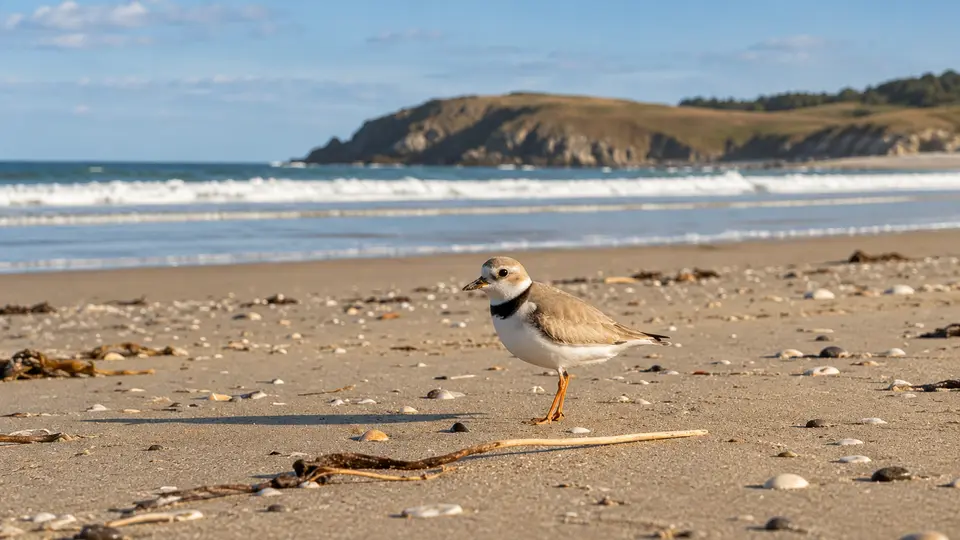
Piping Plover in its natural habitat

Piping PloverCharadrius melodusWhere and when to see them

Piping Plover at a glance

The piping plover is a small, pale shorebird whose sandy plumage nearly disappears against an open beach. It breeds along Atlantic shores and in parts of the North American interior, placing its eggs in a shallow scrape. In New England, its nesting season overlaps with peak beach recreation. Protection of quiet feeding areas and sparsely vegetated nesting ground is therefore central to the survival of local breeding populations.

Behaviour & reproduction

Size
17–18 cm body length
Weight
43–63 g
Lifespan
Not reliably established
Status
Near Threatened

Piping plovers forage with short runs followed by abrupt pauses, picking tiny prey from sand and wrack. Territorial males display in flight and prepare scrape sites that females inspect. Both parents incubate, and chicks leave the nest soon after hatching to feed themselves under adult supervision. Adults may feign injury to draw intruders away. Such distraction displays mean an observer is too close and should retreat promptly. Piping plover chicks, though tiny, are incredibly active and forage constantly after hatching. Adults are highly sensitive to human presence near their nests and will often call repeatedly or feign injury to divert attention.

Top wildlife locations

New England wildlife habitat

New England

Managed sandy beaches and barrier shorelines offer possible views from public paths or outside fenced nesting areas. Seasonal closures can make habitat inaccessible, and protecting mobile chicks takes priority over any sighting.
Destinations describe the species' habitat, not guaranteed cruise stops. Some animals require an optional inland excursion or are found in restricted reserves.

Fun facts about the Piping Plover

  • Its eggs are camouflaged to resemble surrounding sand and small stones.
  • Chicks can walk and feed themselves within hours of hatching.
  • Parents may use a broken-wing display to divert predators.
  • The species has distinct Atlantic Coast, Great Lakes and Great Plains breeding populations.

Best time to see the Piping Plover

In New England, approximately April through August covers arrival, nesting and much chick rearing, although dates vary with latitude and nesting success. Beach closures and protective fencing are especially important then. Most birds leave the region for southern coastal wintering grounds. Early summer offers the best chance to observe both adults and their small, precocial chicks. The species is federally protected as a threatened species, making local nesting sites critical for their recovery.

Piping Plover: season matrix by destination

Travel and observation windows vary by region. Highlighted months are an orientation for planning, not confirmed sightings or a guarantee of access.

New England

This broadly matches regional breeding presence, not unrestricted beach access; follow current local closures and allow for variable arrival and departure dates.

JanFebMarAprMayJunJulAugSepOctNovDec
Cruise ships in New England

Where the Piping Plover lives

Atlantic breeders occupy wide sandy beaches, barrier spits and sparsely vegetated dune margins, often near tidal flats or sheltered feeding pools. Outside breeding they use beaches and intertidal habitats farther south. Open ground is essential, but disturbance can make otherwise suitable beaches unusable. Piping plovers nest above the high tide line, utilizing areas with sparse vegetation for camouflage and protection. Crucially, they require open, undisturbed stretches of beach to detect predators and allow chicks to forage freely.

What the Piping Plover eats

Small marine worms, insects, fly larvae, beetles and tiny crustaceans provide most food. Birds glean prey from damp sand, wrack and shallow shoreline margins. Chicks need safe access to productive feeding patches because they obtain their own food rather than receiving meals from parents. In addition to invertebrates, plovers occasionally consume small amounts of seeds. Their diet emphasizes soft-bodied prey accessible on the surface, as they do not probe deeply into the sand.

Species at a glance

Common name
Piping Plover
Scientific name
Charadrius melodus
Animal group
Birds
Size
17–18 cm body length
Weight
43–63 g
Lifespan
Not reliably established
Status
Near Threatened
Identification
Its pale sandy back, orange legs and short orange-based breeding bill distinguish it from the darker-backed, more strongly banded semipalmated plover. The Piping Plover's unique pale plumage blends seamlessly with the sand, often making it difficult to spot until it moves. Its single breast band is also much thinner and often incomplete compared to the double, bolder bands of Killdeer or the single, thicker band of Semipalmated Plovers.

Piping Plover: frequently asked questions

Where can I see the Piping Plover?
New England. Remain outside all symbolic fencing and closures, leash dogs where permitted, and never follow chicks. If an adult gives alarm calls or performs a broken-wing display, back away immediately. Scanning open sandy areas with binoculars is the best way to spot these camouflaged birds. Maintain a quiet demeanor and avoid sudden movements to prevent startling them.
When is the best time to see the Piping Plover?
In New England, approximately April through August covers arrival, nesting and much chick rearing, although dates vary with latitude and nesting success. Beach closures and protective fencing are especially important then. Most birds leave the region for southern coastal wintering grounds. Early summer offers the best chance to observe both adults and their small, precocial chicks. The species is federally protected as a threatened species, making local nesting sites critical for their recovery.
How big does the Piping Plover get?
17–18 cm body length. Adult weight: 43–63 g. Size varies with age, sex and population.
How should I behave around the Piping Plover?
Remain outside all symbolic fencing and closures, leash dogs where permitted, and never follow chicks. If an adult gives alarm calls or performs a broken-wing display, back away immediately. Scanning open sandy areas with binoculars is the best way to spot these camouflaged birds. Maintain a quiet demeanor and avoid sudden movements to prevent startling them.
What does the Piping Plover eat?
Small marine worms, insects, fly larvae, beetles and tiny crustaceans provide most food. Birds glean prey from damp sand, wrack and shallow shoreline margins. Chicks need safe access to productive feeding patches because they obtain their own food rather than receiving meals from parents. In addition to invertebrates, plovers occasionally consume small amounts of seeds. Their diet emphasizes soft-bodied prey accessible on the surface, as they do not probe deeply into the sand.
Are wildlife sightings guaranteed on an adventure cruise?
No. Animals move freely and routes, weather, access restrictions and local conditions influence every outing. Confirm the actual itinerary and shore program before booking.

Compare wildlife in the same destinations

Explore other birds recorded in these destinations. Similar surroundings do not mean the animals share the same habits or viewing season.

Species comparison by animal group and destination
Piping PloverPiping PloverAtlantic PuffinAtlantic PuffinBald EagleBald Eagle
Animal groupBirdsAnimal groupBirdsAnimal groupBirds
DestinationsNew EnglandDestinationsNew England, Norway, Scotland, ArcticDestinationsAlaska, Florida, New England
All wildlife destinations
Plan your trip

Find your next wildlife adventure

Compare destinations, shore programs and dates with the animals and habitats you would love to see.

  • Naturalist-led shore excursions
  • Responsible wildlife watching
  • Small expedition ships