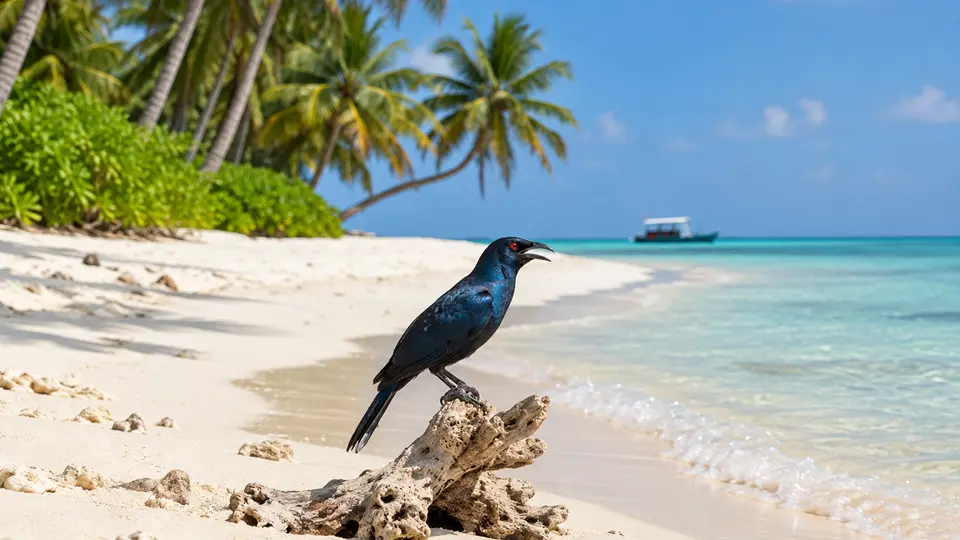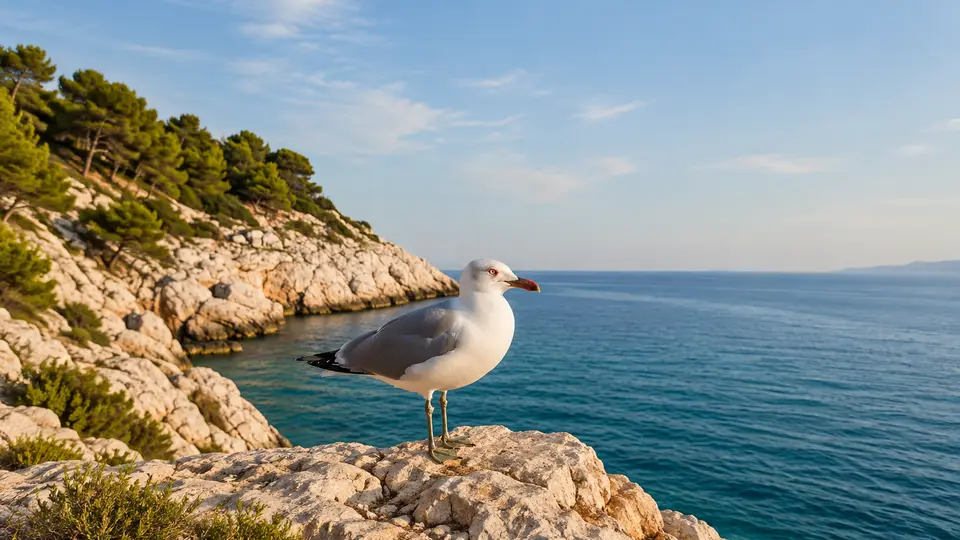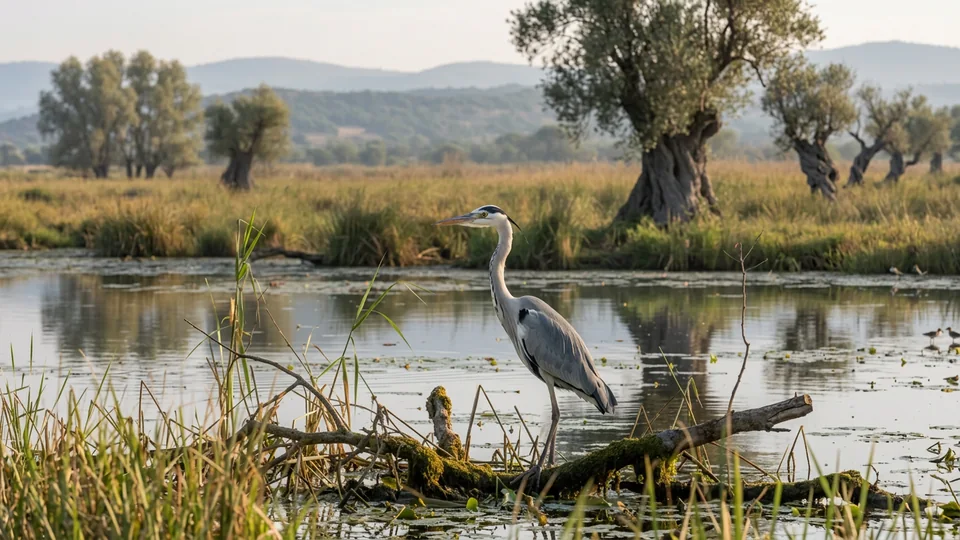
Grey Heron in its natural habitat, AI illustration

Grey HeronArdea cinereaWhere and when to see them

Grey Heron at a glance

The grey heron is a large, adaptable wading bird found across much of Europe, Africa and Asia. Its grey upperparts, pale neck and deliberate movements make it familiar around both natural wetlands and managed waterways. Greece and Turkey support breeding and nonbreeding birds, while the Maldives also offers coastal habitat used by the species. Despite its substantial size, a motionless heron can blend surprisingly well into rocks, reeds or shaded banks.

Behaviour & reproduction

Size
90–98 cm long
Weight
1–2 kg
Lifespan
Not reliably established
Status
Least Concern

Grey herons usually hunt alone, standing still or taking slow steps before striking rapidly at prey. They often defend profitable feeding positions from other herons. Breeding birds gather in colonies, building substantial stick nests in trees or, less commonly, other secure settings. Their flight is measured and powerful, with the neck folded back. Coastal birds adjust feeding positions to tides, while inland birds respond to changing water levels and prey availability. Courtship displays involve bowing, twig-shaking, and mutual preening at the colony site. They communicate with a harsh 'fraank' call, often heard when disturbed or in flight.

Top wildlife locations

Greece wildlife habitat

Greece

Estuarine shallows, lagoon margins and sheltered harbours offer accessible coastal habitat. Larger wetland complexes may require a road excursion, while reedbeds and protected colony areas should be watched only from designated viewpoints.

Turkey wildlife habitat

Turkey

Delta wetlands, coastal lagoons and quiet estuary banks provide plausible viewing from public paths or hides. Some productive areas require land excursions from ports, and military or conservation restrictions can limit shore access.

Maldives wildlife habitat

Maldives

Lagoon edges, exposed reef flats and sheltered beaches can hold solitary feeding herons visible from shore. No inland excursion is needed, but tidal access varies and private or protected islands require permission.

Destinations describe the species' habitat, not guaranteed cruise stops. Some animals require an optional inland excursion or are found in restricted reserves.

Fun facts about the Grey Heron

  • It flies with its neck folded rather than extended like a stork's.
  • Specialized powder-down feathers help maintain the plumage.
  • Breeding colonies are commonly known as heronries.
  • Its prey can include small mammals caught away from water.

Best time to see the Grey Heron

Coastal watching is possible year-round at suitable sites, although Mediterranean wetlands often hold additional birds during migration and winter. In the Maldives, calmer travel periods can make shoreline observation easier. Tides, water depth and disturbance frequently matter more than the calendar for finding feeding individuals. In Greece and Turkey, autumn migration can bring larger numbers through coastal areas, offering good viewing opportunities from observation points. Their presence in the Maldives is less about seasonal migration and more about local movements tied to resource availability.

Grey Heron: season matrix by destination

Travel and observation windows vary by region. Highlighted months are an orientation for planning, not confirmed sightings or a guarantee of access.

Greece

Year-round presence is plausible, with migration and winter concentrations varying among wetlands.

JanFebMarAprMayJunJulAugSepOctNovDec
Cruise ships in Greece

Turkey

Suitable wetlands may hold birds in any month; local winter conditions and migration affect abundance.

JanFebMarAprMayJunJulAugSepOctNovDec
Cruise ships in Turkey

Maldives

These generally drier months favor comfortable coastal observation, rather than defining the species' full period of occurrence.

JanFebMarAprMayJunJulAugSepOctNovDec
Cruise ships in Maldives

Where the Grey Heron lives

Habitats range from lakes, rivers and marshes to estuaries, mangroves, tidal flats and sheltered island shores. Shallow feeding water and nearby secure resting sites are important. Nesting colonies may be some distance from feeding areas, so coastal sightings do not necessarily indicate breeding nearby. They are highly adaptable and can be found in urban parks and gardens, especially where water bodies provide foraging opportunities. These herons will also utilize artificial wetlands like fish farms and drainage ditches for feeding.

What the Grey Heron eats

Fish are major prey, but grey herons also take amphibians, crustaceans, aquatic insects, small mammals and occasionally birds or reptiles. The balance depends on habitat and season. Their strong bills and flexible hunting behavior allow them to exploit a broad range of available animals. They employ a 'sit and wait' strategy, often standing motionless for long periods, but also 'walk-and-stalk' or 'plunge-dive' in deeper water. Their diet includes small fish, eels, voles, and even ducklings, demonstrating their opportunistic nature.

Species at a glance

Common name
Grey Heron
Scientific name
Ardea cinerea
Animal group
Birds
Size
90–98 cm long
Weight
1–2 kg
Lifespan
Not reliably established
Status
Least Concern
Identification
It is bulkier and less richly colored than the purple heron, with predominantly grey wings, a pale neck and a bold black stripe extending behind the eye. Juveniles are duller with a greyish crown, lacking the distinct black stripe and having a more uniformly grey neck. In flight, their slow wingbeats and distinctive S-shaped neck are key distinguishing features.

Grey Heron: frequently asked questions

Where can I see the Grey Heron?
Greece, Turkey, Maldives. Use binoculars from a hide, seawall or established path, allowing feeding birds to choose their own distance. Never offer fish or approach nests; a startled heron can abandon a productive feeding patch. When viewing from a cruise ship, look for them perched conspicuously on rocks, jetties, or isolated trees along the coastline. On shore excursions, maintain a respectful distance to avoid causing stress, particularly during nesting season.
When is the best time to see the Grey Heron?
Coastal watching is possible year-round at suitable sites, although Mediterranean wetlands often hold additional birds during migration and winter. In the Maldives, calmer travel periods can make shoreline observation easier. Tides, water depth and disturbance frequently matter more than the calendar for finding feeding individuals. In Greece and Turkey, autumn migration can bring larger numbers through coastal areas, offering good viewing opportunities from observation points. Their presence in the Maldives is less about seasonal migration and more about local movements tied to resource availability.
How big does the Grey Heron get?
90–98 cm long. Adult weight: 1–2 kg. Size varies with age, sex and population.
How should I behave around the Grey Heron?
Use binoculars from a hide, seawall or established path, allowing feeding birds to choose their own distance. Never offer fish or approach nests; a startled heron can abandon a productive feeding patch. When viewing from a cruise ship, look for them perched conspicuously on rocks, jetties, or isolated trees along the coastline. On shore excursions, maintain a respectful distance to avoid causing stress, particularly during nesting season.
What does the Grey Heron eat?
Fish are major prey, but grey herons also take amphibians, crustaceans, aquatic insects, small mammals and occasionally birds or reptiles. The balance depends on habitat and season. Their strong bills and flexible hunting behavior allow them to exploit a broad range of available animals. They employ a 'sit and wait' strategy, often standing motionless for long periods, but also 'walk-and-stalk' or 'plunge-dive' in deeper water. Their diet includes small fish, eels, voles, and even ducklings, demonstrating their opportunistic nature.
Are wildlife sightings guaranteed on an adventure cruise?
No. Animals move freely and routes, weather, access restrictions and local conditions influence every outing. Confirm the actual itinerary and shore program before booking.

Compare wildlife in the same destinations

Explore other birds recorded in these destinations. Similar surroundings do not mean the animals share the same habits or viewing season.

Species comparison by animal group and destination
Grey HeronGrey HeronAsian koelAsian koelAudouin's GullAudouin's Gull
Animal groupBirdsAnimal groupBirdsAnimal groupBirds
DestinationsGreece, Turkey, MaldivesDestinationsMaldivesDestinationsCroatia, Greece, Portugal, Turkey
All wildlife destinations
Plan your trip

Find your next wildlife adventure

Compare destinations, shore programs and dates with the animals and habitats you would love to see.

  • Naturalist-led shore excursions
  • Responsible wildlife watching
  • Small expedition ships

Newsletter

Take Blue Rides with you

Adventure cruise offers, last-minute deals and trip inspiration.

Free, unsubscribe anytime. Details: Privacy Policy

Partner with Blue Rides

Affiliate Program

Recommend adventure cruises and earn commission on every confirmed booking.

Share. Track. Earn.

Your footage, our stage

Send us your videos or pictures.

Captured remarkable nature or wildlife on your journey? Share it with us, we may feature it on Blue Rides.