Bluerides – Blue Rides - Boka dykkryssningar över hela världenOCEAN ADVENTURES
River CruisesRiversNature & WildlifeOur Promise
River CruisesRiversNature & WildlifeOur PromiseLogga in

Flodresmål

  • Flodresmål
  • Amazonas
  • Donau
  • Rhen
  • Mekong
  • Nilen

Fartyg och avgångar

  • Sök flodkryssning
  • Erbjudanden

Natur och djurliv

  • Natur och djurliv

Resesupport

  • Vårt löfte
  • Kontakt

Kontakt

Ta kontakt

Hör av dig när som helst, vi hjälper dig gärna med resan eller dina frågor.

E-postSkriv till oss, vi svarar oftast inom några timmar.
contact@bluerides.com
WhatsAppSkriv till oss på WhatsApp, mån–fre 10:00–16:00 (CET).
Starta WhatsApp-chatt
TelefonRing oss, vi hjälper dig gärna.
Gratis samtal, mån–fre 10:00–20:00 (CET).
Europa+49 800 1144 990USA+1 888 557 7735Storbritannien+44 800 707 4152Australien+61 2 8599 6113Kanada+1 888 557 7735
Which river journey is yours?Answer 8 quick questions and find the river cruise that fits you.
8 questions, 1 minute·Plus Gift
Säkra betalningsmetoderDina betalningar är helt säkrade med AES-256-kryptering.
Drivs avStripeWiseAMEXPayGoogle PaySEPABank
Impressum·Villkor·Integritetspolicy·Om oss·Kontakt·Ansvarsfriskrivning·Partnerprogram·Cruise·
Följ oss här

© 2026 Blue Rides. Alla rättigheter förbehållna.·

Bluerides – Blue Rides - Boka dykkryssningar över hela världenOCEAN ADVENTURES
River CruisesRiversNature & WildlifeOur Promise
River CruisesRiversNature & WildlifeOur PromiseLogga in
Common Swift i våtmark — Saone, djurliv på flodkryssningar
Hem›River Cruises›River Wildlife›Common Swift

Common SwiftApus apusVar och när du kan se dem

Previous speciesCommon SnipeNext speciesCoypu

Common Swift at a glance

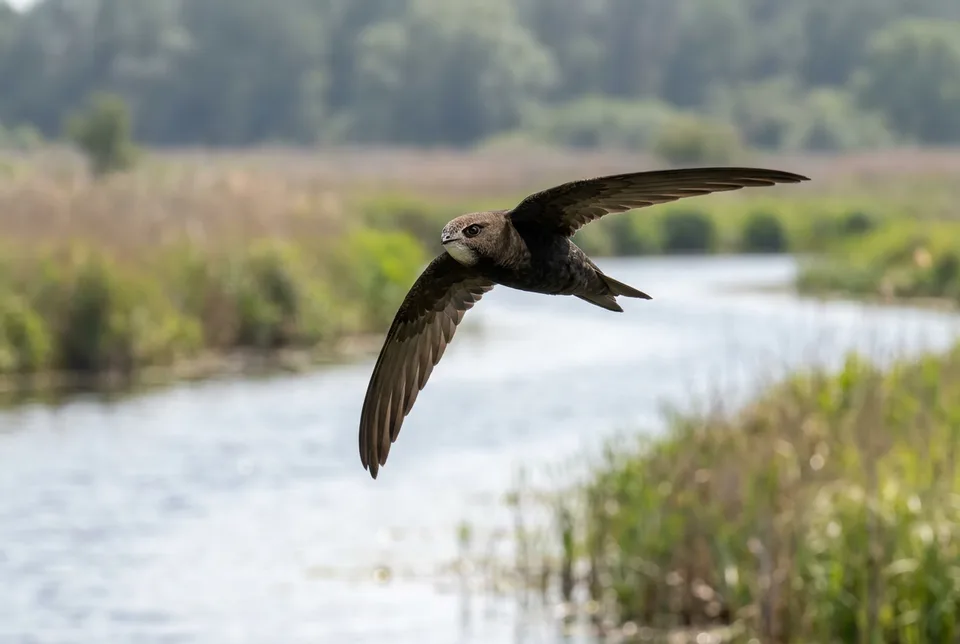
The Common Swift is a highly aerial bird, registered as Apus apus. Although it shares town airspace with swallows and martins, it belongs to a different bird family. Long, narrow curved wings, a compact body and a short forked tail produce its characteristic boomerang-like outline. The plumage is sooty brown but often looks black against the sky; a small pale throat patch can be difficult to see. Swifts catch food in flight and spend exceptionally little time on the ground. The registered Saône association is Mâcon municipality, where the original atlas lists Martinet noir with the correct scientific name. This establishes communal occurrence, not a specific riverbank nesting site or a guaranteed overhead encounter at the cruise quay. A town shore stop with open sky and suitable buildings is the appropriate observation context.

Behaviour & reproduction

Size
Not independently verified in the retrieved evidence
Weight
Not independently verified in the retrieved evidence
Lifespan
Not independently verified in the retrieved evidence
Status
See sourced assessment

Swifts spend much of their lives airborne, and the RSPB describes feeding, sleeping, bathing and even mating in flight. Fast-moving groups may sweep around buildings while giving high-pitched screams, making them conspicuous even before a clear visual view is possible. Their long wings support sustained aerial travel, but rapid changes of direction can make a single bird difficult to follow with binoculars. A bird approaching a building may disappear quickly into a small nest opening. Do not assume every screaming group is nesting in the nearest roof. Swifts migrate between breeding regions and African nonbreeding areas, but those broad movements do not define the local Mâcon calendar. Watch from a fixed position and let birds cross the field of view rather than continually chasing them along streets. If a bird enters a cavity, keep the entrance unobstructed and avoid repeated close inspection of the building.

Top wildlife locations

Flodlandskap Saone — livsmiljö på flodkryssningar

Saone

Mâcon municipal stop on the Saône. Atlas evidence is commune-wide, not a specific riverbank sighting.
Explore river cruises

Destinations describe the species' habitat, not guaranteed cruise stops. Some animals require an optional inland excursion or are found in restricted reserves.

Fun facts about the Common Swift

  • The registry identity is Apus apus.
  • The French atlas name is Martinet noir.
  • Swifts are not members of the swallow family.
  • Their long curved wings create a boomerang-like outline.
  • Sooty brown plumage often appears black against the sky.
  • The small pale throat patch can be difficult to see.
  • Swifts catch food in flight.
  • High-pitched screaming groups are a familiar urban clue.
  • The registered Mâcon evidence is communal rather than riverbank-specific.

Best time to see the Common Swift

The Mâcon atlas confirms Common Swift occurrence and its retrieved summary includes a recent observation year. Embedded records also include a dated May observation, but one dated event does not establish an annually recurring May season or a complete monthly calendar. The monthly array remains empty. RSPB describes the species as a summer visitor in Britain that spends winter in Africa; that general migration account must not be used to fill Mâcon months automatically. Local visibility depends on whether birds are feeding above the town, travelling farther afield or moving at heights difficult to observe from the street. Recent municipal sightings are therefore more useful for a particular shore call than a broad European seasonal label. Check the actual stop date against current local reports, and remember that an old nest opening or a favourable building does not by itself establish present occupation.

Common Swift: season matrix by destination

Highlighted months reflect the stated local evidence, not guaranteed encounters. Neutral months mean no verified monthly viewing window, not absence. Observation records and recommended viewing windows are distinct.

Saone

Municipal occurrence and an individual May record do not establish a complete annually recurring local monthly season.

jan.feb.marsapr.majjunijuliaug.sep.okt.nov.dec.
Explore river cruises

Where the Common Swift lives

Common Swifts use large areas of airspace for feeding and often rely on buildings for nesting in towns. Suitable small openings and cavities can be important even when they are inconspicuous from street level. A river may contribute insect-rich airspace, but the species is not a waterbird and does not depend on a visible waterside perch. At Mâcon, the atlas covers the whole commune rather than a specific Saône bank or bridge. A municipal record therefore should not be converted into a colony marker at the landing stage. During a shore visit, look above streets and open spaces and examine buildings only from lawful public positions. Renovation and the sealing of nesting access can affect swift opportunities, while insect availability influences feeding areas. The profile’s river claim remains the Mâcon stop and does not extend to every Saône town or the entire cruise corridor without separate evidence.

What the Common Swift eats

Common Swifts catch small flying invertebrates while airborne. Their feeding can take place at varying heights and over different habitats as prey becomes available. A group above the Saône may be exploiting insects in the air rather than feeding directly from the water. The exact prey items are normally invisible to a shore observer, so flight alone cannot identify a particular insect species. Watch repeated circuits, changes of height and concentration over a patch of airspace as evidence of feeding activity, while allowing for birds simply travelling through. Do not release insects or use artificial attractants to create a photographic feeding area. Preserving normal insect resources and nesting access is more useful than trying to feed an aerial specialist. At Mâcon, the atlas confirms presence but does not provide a local diet analysis. Any description of specific prey proportions would require additional species and locality evidence not supplied by the municipal listing.

Species at a glance

Common name
Common Swift
Scientific name
Apus apus
Animal group
Birds
Size
Not independently verified in the retrieved evidence
Weight
Not independently verified in the retrieved evidence
Lifespan
Not independently verified in the retrieved evidence
Status
RSPB UK Birds of Conservation Concern: Red. Global and French categories were not independently verified.
Identification
Look for long, narrow, curved wings that create a boomerang outline, a compact bullet-like body and a short forked tail. Common Swifts are predominantly sooty brown, although they usually appear black against a bright sky. The pale throat patch is small and can be invisible in ordinary viewing conditions. House Martins have conspicuous white underparts and a white rump, while swallows and martins generally have different wing proportions. Do not identify every fast aerial bird as a swift or use flight speed alone as a diagnostic feature. Other swift species can require careful comparison where they occur, so a distant dark silhouette may not always be enough for a confident species identification. High-pitched screams support the visual impression but should be interpreted with the whole encounter. Follow a bird through banking turns rather than relying on one head-on or tightly foreshortened view.

Common Swift: frequently asked questions

Where can I see the Common Swift?
Saone. At Mâcon, begin with the sky above the town and listen for high-pitched screaming groups. A wide, unobstructed view helps because swifts can cross a narrow street opening very quickly. Binoculars are useful, but an initial naked-eye view often makes it easier to follow the flight path before raising them. Observe several turns to see the narrow wings and short tail from different angles. Do not stand in roads or enter private courtyards to maintain a view. Where birds approach a building opening, watch from a distance without blocking the route, using flash or investigating the cavity. Record whether the observation involved passing birds, sustained feeding or repeated entry into a structure. The municipal atlas does not specify a riverbank location, so any new sighting should retain its actual town position rather than being described as proof of swift activity beside the cruise vessel.
When is the best time to see the Common Swift?
The Mâcon atlas confirms Common Swift occurrence and its retrieved summary includes a recent observation year. Embedded records also include a dated May observation, but one dated event does not establish an annually recurring May season or a complete monthly calendar. The monthly array remains empty. RSPB describes the species as a summer visitor in Britain that spends winter in Africa; that general migration account must not be used to fill Mâcon months automatically. Local visibility depends on whether birds are feeding above the town, travelling farther afield or moving at heights difficult to observe from the street. Recent municipal sightings are therefore more useful for a particular shore call than a broad European seasonal label. Check the actual stop date against current local reports, and remember that an old nest opening or a favourable building does not by itself establish present occupation.
How big does the Common Swift get?
Not independently verified in the retrieved evidence. Adult weight: Not independently verified in the retrieved evidence. Size varies with age, sex and population.
How should I behave around the Common Swift?
At Mâcon, begin with the sky above the town and listen for high-pitched screaming groups. A wide, unobstructed view helps because swifts can cross a narrow street opening very quickly. Binoculars are useful, but an initial naked-eye view often makes it easier to follow the flight path before raising them. Observe several turns to see the narrow wings and short tail from different angles. Do not stand in roads or enter private courtyards to maintain a view. Where birds approach a building opening, watch from a distance without blocking the route, using flash or investigating the cavity. Record whether the observation involved passing birds, sustained feeding or repeated entry into a structure. The municipal atlas does not specify a riverbank location, so any new sighting should retain its actual town position rather than being described as proof of swift activity beside the cruise vessel.
What does the Common Swift eat?
Common Swifts catch small flying invertebrates while airborne. Their feeding can take place at varying heights and over different habitats as prey becomes available. A group above the Saône may be exploiting insects in the air rather than feeding directly from the water. The exact prey items are normally invisible to a shore observer, so flight alone cannot identify a particular insect species. Watch repeated circuits, changes of height and concentration over a patch of airspace as evidence of feeding activity, while allowing for birds simply travelling through. Do not release insects or use artificial attractants to create a photographic feeding area. Preserving normal insect resources and nesting access is more useful than trying to feed an aerial specialist. At Mâcon, the atlas confirms presence but does not provide a local diet analysis. Any description of specific prey proportions would require additional species and locality evidence not supplied by the municipal listing.
Are wildlife sightings guaranteed on a river cruise?
No. Animals move freely and routes, weather, access restrictions and local conditions influence every outing. Confirm the actual itinerary and shore program before booking.

Compare wildlife in the same destinations

Explore other birds recorded in these destinations. Similar surroundings do not mean the animals share the same habits or viewing season.

Species comparison by animal group and destination
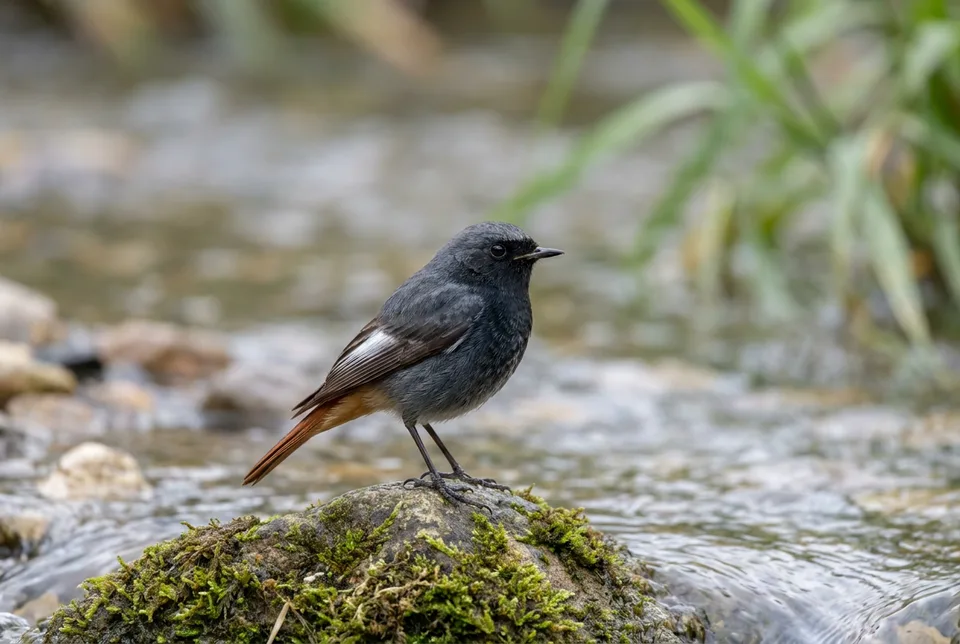
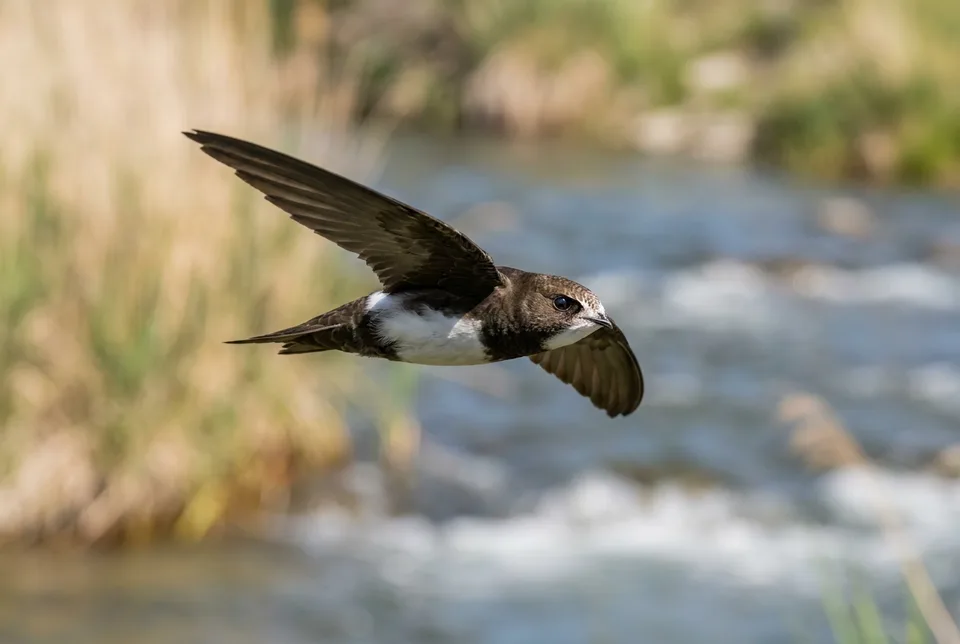
Common Swift i våtmark — Saone, djurliv på flodkryssningarCommon SwiftAlpine Swift i våtmark — Saone, djurliv på flodkryssningarAlpine SwiftBlack Redstart i våtmark — Saone, Douro, djurliv på flodkryssningarBlack Redstart
Animal groupBirdsAnimal groupBirdsAnimal groupBirds
DestinationsSaoneDestinationsSaoneDestinationsSaone, Douro
Scientific name
Apus apus
Scientific name
Scientific name
Previous speciesCommon SnipeNext speciesCoypu
All river wildlife
On this page
  • 01About
  • 02Behaviour & reproduction
  • 03Top wildlife locations
  • 04Fun facts
  • 05Best season
  • 06Season matrix by destination
  • 07Habitat
  • 08Diet
  • 09Species at a glance
  • 10Questions & answers
  • 11Compare

Find your river cruise

Planera din resa

Find your next river journey

Compare destinations, shore programs and dates with the animals and habitats you would love to see.

  • Daily shore excursions
  • Responsible wildlife watching
  • Boutique river ships
Explore river cruises