Bluerides – Blue Rides - Rezervă croaziere de scufundări în întreaga lumeOCEAN ADVENTURES
Croaziere de aventură

Adventure Cruise destinations

Small ships, remarkable places and unforgettable wildlife.

  • AlaskaAlaskaAmericas
  • Costa RicaCosta RicaAmericas
  • FloridaFloridaAmericas
  • GalápagosGalápagosAmericas
  • MexicoMexicoAmericas
  • New EnglandNew EnglandAmericas
  • Cape VerdeCape VerdeEMEA
  • CroatiaCroatiaEMEA
Adventure CruisesAdventure Cruise search
OferteNatură și animalePromisiunea noastrăContact
Croaziere de aventurăOferteNatură și animalePromisiunea noastrăContactAutentificare

Destinații

  • Destinații
  • Alaska
  • Galápagos
  • Antarctica
  • Arctic

Nave și plecări

  • Adventure Cruise search
  • Oferte
  • Nave mici de expediție

Natură și viață sălbatică

  • Natură și viață sălbatică

Asistență de călătorie

  • Ghizi experți
  • Promisiunea noastră
  • Contact

Contact

Contactează-ne

Scrie-ne oricând, te ajutăm cu plăcere să alegi croaziera sau la orice întrebare.

E-mailScrie-ne, răspundem de obicei în câteva ore.
contact@bluerides.com
WhatsAppScrie-ne pe WhatsApp, lun–vin 10:00–16:00 (CET).
Începe conversația pe WhatsApp
TelefonSună-ne, te ajutăm cu plăcere.
Apel gratuit, lun–vin 10:00–20:00 (CET).
Europa+49 800 1144 990SUA+1 888 557 7735Regatul Unit+44 800 707 4152Australia+61 2 8599 6113Canada+1 888 557 7735
Which expedition is yours?Answer 8 quick questions and find the adventure cruise that fits you.
8 questions, 1 minute·Plus Gift
Metode de plată sigurePlățile dumneavoastră sunt complet securizate cu criptare AES-256.
Realizat deStripeWiseAMEXPayGoogle PaySEPABank
Imprint·Termeni și condiții·Politica de confidențialitate·Despre noi·Contact·Renunțare la Răspundere·Program de afiliere·Cruise·
Urmăriți-ne aici

© 2026 Blue Rides. Toate drepturile rezervate.·

Bluerides – Blue Rides - Rezervă croaziere de scufundări în întreaga lumeOCEAN ADVENTURES
Croaziere de aventură

Adventure Cruise destinations

Small ships, remarkable places and unforgettable wildlife.

  • AlaskaAlaskaAmericas
  • Costa RicaCosta RicaAmericas
  • FloridaFloridaAmericas
  • GalápagosGalápagosAmericas
  • MexicoMexicoAmericas
  • New EnglandNew EnglandAmericas
  • Cape VerdeCape VerdeEMEA
  • CroatiaCroatiaEMEA
Adventure CruisesAdventure Cruise search
OferteNatură și animalePromisiunea noastrăContact
Croaziere de aventurăOferteNatură și animalePromisiunea noastrăContactAutentificare
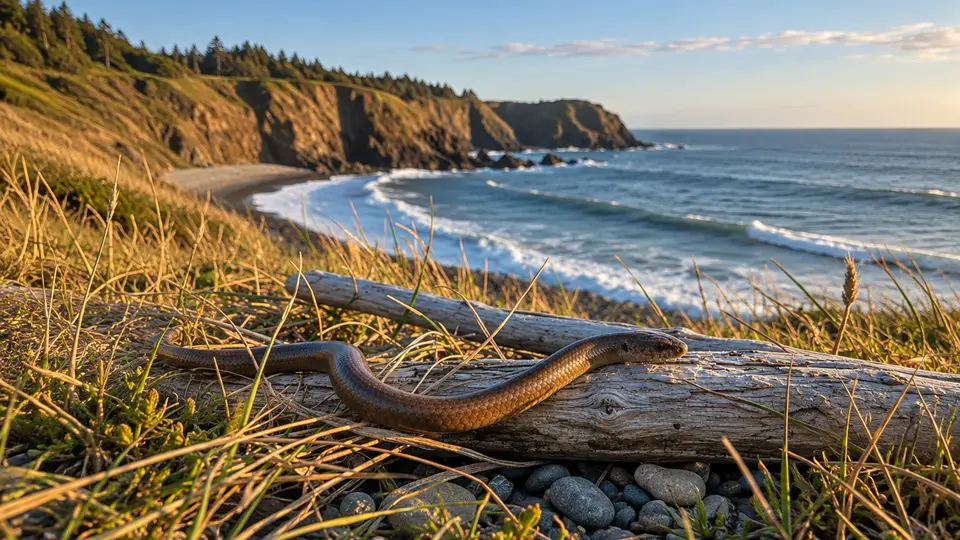
Slow Worm in its natural habitat
Acasă›Adventure Cruises›Nature & Wildlife›Slow Worm

Slow WormAnguis fragilisUnde și când le poți vedea

Previous speciesSitka DeerNext speciesSmall Tree Finch

Slow Worm at a glance

The slow worm is a legless lizard, not a snake, and one of Scotland's native reptiles. Its smooth, glossy body is well suited to moving through grass, leaf litter and loose soil. Because it spends much of its time concealed, it can be present in gardens and rough ground without being noticed. Habitat tidying, road mortality and attacks by domestic cats can affect local populations, even where apparently suitable green space remains.

Behaviour & reproduction

Size
30-45 cm total length
Weight
20-100 g
Lifespan
Not reliably established
Status
Least Concern

Slow worms are secretive and often warm themselves beneath vegetation or other cover rather than basking in the open. They emerge to forage when conditions are mild and humid, sometimes around dusk. During cold months they become inactive in sheltered underground spaces, occasionally sharing refuges. Females retain developing young internally and give birth to live offspring, usually in late summer or early autumn in Britain. They are long-lived, potentially reaching 30 years in the wild and even longer in captivity, indicating a slow life history strategy. When threatened, they may freeze or perform a 'tail shedding' (autotomy) as a distraction, regenerating a shorter, blunt tail over time. Slow worms are generally docile, preferring to escape into cover rather than biting when handled, though this should be avoided.

Top wildlife locations

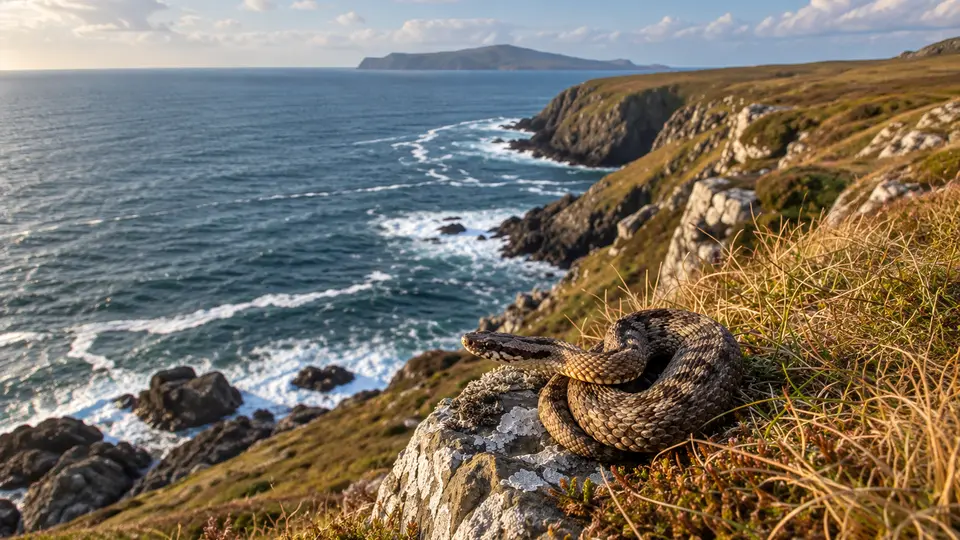
Scotland wildlife habitat

Scotland

Sheltered coastal grassland, garden edges and scrubby banks can provide suitable habitat. Sightings are usually incidental and uncommon; an inland nature-reserve walk may be more appropriate than a busy shoreline.
Adventure cruises in Scotland

Destinations describe the species' habitat, not guaranteed cruise stops. Some animals require an optional inland excursion or are found in restricted reserves.

Fun facts about the Slow Worm

  • Slow worms can blink because they have movable eyelids.
  • A shed tail does not regrow to its original full form.
  • Females give birth to live young rather than laying exposed eggs.
  • Youngsters often have golden bodies with a dark line along the back.

Best time to see the Slow Worm

April to September is a useful Scottish search window, adjusted for local temperature and altitude. Mild, humid weather is often more productive than hot sunshine. Spring activity and late-summer births are distinct events within a relatively short northern active season. Early mornings or late afternoons after a period of rain can be particularly productive for sightings. Observing during cooler, overcast days can also increase chances, as they are less likely to overheat while foraging. Activity typically peaks when ambient temperatures are between 15-20°C, and they become less active above 25°C.

Slow Worm: season matrix by destination

Travel and observation windows vary by region. Highlighted months are an orientation for planning, not confirmed sightings or a guarantee of access.

Scotland

This is a temperature-dependent activity window, not a promise of visibility; cool northern or upland sites may have a shorter season.

ian.feb.mar.apr.maiiun.iul.aug.sept.oct.nov.dec.
Cruise ships in Scotland

Where the Slow Worm lives

Rough grassland, heathland margins, woodland edges, gardens and vegetated banks can all support slow worms. Suitable sites combine warm patches, moist feeding areas and secure cover. In Scotland, sheltered lowland and coastal situations may offer better conditions than exposed uplands. They favour south-facing banks and slopes for thermal regulation, and can often be found near old stone walls or rock piles. Given their secretive nature, healthy populations can persist in surprisingly small, undisturbed pockets within developed areas. In Scotland, they are most often encountered in coastal machair, lowland glens, and woodland clearings.

What the Slow Worm eats

Slow worms mainly eat slugs, earthworms and other small, soft-bodied invertebrates. Small snails and arthropods may also be taken. Their prey choices make damp, structurally varied vegetation valuable, especially where pesticide use and intensive mowing have not depleted invertebrate life. Their preference for slugs makes them valuable natural pest controllers in gardens and agricultural settings. They have a relatively slow metabolism, allowing them to go extended periods between meals. Young slow worms primarily feed on smaller invertebrates such as spiderlings and tiny slugs.

Species at a glance

Common name
Slow Worm
Scientific name
Anguis fragilis
Animal group
Reptiles
Size
30-45 cm total length
Weight
20-100 g
Lifespan
Not reliably established
Status
Least Concern
Identification
Unlike snakes, slow worms have movable eyelids, a blunt head with little neck distinction and a tail that can be shed, while their scales give a uniformly polished appearance. Unlike snakes, their scales are smooth and non-overlapping, giving them a glossy appearance. Adult males are typically grey or bronze and may have blue spots along their flanks, while females are usually brown or copper with dark sides and a distinct dark stripe down their back. Juveniles often exhibit striking gold or silver coloration with a prominent dark dorsal stripe and dark belly.

Slow Worm: frequently asked questions

Where can I see the Slow Worm?
Scotland. Look along existing paths without lifting wildlife refuges or dismantling habitat. Never pick a slow worm up by its tail, which can detach, and keep dogs from investigating an exposed animal. During shore excursions, focus your search on the edges of paths through long grass or under flat stones, always replacing any lifted items carefully. Look for them basking beneath sheets of corrugated iron, discarded wood, or other artificial refugia often used for monitoring. Remember that patience is key, as they are well-camouflaged and blend seamlessly into their surroundings.
When is the best time to see the Slow Worm?
April to September is a useful Scottish search window, adjusted for local temperature and altitude. Mild, humid weather is often more productive than hot sunshine. Spring activity and late-summer births are distinct events within a relatively short northern active season. Early mornings or late afternoons after a period of rain can be particularly productive for sightings. Observing during cooler, overcast days can also increase chances, as they are less likely to overheat while foraging. Activity typically peaks when ambient temperatures are between 15-20°C, and they become less active above 25°C.
How big does the Slow Worm get?
30-45 cm total length. Adult weight: 20-100 g. Size varies with age, sex and population.
How should I behave around the Slow Worm?
Look along existing paths without lifting wildlife refuges or dismantling habitat. Never pick a slow worm up by its tail, which can detach, and keep dogs from investigating an exposed animal. During shore excursions, focus your search on the edges of paths through long grass or under flat stones, always replacing any lifted items carefully. Look for them basking beneath sheets of corrugated iron, discarded wood, or other artificial refugia often used for monitoring. Remember that patience is key, as they are well-camouflaged and blend seamlessly into their surroundings.
What does the Slow Worm eat?
Slow worms mainly eat slugs, earthworms and other small, soft-bodied invertebrates. Small snails and arthropods may also be taken. Their prey choices make damp, structurally varied vegetation valuable, especially where pesticide use and intensive mowing have not depleted invertebrate life. Their preference for slugs makes them valuable natural pest controllers in gardens and agricultural settings. They have a relatively slow metabolism, allowing them to go extended periods between meals. Young slow worms primarily feed on smaller invertebrates such as spiderlings and tiny slugs.
Are wildlife sightings guaranteed on an adventure cruise?
No. Animals move freely and routes, weather, access restrictions and local conditions influence every outing. Confirm the actual itinerary and shore program before booking.

Compare wildlife in the same destinations

Explore other reptiles recorded in these destinations. Similar surroundings do not mean the animals share the same habits or viewing season.

Species comparison by animal group and destination
Slow WormSlow WormCommon AdderCommon Adder
Animal groupReptilesAnimal groupReptiles
DestinationsScotlandDestinationsScotland
Previous speciesSitka DeerNext speciesSmall Tree Finch
All wildlife destinations
On this page
  • 01About
  • 02Behaviour & reproduction
  • 03Top wildlife locations
  • 04Fun facts
  • 05Best season
  • 06Season matrix by destination
  • 07Habitat
  • 08Diet
  • 09Species at a glance
  • 10Questions & answers
  • 11Compare

Find your wildlife cruise

Planifică-ți călătoria

Find your next wildlife adventure

Compare destinations, shore programs and dates with the animals and habitats you would love to see.

  • Naturalist-led shore excursions
  • Responsible wildlife watching
  • Small expedition ships
Search wildlife cruises