Roatan, Utila i Cayo Cochinos (French Harbor - French Harbor)
Roatan Aggressor · Honduras · 7 nocy
O tej trasie
Ta przygoda na łodzi nurkowej odkrywa tętniące życiem miejsca nurkowe Roatanu, Utili i Cayo Cochinos, oferując kompleksową wycieczkę po Wyspach Zatoki Hondurasu. Nurkowie mogą spodziewać się spotkania z różnorodnym życiem morskim wśród oszałamiających formacji rafowych, od dramatycznych ścian po płytkie, kolorowe ogrody. Plan podróży obejmuje możliwości nurkowania na wrakach, eksploracji podwodnych gór i nurkowań nocnych, obiecując bogate podwodne doświadczenie.
Regiony na tej trasie
Najważniejsze
Black Hills
A popular site among divers, Black Hills is known for schooling fish such as Creole wrasse, Atlantic spadefish, and Southern sennets. Scorpionfish, toadfish, and the rare frogfish also frequent this seamount. A resident turtle often interacts with divers, adding to the memorable experience.
- Schools of fish
- Rare frogfish
- Resident turtle
- Seamount diving
Cannery Bank
Cannery Bank is a premier location for witnessing large pelagic fish in open waters. The site boasts vibrant colors on its mounts, with depths ranging from 25 to 110 feet, creating a dynamic environment for diverse marine encounters.
- Large pelagic fish
- Vibrant colors
- Dynamic environment
Cayos Cochinos
The Cayos Cochinos dive sites offer a rich tapestry of marine life, from macro creatures to patrolling barracuda and sharks. The area is known for its spectacular coral gardens and clear waters.
- Macro life
- Coral gardens
- Barracuda patrols
- Clear waters
CJ's Drop-off
Known as an excellent site for deep diving, CJ's Drop-off is home to spiny Caribbean lobster, golden tail moray eels, and schools of jacks. The vibrant marine life here makes it a rewarding experience for those exploring its depths.
- Deep diving
- Caribbean lobster
- Golden tail moray
- Schools of jacks
Duppy Waters
Duppy Waters begins with a vibrant coral garden at about 20 feet, which then slopes down into deeper blue waters. This site is rich with eagle rays, stingrays, octopuses, and schools of Creole wrasse and blue tang, creating a dynamic and colorful underwater scene.
- Coral garden
- Sloping walls
- Eagle rays
- Octopuses
Halliburton Wreck
This artificial reef, sunk in 1998, starts with the wheelhouse at 65 feet and extends to the vessel bottom at 100 feet. Green morays, spotted drum, yellowline arrow crabs, channel clinging crabs, and bearded fire worms are commonly seen. Porcupine fish and pipefish also frequent this exceptional dive site.
- Artificial reef
- Green morays
- Arrow crabs
- Porcupine fish
Hawksbill Bank
Hawksbill Bank is a seamount beginning at 40 feet and sloping down to 80 feet, named after the rare fingerprints it contains. Bluebell tunicates are abundant, and rare fingerprint corals can also be found. A resident hawksbill turtle gives the site its name.
- Seamount diving
- Sloping reef
- Bluebell tunicates
- Hawksbill turtle
Jack Neil Point
Featuring sand, walls, and individual coral heads, Jack Neil Point is a must-dive site. Divers can expect to see stout seahorse, large-eye toadfish, flying gurnards, and octopus, making it one of the best night diving locations in the area.
- Sand and walls
- Stout seahorse
- Flying gurnards
- Night diving
Mary’s Place
One of Roatan's most famous dive sites, Mary's Place is a lush reef characterized by numerous crevices and tunnels. These intricate formations invite exploration and provide excellent photographic opportunities, making it a favorite for many divers.
- Lush reef
- Crevices and tunnels
- Photo opportunities
Odyssey Wreck
The Odyssey Wreck is Roatan's largest shipwreck, a formidable freighter measuring 300 feet long, 50 feet wide, and 85 feet tall. As one of the Caribbean's largest wrecks, it offers an expansive and dramatic dive site for exploration.
- Largest Roatan wreck
- 300 ft freighter
- Caribbean wreck diving
Old Bank
Old Bank is a very shallow dive site, notable for its rare elkhorn coral flourishes and diverse small critters. It is also a prime location to spot the elusive yellowhead jawfish peering out from its hole, making it a favorite for macro enthusiasts.
- Shallow dive
- Elkhorn coral
- Small critters
- Yellowhead jawfish
Pelican Point
Pelican Point is a rich reef, featuring French and queen angelfish, butterflyfish, tangs, and parrotfish. On the outer edge of the reef, divers can often spot sharks and barracudas patrolling, adding an exciting dimension to the dive.
- Rich reef
- Angelfish
- Sharks
- Barracuda patrols
Raggedy Cay
This popular site offers diving at depths between 30 and 130 feet, where majestic eagle rays often sweep through the soft corals. Octopuses can be found around the sand channels, while spotted moray eels inhabit the coral garden, creating a lively underwater spectacle.
- Soft corals
- Majestic eagle rays
- Sand channels
- Spotted moray eels
Roatan, Bay Islands of Honduras
The dive sites around Roatan represent the vibrant underwater landscape of the Bay Islands, offering divers sheer walls, beautiful shallow reefs, and impressive wrecks. These pristine seamounts and reefs provide a frontier rarely explored, rich in marine life and photographic opportunities.
- Sheer walls
- Shallow reefs
- Spectacular wrecks
- Offshore seamounts
Taviana’s Wall
Known for its abundant turtle population, Taviana's Wall is a vibrant site that offers great night diving experiences. Divers can often spot octopus, crabs, and lobsters during evening descents, adding to the magic of this unique location.
- Turtle encounters
- Night dives
- Octopus and crabs
- Lobsters
Toon Town
Known for its excellent macro life, Toon Town, off Cayos Cochinos, is filled with dense clumps of bluebell tunicates, small crabs, and vibrant flamingo tongue cowries. This site is a photographer's dream, showcasing the tiny wonders of the tunicate kingdom.
- Macro dive
- Bluebell tunicates
- Small crabs
- Flamingo tongue cowries
Utila
Utila's dive sites are characterized by breathtaking reefs and a reputation for large pelagic encounters. The area often features schools of Creole wrasse, Atlantic spadefish, and horse-eye jacks. It is also known for sightings of majestic marine creatures like manta rays, marlin, and even whale sharks, making it a thrilling destination for divers.
- Breathtaking reefs
- Large pelagic sightings
- Manta rays
- Whale sharks
Wreck of the Aguila
This shipwreck has become a thriving artificial reef, home to numerous large groupers and a striking blue parrotfish. A significant green moray eel is also a resident here, known for its playful interactions with divers. The wreck provides a fascinating environment for marine life.
- Large groupers
- Blue parrotfish
- Green moray eel
- Artificial reef
Wymagania
- CertyfikatOpen Water
- DoświadczenieNie jest wymagana minimalna liczba zarejestrowanych nurkowań.
Warto wiedzieć
- Diver certification: Open Water with no minimum logged dives required.
- Fly-after-dive: Divers are recommended to wait 24 hours before flying after the last dive.
- Depth Range: 30 – 130 ft (9m – 40m).
- Wetsuit: 3-5 mm wetsuit recommended.
- Water temperatures: 78-84F (summer), 75-80F (winter).
Plan dzień po dniu
Dzień 1: Dzień zaokrętowania – Roatan Yacht Club & Marina
Goście są witani na pokładzie Roatan Aggressor w Roatan Yacht Club & Marina. Po zakwaterowaniu w kabinach i otrzymaniu instruktażu bezpieczeństwa, statek przygotowuje się do wypłynięcia. Kolacja jest serwowana na pokładzie, podczas gdy narasta oczekiwanie na tydzień nurkowania.
Dzień 2: Roatan – eksploracja West End i Southside
Dzień koncentruje się na wspaniałych miejscach nurkowych West End lub Southside Roatanu, znanych z bujnych raf, dramatycznych ścian i zdrowych ekosystemów morskich. Nurkowie mogą eksplorować bogate formacje koralowe, szczeliny i tunele, które charakteryzują te obszary. Miejsca te często są domem dla obfitości ryb rafowych i bezkręgowców.
Dzień 3: Roatan – góry podwodne i Cayos Cochinos
Dzisiejsze nurkowania obejmują eksplorację gór podwodnych Roatanu i dziewiczych wód otaczających Cayos Cochinos. Obszary te charakteryzują się żywymi formacjami koralowymi i obfitym makrożyciem. Góry podwodne często przyciągają większe gatunki pelagiczne, podczas gdy Cayos Cochinos oferuje różnorodne środowiska rafowe bogate w małe stworzenia i kolorowe ryby rafowe.
Dzień 4: Utila – Różnorodne rafy i wraki
Nurkowanie wokół Utili prezentuje jej zróżnicowaną podwodną topografię, od płytkich raf po głębsze ściany i imponujące wraki. Miejsca te są znane z ławic ryb, dużych pelagicznych gatunków i unikalnych stworzeń. Środowisko Utili często charakteryzuje się dynamicznymi prądami, co przyczynia się do zdrowia i różnorodności jej tętniących życiem ekosystemów koralowych.
Dzień 5: Utila / Roatan – Dalsza eksploracja
Piąty dzień kontynuuje eksplorację miejsc nurkowych Utili lub Roatanu, bazując na odkryciach z poprzednich dni. Nurkowie mogą spodziewać się więcej okazji do różnorodnych doświadczeń, od poszukiwania stworzeń na piaszczystych obszarach po nurkowania w prądzie wzdłuż tętniących życiem ścian. Skupiamy się na zanurzeniu w bogatej bioróżnorodności i unikalnych cechach geologicznych Wysp Zatoki.
Dzień 6: Roatan – Nurkowanie na Zachodnim Krańcu lub Południowej Stronie
Dzień powraca do spektakularnych raf Roatanu, koncentrując się na Zachodnim Krańcu lub Południowej Stronie, oferując różne perspektywy nurkowania. Nurkowie będą cieszyć się dalszymi spotkaniami z obfitym życiem morskim i odkrywać więcej słynnych miejsc nurkowych wyspy. Obszary te są znane z zdrowych ekosystemów koralowych i różnorodnych populacji ryb.
Dzień 7: Powrót na Roatan – ostatnie nurkowania i pożegnalna kolacja
Ostatni dzień nurkowania odbywa się w pobliżu Roatanu, oferując ostatnią szansę na doświadczenie jego urzekającego podwodnego świata. Zaplanowane są dwa nurkowania, zanim statek wróci do doku. Wieczorem goście będą cieszyć się pożegnalnym przyjęciem koktajlowym i kolacją na lądzie, wspominając przygody tygodnia.
Dzień 8: Wykwaterowanie – Roatan Yacht Club & Marina
Goście wykwaterowują się z Roatan Aggressor w Roatan Yacht Club & Marina. Zostaną zorganizowane transfery na odlot, kończąc niezapomnianą podróż na łodzi nurkowej przez Wyspy Zatoki Hondurasu.
Najbliższe terminy
- 2026-11-21 – 2026-11-28od 3,295 USDRezerwuj
- 2026-11-28 – 2026-12-05od 2,295 USDRezerwuj
- 2026-12-05 – 2026-12-12od 2,295 USDRezerwuj
- 2026-12-12 – 2026-12-19od 1,795 USDRezerwuj
- 2026-12-19 – 2026-12-26od 2,295 USDRezerwuj
- 2026-12-26 – 2027-01-02od 2,295 USDRezerwuj
- 2027-01-02 – 2027-01-09od 2,295 USDRezerwuj
- 2027-01-09 – 2027-01-16od 2,295 USDRezerwuj
- 2027-01-16 – 2027-01-23od 3,295 USDRezerwuj
- 2027-01-23 – 2027-01-30od 3,295 USDRezerwuj
- 2027-01-30 – 2027-02-06od 2,471 USDRezerwuj
- 2027-02-06 – 2027-02-13od 3,295 USDRezerwuj
O łodzi
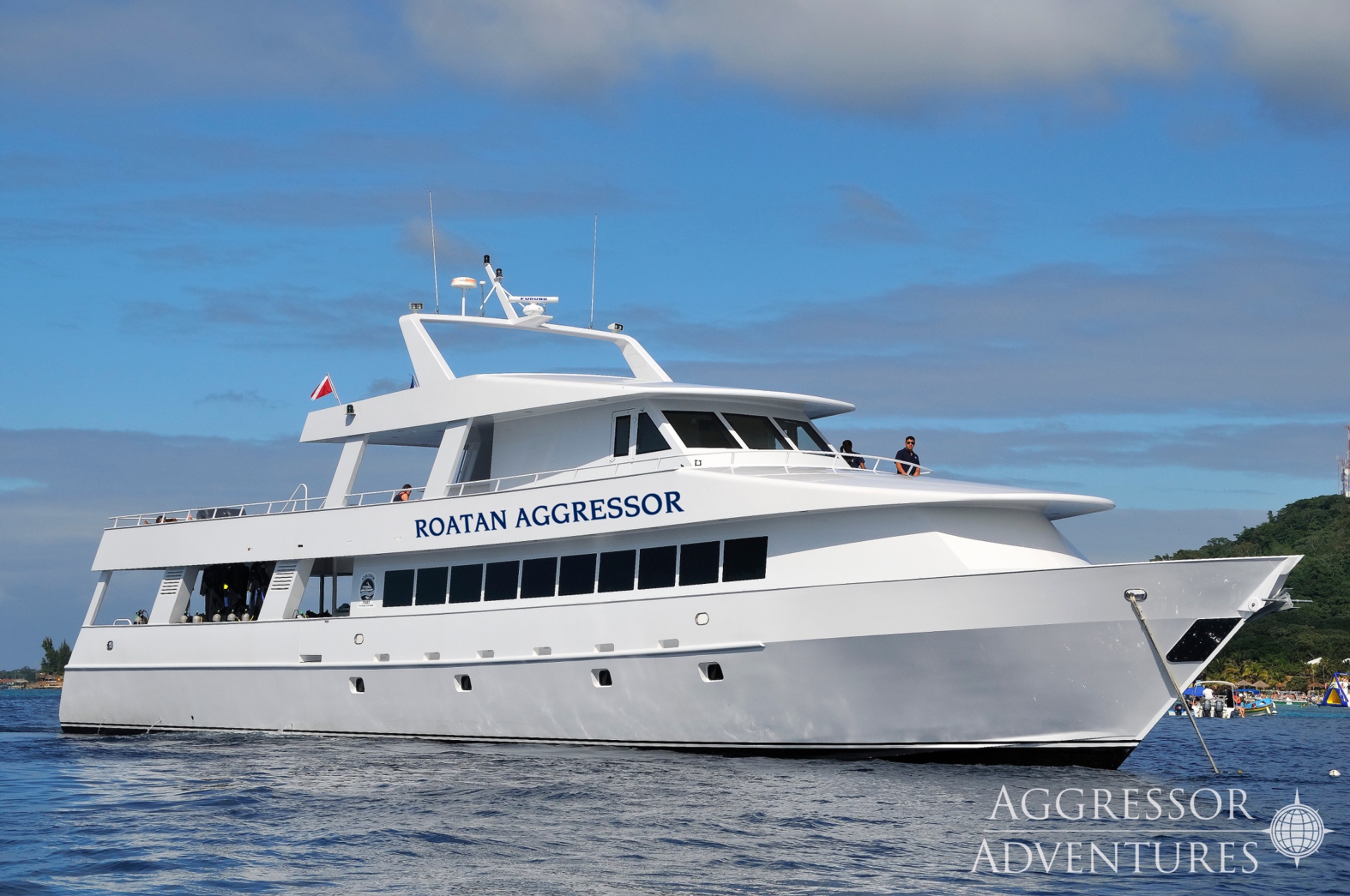 Roatan AggressorHonduras