Północne Morze Czerwone - Najlepsze nurkowanie na wrakach (Hurghada - Hurghada)
Red Sea Aggressor II · Egipt · 7N
O tej trasie
Ta wyprawa nurkowa eksploruje północne Morze Czerwone, znane z tętniących życiem raf koralowych, historycznych wraków i obfitego życia morskiego. Nurkowie mogą spodziewać się spotkania z różnorodnymi drapieżnikami pelagicznymi, ścianami rafowymi i płaskowyżami, na których żyje różnorodna gama stworzeń. Plan podróży oferuje mieszankę makrofauny, dużych pelagicznych ryb i oszałamiających podwodnych krajobrazów, co czyni Północne Morze Czerwone niezapomnianym miejscem do nurkowania. Wraki takie jak SS Thistlegorm i Dunraven są głównymi atrakcjami, przyciągającymi gigantyczne mureny, tuńczyki i inne drapieżniki pelagiczne.
Regiony na tej trasie
Najważniejsze
Abu Nuhas Location (4 wrecks)
Abu Nuhas is a major wreck diving site in the northern Red Sea, often called the 'ship graveyard' due to its cluster of four notable wrecks. These include the Ghiannis D, Carnatic, Chrisoula K, and Kimon M. The site is characterized by relatively shallow depths, generally between 10 and 40 meters, making the wrecks accessible for different skill levels and offering ample penetration opportunities for experienced divers. The wrecks host a diverse range of marine life, thriving on the artificial structures.
- Four wrecks
- Ship graveyard
- Clear waters
- Marine habitat
Carnatic
The Carnatic is one of the oldest wrecks in the Red Sea, a sailing clipper that sank in 1869. It was carrying gold and wine, much of which was salvaged. The wreck lies between 10-27 meters deep and is largely broken up, revealing its iron frames and wooden cargo. It is beautifully encrusted with corals and provides shelter for numerous reef fish, making it a scenic and historically rich dive.
- Historic sailing clipper
- Iron frames
- Coral encrustations
- Rich reef fish life
Chrisoula K
The Chrisoula K is a cargo ship that sank in 1981, often mistaken for the Ghiannis D. It lies at depths between 5 and 25 meters, offering relatively shallow access. The wreck is largely intact, with its bow section and cargo holds (filled with Italian floor tiles) being particularly interesting. It is a vibrant artificial reef, bustling with reef fish and invertebrates.
- Cargo ship wreck
- Intact bow section
- Tile cargo
- Vibrant artificial reef
Dunraven
The Dunraven is a Victorian steamship that sank in 1876, now lying upside down at depths between 15 and 30 meters. The wreck is heavily encrusted with corals and is home to a variety of marine life, including glassfish, yellow goatfish, and giant morays. Its unique orientation and historical significance make it a popular dive site, offering opportunities for exploration through its broken sections.
- Victorian steamship
- Upside-down position
- Coral encrusted
- Giant morays
EJ Khoukh – El Wreck
The EJ Khoukh, also known as El Wreck, is a relatively new addition to the Red Sea's wreck sites, having sunk in 2005. This container ship was intentionally sunk as an artificial reef, now resting at a depth of around 20 meters. It provides an excellent site for divers to observe marine life quickly colonizing the structure, offering an interesting exploration of a modern wreck.
- Modern container ship
- Artificial reef
- Marine colonization
- Accessible depth
El Mina/El Mina Wreck
The El Mina is a Russian-built minesweeper that sank in 1970. It sits upright at approximately 30 meters deep, with the deck around 25 meters. The wreck is known for its resident marine life, including crocodiles fish, scorpionfish, and schools of glassfish. It offers opportunities for penetration into some sections, providing an interesting dive for those wanting to explore inside.
- Russian minesweeper
- Upright position
- Resident marine life
- Wreck penetration
Ghiannis D
The Ghiannis D is a large cargo ship that sank in 1983. It sits at a maximum depth of 27 meters (88 feet) and is famed for its intact stern section, engine room, and accessible holds. The wreck is home to diverse marine life, including crocodile fish, scorpionfish, and large groupers, making it a popular site for exploration and photography. The ship's layout offers various penetration points.
- Large cargo ship
- Intact stern section
- Engine room access
- Diverse marine life
Kimon M
The Kimon M is a cargo ship that sank in 1978 after hitting the Sha'ab Abu Nuhas Reef. It lies on its starboard side at depths of 10 to 32 meters. The wreck is largely intact, with its stern and propeller still visible and explorable. It provides a fascinating dive for observing how marine life, including schools of bannerfish and Napoleon wrasse, has colonized the structure.
- Cargo vessel
- Intact stern and propeller
- Marine colonization
- Napoleon wrasse sightings
MV Salem Express Wreck
The Salem Express, a passenger roll-on/roll-off ferry, sank in 1991. The wreck lies on its starboard side at depths of 10 to 30 meters. Divers can explore its decks, bridge, and even the ferry's internal areas. Despite its tragic history, the ship has become a habitat for various marine species, including schools of jackfish and snapper, and offers a compelling yet poignant dive experience.
- Passenger ferry
- Roll-on/roll-off design
- Shallow wreck sections
- Marine habitat
Red Sea
The Red Sea is renowned for its exceptional marine biodiversity, crystal-clear waters, and dramatic underwater topography. It is a major global dive destination offering a rich variety of experiences, from colorful shallow coral gardens to deep walls and historic wrecks. The unique ecosystem supports a high density of endemic species and pelagic encounters. The northern part is particularly famous for its accessible wreck sites and vibrant reef systems.
- Exceptional biodiversity
- Crystal-clear waters
- Dramatic topography
- Endemic species
Safaga
The Safaga region offers a mix of reef and wreck diving, including the Salem Express. The area is characterized by vibrant coral formations and diverse fish populations. Safaga's dive sites often feature strong currents, providing thrilling drift dives and opportunities to encounter pelagic species. It's a key area for exploring the beauty of the Southern Red Sea's coral gardens.
- Reef and wreck diving
- Vibrant coral formations
- Diverse fish life
- Drift diving opportunities
Salem Express
The Salem Express was a passenger ferry that sank in 1991, making it a controversial but frequently visited wreck. The ship lies on its starboard side, largely intact, with much of its cargo and personal effects still visible. While a somber site, it has become an artificial reef attracting various marine life. The wreck is at a depth of around 10-30 meters, suitable for experienced wreck divers.
- Passenger ferry wreck
- Intact structure
- Artificial reef
- Historical significance
Thistlegorm
The SS Thistlegorm is one of the most famous wreck dives globally, a British armed merchant navy ship sunk in 1941. The cargo includes motorcycles, trucks, rifles, boots, and other wartime supplies, largely intact and offering a vivid historical experience. It lies at a depth of around 30 meters, with the ability to penetrate some areas. This artificial reef also attracts a wide array of marine life.
- Famous WWII wreck
- Intact cargo
- Historical experience
- Rich marine habitat
Ulysses
The Ulysses is a 95-meter steamship that sank in 1887. The ship's wreckage is spread across the seabed, with some sections still identifiable. While not as intact as other wrecks, it offers a glimpse into early steam navigation and serves as a habitat for various marine species among its scattered remains. It lies in relatively shallow parts of the Red Sea.
- Early steamship
- Scattered wreckage
- Historical interest
- Marine habitat
Wymagania
- CertyfikatOpen Water
- DoświadczenieNie jest wymagana minimalna liczba zarejestrowanych nurkowań.
Warto wiedzieć
- A 24-hour surface interval is recommended after the last dive before flying.
- No decompression dives are permitted on this trip.
- Night dives are available on several evenings, subject to conditions.
Plan dzień po dniu
Dzień 1: Zaokrętowanie – Hurghada
Goście są witani na pokładzie Red Sea Aggressor II w Hurghadzie. Po zakwaterowaniu w kabinach i przygotowaniu sprzętu nurkowego odbywa się powitalna odprawa bezpieczeństwa. Następnie finalizowane są formalności celne dotyczące wypłynięcia, po czym następuje kolacja na pokładzie.
Dzień 2: Północne Morze Czerwone – Pierwsze Nurkowania
Po uzyskaniu zgody władz portowych statek wyrusza na pierwsze miejsca nurkowe wycieczki, a początkowe nurkowania zazwyczaj rozpoczynają się około godziny 10:00. Nurkowie mogą spodziewać się 3-4 nurkowań w ciągu dnia, w tym możliwych nurkowań nocnych, eksplorując bogate środowisko podwodne i przygotowując się na ekscytujące wraki i rafy. Harmonogram uwzględnia czas na relaks, posiłki i podziwianie krajobrazów Morza Czerwonego.
Dzień 3: Północne Morze Czerwone – Nurkowanie na Wrakach i Rafach
Dni od 3 do 6 są poświęcone eksploracji różnorodnych miejsc nurkowych Północnego Morza Czerwonego. Nurkowie zazwyczaj odbywają 3-4 nurkowania dziennie, w tym potencjalne nurkowania nocne, koncentrując się na słynnych wrakach regionu i tętniących życiem rafach koralowych. Obszar ten jest znany z doskonałej widoczności oraz połączenia historycznych artefaktów i obfitego życia morskiego. Każdy dzień zapewnia mnóstwo okazji do nurkowania, posiłków i odpoczynku na pokładzie.
Dzień 4: Północne Morze Czerwone – Nurkowanie na wrakach i rafach
Dni 3 do 6 poświęcone są eksploracji różnorodnych miejsc nurkowych Północnego Morza Czerwonego. Nurkowie zazwyczaj wykonują 3-4 nurkowania dziennie, w tym potencjalne nurkowania nocne, koncentrując się na słynnych wrakach regionu i tętniących życiem rafach koralowych. Obszar ten znany jest z doskonałej widoczności oraz połączenia historycznych artefaktów i obfitego życia morskiego. Każdy dzień zapewnia mnóstwo okazji do nurkowania, posiłków i odpoczynku na pokładzie.
Dzień 5: Północne Morze Czerwone – Nurkowanie na wrakach i rafach
Dni 3 do 6 poświęcone są eksploracji różnorodnych miejsc nurkowych Północnego Morza Czerwonego. Nurkowie zazwyczaj wykonują 3-4 nurkowania dziennie, w tym potencjalne nurkowania nocne, koncentrując się na słynnych wrakach regionu i tętniących życiem rafach koralowych. Obszar ten znany jest z doskonałej widoczności oraz połączenia historycznych artefaktów i obfitego życia morskiego. Każdy dzień zapewnia mnóstwo okazji do nurkowania, posiłków i odpoczynku na pokładzie.
Dzień 6: Północne Morze Czerwone – Nurkowanie na wrakach i rafach
Dni 3 do 6 poświęcone są eksploracji różnorodnych miejsc nurkowych Północnego Morza Czerwonego. Nurkowie zazwyczaj wykonują 3-4 nurkowania dziennie, w tym potencjalne nurkowania nocne, koncentrując się na słynnych wrakach regionu i tętniących życiem rafach koralowych. Obszar ten znany jest z doskonałej widoczności oraz połączenia historycznych artefaktów i obfitego życia morskiego. Każdy dzień zapewnia mnóstwo okazji do nurkowania, posiłków i odpoczynku na pokładzie.
Dzień 7: Ostatnie nurkowania i powrót do Hurghady
Ostatni dzień nurkowania obejmuje dwa poranne nurkowania, zanim statek rozpocznie podróż powrotną do mariny El Foley w Hurghadzie. Wieczorem goście zapraszani są na przyjęcie koktajlowe na pokładzie. Po kolacji goście mają możliwość zejścia na ląd i zwiedzania lokalnych restauracji, kawiarni lub pubów w Hurghadzie.
Dzień 8: Wyokrętowanie – Hurghada
Goście zjedzą śniadanie przed wymeldowaniem z Red Sea Aggressor II o godzinie 8:00. To oznacza koniec przygody nurkowej w Hurghadzie. Zaleca się, aby nurkowie odczekali 24 godziny przed lotem po ostatnim nurkowaniu.
Najbliższe terminy
- 2027-05-15 – 2027-05-22od 1,399 USDRezerwuj
- 2027-08-07 – 2027-08-14od 2,760 USDRezerwuj
- 2027-10-30 – 2027-11-06od 2,760 USDRezerwuj
- 2028-05-13 – 2028-05-20od 2,760 USDRezerwuj
- 2028-08-05 – 2028-08-12od 2,760 USDRezerwuj
- 2028-10-28 – 2028-11-04od 2,760 USDRezerwuj
- 2029-05-12 – 2029-05-19od 2,760 USDRezerwuj
- 2029-08-04 – 2029-08-11od 2,760 USDRezerwuj
- 2029-10-27 – 2029-11-03od 2,760 USDRezerwuj
- 2030-08-03 – 2030-08-10od 2,760 USDRezerwuj
- 2030-10-26 – 2030-11-02od 2,760 USDRezerwuj
Wszystkie trasy tej jednostki
O łodzi
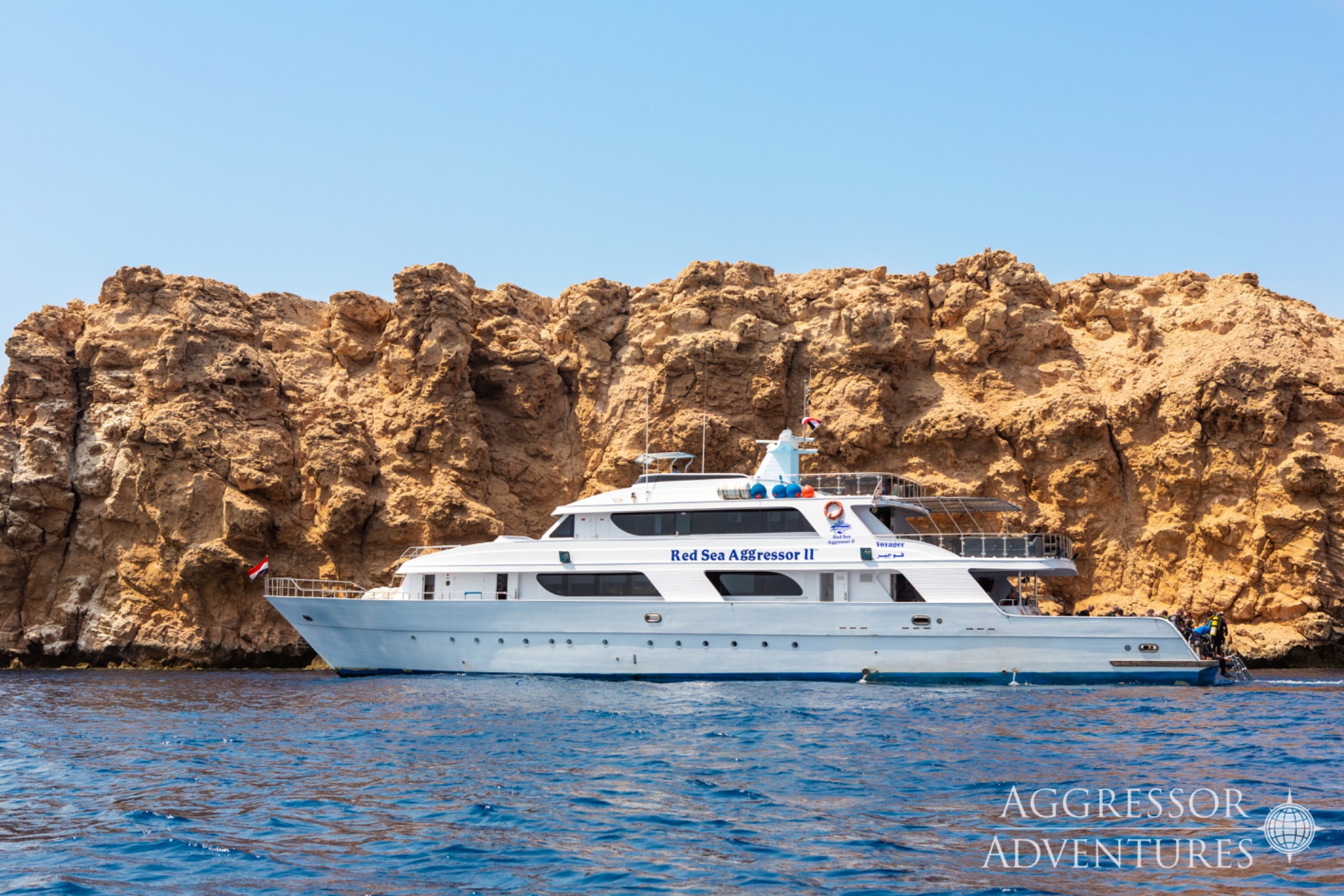 Red Sea Aggressor IIEgipt