Najlepsze z Hurghady (Hurghada - Hurghada)
Amelie · Egipt · 8D/7N
O tej trasie
Ta trasa oferuje dogodny dostęp do głównych miejsc nurkowych Hurghady i Północnego Morza Czerwonego, prezentując jego liczne wyspy, płytkie laguny, uskoki i tętniące życiem ogrody koralowe. Wycieczka jest idealna zarówno dla początkujących, jak i doświadczonych nurków wszystkich poziomów certyfikacji, w tym miłośników wraków i fotografów. Obiecuje zapierające dech w piersiach możliwości nurkowania, zapewniając jednocześnie relaksujące safari.
Regiony na tej trasie
Najważniejsze
Abu Hasheesh Island and all the area around Makadi Bay
Abu Hasheesh Island and the Makadi Bay area offer a mix of reef dives, including shallow fringing reefs and deeper wall dives. The sites are known for their clear waters and vibrant coral formations, providing habitat for a diverse array of reef fish and occasional larger marine animals. It's an ideal spot for both new and experienced divers.
- Fringing reefs
- Wall dives
- Vibrant coral formations
- Clear waters
Abu Ramada Island and all the reefs around
Abu Ramada Island and its surrounding reefs feature a range of dive sites, including vibrant coral walls and sheltered bays. The area is known for its healthy hard and soft corals, attracting a multitude of reef fish and invertebrates. It often provides excellent visibility and gentle currents, making it a pleasant diving experience.
- Vibrant coral walls
- Sheltered bays
- Healthy hard corals
- Abundant reef fish
Blind Reef
Blind Reef is a submerged reef characterized by its dramatic drop-offs and strong currents, which attract schooling fish and larger pelagics. The walls are covered in colorful soft corals, making for a visually stunning dive. Advanced divers can enjoy exhilarating drift dives along its extensive reef system.
- Dramatic drop-offs
- Schooling fish
- Soft coral walls
- Strong currents
Bluff Point (small Gubal Island)
Located off Gubal Island, Bluff Point is a dynamic dive site characterized by its sloping reef and strong currents. It is particularly known for a small wreck and various reef formations that attract pelagic fish. The currents often bring in nutrients, contributing to a healthy ecosystem and diverse marine encounters.
- Sinking patrol boat wreck
- Pelagic encounters
- Current diving
Carless Reef
Carless Reef is a famous offshore reef distinguished by its two large pinnacles rising from the seabed. The site is known for strong currents that attract schooling fish, including tuna and trevally, and offers good chances to spot sharks. Its vibrant soft corals and abundant marine life make it a highly regarded dive spot.
- Two large pinnacles
- Strong currents
- Schooling pelagics
- Shark sightings
El Fanadir
El Fanadir is a long, narrow reef known for its wall dives and opportunities for drift diving. The wall is adorned with various corals and sponges, providing shelter for numerous reef inhabitants. It's a popular site for night dives due to the abundance of nocturnal creatures.
- Wall diving
- Drift diving
- Nocturnal creatures
- Night dives
Giftun Islands and all the reefs around
The Giftun Islands are a protected marine park offering a variety of dive sites with diverse reef structures, from shallow coral gardens to dramatic drop-offs. The area is rich in marine life, including colorful reef fish, turtles, and occasional pelagic visitors. It's suitable for all levels of divers and is popular for its pristine conditions.
- Protected marine park
- Diverse reef structures
- Rich marine life
- Suitable for all levels
Red Sea
The Red Sea is globally renowned for its exceptional biodiversity, vibrant coral reefs, and crystal-clear waters. Its unique oceanographic conditions support a rich ecosystem, featuring a wide array of endemic species. Divers can expect dramatic drop-offs, extensive coral gardens, and encounters with both pelagic and reef inhabitants, making it a world-class diving destination.
- High biodiversity
- Vibrant coral reefs
- Clear visibility
- Endemic marine life
Shaab Abu Nugar
Shaab Abu Nugar features a series of shallow reefs and pinnacles, ideal for relaxed diving and snorkeling. The area is characterized by its healthy hard coral formations and abundant small reef fish. It's a great spot for beginners and photographers looking for vibrant reef scenes.
- Shallow reefs
- Hard coral formations
- Abundant reef fish
Shaab El Erg (Dolphin House)
Shaab El Erg, affectionately known as 'Dolphin House,' is a horseshoe-shaped reef famous for its resident pod of spinner dolphins. Divers often have the chance to observe these playful creatures in their natural habitat. The reef itself offers beautiful coral gardens and a good variety of reef fish.
- Dolphin encounters
- Horseshoe reef
- Beautiful coral gardens
Shaab Galawa
Shaab Galawa is a complex reef system offering a mix of walls, plateaus, and channels. The site is known for its diverse topography and the possibility of encountering pelagic species in the deeper sections. The reef is healthy and supports a wide range of marine life.
- Walls and plateaus
- Diverse topography
- Pelagic sightings
Shabur Umm Gamar
Shabur Umm Gamar is a satellite reef near Umm Gamar Island, characterized by its deep walls and healthy coral formations. It's a prime location for encountering pelagic fish as well as a rich diversity of reef species. The site provides excellent visibility and a challenging yet rewarding dive.
- Deep walls
- Healthy corals
- Pelagic encounters
Siyul Islands
The Siyul Islands present a collection of dive sites with diverse reef structures and channels. These islands are known for their clear waters and a mix of hard and soft corals. The area attracts a variety of marine life, from small reef dwellers to occasional larger pelagics passing through the channels.
- Clear waters
- Diverse reef structures
- Channels with currents
The Wrecks of Shaab Abu Nuhas
Shaab Abu Nuhas hosts several famous wrecks including the Giannis D, the Carnatic, the Chrisoula K, and the Kimon M. Each wreck offers a distinct diving experience, from penetrable cargo holds to engine rooms. These sites are teeming with soft corals, glassfish, and larger pelagics, providing a diverse underwater landscape for wreck enthusiasts.
- Multiple shipwrecks
- Penetration opportunities
- Abundant reef fish
Umm Gamar Island
Umm Gamar Island offers impressive wall dives and a small cave system, providing a thrilling experience for divers. The walls are covered in colorful soft corals and host a variety of fish, including schooling barracuda. Strong currents can be present, offering exciting drift opportunities.
- Impressive wall dives
- Small cave system
- Schooling barracuda
- Soft corals
Umm Usk
Umm Usk is a reef known for its vibrant coral gardens and a healthy population of reef fish. It offers varied topography with gentle slopes and occasional small pinnacles, making it suitable for relaxed dives. The site is often bustling with macro life and colorful schooling fish, providing a picturesque diving experience.
- Vibrant coral gardens
- Healthy reef fish
- Macro life
Wreck of Balena
The Balena wreck, a cargo ship, is an interesting dive that has become a thriving artificial reef. It is encrusted with corals and home to various marine species, offering a glimpse into both maritime history and underwater ecology. The wreck's structure provides shelter and hunting grounds for many fish.
- Cargo ship wreck
- Artificial reef
- Coral encrusted
- Thriving marine life
Wreck of Hebat Allah
The Hebat Allah wreck is a modern cargo ship that sank in 2004, offering a relatively intact and challenging dive site. Due to its depth and potential currents, it is typically recommended for Deep Diver Specialty certified divers. The wreck features penetrable sections and has become a habitat for various marine species.
- Modern cargo ship
- Intact wreck
- Deep dive
- Penetration opportunities
Wreck of Rosalie Moller
The Rosalie Moller is a historic British cargo ship sunk in 1941, lying at considerable depth. It is a world-class wreck dive, highly prized for its pristine condition and the abundance of marine life it supports. Accessing this wreck requires advanced certification, such as Deep Diver Specialty, given its depth and often challenging conditions.
- Historic British cargo ship
- World-class wreck
- Pristine condition
- Deep dive
Wreck of Ulysses
The Ulysses wreck, a British cargo ship that sank in 1887, lies in relatively shallow waters, making it accessible to a wide range of divers. It offers historical exploration with well-preserved sections and has become an established artificial reef, attracting a variety of fish and corals. The wreck provides excellent photographic opportunities.
- Historic cargo ship
- Accessible depth
- Rich marine life
Wymagania
- CertyfikatExperience Open Water
- DoświadczenieNie jest wymagana minimalna liczba zarejestrowanych nurkowań.
Warto wiedzieć
- Your last dive will be on the final day of the trip at 11:00 AM.
- Divers are recommended to wait for 24 hours before flying after the last dive.
- Check out of disembarkation is in the morning on the last day.
- Hotel pick up time may vary for transfers.
- The boat operates Hurghada in the morning on the following day.
- DIN/INT adaptors are available onboard.
- Towels and soap are included.
- The vessel is equipped with European (2 pins) power sockets.
- Accepted payment methods onboard include VISA, Mastercard, Cash (USD), Cash (EUR), Cash (GBP), and local currency.
Plan dzień po dniu
Dzień 1: Dzień zaokrętowania – Hurghada
Goście są przewożeni na łódź w celu zaokrętowania, a następnie serdecznie witani na pokładzie, zakwaterowani w kabinach i otrzymują kompleksową orientację dotyczącą łodzi. Dzień poświęcony jest na zakwaterowanie i przygotowanie do nadchodzącego tygodnia nurkowania.
Dzień 2: Północne Morze Czerwone – Pierwsze Nurkowania
Po śniadaniu statek przemieszcza się do pierwszego miejsca nurkowego wycieczki. Dzień obejmuje dwa nurkowania dzienne i ekscytujące nurkowanie nocne. Region ten jest znany z różnorodnej topografii podwodnej, oferując mieszankę formacji rafowych i szansę na dostrzeżenie różnych gatunków morskich.
Dzień 3: Północne Morze Czerwone – Codzienne Przygody Nurkowe
Dzisiaj plan obejmuje pełny harmonogram nurkowań z trzema nurkowaniami dziennymi i dodatkowym nurkowaniem nocnym. Miejsca nurkowe w tym obszarze często charakteryzują się żywymi ekosystemami koralowymi, możliwościami nurkowania w prądzie wzdłuż imponujących ścian oraz różnorodnością ryb rafowych. Widoczność jest zazwyczaj doskonała, co zapewnia panoramiczne widoki podwodne.
Dzień 4: Północne Morze Czerwone – Odkrywanie Raf
Kontynuując eksplorację regionu Hurghady i Północnego Morza Czerwonego, nurkowie będą cieszyć się trzema nurkowaniami dziennymi i jednym nocnym. Miejsca w tym obszarze często szczycą się zdrowymi formacjami koralowców twardych i miękkich, przyciągając dużą gęstość ryb rafowych. Prądy mogą być zmienne, zapewniając łagodne dryfy i możliwości obserwacji gatunków pelagicznych.
Dzień 5: Północne Morze Czerwone – Różnorodne Miejsca Nurkowe
Program nurkowy na ten dzień obejmuje trzy nurkowania dzienne i jedno nocne, celując w niektóre z unikalnych miejsc nurkowych Morza Czerwonego. Te lokalizacje są znane z dramatycznych spadków i mieszanki pinakli oraz bommies, gdzie można znaleźć szeroki wachlarz obiektów makro i szerokokątnych. Widoczność pozostaje niezmiennie dobra, co poprawia wrażenia z nurkowania.
Dzień 6: Północne Morze Czerwone – Ostatni Pełny Dzień Nurkowania
Ostatni pełny dzień nurkowania oferuje trzy nurkowania dzienne i jedno nocne, koncentrując się na niektórych z najlepszych pozostałych miejsc w Północnym Morzu Czerwonym. Nurkowie mogą spodziewać się eksploracji tętniących życiem raf, które często zapewniają obserwacje rezydentnych ryb rafowych, okazjonalnych pelagików i różnych bezkręgowców. Zróżnicowana topografia zapewnia angażujące nurkowania dla wszystkich poziomów umiejętności.
Dzień 7: Północne Morze Czerwone – Ostatnie Nurkowania i Powrót do Mariny
Dzień obejmuje dwa ostatnie nurkowania przed powrotem do mariny. Po nurkowaniach goście mogą zrelaksować się na pokładzie lub wziąć udział w opcjonalnej aktywności na lądzie, co zapewnia odpowiedni interwał powierzchniowy przed lotem. To kończy część nurkową podróży, pozostawiając czas na refleksję nad przygodami tygodnia.
Dzień 8: Dzień wyokrętowania – Hurghada
Po śniadaniu goście wymeldowują się z łodzi i otrzymują transfery na dalszą podróż. To oznacza koniec przygody na Morzu Czerwonym.
Najbliższe terminy
Obecnie brak zaplanowanych terminów dla tej trasy.
Wszystkie trasy tej jednostki
O łodzi
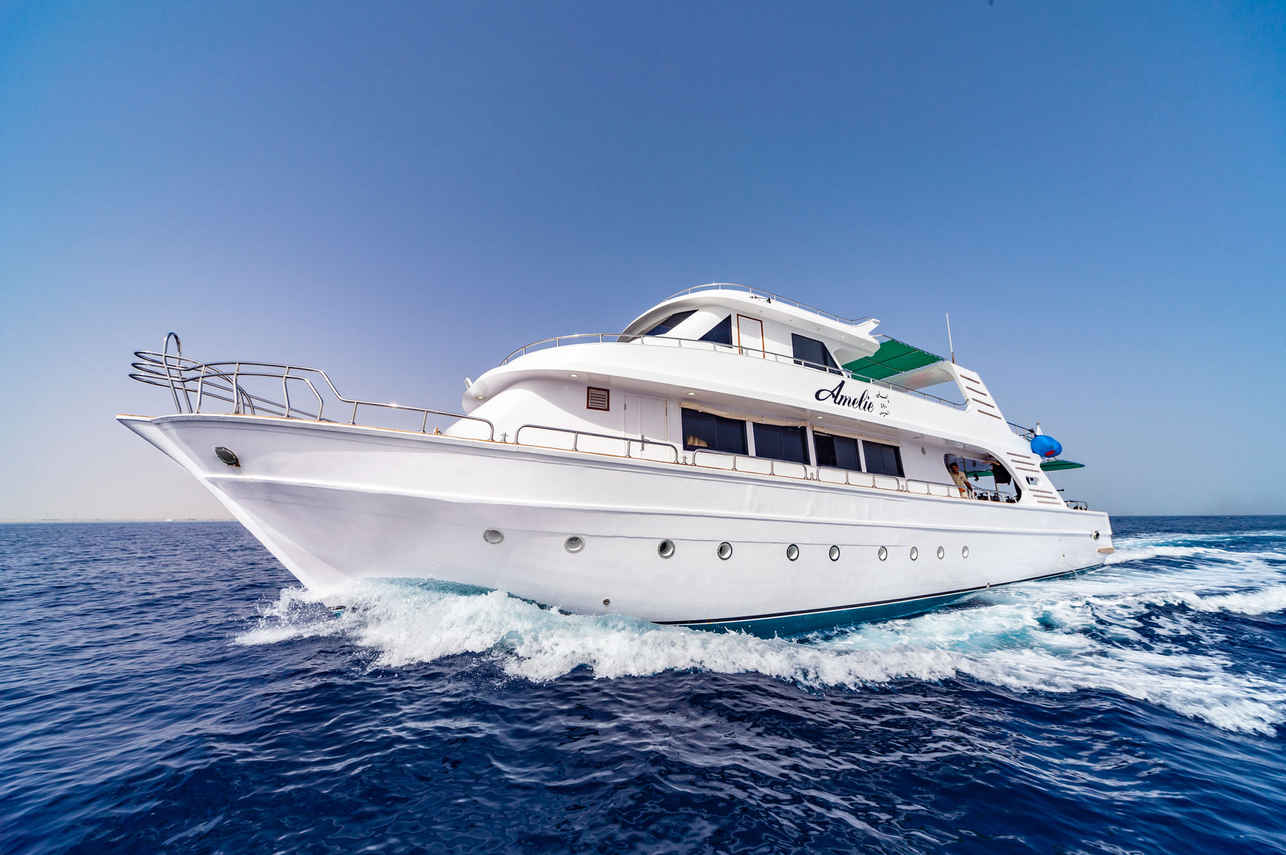 AmelieEgipt