
Cuttlefish
Sepiida
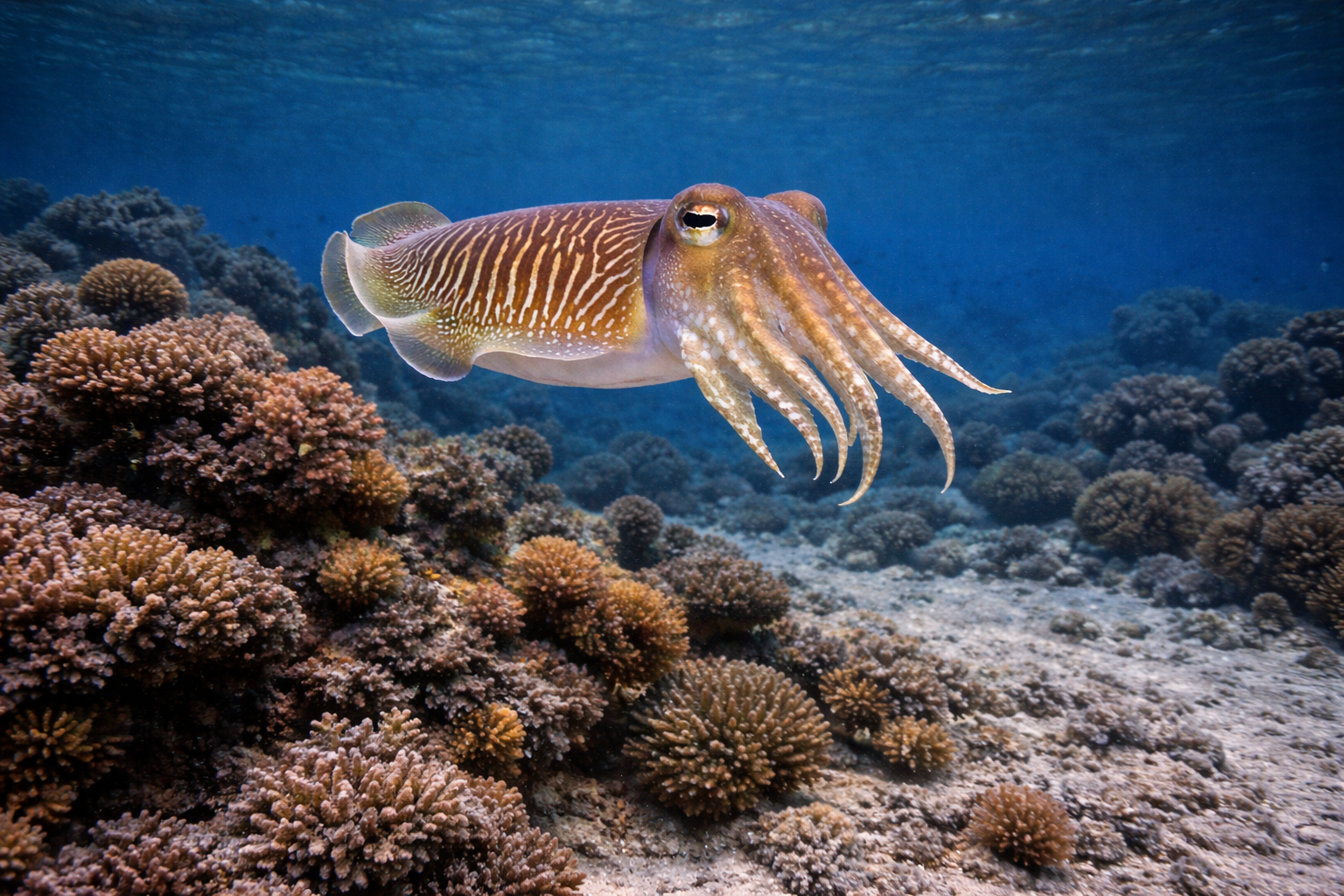
About Cuttlefish
Intelligent and mesmerizing, cuttlefish can change color and texture in milliseconds. They are commonly seen on tropical reefs and are favorites among underwater photographers.
Quick Facts
- Habitat: Cuttlefish are **cosmopolitan** cephalopods, found in temperate and tropical waters worldwide, typically inhabiting **shallow coastal areas** down to depths of around 100-200 meters. They prefer **sandy or muddy seafloors** where they can camouflage effectively, often near seagrass beds or coral reefs. Significant populations are found throughout the **Indo-Pacific**, including popular dive destinations like **Indonesia (Raja Ampat, Lembeh Strait)**, the **Philippines (Anilao, Dumaguete)**, and **Australia (Great Barrier Reef, South Australia)**. In the Mediterranean Sea, species such as *Sepia officinalis* are common, especially off the coasts of **Greece and Croatia**. The Red Sea also hosts diverse cuttlefish species. Some species, like the **giant cuttlefish (*Sepia apama*)**, are known for seasonal aggregations in shallower waters for breeding. During these times, they can be found in high densities along rocky reefs and seagrass beds, moving offshore to deeper waters during post-breeding periods. Their ability to rapidly change skin texture and color allows them to blend seamlessly with a variety of benthic environments, from flat sand to intricate coral structures. They are generally less common in pelagic or open ocean environments, preferring the complex structures and ample food sources offered by coastal shelves.
- Diet: Cuttlefish are **active and opportunistic predators**, primarily feeding on **crustaceans, small fish, and other mollusks**. Their hunting strategy is fascinating, relying heavily on their **exceptional camouflage abilities** to ambush prey. They will often bury themselves partially in the sand, using their **chromatophores** to perfectly match the surrounding substrate, becoming virtually invisible. When unsuspecting prey comes within range, they rapidly extend two specialized tentacles, equipped with **toothed suckers**, to snatch their meal with remarkable speed. Once captured, the prey is brought to their powerful, **parrot-like beak** for processing. Larger cuttlefish can tackle more substantial prey, including crabs, shrimp, and even other cephalopods. Their acute vision and highly developed brain allow for **complex hunting behaviors**, including luring prey with **mesmerizing color displays** on their skin, a phenomenon sometimes referred to as 'hypnotic' predation. They are particularly fond of prawns and small bottom-dwelling fish, making them an important part of the coastal food web.
- Best season: The best season to encounter cuttlefish often depends on the species and geographical location, with **breeding seasons** typically offering the most spectacular sightings. For the famous **giant cuttlefish (*Sepia apama*)** in **South Australia**, the aggregation in **May to August** near Whyalla is world-renowned, with thousands gathering for mating. In the **Indo-Pacific**, generally, the months of **March to October** offer excellent opportunities across destinations like **Indonesia (Lembeh Strait, Raja Ampat)** and the **Philippines (Anilao, Malapascua)**, aligning with calmer seas and higher biodiversity. During the **mating season**, which varies by region but often falls in **late spring to early summer**, cuttlefish are more active and less shy, engaging in elaborate courtship displays. For the Mediterranean species, **spring (April-June)** is a good time for observing them as they move into shallower waters for breeding. While they can be seen throughout the year in many locations, these specific periods often provide divers with **higher probabilities of spotting them** and witnessing their **natural behaviors**, especially the vibrant color changes and mating rituals. Always check local dive operator calendars for specific seasonal peaks for cuttlefish encounters.
Fun Facts
Cuttlefish have three hearts and green-blue blood,They can display two completely different patterns on each side of their body simultaneously,Males sometimes disguise themselves as females to sneak past rival males,Their cuttlebone is used by pet birds as a calcium supplement
Diving Tips
When diving with cuttlefish, **slow, controlled movements** are key to observing their natural behavior without causing disturbance. Approach them **calmly and avoid sudden gestures**. Cuttlefish are masters of **camouflage**, so look for **subtle changes in substrate texture** or **unusual patterns** on the seafloor. They often betray their presence with highly intricate and **rapid-fire color changes** across their skin, especially when curious, startled, or during courtship. Pay attention to sandy or silty patches near coral reefs or seagrass beds. If spotting a cuttlefish, try to maintain a **respectful distance** of at least a few feet; if they appear to change color rapidly and jet away, you're too close. For **photography and videography**, use a gentle light source and avoid direct, harsh strobes, which can startle them. Never touch or harass cuttlefish, as this can cause them stress, disrupt their natural behaviors, or remove their protective mucous layer, making them vulnerable to infection. In destinations like **South Australia for the giant cuttlefish aggregations**, ensure you are briefed on **local regulations and ethical viewing guidelines** to protect these unique events. Observe their **mesmerizing color patterns** and listen for the characteristic sound of their jet propulsion, which can sometimes be heard during rapid escapes. Their excellent vision means they are aware of your presence long before you spot them, so patience and a keen eye for detail will greatly enhance your encounter.