ロアタン、ウティラ、カヨス・コチノス (フレンチハーバー - フレンチハーバー)
Roatan Aggressor · ホンジュラス · 7泊
このルートについて
このライブアボードの冒険では、ロアタン、ウティラ、カヨス・コチノスの活気あるダイビングスポットを探索し、ホンジュラスのベイ諸島を包括的に巡ります。ダイバーは、劇的な壁から浅くカラフルな庭園まで、見事なサンゴ礁の形成にわたる多様な海洋生物に出会うことを期待できます。旅程には、レックダイビング、シーマウント探索、ナイトダイビングの機会が含まれており、豊かな水中体験を約束します。
航路上のエリア
ハイライト
Black Hills
A popular site among divers, Black Hills is known for schooling fish such as Creole wrasse, Atlantic spadefish, and Southern sennets. Scorpionfish, toadfish, and the rare frogfish also frequent this seamount. A resident turtle often interacts with divers, adding to the memorable experience.
- Schools of fish
- Rare frogfish
- Resident turtle
- Seamount diving
Cannery Bank
Cannery Bank is a premier location for witnessing large pelagic fish in open waters. The site boasts vibrant colors on its mounts, with depths ranging from 25 to 110 feet, creating a dynamic environment for diverse marine encounters.
- Large pelagic fish
- Vibrant colors
- Dynamic environment
Cayos Cochinos
The Cayos Cochinos dive sites offer a rich tapestry of marine life, from macro creatures to patrolling barracuda and sharks. The area is known for its spectacular coral gardens and clear waters.
- Macro life
- Coral gardens
- Barracuda patrols
- Clear waters
CJ's Drop-off
Known as an excellent site for deep diving, CJ's Drop-off is home to spiny Caribbean lobster, golden tail moray eels, and schools of jacks. The vibrant marine life here makes it a rewarding experience for those exploring its depths.
- Deep diving
- Caribbean lobster
- Golden tail moray
- Schools of jacks
Duppy Waters
Duppy Waters begins with a vibrant coral garden at about 20 feet, which then slopes down into deeper blue waters. This site is rich with eagle rays, stingrays, octopuses, and schools of Creole wrasse and blue tang, creating a dynamic and colorful underwater scene.
- Coral garden
- Sloping walls
- Eagle rays
- Octopuses
Halliburton Wreck
This artificial reef, sunk in 1998, starts with the wheelhouse at 65 feet and extends to the vessel bottom at 100 feet. Green morays, spotted drum, yellowline arrow crabs, channel clinging crabs, and bearded fire worms are commonly seen. Porcupine fish and pipefish also frequent this exceptional dive site.
- Artificial reef
- Green morays
- Arrow crabs
- Porcupine fish
Hawksbill Bank
Hawksbill Bank is a seamount beginning at 40 feet and sloping down to 80 feet, named after the rare fingerprints it contains. Bluebell tunicates are abundant, and rare fingerprint corals can also be found. A resident hawksbill turtle gives the site its name.
- Seamount diving
- Sloping reef
- Bluebell tunicates
- Hawksbill turtle
Jack Neil Point
Featuring sand, walls, and individual coral heads, Jack Neil Point is a must-dive site. Divers can expect to see stout seahorse, large-eye toadfish, flying gurnards, and octopus, making it one of the best night diving locations in the area.
- Sand and walls
- Stout seahorse
- Flying gurnards
- Night diving
Mary’s Place
One of Roatan's most famous dive sites, Mary's Place is a lush reef characterized by numerous crevices and tunnels. These intricate formations invite exploration and provide excellent photographic opportunities, making it a favorite for many divers.
- Lush reef
- Crevices and tunnels
- Photo opportunities
Odyssey Wreck
The Odyssey Wreck is Roatan's largest shipwreck, a formidable freighter measuring 300 feet long, 50 feet wide, and 85 feet tall. As one of the Caribbean's largest wrecks, it offers an expansive and dramatic dive site for exploration.
- Largest Roatan wreck
- 300 ft freighter
- Caribbean wreck diving
Old Bank
Old Bank is a very shallow dive site, notable for its rare elkhorn coral flourishes and diverse small critters. It is also a prime location to spot the elusive yellowhead jawfish peering out from its hole, making it a favorite for macro enthusiasts.
- Shallow dive
- Elkhorn coral
- Small critters
- Yellowhead jawfish
Pelican Point
Pelican Point is a rich reef, featuring French and queen angelfish, butterflyfish, tangs, and parrotfish. On the outer edge of the reef, divers can often spot sharks and barracudas patrolling, adding an exciting dimension to the dive.
- Rich reef
- Angelfish
- Sharks
- Barracuda patrols
Raggedy Cay
This popular site offers diving at depths between 30 and 130 feet, where majestic eagle rays often sweep through the soft corals. Octopuses can be found around the sand channels, while spotted moray eels inhabit the coral garden, creating a lively underwater spectacle.
- Soft corals
- Majestic eagle rays
- Sand channels
- Spotted moray eels
Roatan, Bay Islands of Honduras
The dive sites around Roatan represent the vibrant underwater landscape of the Bay Islands, offering divers sheer walls, beautiful shallow reefs, and impressive wrecks. These pristine seamounts and reefs provide a frontier rarely explored, rich in marine life and photographic opportunities.
- Sheer walls
- Shallow reefs
- Spectacular wrecks
- Offshore seamounts
Taviana’s Wall
Known for its abundant turtle population, Taviana's Wall is a vibrant site that offers great night diving experiences. Divers can often spot octopus, crabs, and lobsters during evening descents, adding to the magic of this unique location.
- Turtle encounters
- Night dives
- Octopus and crabs
- Lobsters
Toon Town
Known for its excellent macro life, Toon Town, off Cayos Cochinos, is filled with dense clumps of bluebell tunicates, small crabs, and vibrant flamingo tongue cowries. This site is a photographer's dream, showcasing the tiny wonders of the tunicate kingdom.
- Macro dive
- Bluebell tunicates
- Small crabs
- Flamingo tongue cowries
Utila
Utila's dive sites are characterized by breathtaking reefs and a reputation for large pelagic encounters. The area often features schools of Creole wrasse, Atlantic spadefish, and horse-eye jacks. It is also known for sightings of majestic marine creatures like manta rays, marlin, and even whale sharks, making it a thrilling destination for divers.
- Breathtaking reefs
- Large pelagic sightings
- Manta rays
- Whale sharks
Wreck of the Aguila
This shipwreck has become a thriving artificial reef, home to numerous large groupers and a striking blue parrotfish. A significant green moray eel is also a resident here, known for its playful interactions with divers. The wreck provides a fascinating environment for marine life.
- Large groupers
- Blue parrotfish
- Green moray eel
- Artificial reef
参加条件
- 必要ランク(Cカード)オープンウォーター
- 経験レベル最低限のログダイブは不要です。
知っておきたいこと
- Diver certification: Open Water with no minimum logged dives required.
- Fly-after-dive: Divers are recommended to wait 24 hours before flying after the last dive.
- Depth Range: 30 – 130 ft (9m – 40m).
- Wetsuit: 3-5 mm wetsuit recommended.
- Water temperatures: 78-84F (summer), 75-80F (winter).
日ごとのプラン
日目 1: 乗船日 – ロアタンヨットクラブ&マリーナ
ゲストはロアタンヨットクラブ&マリーナでRoatan Aggressorに乗船します。キャビンに落ち着き、安全説明を受けた後、船は出発の準備をします。ダイビングの週への期待が高まる中、船上で夕食が提供されます。
日目 2: ロアタン – ウェストエンドとサウスサイド探検
この日は、豊かなサンゴ礁、劇的な壁、健全な海洋生態系で知られるロアタンのウェストエンドまたはサウスサイドの素晴らしいダイビングサイトに焦点を当てます。ダイバーは、これらの地域を特徴づける豊かなサンゴの形成、亀裂、トンネルを探検します。これらの場所には、しばしば豊富なリーフフィッシュや無脊椎動物が生息しています。
日目 3: ロアタン – シーマウントとカヨス・コチノス
今日のダイビングには、ロアタンのシーマウントとカヨス・コチノス周辺の手つかずの海域の探検が含まれます。これらの地域は、鮮やかなサンゴの形成と豊富なマクロ生物が特徴です。シーマウントはしばしば大型の遠洋魚種を引き寄せ、カヨス・コチノスは小さな生物やカラフルなリーフフィッシュが豊富な多様なサンゴ礁環境を提供します。
日目 4: ウティラ – 多様なリーフと沈船ダイビング
ウティラ周辺でのダイビングは、浅いリーフから深い壁、印象的な沈船まで、多様な水中地形を特徴としています。ここのダイビングサイトは、群れる魚、大型の遠洋魚、ユニークな生物で知られています。ウティラの環境はしばしばダイナミックな潮流を特徴とし、その活気あるサンゴ生態系の健全性と多様性に貢献しています。
日目 5: ウティラ / ロアタン – 継続的な探検
5日目は、前日までの発見に基づいて、ウティラまたはロアタンのダイビングサイトの探検を続けます。ダイバーは、砂地の生物探しから活気ある壁沿いのドリフトダイブまで、多様な体験の機会をさらに期待できます。焦点は、ベイ諸島の豊かな生物多様性とユニークな地質学的特徴に没頭することに置かれています。
日目 6: ロアタン – ウェストエンドまたはサウスサイドでのダイビング
この日はロアタンの壮大なリーフに戻り、ウェストエンドまたはサウスサイドに焦点を当て、異なるダイビングの視点を提供します。ダイバーは豊富な海洋生物とのさらなる出会いを楽しみ、島の有名なダイビングサイトをさらに探検します。これらのエリアは、健全なサンゴ生態系と多様な魚の個体群で有名です。
日目 7: ロアタンへ帰港 – 最終ダイブ&フェアウェルディナー
最終日のダイビングはロアタン近くで行われ、その魅惑的な水中世界を体験する最後の機会を提供します。船がドックに戻る前に2回のダイブが予定されています。夕方には、ゲストはフェアウェルカクテルパーティーと陸上でのディナーを楽しみ、一週間の冒険を振り返ります。
日目 8: 下船 – ロアタンヨットクラブ&マリーナ
ゲストはロアタンヨットクラブ&マリーナでRoatan Aggressorからチェックアウトします。ホンジュラスのベイ諸島を巡る思い出に残るライブアボードの旅を終え、出発のための送迎が手配されます。
今後の出発日
- 2026-11-21 – 2026-11-28〜から 3,295 USD予約する
- 2026-11-28 – 2026-12-05〜から 2,295 USD予約する
- 2026-12-05 – 2026-12-12〜から 2,295 USD予約する
- 2026-12-12 – 2026-12-19〜から 1,795 USD予約する
- 2026-12-19 – 2026-12-26〜から 2,295 USD予約する
- 2026-12-26 – 2027-01-02〜から 2,295 USD予約する
- 2027-01-02 – 2027-01-09〜から 2,295 USD予約する
- 2027-01-09 – 2027-01-16〜から 2,295 USD予約する
- 2027-01-16 – 2027-01-23〜から 3,295 USD予約する
- 2027-01-23 – 2027-01-30〜から 3,295 USD予約する
- 2027-01-30 – 2027-02-06〜から 2,471 USD予約する
- 2027-02-06 – 2027-02-13〜から 3,295 USD予約する
ボートについて
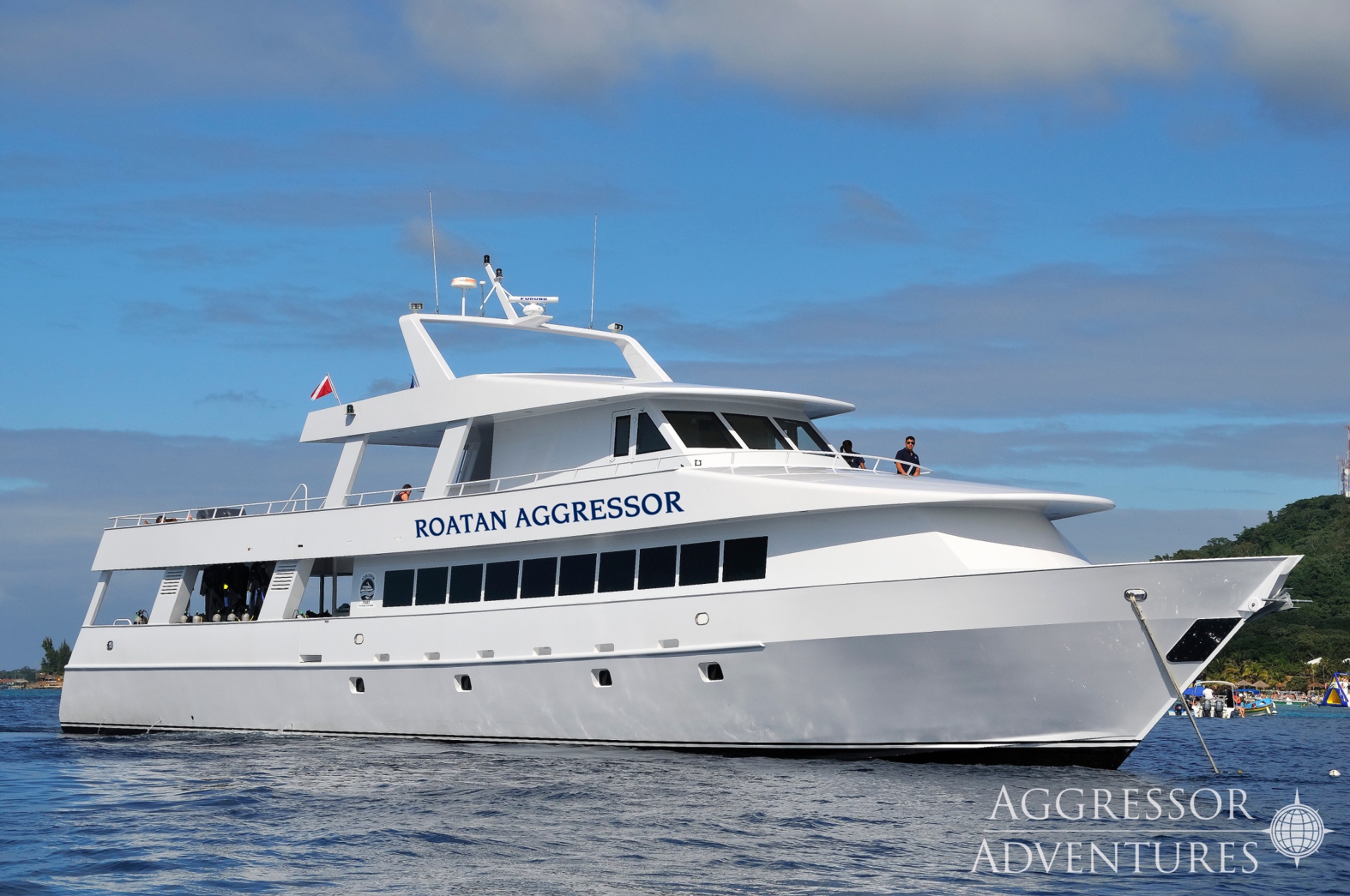 Roatan Aggressorホンジュラス