紅海北部 - ベストレックダイビング (ハルガダ - ハルガダ)
Red Sea Aggressor II · エジプト · 7泊
このルートについて
このライブアボードトリップでは、活気あるサンゴ礁、歴史的な難破船、豊富な海洋生物で知られる紅海北部を探索します。ダイバーは、さまざまな遠洋性捕食動物、リーフウォール、多様な生物が生息する台地に出会うことができます。この旅程は、マクロ生物、大型遠洋魚、そして息をのむような水中景観が混在しており、紅海北部を忘れられないダイビングの目的地にしています。SS ThistlegormやDunravenのような難破船は、巨大なウツボ、マグロ、その他の遠洋性捕食動物を引き寄せる主要な魅力です。
航路上のエリア
ハイライト
Abu Nuhas Location (4 wrecks)
Abu Nuhas is a major wreck diving site in the northern Red Sea, often called the 'ship graveyard' due to its cluster of four notable wrecks. These include the Ghiannis D, Carnatic, Chrisoula K, and Kimon M. The site is characterized by relatively shallow depths, generally between 10 and 40 meters, making the wrecks accessible for different skill levels and offering ample penetration opportunities for experienced divers. The wrecks host a diverse range of marine life, thriving on the artificial structures.
- Four wrecks
- Ship graveyard
- Clear waters
- Marine habitat
Carnatic
The Carnatic is one of the oldest wrecks in the Red Sea, a sailing clipper that sank in 1869. It was carrying gold and wine, much of which was salvaged. The wreck lies between 10-27 meters deep and is largely broken up, revealing its iron frames and wooden cargo. It is beautifully encrusted with corals and provides shelter for numerous reef fish, making it a scenic and historically rich dive.
- Historic sailing clipper
- Iron frames
- Coral encrustations
- Rich reef fish life
Chrisoula K
The Chrisoula K is a cargo ship that sank in 1981, often mistaken for the Ghiannis D. It lies at depths between 5 and 25 meters, offering relatively shallow access. The wreck is largely intact, with its bow section and cargo holds (filled with Italian floor tiles) being particularly interesting. It is a vibrant artificial reef, bustling with reef fish and invertebrates.
- Cargo ship wreck
- Intact bow section
- Tile cargo
- Vibrant artificial reef
Dunraven
The Dunraven is a Victorian steamship that sank in 1876, now lying upside down at depths between 15 and 30 meters. The wreck is heavily encrusted with corals and is home to a variety of marine life, including glassfish, yellow goatfish, and giant morays. Its unique orientation and historical significance make it a popular dive site, offering opportunities for exploration through its broken sections.
- Victorian steamship
- Upside-down position
- Coral encrusted
- Giant morays
EJ Khoukh – El Wreck
The EJ Khoukh, also known as El Wreck, is a relatively new addition to the Red Sea's wreck sites, having sunk in 2005. This container ship was intentionally sunk as an artificial reef, now resting at a depth of around 20 meters. It provides an excellent site for divers to observe marine life quickly colonizing the structure, offering an interesting exploration of a modern wreck.
- Modern container ship
- Artificial reef
- Marine colonization
- Accessible depth
El Mina/El Mina Wreck
The El Mina is a Russian-built minesweeper that sank in 1970. It sits upright at approximately 30 meters deep, with the deck around 25 meters. The wreck is known for its resident marine life, including crocodiles fish, scorpionfish, and schools of glassfish. It offers opportunities for penetration into some sections, providing an interesting dive for those wanting to explore inside.
- Russian minesweeper
- Upright position
- Resident marine life
- Wreck penetration
Ghiannis D
The Ghiannis D is a large cargo ship that sank in 1983. It sits at a maximum depth of 27 meters (88 feet) and is famed for its intact stern section, engine room, and accessible holds. The wreck is home to diverse marine life, including crocodile fish, scorpionfish, and large groupers, making it a popular site for exploration and photography. The ship's layout offers various penetration points.
- Large cargo ship
- Intact stern section
- Engine room access
- Diverse marine life
Kimon M
The Kimon M is a cargo ship that sank in 1978 after hitting the Sha'ab Abu Nuhas Reef. It lies on its starboard side at depths of 10 to 32 meters. The wreck is largely intact, with its stern and propeller still visible and explorable. It provides a fascinating dive for observing how marine life, including schools of bannerfish and Napoleon wrasse, has colonized the structure.
- Cargo vessel
- Intact stern and propeller
- Marine colonization
- Napoleon wrasse sightings
MV Salem Express Wreck
The Salem Express, a passenger roll-on/roll-off ferry, sank in 1991. The wreck lies on its starboard side at depths of 10 to 30 meters. Divers can explore its decks, bridge, and even the ferry's internal areas. Despite its tragic history, the ship has become a habitat for various marine species, including schools of jackfish and snapper, and offers a compelling yet poignant dive experience.
- Passenger ferry
- Roll-on/roll-off design
- Shallow wreck sections
- Marine habitat
Red Sea
The Red Sea is renowned for its exceptional marine biodiversity, crystal-clear waters, and dramatic underwater topography. It is a major global dive destination offering a rich variety of experiences, from colorful shallow coral gardens to deep walls and historic wrecks. The unique ecosystem supports a high density of endemic species and pelagic encounters. The northern part is particularly famous for its accessible wreck sites and vibrant reef systems.
- Exceptional biodiversity
- Crystal-clear waters
- Dramatic topography
- Endemic species
Safaga
The Safaga region offers a mix of reef and wreck diving, including the Salem Express. The area is characterized by vibrant coral formations and diverse fish populations. Safaga's dive sites often feature strong currents, providing thrilling drift dives and opportunities to encounter pelagic species. It's a key area for exploring the beauty of the Southern Red Sea's coral gardens.
- Reef and wreck diving
- Vibrant coral formations
- Diverse fish life
- Drift diving opportunities
Salem Express
The Salem Express was a passenger ferry that sank in 1991, making it a controversial but frequently visited wreck. The ship lies on its starboard side, largely intact, with much of its cargo and personal effects still visible. While a somber site, it has become an artificial reef attracting various marine life. The wreck is at a depth of around 10-30 meters, suitable for experienced wreck divers.
- Passenger ferry wreck
- Intact structure
- Artificial reef
- Historical significance
Thistlegorm
The SS Thistlegorm is one of the most famous wreck dives globally, a British armed merchant navy ship sunk in 1941. The cargo includes motorcycles, trucks, rifles, boots, and other wartime supplies, largely intact and offering a vivid historical experience. It lies at a depth of around 30 meters, with the ability to penetrate some areas. This artificial reef also attracts a wide array of marine life.
- Famous WWII wreck
- Intact cargo
- Historical experience
- Rich marine habitat
Ulysses
The Ulysses is a 95-meter steamship that sank in 1887. The ship's wreckage is spread across the seabed, with some sections still identifiable. While not as intact as other wrecks, it offers a glimpse into early steam navigation and serves as a habitat for various marine species among its scattered remains. It lies in relatively shallow parts of the Red Sea.
- Early steamship
- Scattered wreckage
- Historical interest
- Marine habitat
参加条件
- 必要ランク(Cカード)オープンウォーター
- 経験レベル最低限のログダイブは不要です。
知っておきたいこと
- A 24-hour surface interval is recommended after the last dive before flying.
- No decompression dives are permitted on this trip.
- Night dives are available on several evenings, subject to conditions.
日ごとのプラン
日目 1: 乗船 – ハルガダ
ハルガダでRed Sea Aggressor IIに乗船します。キャビンにチェックインし、ダイビング器材をセットアップした後、歓迎と安全に関する説明会が行われます。出航のための港湾当局の許可が最終決定され、その後船上で夕食をとります。
日目 2: 紅海北部 – 初めてのダイビング
港湾局の許可後、船は最初のダイビングサイトへ出発します。最初のダイビングは通常午前10時頃に開始されます。ダイバーは、豊かな水中環境を探索し、今後のエキサイティングな難破船やサンゴ礁に備えながら、終日3~4回のダイビング(ナイトダイビングの可能性も含む)を期待できます。スケジュールには、リラックス、食事、紅海の景色を楽しむ時間が組み込まれています。
日目 3: 紅海北部 – 難破船とサンゴ礁ダイビング
3日目から6日目は、紅海北部の多様なダイビングサイトの探索に充てられます。ダイバーは通常、毎日3~4回のダイビング(ナイトダイビングの可能性も含む)を楽しみ、この地域の有名な難破船と活気あるサンゴ礁に焦点を当てます。この地域は、優れた透明度と、歴史的な遺物と豊かな海洋生物の組み合わせで知られています。毎日、ダイビング、食事、船上での休息に十分な機会が提供されます。
日目 4: 紅海北部 – 沈船とリーフダイビング
3日目から6日目までは、紅海北部の多様なダイビングサイトの探索に充てられます。ダイバーは通常、毎日3〜4回のダイビングを楽しみ、夜間ダイビングの可能性も含め、この地域の有名な沈船と鮮やかなサンゴ礁に焦点を当てます。このエリアは、優れた透明度と、歴史的遺物と豊かな海洋生物が混在していることで知られています。毎日、ダイビング、食事、船上での休憩に十分な機会が提供されます。
日目 5: 紅海北部 – 沈船とリーフダイビング
3日目から6日目までは、紅海北部の多様なダイビングサイトの探索に充てられます。ダイバーは通常、毎日3〜4回のダイビングを楽しみ、夜間ダイビングの可能性も含め、この地域の有名な沈船と鮮やかなサンゴ礁に焦点を当てます。このエリアは、優れた透明度と、歴史的遺物と豊かな海洋生物が混在していることで知られています。毎日、ダイビング、食事、船上での休憩に十分な機会が提供されます。
日目 6: 紅海北部 – 沈船とリーフダイビング
3日目から6日目までは、紅海北部の多様なダイビングサイトの探索に充てられます。ダイバーは通常、毎日3〜4回のダイビングを楽しみ、夜間ダイビングの可能性も含め、この地域の有名な沈船と鮮やかなサンゴ礁に焦点を当てます。このエリアは、優れた透明度と、歴史的遺物と豊かな海洋生物が混在していることで知られています。毎日、ダイビング、食事、船上での休憩に十分な機会が提供されます。
日目 7: 最終ダイブとフルガダへの帰港
ダイビング最終日は、午前中に2回のダイビングを行い、その後、船はフルガダのエル・フォリー・マリーナへ帰港します。夕方には、船上でカクテルパーティーが開催されます。夕食後、ゲストはフルガダの地元のレストラン、カフェ、パブを探索するために上陸するオプションがあります。
日目 8: 下船 – ハルガダ
ゲストは朝食を楽しんだ後、午前8時にRed Sea Aggressor IIをチェックアウトします。これでハルガダでのライブアボードの冒険は終了です。最後のダイビング後、飛行機に乗る前に24時間待つことをお勧めします。
今後の出発日
- 2027-05-15 – 2027-05-22〜から 1,399 USD予約する
- 2027-08-07 – 2027-08-14〜から 2,760 USD予約する
- 2027-10-30 – 2027-11-06〜から 2,760 USD予約する
- 2028-05-13 – 2028-05-20〜から 2,760 USD予約する
- 2028-08-05 – 2028-08-12〜から 2,760 USD予約する
- 2028-10-28 – 2028-11-04〜から 2,760 USD予約する
- 2029-05-12 – 2029-05-19〜から 2,760 USD予約する
- 2029-08-04 – 2029-08-11〜から 2,760 USD予約する
- 2029-10-27 – 2029-11-03〜から 2,760 USD予約する
- 2030-08-03 – 2030-08-10〜から 2,760 USD予約する
- 2030-10-26 – 2030-11-02〜から 2,760 USD予約する
この船のすべてのルート
ボートについて
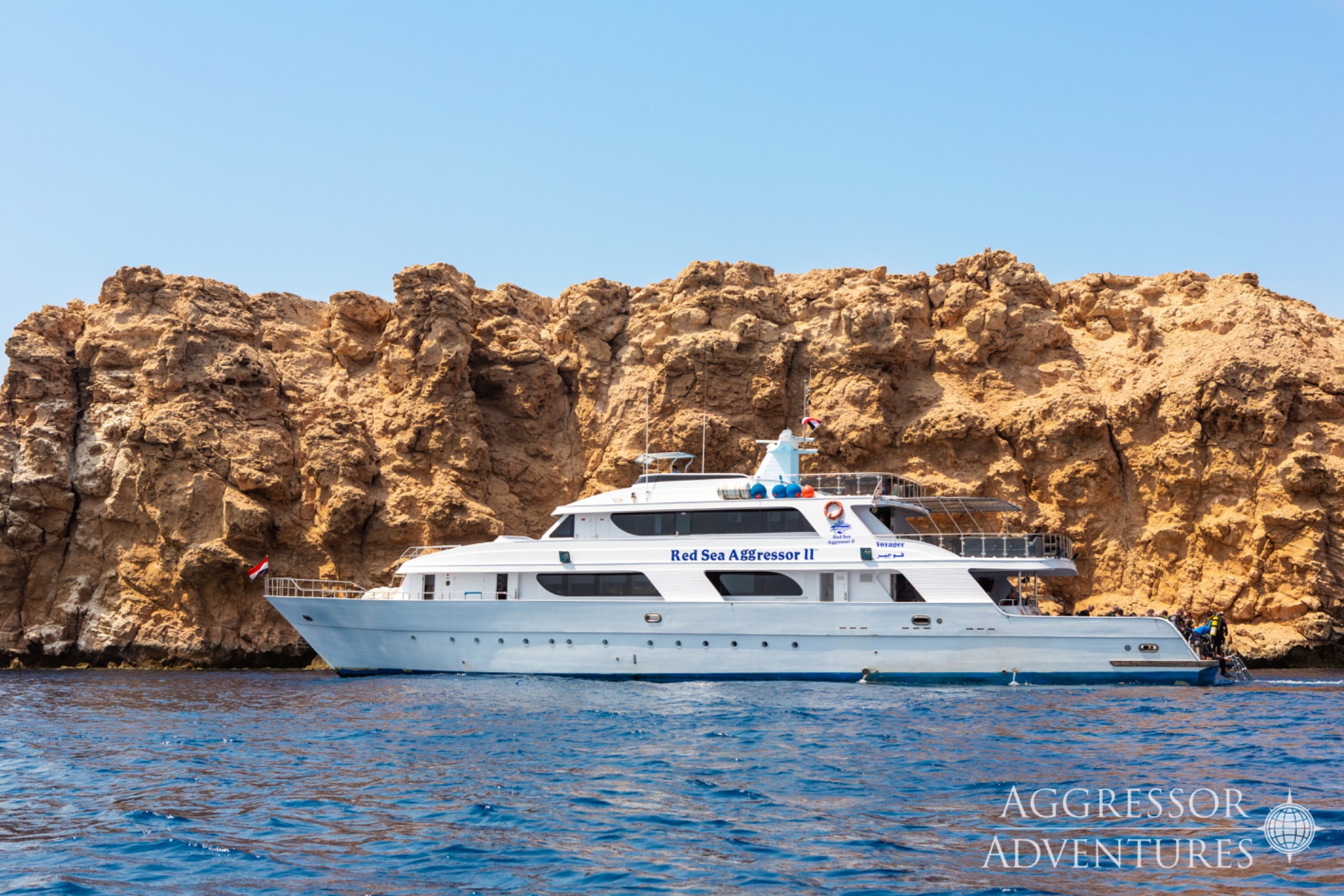 Red Sea Aggressor IIエジプト