Itinerary B (Santa Cruz - Santa Cruz)
Alya · ガラパゴス · 5 nights
このルートについて
Navigate the western reaches of the Galapagos archipelago on a journey through volcanic landscapes and rich marine habitats. This adventure highlights the unique biodiversity of Isabela and Fernandina Islands, where cold-water currents draw in an abundance of specialized wildlife. Guests will encounter prehistoric marine iguanas, endemic penguins, and giant tortoises in their natural environments. The route balances dramatic land excursions with immersive snorkeling opportunities along rugged lava coastlines.
航路上のエリア
ハイライト
Fernandina Island
The youngest and most volcanically active island in the Galapagos, Fernandina offers a raw look at a primitive environment. It is home to an enormous population of marine iguanas and provides critical habitat for the flightless cormorant along its rocky, nutrient-rich shores.
- Active volcanic vistas
- Massive iguana colonies
- Endemic flightless cormorants
Isabela Island
As the largest island in the chain, Isabela is shaped by six shield volcanoes and features diverse ecosystems ranging from mangrove lagoons to arid lava plains. Its western coast is cooled by the Cromwell Current, attracting whales, dolphins, and penguins to its productive waters.
- Dramatic cliff landscapes
- Galapagos penguin habitats
- Whale and dolphin sightings
Santa Cruz Island
Serving as the central hub of the archipelago, Santa Cruz is famous for its high-altitude cloud forests and fertile volcanic slopes. The island is the best place to witness giant tortoises in the wild and explore unique geological features like massive sinkholes and lava tubes.
- Giant tortoise sightings
- Lush highland vegetation
- Volcanic lava tunnels
Santiago Island
Santiago is characterized by its black basaltic rock and fascinating shoreline erosion. The island features iconic sites like Egas Port, where natural rock bridges and grottos provide a sanctuary for fur seals, while its interior supports a variety of endemic bird species and reintroduced land iguanas.
- Volcanic rock grottos
- Galapagos fur seal colonies
- Diverse intertidal life
上陸ツアー
- Trek through the Santa Cruz Highlands to observe giant tortoises in their natural habitat.
- Explore ancient subterranean lava tunnels to learn about the islands' volcanic origins.
- Hike across the Moreno Point lava fields to discover hidden brackish lagoons and birdlife.
- Enjoy panga boat rides through the mangrove-lined coves of Elizabeth Bay.
- Walk the uplifted coral beaches of Urbina Bay to see land iguanas and giant tortoises.
- Visit the massive marine iguana colonies at the base of the Fernandina volcano.
- Climb to the lookout above Darwin Lake at Tagus Cove for panoramic island views.
- Discover the coastal grottos and fur seal colonies at the historic Egas Port.
- Observe sea turtle nesting grounds and saltwater lagoons at Bachas Beach.
知っておきたいこと
- Check-in times are variable and coordinated with local flight arrivals at Baltra.
- The itinerary includes multiple landing types, requiring both wet and dry landing preparation.
- Daily activities include hiking on uneven volcanic terrain and panga boat explorations.
- National Park certified naturalist guides accompany all land and snorkeling excursions.
日ごとのプラン
日目 1: Embarkation – Baltra and Santa Cruz Highlands
Upon arrival at Baltra Airport, travelers are met by a naturalist guide for the start of the expedition. The afternoon is dedicated to the lush highland forests of Santa Cruz, a region characterized by its verdant canopy and volcanic soil. This area is the primary habitat for the iconic Galapagos giant tortoise, which can be seen grazing near freshwater pools. Visitors also have the chance to explore subterranean lava tunnels, witnessing the geological foundations of the islands.
日目 2: Isabela Island – Moreno Point and Elizabeth Bay
The morning exploration at Moreno Point reveals a stark landscape of lava fields dotted with vibrant brackish lagoons. These hidden oases are known for hosting elegant flamingos and a variety of coastal bird species amidst the volcanic rock. In the afternoon, the vessel reaches Elizabeth Bay, a sheltered sanctuary surrounded by tall mangroves. The area is highly regarded for its calm waters, which serve as a haven for flightless cormorants and the rare Galapagos penguin.
日目 3: Western Frontiers – Urbina Bay and Espinoza Point
Urbina Bay offers a unique perspective on geological history, featuring coral remains thrust above sea level by seismic activity. This coastal stretch is often frequented by large land iguanas and provides a nesting ground for Galapagos hawks. Later, the journey continues to Espinoza Point on Fernandina, home to one of the largest marine iguana colonies in the world. The nutrient-dense waters here attract a wealth of sea turtles and sea lions, making for exceptional wildlife viewing against the backdrop of an active volcano.
日目 4: Isabela North – Tagus Cove and Vicente Roca Point
The day begins at Tagus Cove, a historic mooring site once visited by Charles Darwin, overlooking the salt-water Darwin Lake. The surrounding Palo Santo forests are alive with Darwin finches and mockingbirds, while the coastline is a hotspot for penguins and cormorants. The afternoon transition to Vicente Roca Point showcases some of the archipelago's most impressive cliffs. The underwater topography here is rich with sponges and fan corals, often visited by sunfish and various cetaceans in the deeper channels.
日目 5: Santiago Island – Espumilla Beach and Egas Port
Espumilla Beach greets visitors with its distinct rusty-brown sands and a backdrop of expansive mangrove forests. During the wetter months, the nearby salt pans often attract ducks and flamingos, while hawks patrol the dry forest canopy. The expedition then moves to Egas Port, a site renowned for its 'grottos'—natural rock formations that provide shelter for Galapagos fur seals. The intertidal zones here are teeming with life, where marine iguanas bask alongside Sally Lightfoot crabs on the black volcanic shore.
日目 6: Disembarkation – Bachas Beach
The final morning is spent at Bachas Beach, a significant nesting site for Pacific green sea turtles known for its pristine white sand. Visitors can observe saltwater lagoons where flamingos and herons are frequently sighted before the final transfer. The journey concludes with a trip to the airport for return flights to the mainland, marking the end of the Galapagos exploration.
今後の出発日
- 2027-01-04 – 2027-01-09〜から 6,500 USD予約する
- 2027-02-15 – 2027-02-20〜から 6,500 USD予約する
- 2027-03-01 – 2027-03-06〜から 6,500 USD予約する
- 2027-04-12 – 2027-04-17〜から 6,500 USD予約する
- 2027-04-26 – 2027-05-01〜から 6,500 USD予約する
- 2027-05-10 – 2027-05-15〜から 6,500 USD予約する
- 2027-06-07 – 2027-06-12〜から 6,500 USD予約する
- 2027-06-21 – 2027-06-26〜から 6,500 USD予約する
- 2027-07-05 – 2027-07-10〜から 6,500 USD予約する
- 2027-07-19 – 2027-07-24〜から 6,370 USD予約する
- 2027-09-27 – 2027-10-02〜から 6,500 USD予約する
- 2027-10-11 – 2027-10-16〜から 6,500 USD予約する
この船のすべてのルート
ボートについて
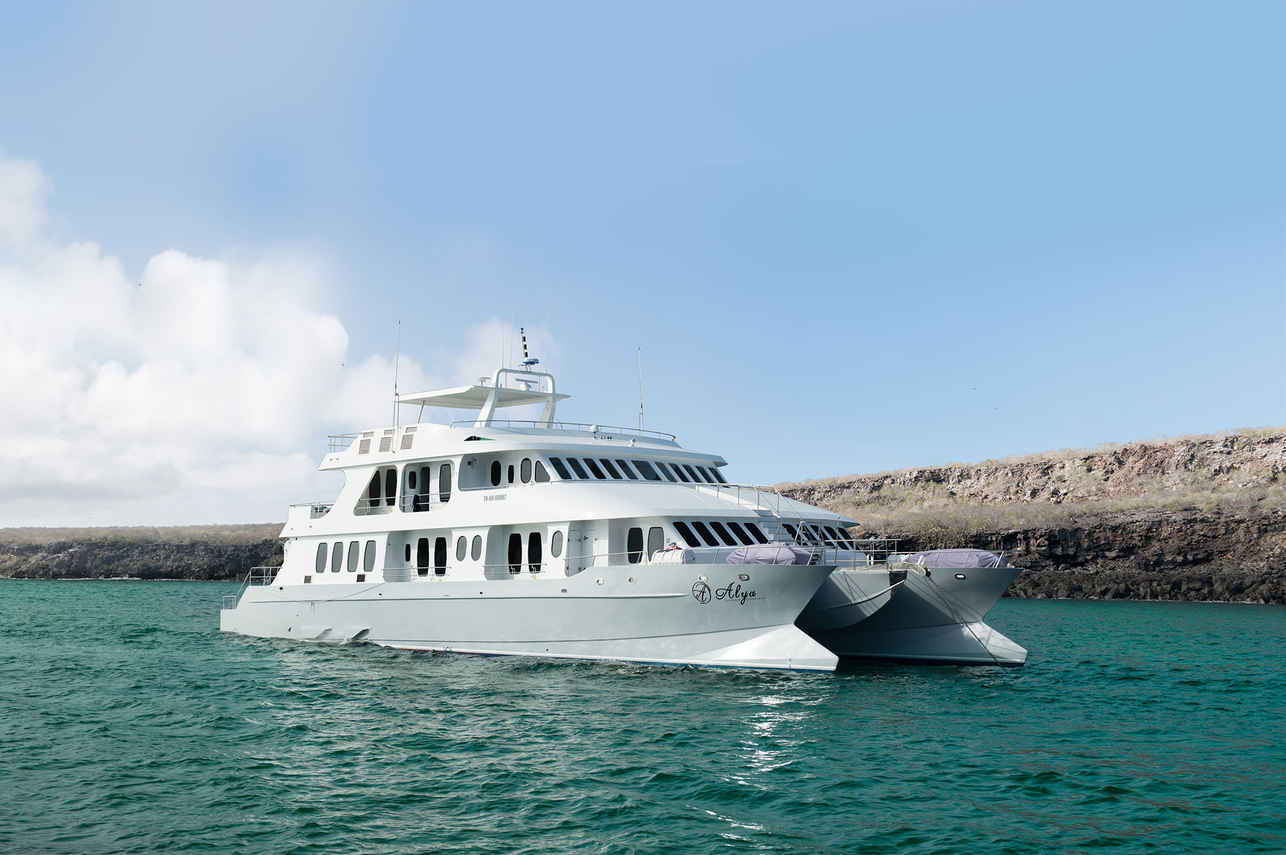 Alyaガラパゴス