Relitti del Nord, Ras Mohamed, Tiran, Brothers, Safaga (Hurghada - Hurghada)
Discovery I · Egitto · 8G7N
Su questo itinerario
Imbarcatevi in un'affascinante avventura in crociera subacquea nel Mar Rosso, esplorando un mix di relitti settentrionali, vivaci barriere coralline e isole al largo. Questo itinerario conduce i subacquei attraverso le rinomate aree di Ras Mohammed e Tiran, più a sud fino alle Brother Islands e alle barriere coralline vicino a Safaga. Aspettatevi incontri con una variegata vita marina, tra cui varie specie di squali, mante e banchi di pesci, sullo sfondo di una spettacolare topografia sottomarina e relitti storici. Preparatevi per una settimana di incredibili immersioni nelle iconiche acque dell'Egitto.
Regioni su questo itinerario
Punti salienti
Carnatic
The Carnatic, a 90-meter-long sail and engine steamer, sank in 1869 while carrying a cargo of wine and 'London soda water'. The wreck is largely intact and lies at approximately 26 meters, offering excellent penetrations into its cargo holds. Its wooden hull has decayed, revealing its iron framework, which is now heavily adorned with soft corals, attracting various marine life including groupers and octopuses.
- 19th-century steamer
- Intact structure
- Penetration opportunities
- Soft coral growth
Dunraven
The Dunraven wreck, a 72m-long English steamer, sank in 1876 on Sha'ab Mahmoud. It lies upside down at a maximum depth of 29m. The wreck is heavily encrusted with corals, attracting a wide variety of marine life including glassfish and moray eels. It offers an excellent opportunity for exploring a historical site that has become a thriving artificial reef.
- 19th-century steamer
- Upside-down position
- Coral encrusted
- Abundant marine life
Giannis D
The Giannis D is a large Greek freighter that sank in 1983. The wreck is split into two sections, lying at a maximum depth of 28m. Divers can explore the engine room, bridge, and cabins, which are now heavily encrusted with soft corals. The wreck is teeming with glassfish, snapper, jacks, and moray eels, making it a captivating dive site for both its historical aspect and marine life.
- Greek freighter wreck
- Penetration dives
- Engine room exploration
- Abundant glassfish
Ras Mohamed
Ras Mohamed National Park is celebrated for its exceptional reef ecosystems, found at the tip of the Sinai where the Red Sea meets the Gulf of Suez and the Gulf of Aqaba. This national park offers some of the best diving in the region, known for its healthy reefs, abundant marine life, and dramatic underwater topography. It's an ideal location for both vibrant reef exploration and wall diving.
- Pristine reefs
- Diverse marine life
- Wall diving
- National park status
Red Sea
The Red Sea is globally renowned for its exceptional marine biodiversity, crystal-clear waters, and stunning coral reefs. It is home to thousands of invertebrate species and over a thousand types of fish, many of which are endemic. The nutrient-rich waters support vibrant ecosystems, making it a prime destination for divers seeking encounters with reef sharks, dugongs, and a myriad of colorful reef fish.
- Exceptional biodiversity
- Crystal-clear waters
- Endemic species
- Vibrant coral reefs
Safaga
Safaga is a port town known for its accessible and diverse dive sites, offering a mix of vibrant reefs and historical wrecks. The sites around Safaga generally feature rich hard and soft coral formations, with a variety of reef fish and occasional larger marine life. It's a key area for exploring both natural reef beauty and submerged history in the Red Sea.
- Coral diversity
- Reef exploration
- Accessible wrecks
- Varied marine habitats
Salam Express
The Salam Express is a relatively recent wreck, sinking in 1976 after an overnight journey from Hurghada to Safaga. The vessel, lying on its side, extends to a maximum depth of 29m. It is completely covered in corals and is home to a wide variety of marine life, including glassfish and moray eels. This wreck offers an excellent deep reef dive experience.
- Recent wreck
- Coral-covered structure
- Glassfish schools
- Moray eels
Sha'ab Ali Abu Nuhas
Sha'ab Ali, near Abu Nuhas, is a great reef area offering diverse marine habitats. This site is known for its shallow, healthy reef systems that provide excellent opportunities for observing a variety of reef fish and some larger pelagic species. The area is particularly famous for its 'Yellow Fish Reef', which is often blanketed by schools of yellow fish, creating stunning visual displays.
- Healthy reef systems
- Diverse fish species
- Shallow depths
- Yellow Fish Reef
SS Thistlegorm
The SS Thistlegorm is one of the most famous and best-preserved wrecks in the world. This British war vessel, sunk in 1941, carried a significant cargo of wartime supplies like trucks, motorbikes, and rifles. Lying at a depth of 30 meters, the wreck offers incredible penetration possibilities and is now home to a diverse marine ecosystem, making it a highlight for any Red Sea itinerary.
- World War II wreck
- Cargo holds
- Motorbikes and trucks
- Penetration opportunities
The Brothers Islands
The Brother Islands are renowned for their twin pinnacles emerging from the deep abyss, located about 60 miles offshore from El Quseir. As part of the Marine Park Islands National Park, these islands offer spectacular wall diving with vibrant soft corals and dense gorgonian forests. The area is a hotspot for large pelagics, including various shark species and manta rays, with occasional thresher sharks sighted on the North and South plateaus of Small Brother.
- Pelagic encounters
- Shark schools
- Soft coral walls
- Gorgonian forests
Thomas Reef
Thomas Reef is part of the Tiran Strait, recognized for its stunning wall dives and deep canyon. The reef boasts impressive hard and soft coral gardens, attracting a wide array of reef fish and pelagic species. Strong currents often characterize this site, making it an exciting drift dive with abundant marine life.
- Deep canyon
- Wall dives
- Coral gardens
- Drift diving
Requisiti
- BrevettoAdvanced Open Water
- Immersioni minime registrate10
- EsperienzaI subacquei devono avere un minimo di 10 immersioni registrate.
Buono a sapersi
- An Advanced Open Water certification is recommended to maximize enjoyment of the trip, especially for deeper sites and potential currents.
- Beginner divers may find some dives challenging and might be asked by the Cruise Director to skip certain dives.
- Divers are recommended to wait for 24 hours before flying after their last dive.
- Transfers are generally from/to Hurghada or RMF airport for Saturday, the first and last day of the trip. Additional charges may apply for transfers on other days or from Marsa Alam.
- Guests must be on board by Sunday before 05:00. The boat typically departs on Sunday and returns to port on Friday at about 15:30.
Programma giorno per giorno
Giorno 1: Imbarco – Hurghada
L'imbarco inizia a Hurghada. Gli ospiti si sistemano nelle loro cabine e ricevono un briefing completo sulla sicurezza prima che l'imbarcazione si prepari per la partenza. La prima serata si trascorre al porto turistico, consentendo relax e anticipazione per la settimana di immersioni che attende.
Giorno 2: Relitti del Nord e Ras Mohamed – Avventure Subacquee
Le immersioni di oggi si concentrano sul Mar Rosso settentrionale, potenzialmente includendo relitti famosi come la SS Thistlegorm, considerata una delle migliori immersioni su relitto a livello globale. L'area offre ricche intuizioni storiche e opportunità per esplorare incredibili barriere coralline artificiali. Dopo le immersioni sui relitti, il viaggio prosegue verso il Parco Nazionale di Ras Mohamed, noto per le sue barriere coralline incontaminate e i diversi ecosistemi marini, offrendo immersioni su pareti e vivaci giardini di corallo.
Giorno 3: Tiran – Esplorazione della Barriera Corallina
La giornata è dedicata all'esplorazione delle impressionanti barriere coralline dell'area di Tiran, inclusi i reef Gordon, Thomas, Woodhouse e Jackson. Questi siti sono rinomati per i loro drammatici drop-off, i vivaci giardini di corallo e le forti correnti che attraggono specie pelagiche. I subacquei possono aspettarsi un ambiente dinamico con potenziali immersioni in corrente lungo splendide formazioni di pareti, offrendo la possibilità di osservare banchi di pesci e vita marina più grande attratta dalle acque ricche di nutrienti.
Giorno 4: Isole Brothers – Incontri Oceanici
Oggi segna l'arrivo alle iconiche Isole Brothers, che comprendono Big Brother e Small Brother. Questi remoti pinnacoli sorgono dalle profondità e sono celebrati per i loro incontri pelagici e le pareti incontaminate adornate da coralli molli e foreste di gorgonie. L'area è nota per le forti correnti e offre spettacolari opportunità di immersioni in corrente dove i subacquei incontrano comunemente varie specie di squali, inclusi squali martello e squali pinna bianca oceanici.
Giorno 5: Isole Brothers – Relitti e Barriere Coralline
Continuando l'esplorazione delle Isole Brothers, i subacquei avranno più opportunità di esplorare la ricca vita marina intorno a questi isolati seamount. La giornata può anche includere immersioni sui relitti dell'Aida II e del Numidia a Big Brother, offrendo un affascinante mix di esplorazione storica e vivaci ecosistemi di barriera corallina. Questi siti ospitano spesso grandi banchi di pesce e una varietà di squali di barriera.
Giorno 6: Safaga – Barriere Coralline e Relitti Settentrionali
Il viaggio prosegue verso sud, verso la regione di Safaga, offrendo diversi siti di immersione noti per le loro bellissime formazioni coralline e potenziali immersioni su relitti. Quest'area presenta spesso vivaci sistemi di barriera corallina con abbondanti pesci di barriera, e alcuni siti sono caratterizzati da una topografia drammatica come pareti e pinnacoli. L'esplorazione potrebbe includere popolari barriere locali e relitti meno profondi, fornendo un'esperienza di immersione rilassata ma coinvolgente.
Giorno 7: Safaga – Esplorazione Finale
L'ultimo giorno intero di immersioni continua nell'area di Safaga, concentrandosi su un'ulteriore esplorazione dei suoi rinomati siti di immersione. Questa regione è famosa per le sue condizioni relativamente calme rispetto al mare aperto, rendendola ideale per godere di estesi sistemi di barriera corallina, inclusi coralli duri e molli. I subacquei possono scoprire habitat marini vari, dai giardini di corallo poco profondi ai pinnacoli più profondi brulicanti di macro vita e banchi di pesci colorati prima che la nave inizi il suo viaggio di ritorno.
Giorno 8: Sbarco – Hurghada
Dopo la colazione, gli ospiti sbarcano a Hurghada. I trasferimenti vengono organizzati in base ai piani di viaggio individuali, concludendo un'indimenticabile crociera subacquea attraverso il Mar Rosso.
Prossime partenze
- 2027-01-09 – 2027-01-16da 930 USDPrenota
- 2027-01-23 – 2027-01-30da 930 USDPrenota
- 2027-02-13 – 2027-02-20da 930 USDPrenota
- 2027-02-27 – 2027-03-06da 930 USDPrenota
- 2027-04-17 – 2027-04-24da 1,037 USDPrenota
- 2027-05-22 – 2027-05-29da 1,037 USDPrenota
- 2027-09-25 – 2027-10-02da 1,277 USDPrenota
- 2027-10-16 – 2027-10-23da 1,277 USDPrenota
- 2027-11-13 – 2027-11-20da 1,277 USDPrenota
- 2028-01-08 – 2028-01-15da 988 USDPrenota
- 2028-01-22 – 2028-01-29da 988 USDPrenota
- 2028-02-12 – 2028-02-19da 988 USDPrenota
Tutti gli itinerari di questa barca
- Relitti del Nord, Ras Mohamed, Tiran (Hurghada - Hurghada) · 8G7N
- Brothers - Daedalus - Elphinstone (Port Ghalib) (Port Ghalib → Port Ghalib) · 8D7N
- Brothers - Daedalus - Elphinstone (Hurghada) (Hurghada → Hurghada) · 8D7N
- St. John's, Fury Shoal, Elphinstone (Port Ghalib - Port Ghalib) · 8G7N
- Brothers - Daedalus - Elphinstone (Hurghada → Port Ghalib) · 8D7N
- Brothers - Daedalus - Elphinstone (Port Ghalib → Hurghada) · 8D7N
- Brothers - Daedalus - Elphinstone · 7 notti
- Brothers, Daedalus, Elphinstone (Hurghada - Hurghada) · 7 notti
- Daedalus, Rocky, Zabargad, Elphinstone (Porto Ghalib - Porto Ghalib) · 7 notti
Informazioni sulla barca
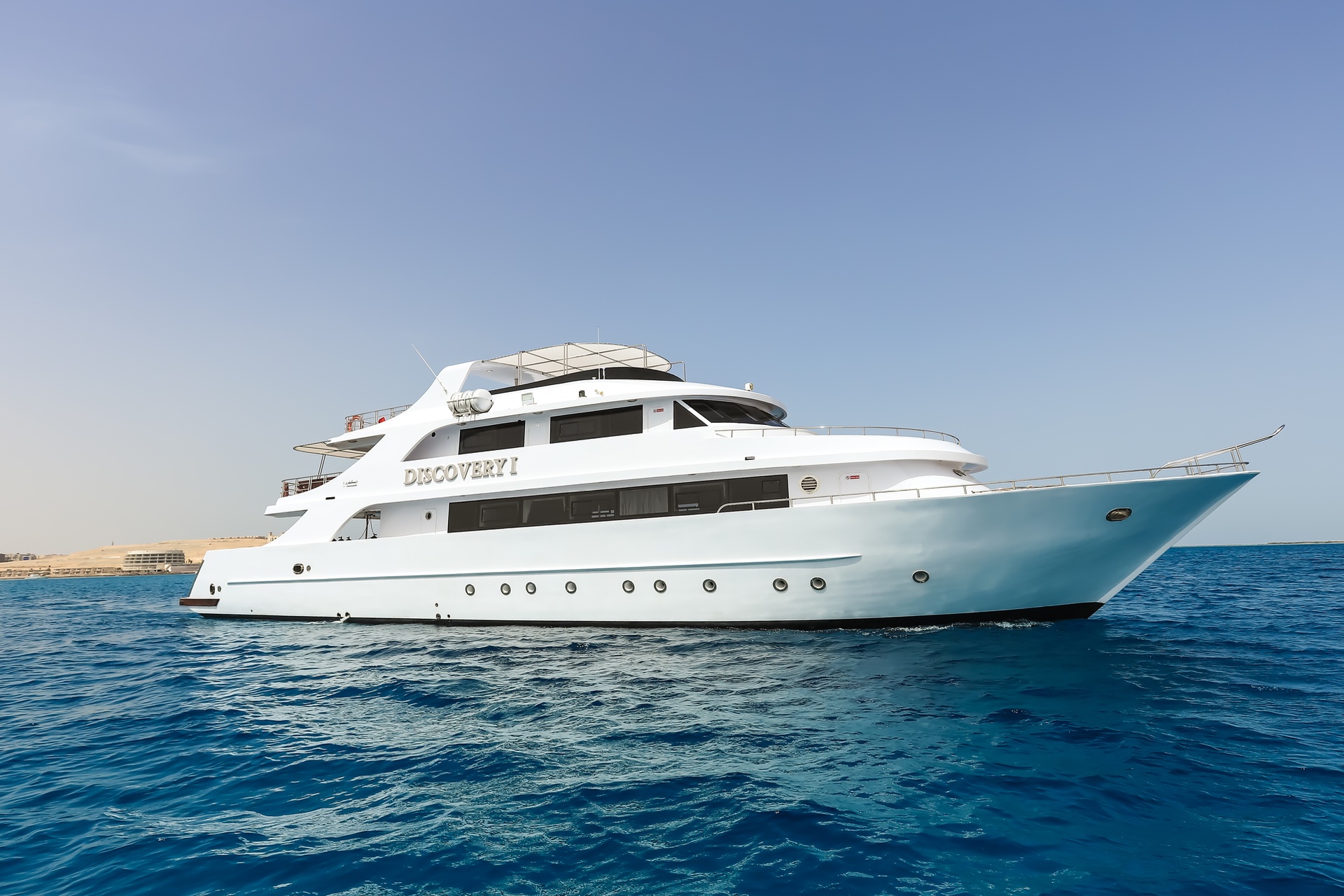 Discovery IEgitto