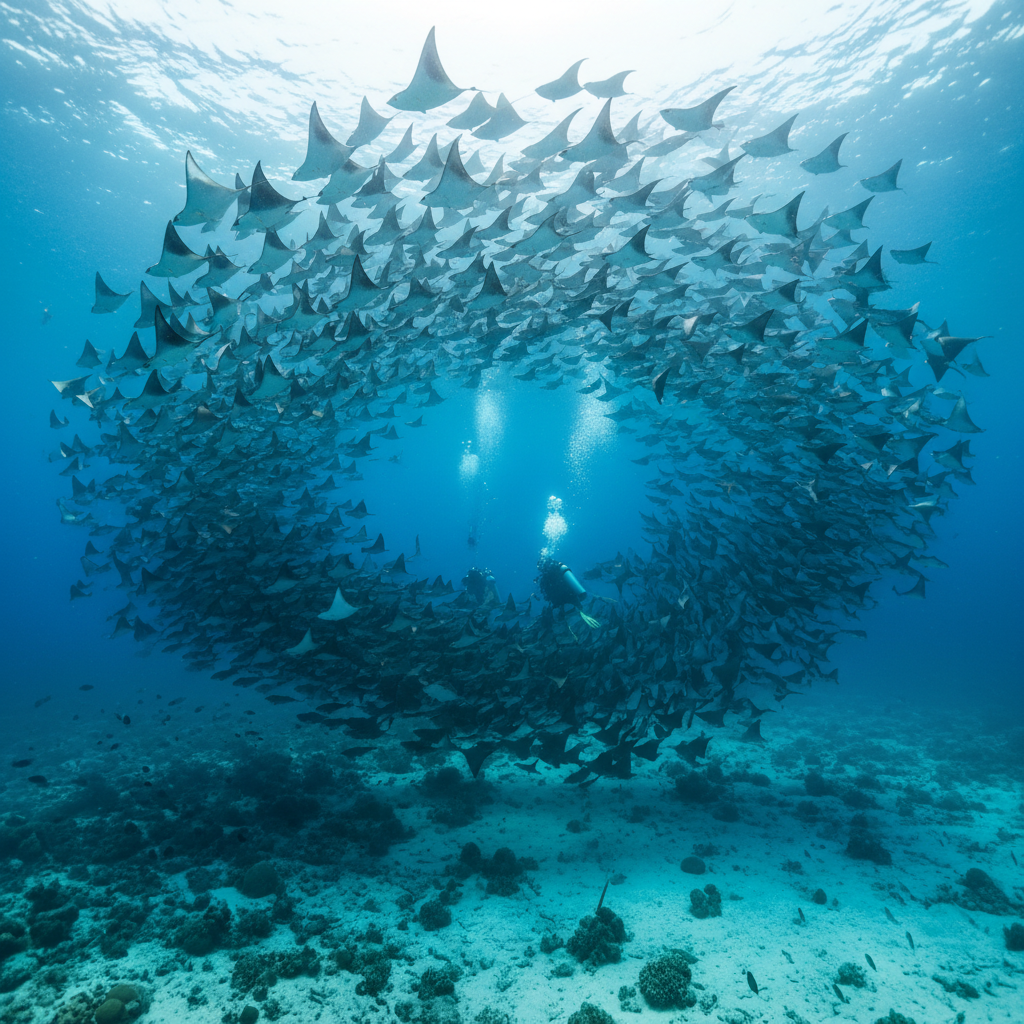
Imagine being suspended in a cerulean embrace, the sun's rays dancing through the surface, illuminating a silent ballet unfolding before your eyes. You’re not dreaming. You’re exactly where you need to be to witness one of the ocean's most spectacular gatherings – the annual Mobula Ray Migration off the sun-kissed shores of Baja California Sur, Mexico. This isn't just a dive; it's an immersive experience that redefines what you thought was possible underwater, a true bucket-list contender.
Why Mobula Ray Migration Belongs on Your Bucket List
There are dives, and then there are encounters. The Mobula Ray Migration is unequivocally the latter – a truly extraordinary phenomenon that carves a permanent space in your memory. What makes this particular event so globally unique isn't just the sheer number of rays, but their mesmerising behaviour. We're talking about thousands upon thousands of these elegant creatures, often referred to as "mini-mantas", gathering en masse. You might witness them forming colossal, swirling 'cyclones' – a breathtaking spectacle of coordinated movement. Or perhaps you'll be treated to their famous aerial displays, where they launch themselves clear out of the water, somersaulting before re-entering with a splash. It’s an explosion of life and energy that’s hard to find anywhere else on the planet.
This experience is tailor-made for those who gravitate towards marine megafauna, particularly freedivers and snorkelers who relish dynamic, open-water interactions. While you can certainly encounter these rays on scuba, the most intimate and prolonged interactions often occur closer to the surface, where the rays are feeding and exhibiting their acrobatic leaps. It’s an adventure that calls to those seeking a connection with nature on its grandest scale, offering astonishing photographic opportunities and an unparalleled sense of wonder.
What You'll See and Do
The magic unfolds in the warm, nutrient-rich waters between La Ventana, a charming kitesurfing town, and the majestic Cerralvo Island (Isla Jacques Cousteau), just off the coast of Baja California Sur. While the Mobula rays are the undisputed stars of the show, the biodiverse Sea of Cortez ensures there’s rarely a dull moment. You'll be spending your days predominantly in the open ocean, scanning the surface for signs of activity – ripples, splashes, or the distinctive dorsal fins breaking the surface. Once a pod is located, it’s all about a respectful, calm approach, often involving freediving or snorkelling to enter the water and swim alongside them.
The Mobula rays themselves are captivating. Typically Mobula Munkiana (Munk's Mobula) or Mobula Thourini (Sicklefin Mobula), they range in size from around 1 to 3 metres (3 to 10 feet) disc width, making them substantial and incredibly graceful. You'll observe them feeding on plankton, performing their famous 'somersaults' underwater, and, if you're lucky, breaching in spectacular fashion. These encounters are generally surface-oriented, making them accessible to competent snorkelers and freedivers. Depths can vary, but the most active behaviour is often observed in the upper water column, ranging from the surface down to about 15-20 metres (50-65 feet).
Beyond the rays, the Sea of Cortez is a vibrant ecosystem. Keep an eye out for playful Californian sea lions, especially around the rocky outcrops of Cerralvo Island, and various species of dolphins that often share the same hunting grounds as the mobulas. You might also spot humpback whales, fin whales, or even majestic whale sharks passing through the area, adding another layer of excitement to your marine safari. Every day is a surprise, a testament to the rich marine life this region supports.
Best Time to Go
To witness the Mobula Ray Migration at its peak, you'll want to plan your trip between April and June. This period marks the height of their annual aggregation in the waters off La Ventana and Cerralvo Island. During these months, the conditions are typically ideal for surface encounters and exceptional visibility.
Water temperatures during the peak season are comfortably warm, generally ranging from 24°C to 28°C (75°F to 82°F), making for enjoyable extended periods in the water for freedivers and snorkelers. Visibility is usually superb, often exceeding 15-20 metres (50-65 feet), and on calm days can stretch even further, providing crystal-clear views of the rays. While currents in the open ocean can be present, especially around the island, experienced guides will always ensure safe and enjoyable interactions. The weather at this time is predominantly sunny and dry, characterising the beautiful Baja spring and early summer.
How to Dive Mobula Ray Migration
Accessing the Mobula Ray Migration is primarily done via day boats operating out of La Ventana or La Paz. While the region does offer liveaboard options for extended diving safaris in the Sea of Cortez, the Mobula encounters are often specifically coordinated by local operators. These operators specialize in finding and interacting with the ray aggregations, providing a dedicated itinerary focused on this unique experience. Certification-wise, strong swimming skills and comfort in open water are paramount. While a scuba certification isn't strictly necessary for the surface encounters, having an Advanced Open Water certification certainly broadens your options for other dives in the area. For those looking to freedive, a certified freediving course will greatly enhance your breath-holding capabilities and comfort in the water, allowing for more prolonged and intimate interactions.
There are no specific minimum logged dives required for snorkelling or freediving, but being physically fit and an experienced water-person will naturally improve your experience. For equipment, a 3mm shorty or full wetsuit is typically sufficient for the comfortable water temperatures. Beyond that, standard snorkelling or freediving gear – mask, snorkel, fins – is all you’ll need. Consider bringing a long-sleeved rash guard for sun protection during surface time. A camera with good underwater capabilities is highly recommended to capture the unforgettable moments. Remember, these are wild animals in the open ocean, so patience and respect for their natural environment are key ingredients for a successful and rewarding experience.
Conservation and Responsible Diving
The Mobula Ray Migration is a precious natural spectacle and responsible interaction is key to its preservation. Always maintain a respectful distance from the rays; avoid chasing, touching, or interfering with their natural behaviour. Our presence in their natural habitat is a privilege, not a right. Choose operators who demonstrate a strong commitment to marine conservation and adhere to responsible wildlife interaction guidelines. This includes avoiding large groups converging on the rays and ensuring a calm, non-intrusive approach. When taking photographs, be mindful of your buoyancy and movements to avoid disturbing the rays or other marine life. By choosing responsible practices, you contribute directly to the long-term protection of these magnificent creatures and their vital ecosystem, ensuring future generations can also witness this extraordinary event.
Plan Your Trip
The Mobula Ray Migration off Baja California Sur is more than just a trip; it’s an opportunity to connect with the ocean's raw power and ethereal beauty. If you're ready to cross this phenomenal encounter off your bucket list, Blue Rides offers a curated selection of liveaboard experiences and packages that can seamlessly integrate this incredible interaction into your Mexican diving adventure. Explore our offerings and let us help you plan an unforgettable journey to the Sea of Cortez, where the Mobula rays await.