
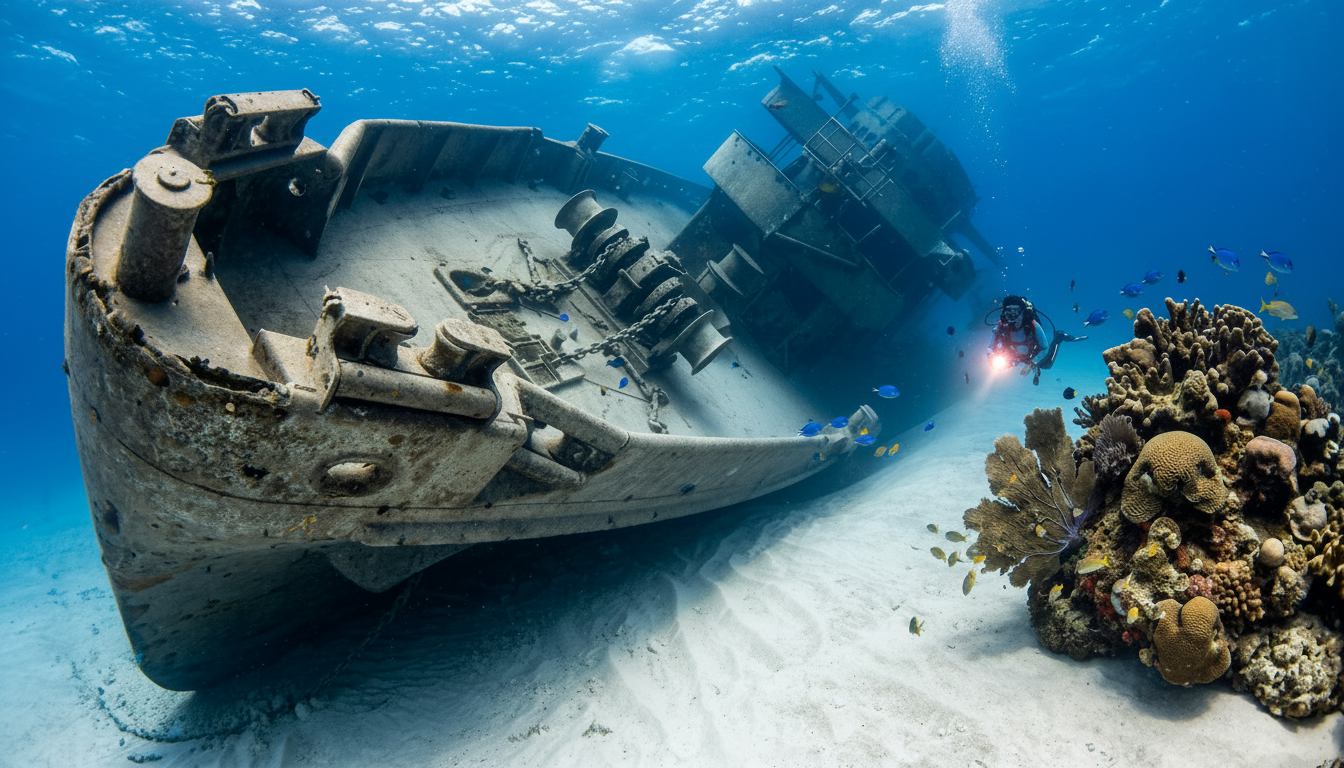
Imagine sliding effortlessly through the warm embrace of the Caribbean Sea, your gaze drawn to the colossal silhouette of a submarine rescue vessel, purposefully sunk to create a vibrant haven beneath the waves. This isn't just another dive; it's an immersive journey into a living monument, a testament to both human ingenuity and nature’s remarkable capacity for reclamation. Welcome to the USS Kittiwake Wreck, a bucket list contender that promises an unforgettable underwater symphony of history and marine life.
Why USS Kittiwake Wreck Belongs on Your Bucket List
The USS Kittiwake isn't merely a sunken ship; she's a meticulously prepared artificial reef, a colossal underwater playground designed with divers in mind. Resting upright on a sandy bottom just off Grand Cayman's iconic Seven Mile Beach, her sheer size and incredible accessibility are what truly set her apart. At 77 meters (251 feet) long and five decks high, she offers a vast canvas for exploration, from her cavernous engine rooms to her bridge, each section now teeming with life. This isn't a deep, dark penetration dive for the most experienced few; the Kittiwake's shallow depth of around 20 meters (65 feet) at her deepest point and her thoughtful preparation (all doors and hatches enlarged, potential hazards removed) mean she’s approachable for a wide range of certified divers. It’s this unique blend of impressive scale and relative ease of access that makes her such a compelling proposition.
What makes the Kittiwake globally unique is her intentional transformation into an artificial reef, not an accidental wreck. Sunk in 2011, every detail was considered to enhance the diving experience and foster marine biodiversity. You're not just observing a historical relic; you're witnessing an ecological experiment in real-time, a thriving ecosystem that has rapidly developed around her steel skeleton. For photographers, the natural light penetration at this depth, combined with the ship's intricate structure, offers endless opportunities for stunning wide-angle and macro shots. For those who appreciate history, exploring the vessel’s various compartments provides a tangible connection to her past service, even as it serves as a future for countless marine creatures. The Kittiwake truly suits anyone looking for an impactful, diverse, and relatively easy wreck dive with abundant marine life.
Forget the intimidating image of deep, technical wreck diving. The USS Kittiwake offers all the thrill of exploring a large vessel without the typical associated risks. It's an adventure that balances historical curiosity with the joy of observing prolific marine life, all under the Caribbean sun. Whether you're a seasoned wreck enthusiast or a diver looking to tick off that first major wreck, the Kittiwake delivers an experience that transcends expectations.
What You'll See and Do
Diving the USS Kittiwake is an exercise in discovery. Every pass reveals something new. Around the hull and within her open decks, you'll encounter a dazzling array of reef fish. Schools of French grunts and sergeant majors shimmer, while vibrant parrotfish graze on algae-covered surfaces. Look closer, and you might spot cleaning stations where tiny gobies tend to larger fish. Juvenile barracuda often patrol the upper decks, their curious eyes following your movements. The ship itself has become a canvas for soft corals and sponges, adding splashes of colour to the grey steel.
As you penetrate deeper into the designated open areas, the scale of the vessel becomes even more apparent. Explore the engine room, a vast space that once hummed with machinery, now home to moray eels peering from pipes and lobsters tucked into crevices. The bridge, now beautifully lit by natural light filtered through the clear Caribbean water, offers an incredible perspective. Keep an eye out for southern stingrays gliding past on the sandy bottom nearby, or even a sleepy nurse shark tucked under a plate. Photographers will appreciate the chance to capture the iconic silhouette of the wreck against the sun's rays, especially on sunny days.
The Kittiwake rests on a sandy bottom at approximately 20 meters (65 feet) at its deepest point, with the top of the mast just 6 meters (20 feet) below the surface, making it ideal for multi-level diving. Most dives will be conducted within the 10-20 meter range, offering ample bottom time to explore. While no advanced wreck penetration training is required due to the open nature of the dive, maintaining good buoyancy is crucial to avoid silting up the wreck and to protect the fragile marine life. Expect to spend at least two dives to fully appreciate the Kittiwake’s many facets, and even then, there will be more to discover on subsequent visits.
Best Time to Go
One of the many delights of diving the Cayman Islands, and specifically the USS Kittiwake, is its year-round accessibility. The Caribbean climate ensures consistently warm water temperatures and excellent visibility for most of the year. While there theoretically exists a "rainy season" from May to November, this typically manifests as short, intense showers that rarely impact dive conditions significantly. The hurricane season officially runs from June to November, but direct hits are rare, and local operators are highly experienced in monitoring weather patterns to ensure diver safety.
Water temperatures typically range from a comfortable 26°C (79°F) in the winter months (December to April) to a balmy 30°C (86°F) during the summer and autumn (May to November). Most divers find a 3mm shorty or full suit more than sufficient, with some opting for a rash vest in the warmer months. Visibility is consistently superb, often exceeding 30 meters (100 feet), allowing for breathtaking panoramic views of the entire wreck from a distance. Currents around the Kittiwake are generally very mild, making it an accessible dive for all levels. Occasionally, divers might encounter a gentle drift, but it’s rarely strong enough to cause concern. Given these optimal conditions, there’s truly no "bad" time to visit; the Kittiwake awaits your exploration whenever wanderlust strikes.
How to Dive USS Kittiwake Wreck
Accessing the USS Kittiwake is almost exclusively done via day-boats departing from various points along Seven Mile Beach on Grand Cayman. While the Cayman Islands boast exquisite liveaboard experiences that venture to the outer islands, the Kittiwake's prime location close to shore makes it a perfect day trip. Many local dive operators run multiple trips daily to the site, often combining it with a second reef dive. This accessibility from land-based resorts or a short transfer from a port-based liveaboard provides immense flexibility in planning your visit.
To dive the Kittiwake, you need to be at least an Open Water Diver certified. However, to truly enhance your experience and maximise your bottom time and comfort, holding an Advanced Open Water certification is highly recommended. This allows you to dive to the full depth of the wreck (around 20m) with greater confidence and training in navigation and deeper diving. Furthermore, a Nitrox certification is a game-changer for the Kittiwake; the increased no-decompression limits it provides will allow you significantly more time exploring the wreck's many fascinating features. While not strictly necessary, having at least 20-30 logged dives will make you more comfortable navigating around a large structure. Good buoyancy control is paramount, not only for your safety but also for the preservation of the wreck and its burgeoning ecosystem, and to avoid kicking up silt. A 3mm wetsuit or shorty is usually ideal, and don't forget a dive torch – even in shallow, clear water, it helps to illuminate the vibrant colours and critters hiding within the ship's darker corners.
Conservation and Responsible Diving
The USS Kittiwake is a prime example of successful marine conservation through artificial reef creation, and as such, responsible diving practices are paramount. Remember that this is a living, breathing ecosystem. Maintain excellent buoyancy control to avoid contact with the wreck itself or any of the delicate corals and sponges growing on its surfaces. Touching any marine life, including fish, corals, or other invertebrates, is strictly prohibited – observe, but do not interact. Do not collect souvenirs; the only thing you should take away are photographs and memories, and the only thing you should leave behind are bubbles. When taking photographs, be mindful of your fin kicks and proximity, ensuring you don't disturb the marine inhabitants or cause damage. Always follow your dive guide's instructions; they are experts in protecting this incredible site and ensuring a safe and respectful experience for all. By diving responsibly, you contribute to the ongoing health and vibrancy of the Kittiwake for future generations to enjoy.
Plan Your Trip
Ready to immerse yourself in the magnificent history and vibrant marine life of the USS Kittiwake Wreck? This truly unique dive experience, set against the stunning backdrop of the Cayman Islands, promises an adventure you won't soon forget. Explore our curated selection of premium liveaboards departing for the Cayman Islands or discover land-based dive packages that perfectly complement a visit to this iconic artificial reef. Your next unforgettable dive journey starts here.