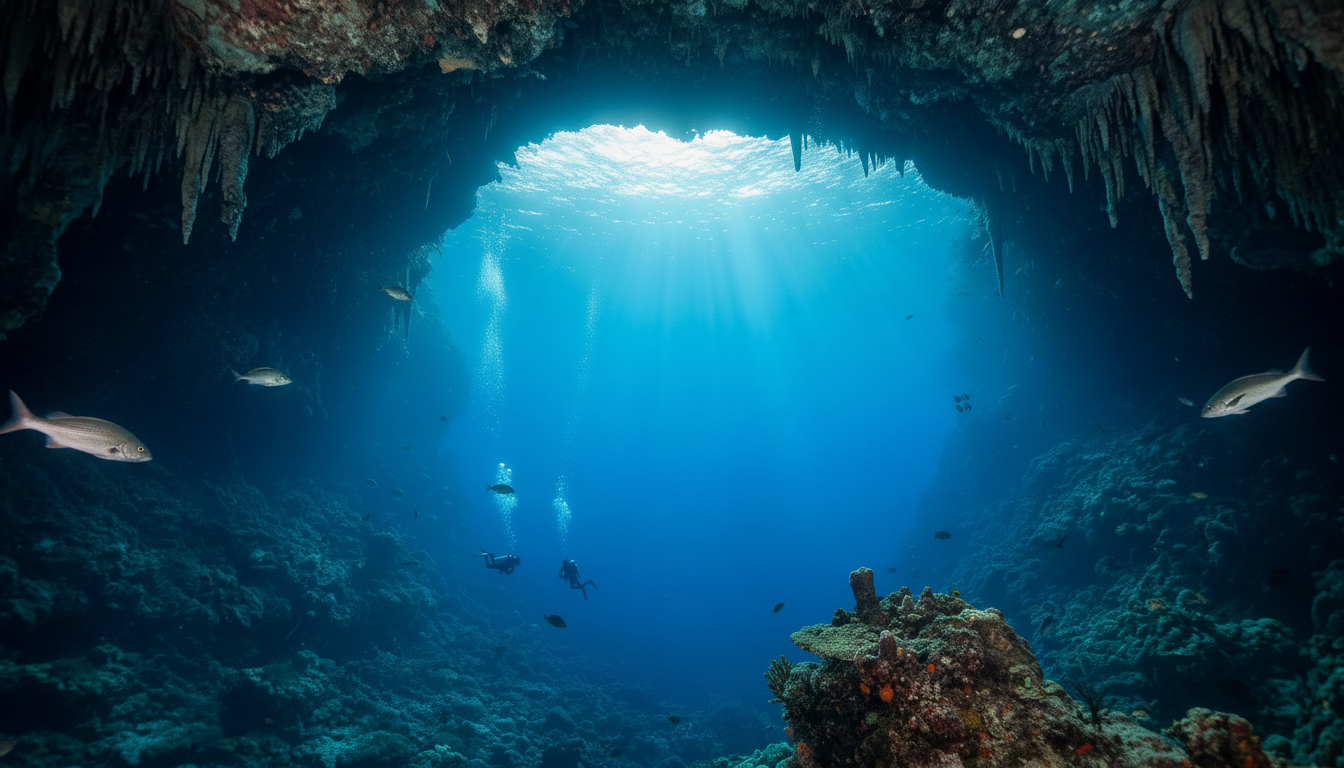
Imagine dropping into an abyss older than recorded history, a place where time has carved a monumental testament to nature’s grandeur. The Great Blue Hole isn't just a dive; it's a descent into an ancient wonder, a silent chronicle written in stone and shrouded in the cerulean depths of the Caribbean. This isn't your everyday reef exploration; this is an expedition to the heart of a geological marvel, an experience utterly distinct and breathtakingly profound.
Why Great Blue Hole Dive Belongs on Your Bucket List
There are dives, and then there are dives that redefine your understanding of the underwater world. The Great Blue Hole, situated in the Lighthouse Reef Atoll off the coast of Belize, unequivocally falls into the latter category. Its sheer scale is mesmerising – a perfectly circular sinkhole, over 300 metres across and plunging to depths of 125 metres. This isn't just a big hole in the ocean; it's a geological phenomenon, a testament to a bygone era when this colossal cavern was above sea level, slowly dissolving as ancient glaciers expanded and receded. What makes it globally unique is the striking visibility and the opportunity to witness colossal stalactites and stalagmites, formations usually reserved for cave systems on land, now submerged in a cathedral of salt water.
The "wow factor" here is undeniable. As your dive boat cuts across the shimmering surface of Lighthouse Reef, the perfect dark circle of the Blue Hole beckons, a stark contrast to the vibrant shallow reefs surrounding it. Dropping into its depths is like entering another dimension. The journey past the reef crest, down into the sheer wall of the sinkhole, is where the true adventure begins. It’s a dive for those who seek the extraordinary, for explorers with a deep appreciation for both geology and marine life. If your dive log is filled with colourful reef photographs but lacks a truly monumental, awe-inspiring geological encounter, then the Great Blue Hole is calling your name.
This experience suits divers who are comfortable with deep diving and have a healthy respect for the vastness of the ocean. It's not about intricate macro life (though you’ll find plenty of that on the surrounding reefs), but rather about the grandeur of the landscape, the thrill of the descent, and the encounter with species perfectly adapted to this unique environment. It’s for the diver who wants to tick off a UNESCO World Heritage site that is as iconic below the waves as any above it.
What You'll See and Do
The dive typically begins with a descent along the sheer, almost vertical walls of the sinkhole. The initial stages are often marked by the vibrant blue fading to deeper, enigmatic hues. The primary objective is to reach the colossal limestone formations – the stalactites and stalagmites – which begin at around 30 to 40 metres (100 to 130 feet) and extend far beyond recreational limits. These ancient structures, some reaching several metres in length and a metre thick, are breathtaking in their scale and offer a humbling perspective on the passage of geological time. Many divers find themselves gazing at these formations, contemplating the prehistoric world in which they were formed.
While the Blue Hole is renowned more for its geology than its prolific reef life, there are incredible encounters to be had, particularly with larger pelagic species. As you descend, keep an eye out for patrolling reef sharks. Caribbean reef sharks (Carcharhinus perezi) are frequently sighted, gracefully cruising the edges of the sinkhole. Bull sharks (Carcharhinus leucas) are also known to make appearances, particularly in the deeper, darker sections. Occasionally, you might even spot a hammerhead shark (Sphyrna mokarran) in the vicinity. The sparse, deeper environment makes these large encounters all the more dramatic and memorable.
The dive profile for the Great Blue Hole typically involves reaching depths between 35 and 45 metres (115 to 150 feet) to experience the main stalactite formations, followed by a slow ascent and a safety stop along the shallower, more vibrant reef encircling the top edge of the hole. During your ascent, as the light gradually returns, you'll pass over the upper rim where a band of reef life exists, offering a stark contrast to the deeper, starker environment. Schools of snappers, grunts, and various colourful wrasses become visible again, reminding you of the rich biodiversity of the Caribbean, even if the main event was the ancient, geological wonder.
Best Time to Go
Belize enjoys a tropical climate, making the Great Blue Hole dive accessible year-round. However, there are nuances to consider for the optimal experience. The official "dry season" runs from November to May, characterised by less rainfall, lower humidity, and generally calmer seas, which can contribute to smoother liveaboard journeys and easier surface conditions. The "wet season," from June to October, brings more rain and higher humidity, with the possibility of tropical storms and hurricanes, particularly from August to October. Despite this, diving continues, and many find the lighter crowds during the wet season appealing.
Water temperatures in Belize are consistently warm, generally ranging from 26°C (79°F) to 29°C (84°F) throughout the year. During the dry season, temperatures typically hover around 26-27°C (79-81°F), while the wet season can see them climb to 28-29°C (82-84°F). Visibility inside the Great Blue Hole itself can be extraordinary, often exceeding 30 metres (100 feet), although this can be affected by plankton blooms or strong winds stirring up sediment on the surrounding reef. Currents inside the Blue Hole are generally negligible due to its enclosed nature, making for a relatively placid descent, though surface currents on the outer reef can occasionally be moderate.
How to Dive Great Blue Hole Dive
Accessing the Great Blue Hole is predominantly through liveaboard charters, which offer the most convenient and comprehensive way to experience this remote wonder. Liveaboards typically depart from Belize City or San Pedro, Ambergris Caye, and include the Blue Hole as a highlight within a week-long itinerary exploring the other dive sites of Lighthouse Reef, Turneffe Atoll, and the barrier reef. While some day-trip operators from Ambergris Caye or Caye Caulker offer excursions, these involve significant travel time and limited bottom time, often resulting in a very long day. A liveaboard offers multiple dives in the area, allowing for a more relaxed and immersive experience, often including other spectacular dives like the Half Moon Caye Wall and the Elbow at Turneffe Atoll.
To safely and enjoyably dive the Great Blue Hole, a minimum certification of Advanced Open Water Diver is required due to the depth involved. Most liveaboard operators will also strongly recommend, if not require, that you have at least 50 logged dives, with some experience in deep diving. The primary dive to the stalactites will take you beyond 30 metres (100 feet), so comfort and proficiency at these depths are crucial. Recommended additional certifications include Enriched Air Nitrox, as it allows for extended bottom time, particularly on repetitive dives throughout the week. A Deep Diver specialty certification can also be highly beneficial. While currents inside the hole are minimal, a Drift Diver specialty can be useful for other sites on the itinerary. A 3mm full wetsuit is generally sufficient given the warm water temperatures, but some divers may prefer a 5mm for added comfort and warmth on multiple dives. Essential gear notes include having a reliable dive computer, a surface marker buoy (SMB), and a whistle.
Conservation and Responsible Diving
The Great Blue Hole, as part of the Belize Barrier Reef Reserve System, is a UNESCO World Heritage Site, underscoring its global significance and the imperative for its protection. When diving here, adherence to responsible diving practices is paramount. This means maintaining excellent buoyancy control to avoid any contact with the delicate reef structures on the rim or the ancient stalactites in the deeper sections. Absolutely no touching of marine life or geological formations is permitted. Respect the natural behaviour of any sharks or other large pelagics you encounter; observe from a distance and avoid any provocative actions. When taking photographs, be mindful of your fin kicks and environmental impact, and never disturb the natural environment for "the shot." By honouring these principles, we ensure that this majestic natural wonder remains pristine for future generations of divers.
Plan Your Trip
Ready to embark on an unparalleled underwater journey that traces the lines of ancient history and thrills with iconic geological formations and pelagic encounters? The Great Blue Hole awaits. Explore our curated selection of premium liveaboard experiences to Belize, designed to introduce you to the full majesty of this incredible destination. Let Blue Rides connect you with the dive trip of a lifetime.
