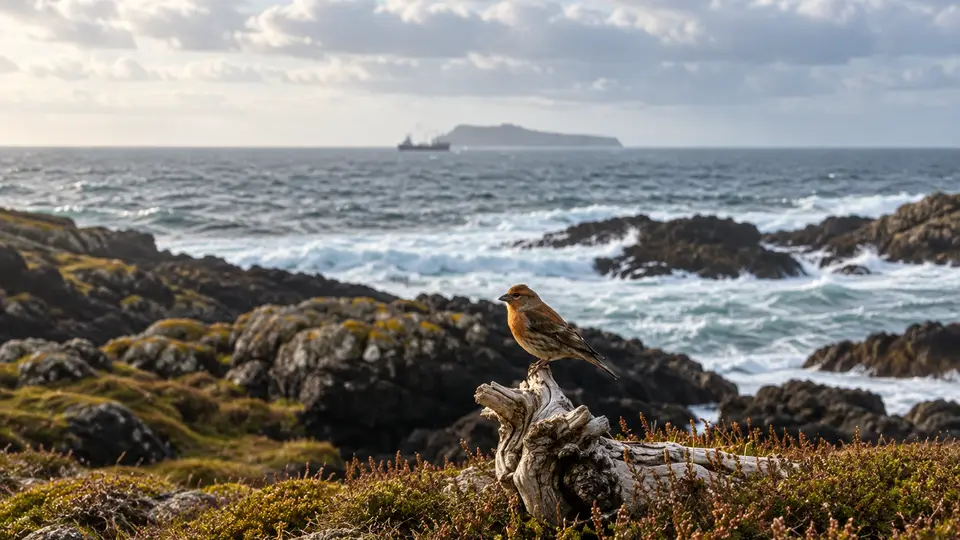
Scottish Crossbill in its natural habitat

Scottish CrossbillLoxia scoticaWhere and when to see them

Scottish Crossbill at a glance

The Scottish crossbill is a cone-feeding finch associated with the pinewoods of northern Scotland. Usually recognized as a species endemic to Britain, it belongs to a difficult complex that also includes common and parrot crossbills. Its precise taxonomic boundaries remain debated. Differences in calls, bill structure and feeding ecology are more useful collectively than any single field mark, making confident identification a specialist task rather than a straightforward visual exercise.

Behaviour & reproduction

Size
16–18 cm (6.3–7.1 in) body length
Weight
40–50 g (1.4–1.8 oz)
Lifespan
Not reliably established
Status
Least Concern

These crossbills move through conifer canopies in small parties, using their crossed bill tips to prise apart cone scales. Breeding timing can respond to seed availability, so nesting is not confined to a conventional late-spring songbird season. Birds may visit drinking places and shift among woodland patches as cone crops change. Their flight and excitement calls are important evidence for identification, especially where several crossbill types occur together. Flocks often consist of family groups and can be quite vocal, especially when moving between feeding trees. They exhibit a unique climbing gait, using their bills as a third limb to navigate conifer branches while extracting seeds.

Top wildlife locations

Scotland wildlife habitat

Scotland

Caledonian pinewoods in the Highlands, including the Cairngorms region, provide suitable habitat along established forest trails. An inland excursion is required, and distinguishing this species from other crossbills remains difficult.
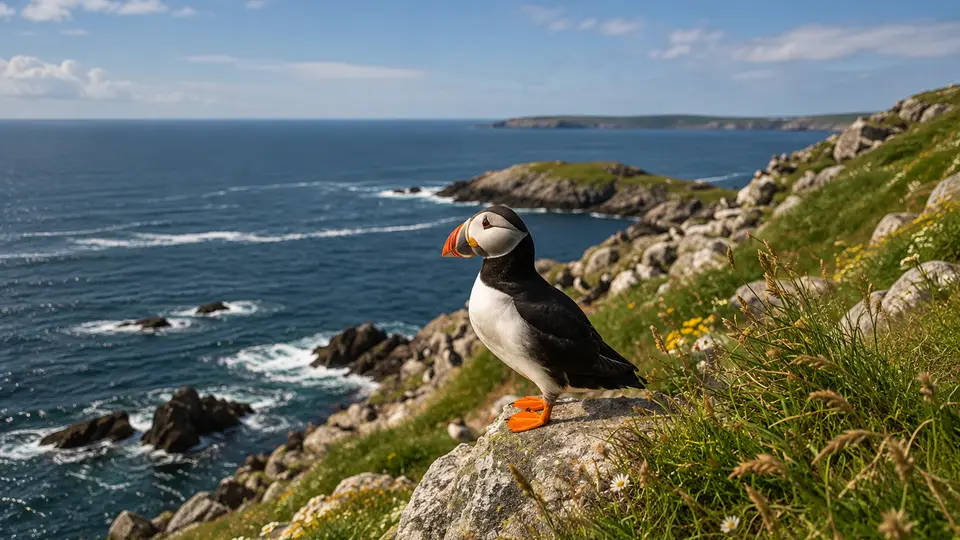
Destinations describe the species' habitat, not guaranteed cruise stops. Some animals require an optional inland excursion or are found in restricted reserves.

Fun facts about the Scottish Crossbill

  • The upper bill tip may cross either to the left or to the right.
  • Young crossbills leave the nest before their bill tips become fully crossed.
  • Its recognition as a species has made it a prominent example in debates about bird speciation.
  • Pine seed availability can influence breeding timing more strongly than calendar season.

Best time to see the Scottish Crossbill

Observation is possible year-round, but late winter through spring can bring calling activity and breeding behaviour in suitable pinewoods. Cone crops strongly affect local presence. A quiet woodland visit with an experienced local guide is more useful than relying on dates alone. Breeding activity can occur at any time of year, peaking from late winter through spring when new cones are developing. Their presence and abundance in a specific area are directly linked to the annual cone crop, meaning local populations can fluctuate significantly.

Scottish Crossbill: season matrix by destination

Travel and observation windows vary by region. Highlighted months are an orientation for planning, not confirmed sightings or a guarantee of access.

Scotland

Late winter and spring can favour listening for active birds, but winter access varies and cone crops influence distribution throughout the year.

JanFebMarAprMayJunJulAugSepOctNovDec
Cruise ships in Scotland

Where the Scottish Crossbill lives

Native Scots pine woodland is its characteristic habitat, especially in the Scottish Highlands, although other conifer stands may be used. Suitable habitat is inland rather than coastal, and productive cone-bearing trees are more important than proximity to settlements or visitor facilities. While primarily associated with Scots pine, the species can also be found in planted conifer stands such as Norway spruce or larch, particularly when foraging. Its distribution is largely restricted to the native pinewoods of the Scottish Highlands, making it the UK's only endemic bird species.

What the Scottish Crossbill eats

Conifer seeds dominate the diet, particularly those extracted from Scots pine cones. Birds hold cones or cling beside them while levering scales apart. Small invertebrates and other plant foods may supplement this specialized diet, especially when feeding growing young. The specialized bill allows efficient extraction of seeds from closed cones that are inaccessible to many other birds. This dietary specialization means their breeding success is highly dependent on a good supply of mature conifer cones.

Species at a glance

Common name
Scottish Crossbill
Scientific name
Loxia scotica
Animal group
Birds
Size
16–18 cm (6.3–7.1 in) body length
Weight
40–50 g (1.4–1.8 oz)
Lifespan
Not reliably established
Status
Least Concern
Identification
Typically intermediate in bill size between common and parrot crossbills, the Scottish crossbill cannot be reliably distinguished from both by appearance alone and requires careful assessment of calls. The deep, ringing calls are crucial for distinguishing this species from common and parrot crossbills, which can co-occur in the same forests. Expert birders often rely on detailed analysis of sonograms to confirm identification, especially for individual birds.

Scottish Crossbill: frequently asked questions

Where can I see the Scottish Crossbill?
Scotland. Use established pinewood trails and listen before approaching a flock. Avoid playback near possible nests, and do not claim identification from bill size alone; recordings assessed by a knowledgeable specialist may be necessary. When searching for these birds, focusing on the tops of mature conifers with abundant cones is often productive. Early mornings are typically best for hearing their characteristic calls and observing feeding activity.
When is the best time to see the Scottish Crossbill?
Observation is possible year-round, but late winter through spring can bring calling activity and breeding behaviour in suitable pinewoods. Cone crops strongly affect local presence. A quiet woodland visit with an experienced local guide is more useful than relying on dates alone. Breeding activity can occur at any time of year, peaking from late winter through spring when new cones are developing. Their presence and abundance in a specific area are directly linked to the annual cone crop, meaning local populations can fluctuate significantly.
How big does the Scottish Crossbill get?
16–18 cm (6.3–7.1 in) body length. Adult weight: 40–50 g (1.4–1.8 oz). Size varies with age, sex and population.
How should I behave around the Scottish Crossbill?
Use established pinewood trails and listen before approaching a flock. Avoid playback near possible nests, and do not claim identification from bill size alone; recordings assessed by a knowledgeable specialist may be necessary. When searching for these birds, focusing on the tops of mature conifers with abundant cones is often productive. Early mornings are typically best for hearing their characteristic calls and observing feeding activity.
What does the Scottish Crossbill eat?
Conifer seeds dominate the diet, particularly those extracted from Scots pine cones. Birds hold cones or cling beside them while levering scales apart. Small invertebrates and other plant foods may supplement this specialized diet, especially when feeding growing young. The specialized bill allows efficient extraction of seeds from closed cones that are inaccessible to many other birds. This dietary specialization means their breeding success is highly dependent on a good supply of mature conifer cones.
Are wildlife sightings guaranteed on an adventure cruise?
No. Animals move freely and routes, weather, access restrictions and local conditions influence every outing. Confirm the actual itinerary and shore program before booking.

Compare wildlife in the same destinations

Explore other birds recorded in these destinations. Similar surroundings do not mean the animals share the same habits or viewing season.

Species comparison by animal group and destination
Scottish CrossbillScottish CrossbillAtlantic PuffinAtlantic PuffinBlack GuillemotBlack Guillemot
Animal groupBirdsAnimal groupBirdsAnimal groupBirds
DestinationsScotlandDestinationsNew England, Norway, Scotland, ArcticDestinationsNew England, Norway, Scotland
Scientific nameLoxia scoticaScientific nameScientific name
All wildlife destinations
Plan your trip

Find your next wildlife adventure

Compare destinations, shore programs and dates with the animals and habitats you would love to see.

  • Naturalist-led shore excursions
  • Responsible wildlife watching
  • Small expedition ships