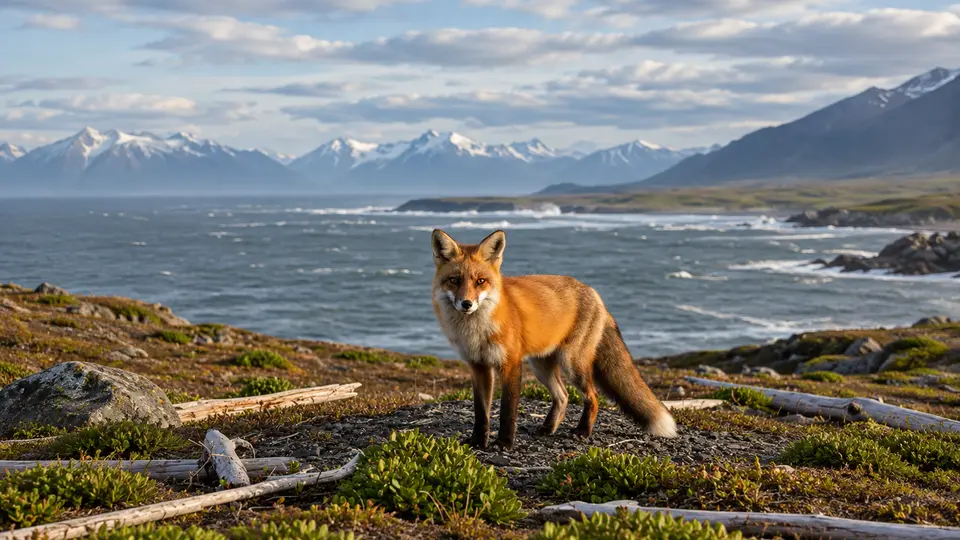
Red Fox in its natural habitat, AI illustration

Red FoxVulpes vulpesWhere and when to see them

Red Fox at a glance

The red fox is a highly adaptable northern carnivore found across much of Alaska, including forests, tundra margins and some coastal landscapes. Its familiar red coat is only one colour form: silver, blackish and cross-patterned animals belong to the same species. A bushy tail, pointed muzzle and dark lower legs create a distinctive outline. Local abundance reflects prey availability, winter conditions and competition with other predators rather than simply the presence of human settlements.

Behaviour & reproduction

Size
Head and body 45–90 cm
Weight
3–10 kg
Lifespan
3–6 years in the wild
Status
Least Concern

Red foxes usually hunt alone, locating small prey through careful listening before making a high, precise pounce. They cache surplus food in shallow hiding places and use scent marks to communicate. Breeding pairs may share a territory, with both parents contributing to pup care. Activity is often greatest around dusk and dawn, but Alaska's long summer daylight allows daytime movement too. Foxes near people may become bold if repeatedly fed. Communication among red foxes involves a complex repertoire of barks, howls, and yelps, especially during mating season or when defending territory. They are primarily solitary hunters but sometimes form small family groups to raise young. Their incredible hearing allows them to detect prey underground or under snow, which they then pinpoint with remarkable accuracy.

Top wildlife locations

Alaska wildlife habitat

Alaska

Mainland coastal tundra, dunes and forest edges can provide viewing from established routes. Distribution varies between islands, so some itineraries require an inland excursion and many coastal stops offer little realistic opportunity.
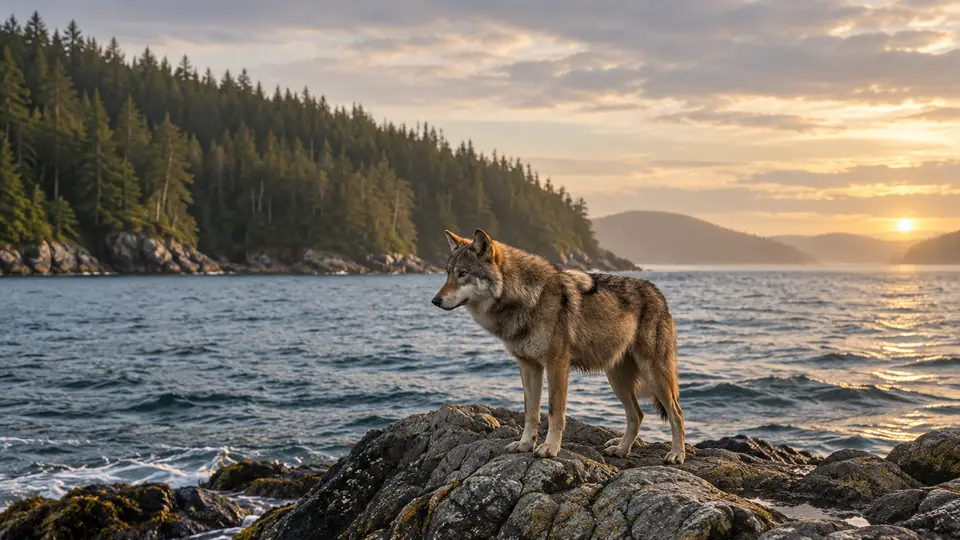
Destinations describe the species' habitat, not guaranteed cruise stops. Some animals require an optional inland excursion or are found in restricted reserves.

Fun facts about the Red Fox

  • Silver foxes are a colour form of the red fox, not a separate species.
  • The tail is often called a brush.
  • Foxes can locate concealed rodents using sound before pouncing.
  • Stored food may be recovered later using scent and spatial memory.

Best time to see the Red Fox

Late spring through early autumn generally provides the easiest coastal travel and longest viewing days in Alaska. Foxes remain active all year, but winter access is much more limited. Pup-rearing increases family activity in summer without making dens appropriate visitor destinations. Summer offers the best chance to see pups learning to hunt and explore near den sites, though dens should never be approached. The extended daylight hours in Alaska during summer mean foxes may be active throughout the day, increasing viewing opportunities. Late spring also sees increased activity as adults prepare for the breeding season.

Red Fox: season matrix by destination

Travel and observation windows vary by region. Highlighted months are an orientation for planning, not confirmed sightings or a guarantee of access.

Alaska

These months favour coastal access and daylight, not confirmed sightings or a uniform breeding schedule across Alaska.

JanFebMarAprMayJunJulAugSepOctNovDec
Cruise ships in Alaska

Where the Red Fox lives

Habitats include boreal forest edges, shrub tundra, river valleys, grassland and coastal dunes. Foxes need suitable denning ground and dependable food, not necessarily dense cover. In Alaska, distribution is uneven, and many exposed islands do not support naturally occurring populations. Red foxes are highly adaptable and thrive in a wide variety of habitats, including urban and suburban areas when food is available. In Alaska, their range extends across most of the mainland, adapting to both forested and open environments. They often utilize natural shelters like rock crevices or abandoned burrows, especially during denning season.

What the Red Fox eats

Voles and other small mammals are important prey, supplemented by birds, eggs, insects, berries and carrion. Coastal animals may scavenge stranded marine material. Their flexible diet helps them exploit seasonal opportunities, but feeding by visitors can create dangerous dependence and conflict. Their opportunistic diet includes a significant proportion of insects and berries, especially during late summer and autumn when these resources are abundant. In some coastal regions, red foxes may also prey on ground-nesting birds and their eggs during breeding season. They are known to cache food extensively to create reserves for times of scarcity.

Species at a glance

Common name
Red Fox
Scientific name
Vulpes vulpes
Animal group
Mammals
Size
Head and body 45–90 cm
Weight
3–10 kg
Lifespan
3–6 years in the wild
Status
Least Concern
Identification
Compared with Arctic foxes, red foxes have longer legs, larger pointed ears and usually a white-tipped tail with dark lower legs. The red fox's fur color can vary widely from bright fiery red to a more muted reddish-brown or even silver-black, but the white-tipped tail is a consistent feature. Their slender build and agility are also key characteristics, distinguishing them from sturdier canids. Look for their characteristic trot and long, bushy tail when they move.

Red Fox: frequently asked questions

Where can I see the Red Fox?
Alaska. Observe quietly from a path, deck or parked vehicle, allowing foxes a clear escape route. Never offer food or approach dens. Retreat from an animal behaving abnormally, and report unusually aggressive or disoriented foxes to local authorities. Keep a respectful distance to avoid disturbing their natural behavior and allow them to remain wild. Using binoculars or a telephoto lens will provide excellent views without causing stress to the animal. Be mindful of your scent and noise when observing from shore, as foxes have keen senses.
When is the best time to see the Red Fox?
Late spring through early autumn generally provides the easiest coastal travel and longest viewing days in Alaska. Foxes remain active all year, but winter access is much more limited. Pup-rearing increases family activity in summer without making dens appropriate visitor destinations. Summer offers the best chance to see pups learning to hunt and explore near den sites, though dens should never be approached. The extended daylight hours in Alaska during summer mean foxes may be active throughout the day, increasing viewing opportunities. Late spring also sees increased activity as adults prepare for the breeding season.
How big does the Red Fox get?
Head and body 45–90 cm. Adult weight: 3–10 kg. Size varies with age, sex and population.
How should I behave around the Red Fox?
Observe quietly from a path, deck or parked vehicle, allowing foxes a clear escape route. Never offer food or approach dens. Retreat from an animal behaving abnormally, and report unusually aggressive or disoriented foxes to local authorities. Keep a respectful distance to avoid disturbing their natural behavior and allow them to remain wild. Using binoculars or a telephoto lens will provide excellent views without causing stress to the animal. Be mindful of your scent and noise when observing from shore, as foxes have keen senses.
What does the Red Fox eat?
Voles and other small mammals are important prey, supplemented by birds, eggs, insects, berries and carrion. Coastal animals may scavenge stranded marine material. Their flexible diet helps them exploit seasonal opportunities, but feeding by visitors can create dangerous dependence and conflict. Their opportunistic diet includes a significant proportion of insects and berries, especially during late summer and autumn when these resources are abundant. In some coastal regions, red foxes may also prey on ground-nesting birds and their eggs during breeding season. They are known to cache food extensively to create reserves for times of scarcity.
Are wildlife sightings guaranteed on an adventure cruise?
No. Animals move freely and routes, weather, access restrictions and local conditions influence every outing. Confirm the actual itinerary and shore program before booking.

Compare wildlife in the same destinations

Explore other mammals recorded in these destinations. Similar surroundings do not mean the animals share the same habits or viewing season.

Species comparison by animal group and destination
Red FoxRed FoxAlexander Archipelago WolfAlexander Archipelago WolfAmerican Black BearAmerican Black Bear
Animal groupMammalsAnimal groupMammalsAnimal groupMammals
DestinationsAlaskaDestinationsAlaskaDestinationsAlaska, New England
All wildlife destinations
Plan your trip

Find your next wildlife adventure

Compare destinations, shore programs and dates with the animals and habitats you would love to see.

  • Naturalist-led shore excursions
  • Responsible wildlife watching
  • Small expedition ships

Newsletter

Take Blue Rides with you

Adventure cruise offers, last-minute deals and trip inspiration.

Free, unsubscribe anytime. Details: Privacy Policy

Partner with Blue Rides

Affiliate Program

Recommend adventure cruises and earn commission on every confirmed booking.

Share. Track. Earn.

Your footage, our stage

Send us your videos or pictures.

Captured remarkable nature or wildlife on your journey? Share it with us, we may feature it on Blue Rides.