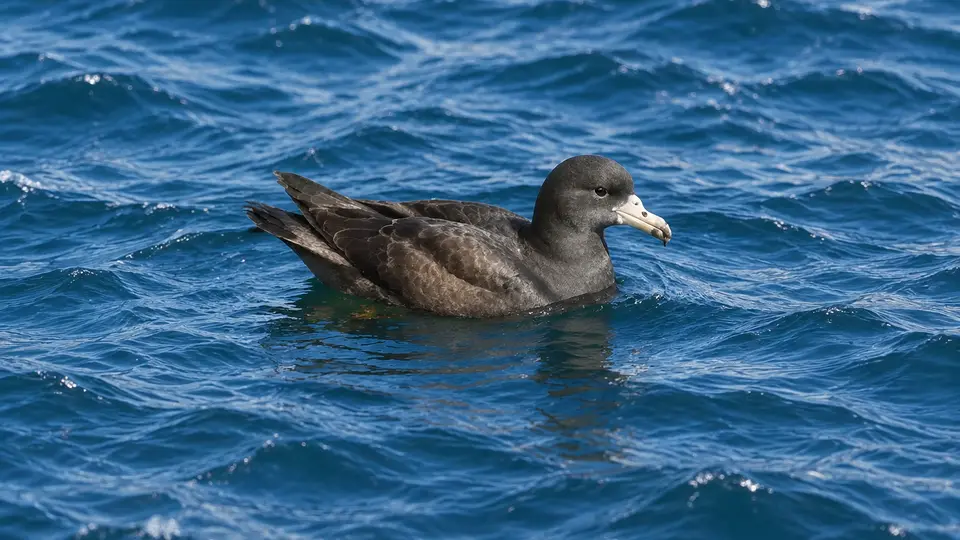
Fiji petrel in its natural habitat

Fiji petrelPseudobulweria macgillivrayiWhere and when to see them

Fiji petrel at a glance

The Fiji petrel is one of the world’s least-known seabirds, associated with the Fijian island of Gau and adjacent oceanic waters. Its uniformly dark plumage can seem unremarkable, but confirmed records are exceptionally significant. After the original nineteenth-century specimen, the species went unconfirmed for more than a century before its rediscovery in 1984. Its population is believed to be extremely small, and introduced predators threaten birds returning to land.

Behaviour & reproduction

Size
About 30 cm long
Weight
Not reliably established
Lifespan
Not reliably established
Status
Critically Endangered

At sea, Fiji petrels travel low over the surface using alternating wingbeats and glides, searching for scattered food. Their land visits are thought to be nocturnal, as in many burrow-nesting petrels, but breeding behaviour remains poorly understood. Birds have occasionally been found grounded on Gau, including near human activity. Such incidents are conservation emergencies rather than viewing opportunities, and researchers still lack the detailed annual cycle available for better-studied seabirds. At sea, Fiji petrels travel low over the surface using alternating wingbeats and glides, searching for scattered food. Their land visits are thought to be nocturnal, as in many burrow-nesting petrels, but breeding behaviour remains poorly understood. Birds have occasionally been found grounded on Gau, including near human activity. Such incidents are conservation emergencies rather than viewing opportunities, and researchers still lack the detailed annual cycle available for better-studied seabirds. They are believed to nest in burrows, typically hidden under dense vegetation or tree roots. Grounded birds are often disoriented by artificial lights, particularly during their nocturnal flights to and from breeding sites.

Top wildlife locations

Fiji wildlife habitat

Fiji

Distant deck observation in waters near Gau is more plausible than watching beaches, but encounters are exceptionally rare. Coastal viewpoints offer little prospect, and suspected inland nesting habitat is not a routine visitor destination.
Destinations describe the species' habitat, not guaranteed cruise stops. Some animals require an optional inland excursion or are found in restricted reserves.

Fun facts about the Fiji petrel

  • The first scientific specimen was collected on Gau in 1855.
  • Its rediscovery in 1984 ended a gap of more than a century without confirmation.
  • It belongs to the tubenoses, seabirds with tubular nostrils.
  • Confirmed at-sea observations have been exceptionally scarce.

Best time to see the Fiji petrel

There is no dependable public observation season. A small number of dated records cannot establish a reliable annual viewing peak. Conditions suitable for distant deck-based seabird watching depend on local weather, while the species’ breeding timing and movements remain incompletely known. There is no dependable public observation season. A small number of dated records cannot establish a reliable annual viewing peak. Conditions suitable for distant deck-based seabird watching depend on local weather, while the species’ breeding timing and movements remain incompletely known. Records suggest breeding activity, such as eggs or chicks, occurs between October and April. However, pelagic sightings are sparse year-round, making specific viewing seasons unreliable.

Fiji petrel: season matrix by destination

Travel and observation windows vary by region. Highlighted months are an orientation for planning, not confirmed sightings or a guarantee of access.

Fiji

Records are too sparse to support a reliable seasonal viewing window; suitable travel weather must not be mistaken for predictable petrel occurrence.

JanFebMarAprMayJunJulAugSepOctNovDec
Cruise ships in Fiji

Where the Fiji petrel lives

This is an oceanic seabird, not a coastal land animal. It uses offshore tropical waters, while Gau’s forested interior is associated with its presumed breeding habitat. Ordinary beaches and ports offer very poor prospects, and potential nesting areas are sensitive. This is an oceanic seabird, not a coastal land animal. It uses offshore tropical waters, while Gau’s forested interior is associated with its presumed breeding habitat. Ordinary beaches and ports offer very poor prospects, and potential nesting areas are sensitive. Its breeding population is confined to the remote interior highlands of Gau Island, Fiji. These areas are typically characterized by dense, old growth rainforests at high elevation. While foraging, they are found over deep pelagic waters, often near oceanic fronts.

What the Fiji petrel eats

Its diet is insufficiently documented for a species-specific menu. Small squid, fish and crustaceans are plausible prey based on related petrels and its marine feeding ecology, but their relative importance has not been reliably established for the Fiji petrel. Its diet is insufficiently documented for a species-specific menu. Small squid, fish and crustaceans are plausible prey based on related petrels and its marine feeding ecology, but their relative importance has not been reliably established for the Fiji petrel. Studies of related petrels suggest a diet of small, surface-dwelling marine invertebrates and fish. They likely forage by snatching prey from the ocean surface while in flight or briefly landing on the water.

Species at a glance

Common name
Fiji petrel
Scientific name
Pseudobulweria macgillivrayi
Animal group
Birds
Size
About 30 cm long
Weight
Not reliably established
Lifespan
Not reliably established
Status
Critically Endangered
Identification
Its compact, entirely dark form and relatively short tail distinguish it from the longer-tailed Tahiti petrel, although distant identification requires expert assessment of structure and flight. Its compact, entirely dark form and relatively short tail distinguish it from the longer-tailed Tahiti petrel, although distant identification requires expert assessment of structure and flight. The Fiji petrel is a small, uniformly dark petrel with a short, wedge-shaped tail. Its flight pattern is characteristic, with rapid wing beats interspersed with long glides close to the water surface, aiding differentiation from similar-sized birds.

Fiji petrel: frequently asked questions

Where can I see the Fiji petrel?
Fiji. Watch distant seabirds from a stable deck without attracting or pursuing them. Never enter suspected nesting forest. If a petrel is grounded near lights, contact local conservation authorities and keep pets and unnecessary lighting away. Watch distant seabirds from a stable deck without attracting or pursuing them. Never enter suspected nesting forest. If a petrel is grounded near lights, contact local conservation authorities and keep pets and unnecessary lighting away. Maintaining a respectful distance from any suspected nesting areas is crucial for this critically endangered species. Deck-based observation requires patience and good optics, as these birds are often seen at long range over the open ocean.
When is the best time to see the Fiji petrel?
There is no dependable public observation season. A small number of dated records cannot establish a reliable annual viewing peak. Conditions suitable for distant deck-based seabird watching depend on local weather, while the species’ breeding timing and movements remain incompletely known. There is no dependable public observation season. A small number of dated records cannot establish a reliable annual viewing peak. Conditions suitable for distant deck-based seabird watching depend on local weather, while the species’ breeding timing and movements remain incompletely known. Records suggest breeding activity, such as eggs or chicks, occurs between October and April. However, pelagic sightings are sparse year-round, making specific viewing seasons unreliable.
How big does the Fiji petrel get?
About 30 cm long. Adult weight: Not reliably established. Size varies with age, sex and population.
How should I behave around the Fiji petrel?
Watch distant seabirds from a stable deck without attracting or pursuing them. Never enter suspected nesting forest. If a petrel is grounded near lights, contact local conservation authorities and keep pets and unnecessary lighting away. Watch distant seabirds from a stable deck without attracting or pursuing them. Never enter suspected nesting forest. If a petrel is grounded near lights, contact local conservation authorities and keep pets and unnecessary lighting away. Maintaining a respectful distance from any suspected nesting areas is crucial for this critically endangered species. Deck-based observation requires patience and good optics, as these birds are often seen at long range over the open ocean.
What does the Fiji petrel eat?
Its diet is insufficiently documented for a species-specific menu. Small squid, fish and crustaceans are plausible prey based on related petrels and its marine feeding ecology, but their relative importance has not been reliably established for the Fiji petrel. Its diet is insufficiently documented for a species-specific menu. Small squid, fish and crustaceans are plausible prey based on related petrels and its marine feeding ecology, but their relative importance has not been reliably established for the Fiji petrel. Studies of related petrels suggest a diet of small, surface-dwelling marine invertebrates and fish. They likely forage by snatching prey from the ocean surface while in flight or briefly landing on the water.
Are wildlife sightings guaranteed on an adventure cruise?
No. Animals move freely and routes, weather, access restrictions and local conditions influence every outing. Confirm the actual itinerary and shore program before booking.

Compare wildlife in the same destinations

Explore other birds recorded in these destinations. Similar surroundings do not mean the animals share the same habits or viewing season.

Species comparison by animal group and destination
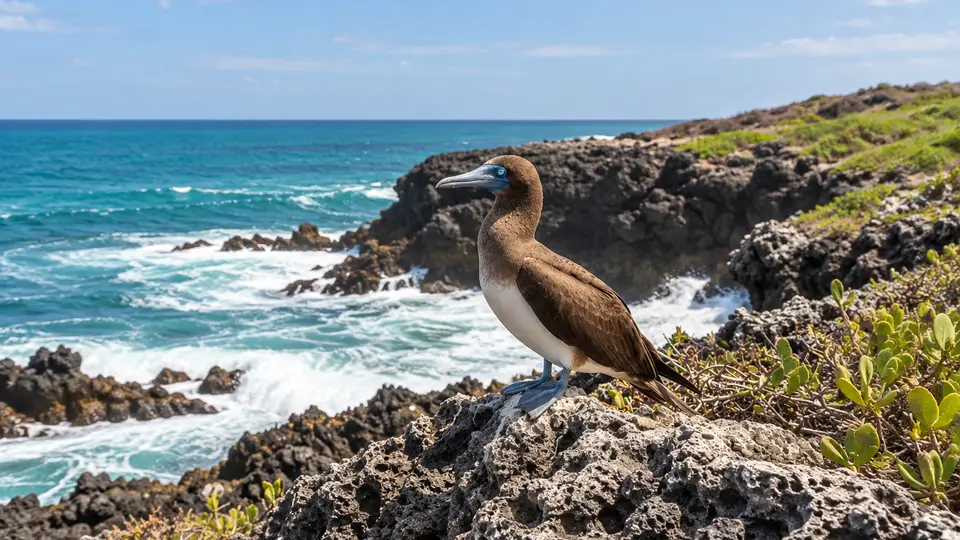
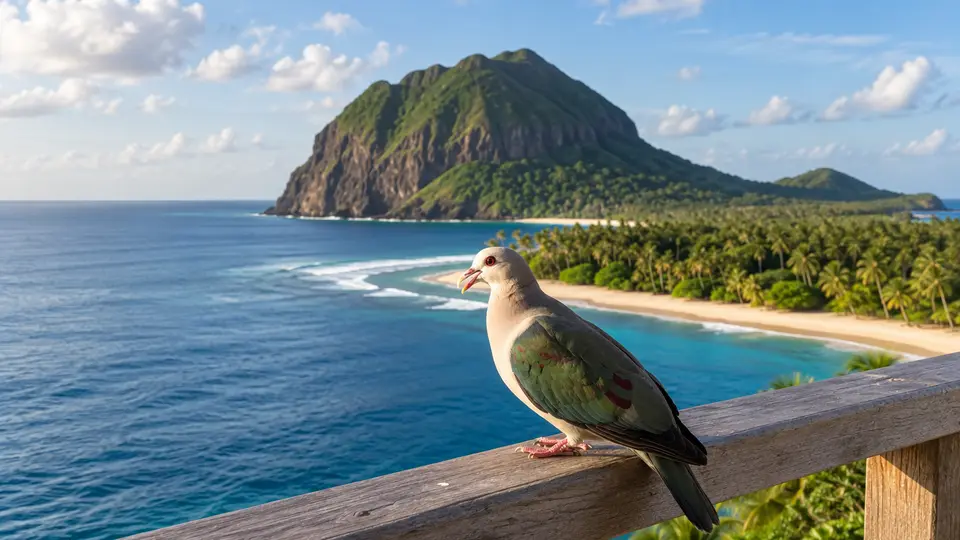
Fiji petrelFiji petrelBarking imperial pigeonBarking imperial pigeonBrown BoobyBrown Booby
Animal groupBirdsAnimal groupBirdsAnimal groupBirds
DestinationsFijiDestinationsFijiDestinationsCosta Rica, Cape Verde, Egypt, Fiji, Polynesia
All wildlife destinations
Plan your trip

Find your next wildlife adventure

Compare destinations, shore programs and dates with the animals and habitats you would love to see.

  • Naturalist-led shore excursions
  • Responsible wildlife watching
  • Small expedition ships