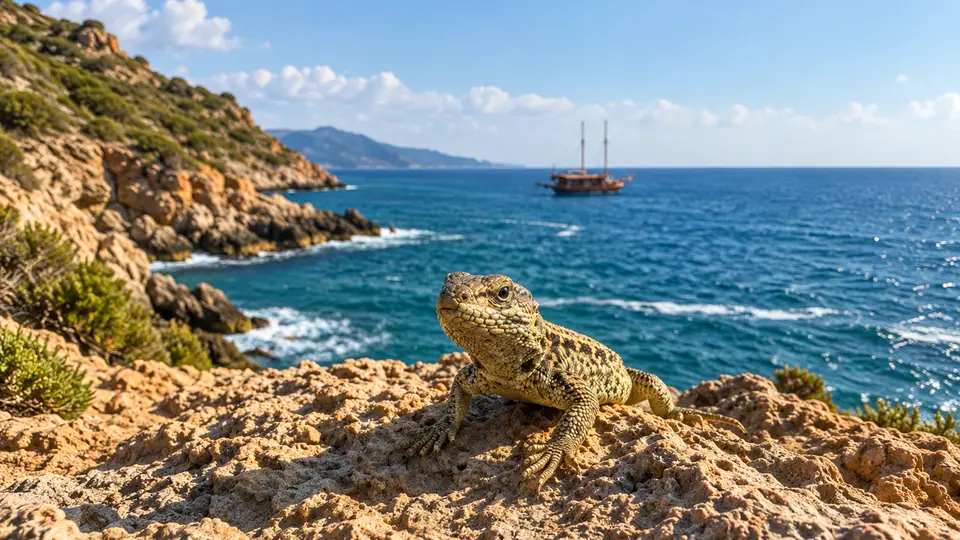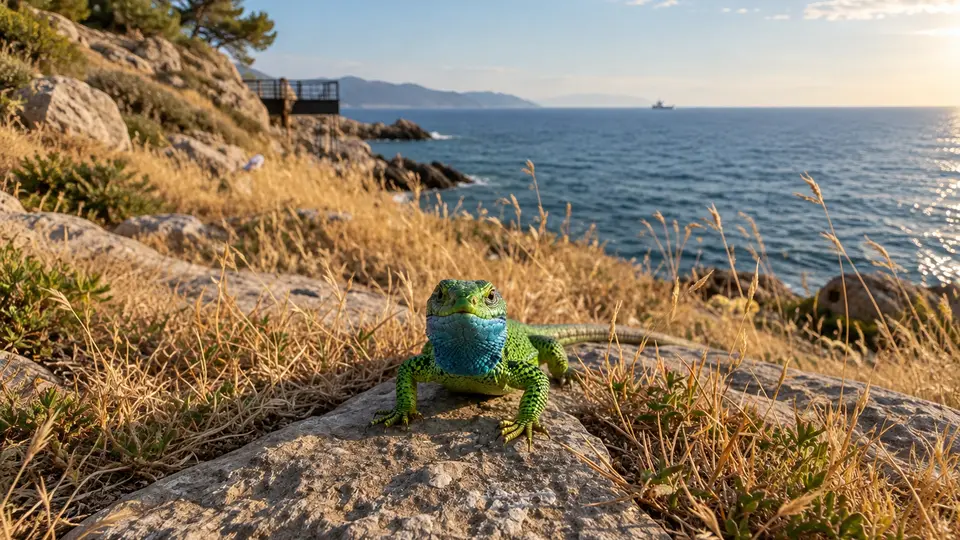
Balkan Green Lizard in its natural habitat

Balkan Green LizardLacerta trilineataWhere and when to see them

Balkan Green Lizard at a glance

The Balkan green lizard is a large, robust lizard of southeastern Europe and western parts of Asia Minor. Adults can appear brilliantly green, while juveniles often carry pale lengthwise stripes. It occupies a range of sunny, well-vegetated landscapes rather than bare desert. Dense cover close to basking places is particularly valuable, allowing an animal to warm itself while remaining only a short dash from safety.

Behaviour & reproduction

Size
30–50 cm (12–20 in) total length
Weight
Not reliably established
Lifespan
8–10 years (related species)
Status
Least Concern

These lizards emerge to bask before moving through vegetation in search of food. Males become territorial during the reproductive season and may chase rivals or display at close range. When alarmed, a lizard commonly disappears into shrubs, stonework or a ground refuge. During hot weather, activity shifts away from exposed midday conditions. Females lay eggs in sheltered ground, and young animals are more striped than most adults. During the breeding season, males engage in elaborate head-bobbing and push-up displays to attract mates and assert dominance. Females may lay 6 to 20 eggs in a clutch, typically burying them in loose soil or under rocks. Young lizards are more secretive and spend more time concealed within dense vegetation to avoid predation.

Top wildlife locations

Turkey wildlife habitat

Turkey

Vegetated coastal hills, scrub margins and old stone walls in the western part of its Turkish range offer possible land-based views. Some suitable sites require inland walks, and identification can be difficult.
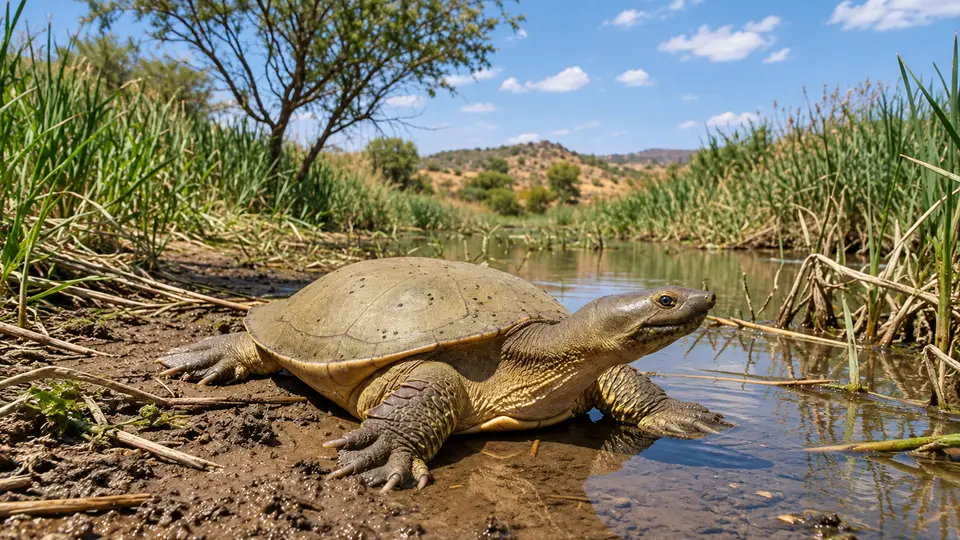
Destinations describe the species' habitat, not guaranteed cruise stops. Some animals require an optional inland excursion or are found in restricted reserves.

Fun facts about the Balkan Green Lizard

  • The name trilineata refers to a three-lined pattern.
  • Juvenile markings can look very different from adult coloration.
  • A shed tail can regrow, but the replacement differs from the original.
  • Vegetation cover helps it balance basking opportunities against predation risk.

Best time to see the Balkan Green Lizard

Spring and early summer usually offer good conditions for seeing active lizards in western Turkey. Autumn warmth can also support activity. Exact timing depends on altitude and local temperatures, while cool winter weather generally reduces surface activity substantially. Early morning and late afternoon hours are generally most productive for sightings during spring and early summer, avoiding the peak heat of the day. Mild, sunny days following a cool period can trigger increased activity. Their overall activity period in Turkey can span from March to October, depending on specific regional conditions.

Balkan Green Lizard: season matrix by destination

Travel and observation windows vary by region. Highlighted months are an orientation for planning, not confirmed sightings or a guarantee of access.

Turkey

These months offer plausible temperatures for surface activity; altitude, heat and local distribution can substantially change the window.

JanFebMarAprMayJunJulAugSepOctNovDec
Cruise ships in Turkey

Where the Balkan Green Lizard lives

Scrub, hedgerows, woodland edges, overgrown stone walls and grassy slopes provide suitable cover. It also occupies some cultivated landscapes where vegetation remains structurally varied. In Turkey, locality matters because other green lizards occur in adjoining or overlapping regions. They are commonly found near human settlements, benefiting from mosaic landscapes. Their preference for diverse vegetation provides shelter from predators and a rich hunting ground. In Turkey, this species is typically found in the western and northwestern regions, extending into Thrace and parts of Anatolia.

What the Balkan Green Lizard eats

Large insects and other invertebrates form most of the diet, including beetles, grasshoppers and spiders. Adults can occasionally take small vertebrates or plant foods. They search actively through low vegetation and litter rather than relying solely on stationary ambush. They are opportunistic predators, readily consuming slow-moving arthropods. Hatchlings and juveniles primarily feed on smaller insects. This species plays a role in controlling local invertebrate populations within its ecosystem.

Species at a glance

Common name
Balkan Green Lizard
Scientific name
Lacerta trilineata
Animal group
Reptiles
Size
30–50 cm (12–20 in) total length
Weight
Not reliably established
Lifespan
8–10 years (related species)
Status
Least Concern
Identification
Its robust build and often three pale juvenile stripes suggest Balkan green lizard, but reliable separation from related green lizards may require scale details and locality. Adult males often exhibit vibrant green coloration and a broad head, sometimes with blue cheeks or throat during the breeding season. Females are typically duller green or brownish, and the pale stripes are often more persistent into adulthood than in males. The presence of large keeled scales on the dorsal surface can be a key characteristic for species differentiation from other green lizards in Turkey.

Balkan Green Lizard: frequently asked questions

Where can I see the Balkan Green Lizard?
Turkey. Scan sunny vegetation edges from a path and stop before the lizard retreats. Never catch it or grasp its tail, which can detach; avoid overturning shelter stones and use photographs rather than handling for identification. Approach quietly and slowly, using binoculars to observe from a distance without disturbing the animal. Look for them basking on rocks, logs, or low branches where sunlight can warm their bodies. Remember to scan both horizontal surfaces and low vertical structures such as old walls.
When is the best time to see the Balkan Green Lizard?
Spring and early summer usually offer good conditions for seeing active lizards in western Turkey. Autumn warmth can also support activity. Exact timing depends on altitude and local temperatures, while cool winter weather generally reduces surface activity substantially. Early morning and late afternoon hours are generally most productive for sightings during spring and early summer, avoiding the peak heat of the day. Mild, sunny days following a cool period can trigger increased activity. Their overall activity period in Turkey can span from March to October, depending on specific regional conditions.
How big does the Balkan Green Lizard get?
30–50 cm (12–20 in) total length. Adult weight: Not reliably established. Size varies with age, sex and population.
How should I behave around the Balkan Green Lizard?
Scan sunny vegetation edges from a path and stop before the lizard retreats. Never catch it or grasp its tail, which can detach; avoid overturning shelter stones and use photographs rather than handling for identification. Approach quietly and slowly, using binoculars to observe from a distance without disturbing the animal. Look for them basking on rocks, logs, or low branches where sunlight can warm their bodies. Remember to scan both horizontal surfaces and low vertical structures such as old walls.
What does the Balkan Green Lizard eat?
Large insects and other invertebrates form most of the diet, including beetles, grasshoppers and spiders. Adults can occasionally take small vertebrates or plant foods. They search actively through low vegetation and litter rather than relying solely on stationary ambush. They are opportunistic predators, readily consuming slow-moving arthropods. Hatchlings and juveniles primarily feed on smaller insects. This species plays a role in controlling local invertebrate populations within its ecosystem.
Are wildlife sightings guaranteed on an adventure cruise?
No. Animals move freely and routes, weather, access restrictions and local conditions influence every outing. Confirm the actual itinerary and shore program before booking.

Compare wildlife in the same destinations

Explore other reptiles recorded in these destinations. Similar surroundings do not mean the animals share the same habits or viewing season.

Species comparison by animal group and destination
Balkan Green LizardBalkan Green LizardAfrican Softshell TurtleAfrican Softshell TurtleAnatolian Rock LizardAnatolian Rock Lizard
Animal groupReptilesAnimal groupReptilesAnimal groupReptiles
DestinationsTurkeyDestinationsTurkeyDestinationsTurkey
Scientific nameLacerta trilineataScientific nameScientific name
All wildlife destinations
Plan your trip

Find your next wildlife adventure

Compare destinations, shore programs and dates with the animals and habitats you would love to see.

  • Naturalist-led shore excursions
  • Responsible wildlife watching
  • Small expedition ships